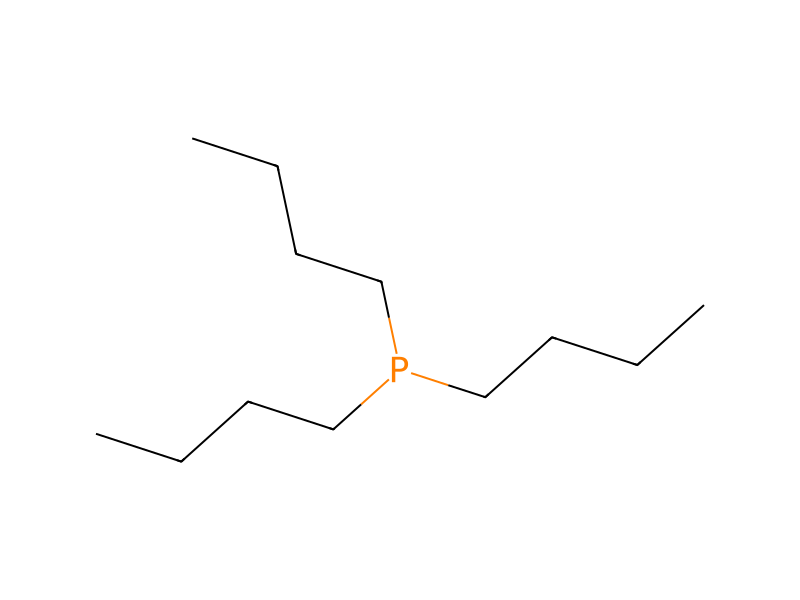
Tributylphosphine → HCID 13711424, compound
Reaction equation

[F:1][C:2]1[CH:7]=[CH:6][CH:5]=[C:4]([F:8])[C:3]=1[C:9]1[S:13]S[C:11](=[O:14])[N:10]=1.[Cl:15][C:16]1[C:22]([C:23]([F:26])([F:25])[F:24])=[CH:21][C:20]([Cl:27])=[CH:19][C:17]=1[NH2:18].C(P(CCCC)CCCC)CCC>ClCCl>[Cl:15][C:16]1[C:22]([C:23]([F:25])([F:26])[F:24])=[CH:21][C:20]([Cl:27])=[CH:19][C:17]=1[NH:18][C:11]([NH:10][C:9](=[S:13])[C:3]1[C:2]([F:1])=[CH:7][CH:6]=[CH:5][C:4]=1[F:8])=[O:14]Participants
5
Reactant 3


Product 1

Reagents, catalysts & solvents 1

Procedure
To a solution of 5-(2,6-difluorophenyl)-1,2,4-dithiazole-3-one (0.9 g) in 20 ml of dichloromethane was added dropwise a solution of 2,5-dichloro-3-trifluoromethylaniline (0.9 g) and tributylphosphine (0.8 g) in 10 ml of dichloromethane under ice-cooling and the solution was stirred for 30 minutes at room temperature. The dichloromethane was then distilled off under reduced pressure and to the residue was added ligroin. The precipitated crystal was filtered and the crystal was washed with ligroin to obtain the desired product 1.3 g. (d.p. 176°-177° C.)
Workup
- temperaturecooling
- distillationThe dichloromethane was then distilled off under reduced pressure and to the residue
- additionwas added ligroin
- filtrationThe precipitated crystal was filtered
- washthe crystal was washed with ligroin
Sources & evidence
- ORD record
- ord-17607399c4f54285805b5f047cb349cb
- Source dataset
- uspto-grants-1987_12
- Patent number
- US04713396
Reaction notes
Loading…