Tetrafluoroboric acid → HCID 18005020, compound
Reaction equation

[NH2:1][C:2]1[CH:3]=[N:4][C:5]2[C:10]([C:11]=1[Cl:12])=[CH:9][C:8]([O:13][CH3:14])=[C:7]([O:15][CH3:16])[CH:6]=2.[H+].[B-:18]([F:22])([F:21])([F:20])[F:19].[N:23]([O-])=O.[Na+]>O1CCCC1.O>[F:19][B-:18]([F:22])([F:21])[F:20].[Cl:12][C:11]1[C:10]2[C:5](=[CH:6][C:7]([O:15][CH3:16])=[C:8]([O:13][CH3:14])[CH:9]=2)[N:4]=[CH:3][C:2]=1[N+:1]#[N:23]Participants
6
Reactant 3
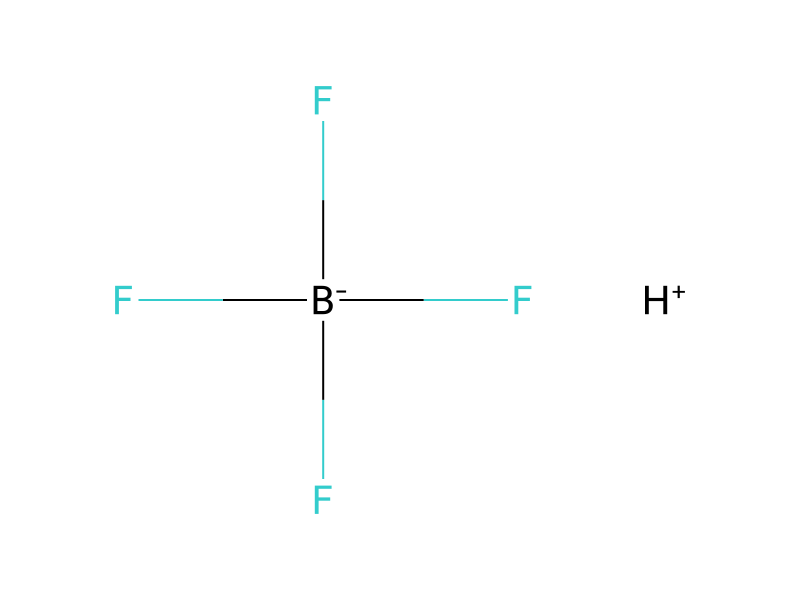


Product 1

Reagents, catalysts & solvents 2


Procedure
3-amino-4-chloro-6,7-dimethoxyquinoline (3.3 g) was dissolved in tetrahydrofuran (70 ml) with stirring and then cooled in an ice/water bath to below 10° C. 48% aqueous fluoboric acid (7.3 ml) was then added and the mixture stirred for 5 minutes. A solution of sodium nitrite (1.05 g) in water (2 ml) was added keeping the temperature below 10° C. The reaction mixture was then stirred for 30 minutes with cooling. The resulting yellow solid was filtered off, washed with fresh tetrahydrofuran. Carefully vac dried. To give 4-chloro-6,7-dimethoxyquinoline-3-diazonium tetrafluoroborate (4.15 g, 89%).
Workup
- temperaturecooled in an ice/water bath to below 10° C
- stirringthe mixture stirred for 5 minutes
- customthe temperature below 10° C
- stirringThe reaction mixture was then stirred for 30 minutes
- temperaturewith cooling
- filtrationThe resulting yellow solid was filtered off
- washwashed with fresh tetrahydrofuran
Sources & evidence
- ORD record
- ord-32d5b572ba1b45ac9e7ada3fb38f61fa
- Source dataset
- uspto-grants-2003_10
- Patent number
- US06638945B1
Reaction notes
Loading…