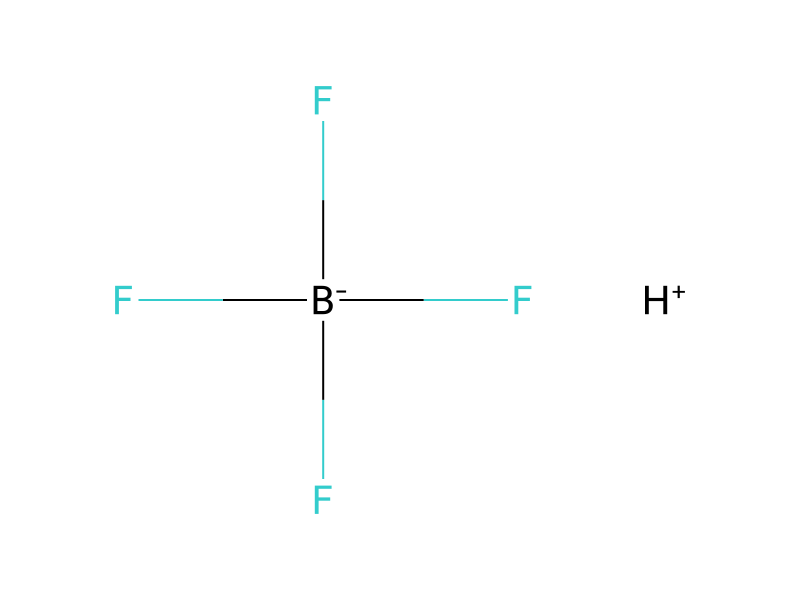
Tetrafluoroboric acid → HCID 178444241, compound
Reaction equation

[F:1][C:2]1[C:11]([F:12])=[CH:10][CH:9]=[C:8]2[C:3]=1[CH:4]=[CH:5][C:6](Br)=[CH:7]2.BrC1C=C2C(=CC=1)C(F)=C(N)C=C2.F[B-](F)(F)F.[H+].FC1C=C2C(=CC=1)C=C(Br)C=C2.[CH2:45]([CH:50]1[CH2:55][CH2:54][C:53](=O)[CH2:52][CH2:51]1)[CH2:46][CH2:47][CH2:48][CH3:49]>>[F:1][C:2]1[C:11]([F:12])=[CH:10][CH:9]=[C:8]2[C:3]=1[CH:4]=[CH:5][C:6]([C@H:53]1[CH2:52][CH2:51][C@H:50]([CH2:45][CH2:46][CH2:47][CH2:48][CH3:49])[CH2:55][CH2:54]1)=[CH:7]2Participants
6


Procedure
The procedure of Example 14 was followed except that 5,6-difluoro-2-bromonaphthalene (synthesized by converting 6-bromo-1-fluoro-2-naphthylamine to a diazonium salt of tetrafluoroboric acid, and then subjecting the diazonium salt to thermal decomposition) was used instead of 6-fluoro-2-bromonaphthalene and 4-pentylcyclohexanone was used instead of 4-propylcyclohexanone to obtain 5,6-difluoro-2-(trans-4-pentylcyclohexyl)naphthalene.
Workup
- customsynthesized
Sources & evidence
- ORD record
- ord-5fbe548ca2934496a942363082bbe259
- Source dataset
- uspto-grants-2002_10
- Patent number
- US06468607B1
Reaction notes
Loading…