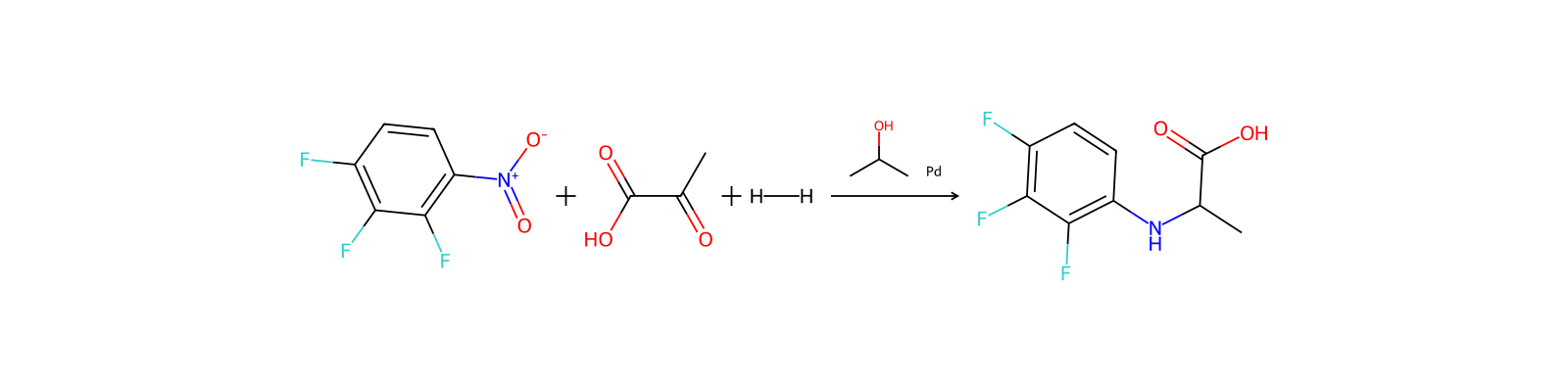
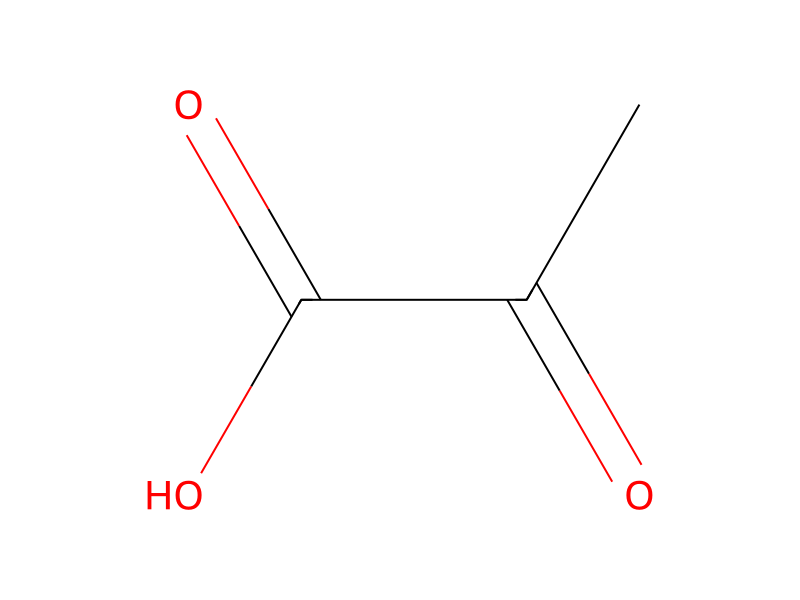
基本信息
- 标准SMILES
CC(=O)C(=O)O- InChIKey
LCTONWCANYUPML-UHFFFAOYSA-N- 分子式
- C3H4O3
- 平均分子量
- 88.06 g/mol
- 单同位素质量
- 88.01604399
概述
Pyruvic acid is a 2-oxo monocarboxylic acid that is the 2-keto derivative of propionic acid. It is a metabolite obtained during glycolysis. It has a role as a cofactor and a fundamental metabolite. It is functionally related to a propionic acid. It is a conjugate acid of a pyruvate.
名称与标识
- 首选名称
- Pyruvic Acid
- IUPAC
- 2-oxopropanoic acid
- 中文名
- 丙酮酸
- 英文名
- Pyruvic acid
- 分子式
- C3H4O3
- 分子量
- 88.06
名称与别名
Pyruvic acid2-Oxopropanoic acid127-17-3acetylformic acidPyroracemic acid2-Oxopropionic acidPropanoic acid, 2-oxo-alpha-ketopropionic acid2-Ketopropionic acid2-Oxopropansaeure2-Oxopropionsaeurealpha-Oxopropionsaeure
展开更多名称
丙酮酸乙酰甲酸乙醯甲酸乙盐甲酸乙酰基甲酸天然丙酮酸丙酮酸BR丙酮酸标准品A-酮基丙酸2-酮基丙酸pyruvicFEMA 29702-oxo-propanoicaciNSC 179Pyruvia AcidACID PYRUVATE
2-oxo-propionic acidacide pyruviquea-Ketopropionic acidCH3COCOOHFEMA No. 2970BrenztraubensaeureDTXSID2021650NSC-179
数据库标识
- CAS
127-17-3- PubChem CID
- 1060
- DTXSID
DTXSID2021650- ChEBI
CHEBI:32816- UNII
- 8558G7RUTR
- EC Number
- 204-824-3
- Nikkaji
- J2.015J
性质
结构计算性质
- XLogP
- -0.3
- 极性表面积
- 54.4 Ų
- 氢键供体
- 1
- 氢键受体
- 3
- 可旋转键
- 1
- 重原子
- 6
- 形式电荷
- 0
- 复杂度
- 84
实验与物化性质
Chemical ClassesBiological Agents -> Other Biomolecules
DrugsPharmaceuticals -> Listed in ZINC15
LipidsFatty Acyls [FA] -> Fatty Acids and Conjugates [FA01] -> Oxo fatty acids [FA0106]
SpringerMaterials PropertiesCoriolis coupling
FragrancesFragrance Ingredient (Pyruvic acid) -> IFRA transparency List
Food AdditivesFLAVORING AGENT OR ADJUVANT -> FDA Substance added to food
Density1.260-1.281
Flavoring AgentsEU Flavoring substances
Solubility
1000.0 mg/mL
miscible with water; soluble in organic solvents, oils
miscible at room temperature (in ethanol)
Boiling Point164 °C
Melting Point13.8 °C
Vapor Pressure1.29 [mmHg]
物理化学性质
- 熔点
- 11 · 11-12 °C (lit.)
- 沸点
- 165 °C · 165 °C (lit.)
- 密度
- 1.267 g/mL · 1.267 g/mL at 25 °C (lit.)
- 蒸气压
- 1.72 hPa · 1.72hPa at 25℃
- 折射率
- 20 · n20/D 1.428(lit.)
- FEMA
- 2970 · 2970 | PYRUVIC ACID
- 闪点
- 183 °F · 183 °F
- 储存条件
- 2 · 2-8°C
- 溶解度
- Miscible with chloroform and methanol.
- 酸度系数(pKa)
- 2.39 · 2.39(at 25℃)
- 形态
- Liquid
- 颜色
- Clear colorless to light yellow or amber
- PH值
- 3.11 · 3.11(1 mM solution);2.38(10 mM solution);1.79(100 mM solution);
- 气味 (Odor)
- 1 % · at 1.00 % in propylene glycol. sharp sour acetic caramellic
- 香型
- acidic
- 生物来源
- synthetic
- 水溶解性
- 2 O: · H2O: misciblealcohol: misciblediethyl ether: miscible
- Merck
- 14 · 14,8021
- JECFA Number
- 936 · 936
- BRN
- 506211 · 506211
- Henry's Law Constant
- 3.1 · 3.1×103 mol/(m3Pa) at 25℃, Burkholder et al. (2019)
- 稳定性
- Stable. Combustible. Incompatible with strong oxidizing agents, strong bases. Refrigerate.
- 主要应用
- flavors and fragrances
- 化妆品成分功效
- FRAGRANCE
- InChI
- 1S/C3H4O3/c1-2(4)3(5)6/h1H3,(H,5,6)
- InChIKey
- LCTONWCANYUPML-UHFFFAOYSA-N
- SMILES
- CC(=O)C(O)=O
- LogP
- -1.24 · -1.24
- 解离常数
- 2.49 at · 2.49 at 25℃
- CAS 数据库
- 127 · 127-17-3(CAS DataBase Reference)
- NIST化学物质信息
- Pyruvic acid(127-17-3)
- EPA化学物质信息
- 2 · Propanoic acid, 2-oxo- (127-17-3)
化学性质
无色至琥珀色粘稠液体,呈醋酸似香气和愉.陕酸味,带有辣的微甜味。熔点12~14℃,沸点164℃(分解),闪点82℃。相对密度(d415)1.267。混溶于水、乙醇和乙醚。即使含微量杂质亦易变暗并分解,故宜高纯度密闭存放。天然品存在于蔗糖发酵液和薄荷等中。
安全与法规
GHS分类
GHS Classification
Danger
H314 (100%): Causes severe skin burns and eye damage [Danger Skin corrosion/irritation]
P260, P264, P264+P265, P280, P301+P330+P331, P302+P361+P354, P304+P340, P305+P354+P338, P316, P317, P321, P363, P405, and P501 (click each P-code to see the statement)
Aggregated GHS information provided per 1823 reports by companies from 11 notifications to the ECHA C&L Inventory. Each notification may be associated with multiple companies.
危害信息
Regulatory Information
Chemical: Propanoic acid, 2-oxo-
Commission Regulation (EC) No 1565/2000 (Repealed by Com. Implementing Reg. (EU) No 872/2012)
Status: Active Update: 13-04-2018 https://echa.europa.eu/registration-dossier/-/registered-dossier/23815
Pyruvic acid: Does not have an individual approval but may be used under an appropriate group standard
Other Safety InformationEvaluation - Chemicals that are unlikely to require further regulation to manage risks to environment
Hazards Summary
Causes degenerative changes to brain in acute cerebral studies of rats; [RTECS] Polymerizes and decomposes on standing unless pure and stored in airtight container; [Merck Index] Safe when used as a flavoring agent in food; [JECFA] Causes burns; Inhalation may cause corrosive injuries to upper respiratory tract and lungs; [Sigma-Aldrich MSDS]
Hazard Classes and CategoriesSkin Corr. 1B (100%)
毒理信息
Adverse EffectsDermatotoxin - Skin burns.
Exposure RoutesPyruvate is absorbed from the gastrointestinal tract from whence it is transported to the liver via the portal circulation.
Toxicity Summary
Pyruvate serves as a biological fuel by being converted to acetyl coenzyme A, which enters the tricarboxylic acid or Krebs cycle where it is metabolized to produce ATP aerobically. Energy can also be obtained anaerobically from pyruvate via its conversion to lactate. Pyruvate injections or perfusions increase contractile function of hearts when metabolizing glucose or fatty acids. This inotropic effect is striking in hearts stunned by ischemia/reperfusion. The inotropic effect of pyruvate requires intracoronary infusion. Among possible mechanisms for this effect are increased generation of ATP and an increase in ATP phosphorylation potential. Another is activation of pyruvate dehydrogenase, promoting its own oxidation by inhibiting pyruvate dehydrogenase kinase. Pyruvate dehydrogenase is inactivated in ischemia myocardium. Yet another is reduction of cytosolic inorganic phosphate concentration. Pyruvate, as an antioxidant, is known to scavenge such reactive oxygen species as hydrogen peroxide and lipid peroxides. Indirectly, supraphysiological levels of pyruvate may increase cellular reduced glutathione.
Carcinogen ClassificationNo indication of carcinogenicity to humans (not listed by IARC).
安全数据
- wgk
- 3
- tsca
- TSCA listed
- RTECS号
- UZ0829800
- 包装类别
- II
- 危险等级
- 8
- 存储类别
- 8A - Combustible corrosive hazardous materials
- 安全说明
- 26-36/37/39-45-25-27
- 海关编码
- 29335995
- 自燃温度
- 305 °C
- 危险品标志
- C
- 危险性类别
- Eye Dam. 1Skin Corr. 1C
- 危险类别码
- 34
- 危险品运输编号
- UN 3265 8/PG 2
毒性防护
毒性可安全用于食品(FDA,§172.51 5,2000)。
化学与工业
药理信息
Pharmacodynamics
Pyruvic acid or pyruvate is a key intermediate in the glycolytic and pyruvate dehydrogenase pathways, which are involved in biological energy production. Pyruvate is widely found in living organisms. It is not an essential nutrient since it can be synthesized in the cells of the body. Certain fruits and vegetables are rich in pyruvate. For example, an average-size red apple contains approximately 450 milligrams. Dark beer and red wine are also rich sources of pyruvate. Recent research suggests that pyruvate in high concentrations may have a role in cardiovascular therapy, as an inotropic agent. Supplements of this dietary substance may also have bariatric and ergogenic applications.
Mechanism of Action
Pyruvate serves as a biological fuel by being converted to acetyl coenzyme A, which enters the tricarboxylic acid or Krebs cycle where it is metabolized to produce ATP aerobically. Energy can also be obtained anaerobically from pyruvate via its conversion to lactate. Pyruvate injections or perfusions increase contractile function of hearts when metabolizing glucose or fatty acids. This inotropic effect is striking in hearts stunned by ischemia/reperfusion. The inotropic effect of pyruvate requires intracoronary infusion. Among possible mechanisms for this effect are increased generation of ATP and an increase in ATP phosphorylation potential. Another is activation of pyruvate dehydrogenase, promoting its own oxidation by inhibiting pyruvate dehydrogenase kinase. Pyruvate dehydrogenase is inactivated in ischemia myocardium. Yet another is reduction of cytosolic inorganic phosphate concentration. Pyruvate, as an antioxidant, is known to scavenge such reactive oxygen species as hydrogen peroxide and lipid peroxides. Indirectly, supraphysiological levels of pyruvate may increase cellular reduced glutathione.
Metabolism/Metabolites
In the liver, pyruvate is metabolized via several pathways.
In the liver, pyruvate is metabolized via several pathways.
Absorption, Distribution and ExcretionPyruvate is absorbed from the gastrointestinal tract from whence it is transported to the liver via the portal circulation.
Tissue LocationsAdipose Tissue
Cellular LocationsExtracellular
Metabolite Pathways2-Hydroxyglutric Aciduria (D And L Form)
用途与制造
Uses
Intermediate in sugar metabolism and alcoholic fermentation; [Merck Index] Used as flavoring agent or adjuvant; [FDA]
For nutritional supplementation, also for treating dietary shortage or imbalance
Use Classification
Fragrance Ingredients
Flavouring Agent -> FLAVOURING_AGENT -> JECFA Functional Classes
Flavoring Agents -> JECFA Flavorings Index
Flavouring Agent -> FLAVOURING_AGENT -> JECFA Functional Classes
Flavouring Agent -> FLAVOURING_AGENT -> JECFA Functional Classes
Flavouring Agent -> FLAVOURING_AGENT -> JECFA Functional Classes
General Manufacturing InformationPropanoic acid, 2-oxo-: ACTIVE
应用领域
概述丙酮酸是人体的一种成分,在人体内主要参与糖、脂肪等的代谢,也是碳水化合物代谢的中间产物之一。 丙酮酸及它生成的盐,在医药领域应用很广,用于生产镇静剂、抗氧剂、抗病毒剂、合成治疗高血压的药物等等。 丙酮酸又称乙酰甲酸、 焦性葡萄酸、2-氧代丙酸。浅黄色至黄色的透明液体。有醋酸气味。有酸味。天然品存在于薄荷及蔗糖发酵液中。相对分子质量88.06。相对密度 1.2271。熔点13.8℃。沸点165℃(分解)、 106.5℃(13.332×10³Pa)、85.3℃(5.333×10³ Pa)、70.8℃(2.666×10³Pa)、57.9℃(1.333×10³ Pa)、45.8℃(0.667×10³Pa)、21.4℃(0.133×10³ Pa)。闪点82℃。折射率1.4280。与水、乙醇、乙醚等混溶。在空气中颜色变暗。加热时缓慢聚合,富有反应性,容易与氮化物、醛、卤化物、磷化物等反应,参与生物体的糖代谢、胶质、氨基酸、蛋白质等的生化合成、代谢、醇的发酵等。当用力时,在肌肉中被还原为乳酸,休息时再次氧化并部分转变为糖原。大鼠经口LD502100mg/kg。 用途:用于医药、氨基酸(L-酪氨酸的底物)等的合成,可提高效率,特别是在制药工业方面可缩短流程,简化流程,例如用本品制成的2-苯基辛可宁酸,是一种解热镇痛、利尿药,采用本品为原料,可大大降低生产成本;此外还用作抗结核药、异菸肼丙酮酸钙、激素的合成,驱虫剂扑绕灵(Pyrunium pamote)的原料;也用于农药原料;以丙酮酸、吲哚和氨为原料,进行生化反应,可制造色氨酸;生产味精,为提高L-苏氨酸的产率,可采用本品;香料,是我国GB2760—1996规定允许使用的食用香料。 制法: 1,以乳酸酯为原料进行气相或液相氧化制得丙酮酯,进一步水解可制得。 2,以酒石酸为原料,在其中加入硫酸氢钾和硫酸氢钠,加热至210~220℃,脱氢,可得丙酮酸粗品,再利用减压精馏精制。 3,以2,2-二氯丙酸为原料,采用氢氧化钠,调节pH=6左右,进行水解,可制得。
用途GB 2760--1996规定为允许使用的食品用香料。
用途丙酮酸是杀菌剂噻菌灵的中间体。
用途用于有机合成和生化研究。
用途生化研究。检定伯醇和仲醇。检定脂肪族胺的显色剂。测定转氨酶。
用途用作医药的原料和食品添加剂
用途是生产色氨酸、苯丙氨酸和维生素B的主要原料,是生物合成L-多巴的原料,也是乙烯聚合物的起始剂
制备方法
生产方法由酒石酸与焦硫酸钾反应而得。先将酒石酸和焦硫酸钾充分拌匀后,投入搪玻璃反应锅中,用油浴加热至180℃左右,固体开始熔融,并有大量泡沫上升,开动搅拌器,打散泡沫,防止溢出,再升温至220℃,即有丙酮酸蒸出,油温保持在245℃,待丙酮酸蒸完为止。
生产方法其制备方法有以下几种。由酒石酸制备酒石酸在重硫酸钾存在下脱水和二氧化碳而制得。由二氯丙酸制备将2,2-二氯丙酸与10%NaOH溶液进行回流,最后反应物的pH=2.5,进行冷却,蒸去水分,加稀H2SO4而成黏糊状的酸性物,在减压下蒸馏得产品。用乳酸乙酯氧化再进行水解乳酸乙酯氧化可以进行气相氧化或液相氧化而制得丙酮酸,也可用二氧化锰、过氧化氢为氧化剂进行氧化,得到的丙酮酸乙酯进行水解而得到产品。丙烯酸酯氧化再进行水解丙烯酸或其酯在催化剂Cr或V化合物存在下用H2O2氧化而制得产品。葡萄糖为原料进行发酵丙酮醛氧化丙酮醛可以用1,2-丙二醇进行气相氧化而得到,再进一步与甲醇在磷酸镍催化剂存在下用氧气进行气相氧化而制得产品。其中方法(3)和方法(5)可以实行工业化。
生产方法由酒石酸在脱水剂硫酸氢钾存在下蒸馏后再真空精馏而得。由乙酰氯与氰化钾生成腈,再经酸水解而得。
上下游产品信息
上游原料
下游产品
试剂价格
- HY-Y0781R · 10 mg
- 丙酮酸Pyruvic acid (Standard) — 200元
- HY-Y0781R · 25 mg
- 丙酮酸Pyruvic acid (Standard) — 352元
供应商50 家
国药集团化学试剂有限公司86-21-63210123 · [email protected]
梯希爱(上海)化成工业发展有限公司021-67121386 · [email protected]
衢州润东化工有限公司0570-8789886 18892685668 · [email protected]
上海阿拉丁生化科技股份有限公司400-6206333 13167063860 · [email protected]
韶远科技(上海)有限公司021-50795510 4000665055 · [email protected]
科瑞迪化学400-821-5857 021-64326257 · [email protected]
上海将来实业股份有限公司400-0066400 13621662912 · [email protected]
Syntechem Co.,Ltd[email protected]
上海迈瑞尔生化科技有限公司4006356688 18621169109 · [email protected]
大连美仑生物技术有限公司0411-62910999 13889544652 · [email protected]
阿法埃莎(中国)化学有限公司400-6106006 · [email protected]
安耐吉化学&3A(安徽泽升科技股份有限公司)400-0056266 · [email protected]
上海瀚鸿科技股份有限公司021-54306202 13764082696 · [email protected]
上海柯维化学技术有限公司021-64609169 18901607656 · [email protected]
吉良化学21-62165282 · [email protected]
上海景颜化工科技有限公司13817811078 · [email protected]
嘉兴市艾森化工有限公司0573-85285100 18627885956 · [email protected]
上海泰坦科技股份有限公司400-6009262 15618770481 · [email protected]
武汉丰泰威远科技有限公司027-87465837 19945049750 · [email protected]
孝感深远化工有限公司15527621225; 15527621225 · [email protected]
山东西亚化学有限公司13355009207 13355009207 · [email protected]
玛雅试剂+86 (573) 82222445 (0)18006601000 452520369 · [email protected]
四川库利南科技有限公司400-1166-196 18981987031 · [email protected]
南京维奥化工有限公司Please Send Email 18652950785 · [email protected]
斯百全化学(上海)有限公司021-021-021-67601398-809-809-809 15221380277 · [email protected]
北京泰亚杰科技有限公司021-33690831-8001 13552411790;18616022633 · [email protected]
上海源叶生物科技有限公司13636370518 · [email protected]
艾科试剂4008-755-333 18080918076 · [email protected]
上海思域化工科技有限公司86-21-34053660 · [email protected]
赛默飞世尔科技(中国)有限公司800-810-5118 · [email protected]
北京伊诺凯科技有限公司400-810-7969 010-59572699 · [email protected]
江苏艾康生物医药研发有限公司025-66113011 13913916777 · [email protected]
TCI AMERICA800-4238616 · [email protected]
TOKYO CHEMICAL INDUSTRY CO., LTD.03-36680489 · [email protected]
TCI Europe320-37350700 · [email protected]
上海贤鼎生物科技有限公司4009209199 · [email protected]
深圳振强药物研发有限公司0755-66853366 13670046396 · [email protected]
越林试剂021-62960152 · [email protected]
南京杜莱生物技术有限公司025-84699383-8003;025-846993838003-8003 18013301590 · [email protected]
上海陶素生化科技有限公司021-33632979 · [email protected]
上海将来实业股份有限公司400-0066400 13621662912 · [email protected]
日照力德士化工有限公司010-51268198 · [email protected]
美岚实业(上海)有限公司021-58958189 · [email protected]
上海石洋化工有限公司021-56795766 · [email protected]
上海爱蝶实业有限公司021-58957966 18930537195 · [email protected]
四川省维克奇生物科技有限公司028-81700200 18116577057 · [email protected]
成都零六生物科技有限公司400-1166-196 13458535857 · [email protected]
广拓化学(上海)有限公司021-60899189-8001 18918189673 · [email protected]
上海御略医药科技有限公司021-60345187 13671753212 · [email protected]
上海德榜化工有限公司021-61531158 · [email protected]
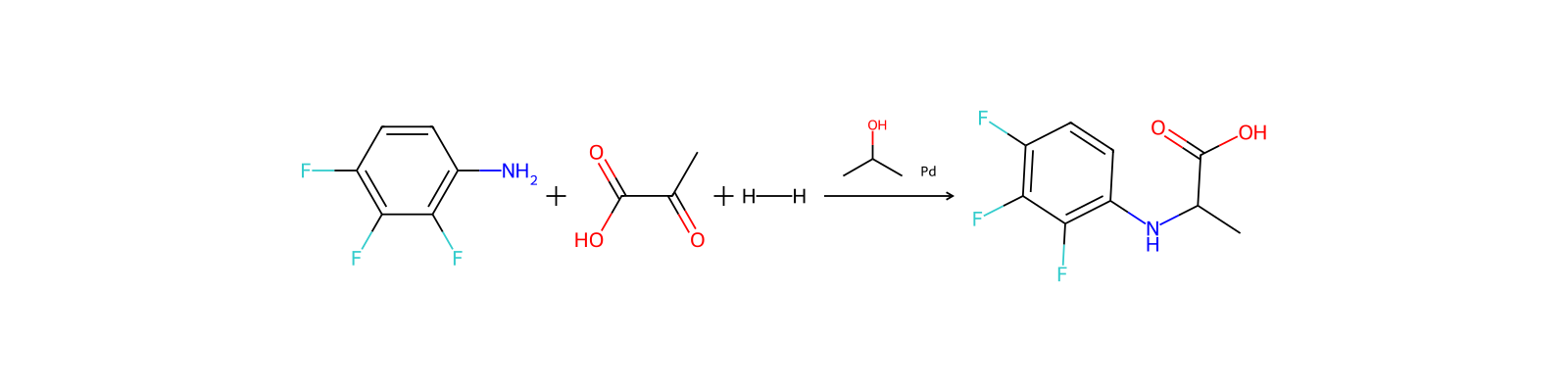
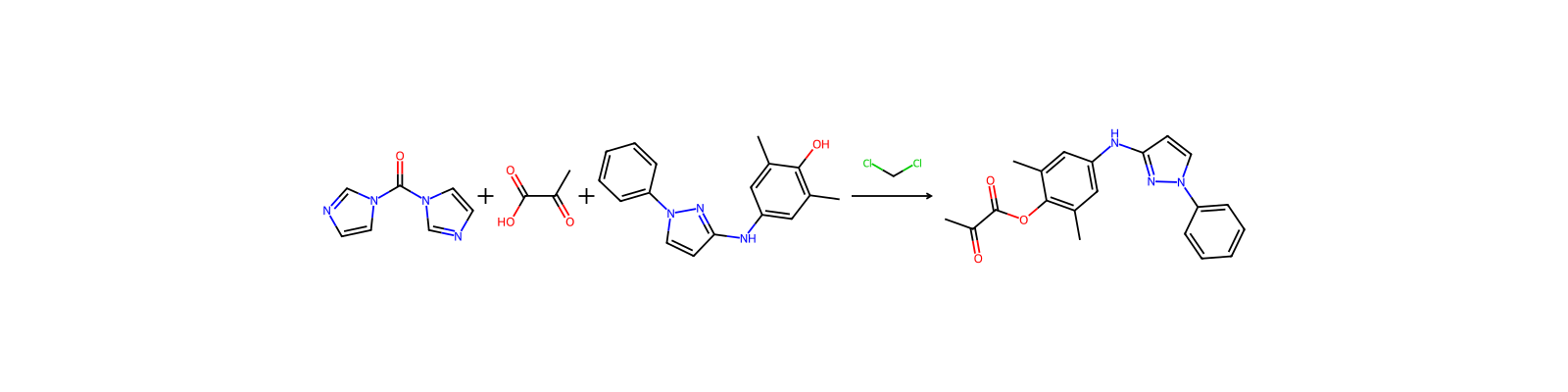
相关反应
267 条





关联笔记
加载中…