反应方程式
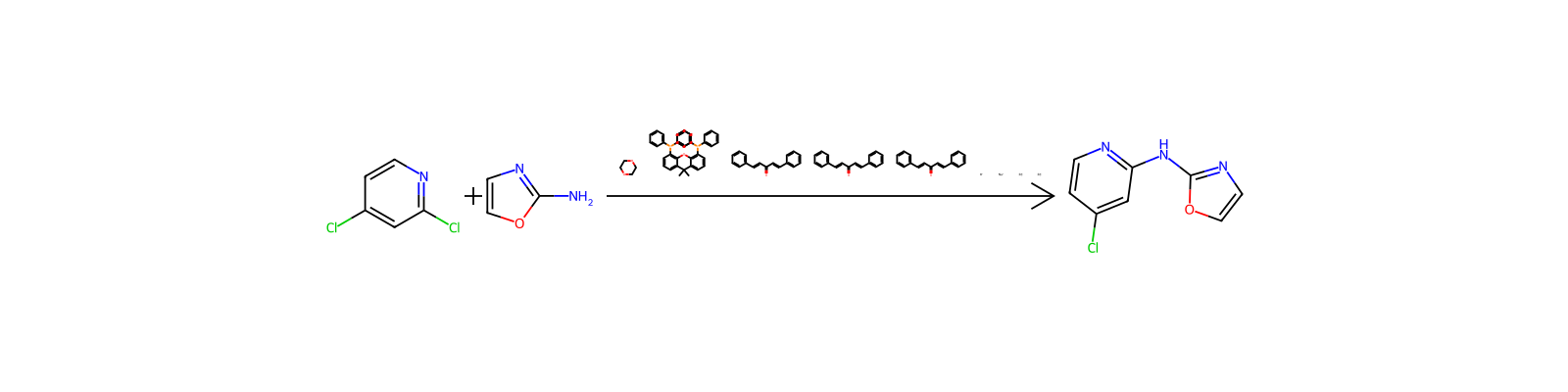
Clc1ccnc(Cl)c1.Nc1ncco1>C1COCCO1.CC1(C)c2cccc(P(c3ccccc3)c3ccccc3)c2Oc2c(P(c3ccccc3)c3ccccc3)cccc21.O=C(/C=C/c1ccccc1)/C=C/c1ccccc1.O=C(/C=C/c1ccccc1)/C=C/c1ccccc1.O=C(/C=C/c1ccccc1)/C=C/c1ccccc1.[H-].[Na+].[Pd].[Pd]>Clc1ccnc(Nc2ncco2)c1参与物





反应条件
- 温度
- 140 °C
实验过程
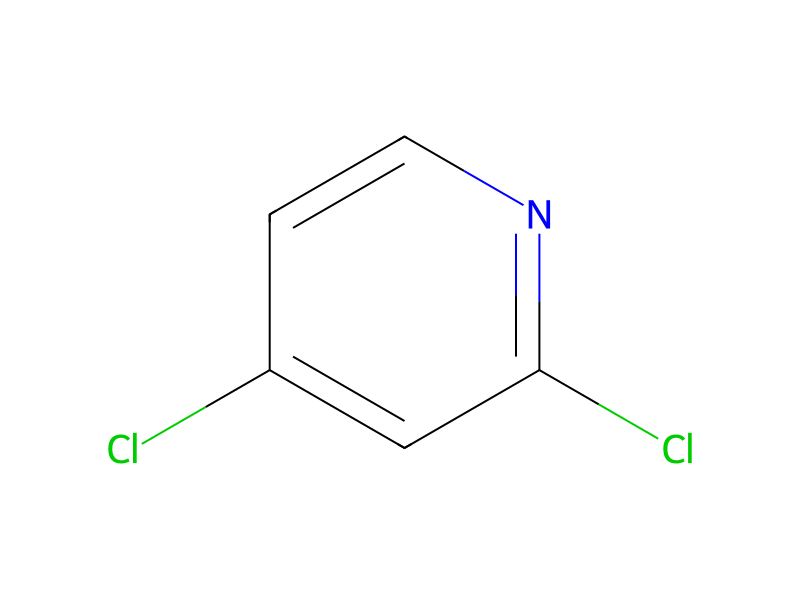
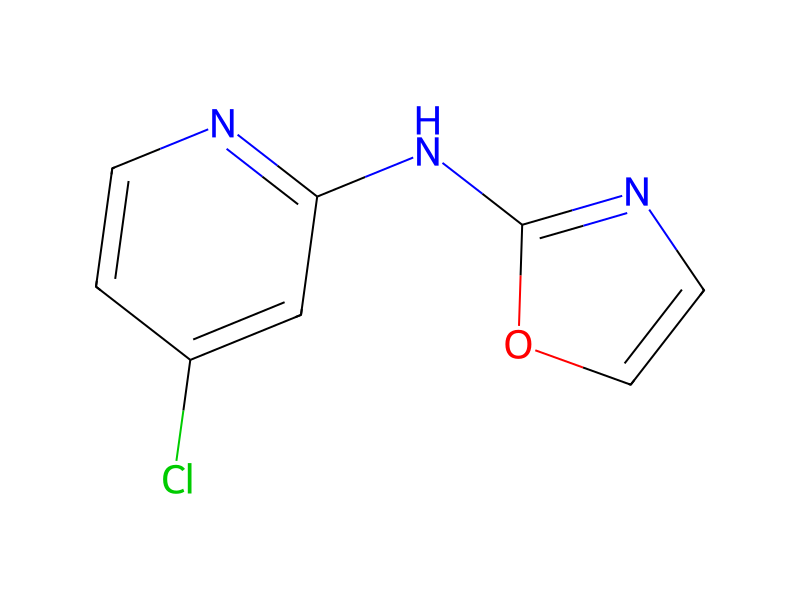
Objective: If deprotonation is rate-determining in this coupling quantitative deprotonation prior to subjection to coupling conditions should prove beneficial. To an oven dried microwave vial was added oxazol-2-amine (85 mg, 1.01 mmol) together with sodium hydride (40.5 mg, 1.01 mmol), the vial was capped and purged with nitrogen and dioxane (1 mL) was added. The mixture was then stirred at rt for 1 h (initially effervescence was observed but subsided within 20 min of stirring). To the above vial was added 2,4-dichloropyridine (0.109 mL, 1.01 mmol), TRIS(DIBENZYLIDENEACETONE)DIPALLADIUM(0) (22.89 mg, 0.02 mmol) and (9,9-dimethyl-9H-xanthene-4,5-diyl)bis(diphenylphosphine) (44.0 mg, 0.08 mmol) (Xantphos) as a solution in dioxane (2 mL) and the reaction mixture was heated to 140 °C for 1 h under microwave irradiation. Dichloromethane (10 mL) was added to the crude reaction mixture and the mixture was absorbed onto silica. The crude product was purified by flash silica chromatography, elution gradient 0 to 20% EtOAc in heptane. Pure fractions were evaporated to dryness to afford N-(4-chloropyridin-2-yl)oxazol-2-amine (6.00 mg, 3.03 %) as a pale yellow dry film. Conclusion: The formal deprotonation appears to have had no benificial effect on this coupling.
来源与证据
- ORD记录
- ord-76fdaa39a364497293ede72dc7b21aee
- 来源数据集
- 750 AstraZeneca ELN dataset
- 原始链接
- 查看来源
关联笔记
加载中…