Vapor DensityRelative vapor density (air = 1): 6.6
Physical DescriptionORANGE-TO-BROWN CRYSTALS.
Physicochemical properties
Melting point
64 · 64-65 °C(lit.)
Boiling point
259.71 °C · 259.71°C (rough estimate)
Safety & regulation
Safety information is for reference only and does not replace the supplier’s Safety Data Sheet (SDS), applicable regulations, or professional assessment.
GHS classification
GHS Classification · 4 items
Warning
H302 (52.3%): Harmful if swallowed [Warning Acute toxicity, oral]
P261, P264, P264+P265, P270, P271, P273, P280, P301+P317, P302+P352, P304+P340, P305+P351+P338, P319, P321, P330, P332+P317, P337+P317, P362+P364, P391, P403+P233, P405, and P501 (click each P-code to see the statement)
Aggregated GHS information provided per 86 reports by companies from 7 notifications to the ECHA C&L Inventory. Each notification may be associated with multiple companies.
Chemical DangersDecomposes on heating. This produces toxic and corrosive fumes including nitrogen oxides and hydrogen chloride. Reacts with strong bases and strong oxidants.
Hazard Classes and CategoriesAcute Tox. 4 (52.3%)
Safety & protection
Fire FightingUse powder, alcohol-resistant foam, water spray, carbon dioxide.
First Aid Measures · 4 items
Fresh air, rest.
Rinse and then wash skin with water and soap.
Rinse with plenty of water (remove contact lenses if easily possible).
Rinse mouth.
Safe StorageSeparated from strong oxidants and strong bases.
Chemistry & industry
Uses & manufacturing
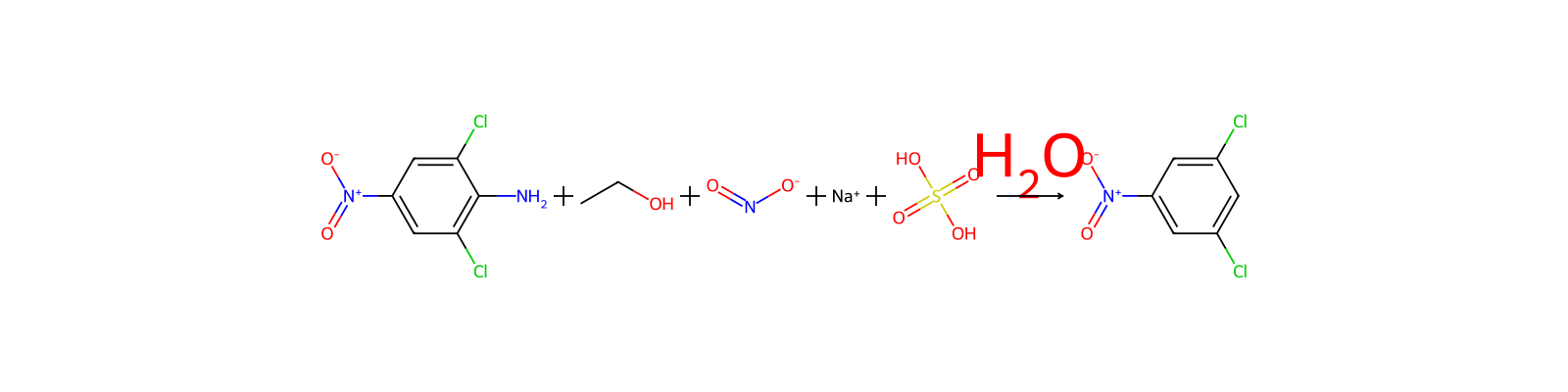
General Manufacturing InformationBenzene, 1,3-dichloro-5-nitro-: INACTIVE
Applications
Uses1,3-Dichloro-5-nitrobenzene was used as an internal standard in the 1H nuclear magnetic resonance spectroscopic method for the assay of phenylbutazone and oxyphenbutazone.
General Description1,3-Dichloro-5-nitrobenzene was tested for fungitoxicity against Aspergillus niger, A. oryzae, Trichoderma viride, Myrothecium verrucaria and Trichophyton mentagrophytes.
5 L · 5.0 L (1.3 gallons) (liquid) or 5.0 kg (11 lbs) (solid)
Excepted Quantities
Max Inner Pack (30g or 30ml) and Max Outer Pack (1Kg or 1L)
Spillage Disposal · 1 item
Personal protection: particulate filter respirator adapted to the airborne concentration of the substance. Sweep spilled substance into covered containers. If appropriate, moisten first to prevent dusting. Do NOT let this chemical enter the environment.
Eye PreventionWear safety spectacles.
Fire PreventionNO open flames.
Inhalation RiskA nuisance-causing concentration of airborne particles can be reached quickly when dispersed.
Skin PreventionProtective gloves.
Exposure PreventionPREVENT DISPERSION OF DUST!
Ingestion PreventionDo not eat, drink, or smoke during work.
Inhalation PreventionUse ventilation (not if powder).
Toxicology
Exposure RoutesThe substance can be absorbed into the body by ingestion.
Signs and Symptoms · 2 items
Cough.
Redness.
ICSC Environmental DataThis substance may be hazardous to the environment. Special attention should be given to algae. It is strongly advised not to let the chemical enter into the environment.
Safety data
PPE
dust mask type N95 (US), Eyeshields, Gloves
wgk
3
tsca
TSCA listed
ridadr
UN3077
hs_code
29049095
risk_code
36/37/38-20/21/22
Signal word
Warning
Symbol(GHS)
GHS07,GHS09
hazard_code
Xi,Xn
hazard_note
Irritant
safety_code
26-36/37-36/37/39-36
hazard_class
9
Storage Class
11 - Combustible Solids
packing_group
III
Hazard statements
H302-H319-H410
Limited Quantities
5.0 L (1.3 gallons) (liquid) or 5.0 kg (11 lbs) (solid)
Excepted Quantities
Max Inner Pack (30g or 30ml) and Max Outer Pack (1Kg or 1L)