
HRID 16133As catalyst
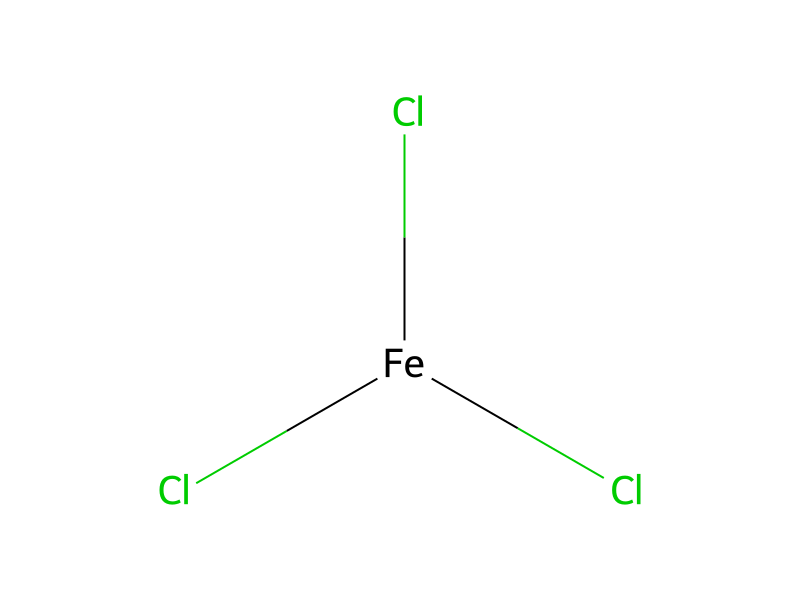
7705-08-0[Cl][Fe]([Cl])[Cl]RBTARNINKXHZNM-UHFFFAOYSA-KFerric chloride is an orange to brown-black solid. It is slightly soluble in water. It is noncombustible. When wet it is corrosive to aluminum and most metals. Pick up and remove spilled solid before adding water. It is used to treat sewage, industrial waste, to purify water, as an etching agent for engraving circuit boards, and in the manufacture of other chemicals.
7705-08-0CHEBI:30808Metals -> Metals, Inorganic Compounds
Corrosives
2.8 at 68 °F (anhydrous solid) (USCG, 1999) - Denser than water; will sink
2.90 at 25 °C
Density of 1.82; very hygroscopic; readily soluble in water, alcohol, acetone, ether /Hexahydrate/
2.9 g/cm³
2.9 @25 °C
5 to 10 mg/mL at 68 °F (NTP, 1992)
In cold water: 74.4 g/100 cc at 0 °C; in hot water: 535.7 g/100 cc at 100 °C; in acetone: 63 g/100 cc at 18 °C; very sol in alc, ether, methanol.
Slightly sol in carbon disulfide, practically insol in ethyl acetate.
Sol in glycerol
Safety information is for reference only and does not replace the supplier’s Safety Data Sheet (SDS), applicable regulations, or professional assessment.
This chemical does not meet GHS hazard criteria for 0.2% (7 of 2856) of reports.
Danger
H302 (96.6%): Harmful if swallowed [Warning Acute toxicity, oral]
P260, P264, P264+P265, P270, P273, P280, P301+P317, P301+P330+P331, P302+P352, P302+P361+P354, P304+P340, P305+P354+P338, P316, P317, P321, P330, P332+P317, P362+P364, P363, P405, and P501 (click each P-code to see the statement)
Aggregated GHS information provided per 2856 reports by companies from 27 notifications to the ECHA C&L Inventory. Each notification may be associated with multiple companies.
Danger
Chemical: Iron chloride (FeCl3)
Iron chloride (FeCl3) is listed on the EPA's Chemical Data Reporting (CDR) system. Manufacturers and importers of Iron chloride (FeCl3) are required to report information about their production and use of this chemical to the EPA under the Toxic Substances Control Act (TSCA). (40 eCFR Part 711)
REACH registered substance: Iron trichloride (EC: 231-729-4)
Iron (III) chloride: Does not have an individual approval but may be used under an appropriate group standard
The New Jersey Worker and Community Right to Know Act requires public and private employers to provide information about hazardous substances at their workplaces. (N.J.S.A. 34:5A-1 et. seq.)
Corrosive
Corrosive
Special Hazards of Combustion Products: Irritating hydrogen chloride fumes may form in fire. (USCG, 1999)
An ovine model of maternal iron poisoning in pregnancy was used to examine the placental transport of deferoxamine and ferrioxasmine and to follow maternal and fetal serum iron concentrations when maternal serum iron levels exceeded total iron-binding capacity. Ewes in the third stage of gestation underwent hysterectomy and delivery of the fetal head through an abdominal incision while under ketamine and halothane anesthesia. The fetal external jugular vein was catheterized for sampling of venous blood while the fetus remained in utero. Administration of deferoxamine mesylate or ferrioxamine mesylate IV to ewes was not accompanied by measurable deferoxamine or ferrioxamine in fetal blood. In a final experiment, four gravid ewes in a control group received 2 mg/kg maternal body wt iron IV over 60 minutes. An experimental group comprision another four ewes received similar doses of iron but then received 50 mg/kg deferoxamine mesylate IV over 15 minutes. Control and deferoxamine ewes reached similar peak maternal serum iron concentration (2,479 + or - 266 and 2,121 + or - 343 ug/dL, respectively). The markedly elevated maternal serum iron concentrations were not accompanied by meaningful elevations in fetal serum iron level over baseline values. Maternal deferoxamine infusion resulted in a more rapid fall in maternal serum iron concentrations but had no effect on fetal serum iron levels. The ovine fetus appears to be protected from elevated maternal serum iron concentrations in the last trimester of prenancy. It could not be demonstrated that meaningful quantities of deferoxamine or ferrioxamine cross the placenta in the last trimester.
Used as a medication, an analytical reagent, an etching agent (engraving, photography, and printed circuits), a catalyst, a mordant, a disinfectant, a pigment, and a feed additive; also used in sewage treatment and water purification; [HSDB] Found in nature as the mineral molysite; Used in photography, to make other iron salts, pigments, and inks, and for chlorinating silver and copper ores; [Merck Index]





430 g/kg solution at 0 °C; 480 g/kg solution at 20 °C; 743 g/kg solution at 40 °C
Readily soluble in liquids having donor properties, such as alcohols, ketones, ethers, nitriles, amines, and liquid sulfur dioxide, but only sparingly soluble in nonpolar solvents such as benzene and hexane.
599 °F at 760 mmHg (Decomposes) (NTP, 1992)
About 316 °C
583 °F (NTP, 1992)
[ACGIH] approximately 300 °C
304 °C
Brownish-yellow or orange monoclinic crystals; usually slight odor of HCl; pH of 0.1 molar aqueous solution: 2.0; mp: about 37 °C. /Hexahydrate/
37 °C
307.6 °C
1 mmHg at 381 °F (NTP, 1992)
VP: 1 mm Hg at 194.0 °C
VP: 1 Pa at 118 °C; 100 Pa at 190 °C; 100 kPa at 319 °C
Vapor pressure at 20 °C: negligible
1 [mm Hg] @194 °C
Excerpt from ERG Guide 154 [Substances - Toxic and/or Corrosive (Non-Combustible)]:
· Non-combustible, substance itself does not burn but may decompose upon heating to produce corrosive and/or toxic fumes.
· Non-combustible, substance itself does not burn but may decompose upon heating to produce corrosive and/or toxic fumes.
Not combustible. Gives off irritating or toxic fumes (or gases) in a fire.
Inhalation of dust may irritate nose and throat. Ingestion causes irritation of mouth and stomach. Dust irritates eyes. Prolonged contact with skin causes irritation and burns. (USCG, 1999)
Excerpt from ERG Guide 154 [Substances - Toxic and/or Corrosive (Non-Combustible)]:
· TOXIC and/or CORROSIVE; inhalation, ingestion or contact (skin, eyes) with vapors, dusts or substance may cause severe injury, burns or death.
· TOXIC and/or CORROSIVE; inhalation, ingestion or skin contact with material may cause severe injury or death.
Toxic by ingestion: 10 tablets (0.3 g Fe/tablet) causes mild illness in children; 20 tablets cause severe intoxication; Mortality rate was 1% in 474 acute iron poisoning cases; [ACGIH] Corrosive to skin; [Quick CPC] An irritant that may cause liver injury; [Merck Index] Decomposed by water forming hydrogen chloride; A skin, eye, and respiratory tract irritant; Corrosive on ingestion; [ICSC] A skin, eye, nose, and throat irritant; Prolonged skin contact can case burns; [CHRIS] A skin and strong eye irritant; Toxic by ingestion; [Aldrich MSDS] See Iron salts, soluble. See Ferric chloride hexahydrate.
1773 157
2582 154
Substance added directly to human food affirmed as generally recognized as safe (GRAS).
Ferric chloride is an indirect food additive for use only as a component of adhesives.
Acids, Strong Non-oxidizing
Acids, Strong Non-oxidizing
Ferric chloride (not > 2% of suspending, dispersing agent, pesticide formulation) is exempted from the requirement of a tolerance when used in accordance with good agricultural practice as inert (or occasionally active) ingredients in pesticide formulations applied to growing crops only.
Excerpt from ERG Guide 157 [Substances - Toxic and/or Corrosive (Non-Combustible / Water-Sensitive)]:
Excerpt from ERG Guide 154 [Substances - Toxic and/or Corrosive (Non-Combustible)]:
In case of fire in the surroundings, use appropriate extinguishing media.
Fresh air, rest. Refer for medical attention.
Remove contaminated clothes. Rinse skin with plenty of water or shower.
First rinse with plenty of water for several minutes (remove contact lenses if easily possible), then refer for medical attention.
Rinse mouth. Give one or two glasses of water to drink. Do NOT induce vomiting. Refer for medical attention .
· CALL 911. Then call emergency response telephone number on shipping paper. If shipping paper not available or no answer, refer to appropriate telephone number listed on the inside back cover.
· ELIMINATE all ignition sources (no smoking, flares, sparks or flames) from immediate area.
· CALL 911. Then call emergency response telephone number on shipping paper. If shipping paper not available or no answer, refer to appropriate telephone number listed on the inside back cover.
· ELIMINATE all ignition sources (no smoking, flares, sparks or flames) from immediate area.
EYES: First check the victim for contact lenses and remove if present. Flush victim's eyes with water or normal saline solution for 20 to 30 minutes while simultaneously calling a hospital or poison control center. Do not put any ointments, oils, or medication in the victim's eyes without specific instructions from a physician. IMMEDIATELY transport the victim after flushing eyes to a hospital even if no symptoms (such as redness or irritation) develop.
Excerpt from ERG Guide 154 [Substances - Toxic and/or Corrosive (Non-Combustible)]:
General First Aid:
General First Aid:
· Wear positive pressure self-contained breathing apparatus (SCBA).
· Wear positive pressure self-contained breathing apparatus (SCBA).
If material involved in fire: Extinguish fire using agent suitable for type of surrounding fire. (Material itself does not burn or burns with difficulty.) /Ferric chloride, anhydrous/
If material on fire or involved in fire: Extinguish fire using agent suitable for type of surrounding fire. (Material itself does not burn or burns with difficulty.) Use water in flooding quantities as fog. Cool all affected containers with flooding quantities of water. Apply water from as far a distance as possible. /Ferric chloride, solution/
Solution of ferric chloride should be stored in polyethylene bottles and should be protected from exposure to light and heat. ...If solutions ...become cloudy, they should be discarded. Solution stored in glass bottles must be refrigerated. Solution stored in glass bottles may reach alkali from glass and the rubber stoppers, forming yellow precipitate of ferric oxide.
Keep well closed.
Environmental consideration: Land spill: Dig a pit, pond, lagoon, holding area to contain liquid or solid material. /SRP: If time permits, pits, ponds, lagoons, soak holes, or holding areas should be sealed with an impermeable flexible membrane liner./ Cover solids with a plastic sheet to prevent dissolving in rain or fire fighting water. /Ferric chloride, anhydrous/
Environmental considerations: Land spill: Dig a pit, pond, lagoon, holding area to contain liquid or solid material. /SRP: If time permits, pits, ponds, lagoons, soak holes, or holding areas should be sealed with an impermeable flexible membrane liner./ Dike surface flow using soil, sand bags, foamed polyurethane, or foamed concrete. Absorb bulk liquid with fly ash, cement powder, or commercial sorbents. Neutralize with agricultural lime (CaO), crushed limestone (CaCO3) or sodium bicarbonate (NaHCO3). /Ferric chloride, solution/
Environmental consideration: Water spill: Neutralize with agricultural lime (CaO), crushed limestone (CaCO3) or sodium bicarbonate (NaHCO3). Use mechanical dredges or lifts to remove immobilized masses of pollutants and precipitates. Adjust pH to neutral (pH= 7). /Ferric chloride, solution/
Environmental considerations: Water spill: Neutralize with agricultural lime (CaO), crushed limestone (CaCO3) or sodium bicarbonate (NaHCO3). Adjust pH to neutral (pH= 7). Use mechanical dredges or lifts to remove immobilized masses of pollutants and precipitates. /Ferric chloride, anhydrous/
Environmental considerations: Air spill: Apply water spray or mist to knock down vapors. /Ferric chloride, solution/
Excerpt from ERG Guide 157 [Substances - Toxic and/or Corrosive (Non-Combustible / Water-Sensitive)]:
Excerpt from ERG Guide 154 [Substances - Toxic and/or Corrosive (Non-Combustible)]:
SRP: The most favorable course of action is to use an alternative chemical product with less inherent propensity for occupational exposure or environmental contamination. Recycle any unused portion of the material for its approved use or return it to the manufacturer or supplier. Ultimate disposal of the chemical must consider: the material's impact on air quality; potential migration in soil or water; effects on animal, aquatic, and plant life; and conformance with environmental and public health regulations.
Neutralization & landfill: Bury neutralized (with lime or soda ash) waste material in an approved landfill or dispose of through a licensed waste disposal firm.
The following wastewater treatment technologies have been investigated for iron (Fe+2): Concentration process: Biological treatment. /Iron (Fe+2)/
Personal protection: particulate filter respirator adapted to the airborne concentration of the substance. Do NOT let this chemical enter the environment. Sweep spilled substance into covered plastic containers. If appropriate, moisten first to prevent dusting.
The effect of di- and trivalent iron on the intestinal absorption of aluminum (Al) was studied in an in situ perfusion system of rat small intestine in combination with systemic and portal blood sampling. The small intestine of female Wistar rats (6 animals/group) was perfused with media containing 10.0, 15.0, 20.0, and 25.0 mmol/L Al as aluminum chloride hexahydrate (AlCl3.6H2O), with or without 5 mmol/L ferrous chloride tetrahydrate (FeCl2.4H2O) or ferric chloride hexahydrate (FeCl3.6H2O) for 60 min. The disappearance of Al or Fe from the perfusion medium, which is a measure for uptake from the intestinal lumen, was calculated. After perfusion, samples of small intestine were collected. Control tissue samples were taken from a rat perfused with saline for 60 min and from a nonperfused rat. In the rats perfused with Al and/or Fe there was no morphological damage to the intestinal wall compared with the saline and nonperfused controls. Fe(III) did not affect Al disappearance at any point during perfusion (p>0.05 for all concentrations of Al perfusion media). Al appeared after the 60 min perfusion period in both systemic and portal blood. Both Fe(II) and Fe(III) were absorbed after 60 min perfusion, with the divalent iron being more extensively absorbed. The rise of the Al level in portal blood was slightly higher than that in systemic blood suggesting a possible liver trapping of Al before entering the peripheral circulation. Fe(III) did not affect Al absorption during 60 min perfusion for all concentrations of Al perfusion media (0.10< p<0.25). /Ferric chloride hexahydrate/
Benzo(a)pyrene (0.5 mg), in itself weakly carcinogenic, when given in combination with ferric chloride (0.16 mg) or iodine (0.2 mg), alone noncarcinogen, induced a number of tumors of different parts of the respiratory tract of Syrian golden hamsters.
TLm Daphnia 15 ppm/96 hr fresh water /Conditions of bioassay not specified/
LC50 Ceriodaphnia dubia (Water flea) 30.06 mg/L/48 hr (95% confidence interval: 28.20-31.72 mg/L); static
LC50 Gambusia affinis (Western mosquitofish) >26 mg/L/24, 48, 96 hr; static
LC50 Nitocra spinipes (Harpacticoid copepod) 21 mg/L/96 hr (95% confidence interval: 16-28 mg/L); static
For more Ecotoxicity Values (Complete) data for FERRIC CHLORIDE (7 total), please visit the HSDB record page.
/AQUATIC SPECIES/ Harmful to aquatic life in very low concentrations.
/AQUATIC SPECIES/ Among populations of Paracentrotus lividus living near the sewage outlet of Marseilles' conurbation, ...individuals with brown to black gonads /have been observed/. An ultrastructural study demonstrated the presence of extracellular and intracellular crystals. In the latter they are in nucleus, vacuoles and cytoplasm of phagocytic coelomocytes. An X-ray microanalysis indicates the presence of iron, chlorine and sulfur in these crystals. ...A relationship between this bioaccumulation and the release into coastal water of iron chloride from the sewage treatment plant of Marseilles /is proposed/. This element may be found in both the coelomic fluid and food of sea-urchin. It is collected and transformed by phagocytic coelomocytes. When this bioaccumulation becomes excessive coelomocytes are injured and free crystals may be found within the gonads and hemal system.
Cough. Sore throat.
Redness. Pain.
Redness. Pain. Blurred vision.
Abdominal pain. Vomiting. Diarrhoea. Shock or collapse.
/CASE REPORTS/ Contact sensitization to iron and positive patch test to a 2% ferric chloride solution were reported in a 66 yr old white male tool maker. The patient's 5 yr history of allergic contact dermatitis was not associated with any other exposure to metals. This is the second documented case of allergic contact sensitization to iron.
/CASE REPORTS/ ...A 25-y-old woman presented with vomiting after ingestion of 200 mL ferric chloride solution (pH 1.0). She had hypoxemia and severe metabolic acidosis with respiratory alkalosis initially. Three hours after her ingestion she presented with drowsy consciousness, tachycardia, tachypnea and protracted vomiting. Laboratory studies showed leukocytosis, elevated glucose, aspartate aminotransferase, amylase, lactate dehydrogenase, and total bilirubin, coagulation defect and hemolysis. Aspiration pneumonia and vision loss were also noted. Four hours after ingestion cardiopulmonary arrest suddenly occurred after severe vomiting and she expired. Toxicological studies showed marked elevation of serum iron (2440 ug/dL); the estimated oral dose of ferric chloride was equivalent to 11.52 g (230 mg/kg) of elemental iron. This patient did not receive deferoxamine due to rapid deterioration and a late diagnosis.
/OTHER TOXICITY INFORMATION/ Diagnosis of iron intraocular foreign body has usually been based on x-ray demonstration of an opaque foreign body by establishing that the foreign body can be made to move with a magnet, but in some instances either one or both of these diagnostic measures are inconclusive, yet clinical findings suggestive of siderosis indicate that there may be an intraocular iron foreign body. To help establish the diagnosis, analysis of the aqueous humor for iron, to detect an abnormally high content, has proven useful in a few cases. Also as a help in diagnosis, particularly in eyes where surgery for cataract is required, histologic staining of an excised piece of iris or analysis of the lens for iron has been helpful diagnostically. However, to make a definite diagnosis on the basis of histologic examination it is essential to rule out hemosiderosis, which can be produced by persistent intraocular hemorrhage, because the histologic findings and iron staining are indistinguishable in these two conditions. ... /Iron Compounds/
/LABORATORY ANIMALS: Acute Exposure/ ...Injection of 0.05 - 0.1 cc of 10% solution of ferric chloride into vitreous humor of rabbits caused in 1-4 wk a loss of pupillary response to light, marked drop in resting potential of eye measured at cornea and subnormal intraocular pressure.
/LABORATORY ANIMALS: Acute Exposure/ A single injection of 5 or 10 uL of ferrous or ferric chloride into rat or cat sensorimotor cortex resulted in chronic recurrent focal paroxysmal electroencaphalographic discharges as well as behavioral convulsions and electrical seizures. Recurrent focal epileptiform discharge caused by cortical injection of iron salts suggests that the development of human posttraumatic epilepsy may depend, in part, on the neurochemical alterations induced by the principal metallic ions found in whole blood.
/LABORATORY ANIMALS: Acute Exposure/ ...A thermocouple was inserted under a carotid artery of the anesthetized rat and vessel temperature was recorded continuously. Arterial injury was induced by FeCl3 solution applied topically to the artery above the thermocouple. To validate the relationship between thrombotic occlusion and vessel temperature, blood flow velocity, proximal to the injury, and temperature were recorded simultaneously. Temperature decreased rapidly when velocity averaged 24 +/- 12% of control and velocity did not differ from zero within 20 sec. In normal vessels, average flow velocity did not decrease significantly from control until a fixed stenosis decreased diameter by 78%. Average time to occlusion (TTO), signaled by the abrupt temperature inflection, ranged from 56 +/- 4 min to 14 +/- 1 min after 10 and 65% FeCl3 application respectively. Vessel segments were fixed at various times after FeCl3 exposure and examined by scanning electron microscopy. Endothelial damage was observed and was associated with thrombus composed of activated platelets, fibrin strands and entrapped erythrocytes. The results demonstrate that FeCl3 dose-dependently induced formation of an occlusive mixed thrombus that was indexed by monitoring the time between FeCl3 application and a rapid temperature decrease in the carotid artery of the rat.
/LABORATORY ANIMALS: Subchronic or Prechronic Exposure/ The effects of inhaled iron-chloride on rabbit lung alveolar macrophages, alveolar epithelial cells, and surfactant were studied. Animals were exposed for 2 months to either 3.1 mg/cu cm or 1.4 mg/cu m nebulized iron-chloride. Lung and alveolar macrophage morphology were examined under light and electron microscopy. Macrophage oxidative metabolism and lung phospholipids were also analyzed. Iron-chloride inhalation increased macrophage number and caused them to aggregate into large granulomas in the alveoli. Macrophage ultrastructure revealed marked alterations with enlarged lysosomal complexes that often contained iron rich inclusions. Oxidative metabolism was not affected. Rabbits exposed to high iron-chloride concentrations showed a small increase in the volume density of type-II cells and a significant increase in total phospholipid concentration of the lung.
...There is concern that the individual with metabolic defects that impair the ability to regulate iron absorption will be at risk from excessive exposure to iron, primarily as a result of acceleration of accumulation of iron in the body and an earlier onset of clinical symptoms of the disease. /Iron salts/
Substance added directly to human food affirmed as generally recognized as safe (GRAS).
Ferric chloride is an indirect food additive for use only as a component of adhesives.
Ferric chloride (not > 2% of suspending, dispersing agent, pesticide formulation) is exempted from the requirement of a tolerance when used in accordance with good agricultural practice as inert (or occasionally active) ingredients in pesticide formulations applied to growing crops only.
Persons in charge of vessels or facilities are required to notify the National Response Center (NRC) immediately, when there is a release of this designated hazardous substance, in an amount equal to or greater than its reportable quantity of 1000 lb or 454 kg. The toll free number of the NRC is (800) 424-8802; In the Washington D.C. metropolitan area (202) 426-2675. The rule for determining when notification is required is stated in 40 CFR 302.4 (section IV. D.3.b).
Ferric chloride is designated as a hazardous substance under section 311(b)(2)(A) of the Federal Water Pollution Control Act and further regulated by the Clean Water Act Amendments of 1977 and 1978. These regulations apply to discharges of this substance. This designation includes any isomers and hydrates, as well as any solutions and mixtures containing this substance.
Using Disinfectants or Biocides [Category: Clean]
Intalagio printing [Category: Hobbies]
For ferric chloride (USEPA/OPP Pesticide Code: 034901) there are 0 labels match. /SRP: Not registered for current use in the U.S., but approved pesticide uses may change periodically and so federal, state and local authorities must be consulted for currently approved uses./
Treatment of sewage and industrial wastes; etching agent for engraving, photography, and printed circuitry; condensation catalyst in Friedel-crafts reactions; mordant; oxidizing, chlorinating, and condensing agent; disinfectant; pigment; feed additive; water purification.
Reagent useful in gross screening for phenylketonuria and as guide to adequacy of dietary management of phenylketonuria.
2023: 550,000,000 - <700,000,000 lb
(1984) 1.16X10+11 g
(1994) 200,000 tons (as 100% FeCl3)
Sewage and waste water treatment, 80% ; industrial and potable water treatment, 15%; misc, 5% (1984)
CHEMICAL PROFILE: Ferric chloride. Sewage and waste water treatment, 70%; (waste water sludge conditioning, 50%; phosphates removal, 20%); industrial and potable water treatment, 15%; other, including electronic and photographic etchant, catalyst and asphalt walling, 15%.
CHEMICAL PROFILE: Ferric chloride. Demand: 1987: 185,000 tons; 1988: 185,000 tons; 1992 /projected/: 194,000 tons (Imports and exports are negligible).
... Produced industrially by reaction of dry chlorine with scrap iron at 500-700 °C. The process is known as direct chlorination.
... Carried out in a reactor with an acid-resistant liner, iron scrap and dry chlorine gas react in a eutectic melt of iron(III) chloride and potassium or sodium chloride ... First, iron scrap is dissolved in the melt at 600 °C and oxidized to iron(II) chloride by iron(III) chloride. Iron(II) chloride then reacts with chlorine to yield iron(III) chloride, which sublimes and is collected in cooled condensation chambers.
Action of chlorine on ferrous sulfate or chloride.
Commercial process generally involves the reaction of chlorine gas on red hot iron.
For more Methods of Manufacturing (Complete) data for FERRIC CHLORIDE (6 total), please visit the HSDB record page.
Ferric chloride solution, reagent, 5% and 10%.
Grades: Anhydrous 96%; 42 deg Be solution, photographic and sewage grades.
Anhydrous; Hydrate; Reagent; 46% solution in water.
Information on 1 consumer products that contain Ferric chloride-Iron (III) chloride in the following categories is provided:
Information on 1 consumer products that contain Iron chloride in the following categories is provided:
Not Known or Reasonably Ascertainable
Iron chloride (FeCl3): ACTIVE
/Has been patented for use/ in the manufacture of catalytic asphalt.
UsesIron(III) chloride occurs naturally as the mineral molysite. The compound is widely used to prepare a number of iron(III) salts. Also, it is applied in sewage and industrial waste treatment processes. It also is used in the manufacture of dyes, pigments and inks; as a chlorinating agent; and as a catalyst in chlorination reactions of aromatics.In the laboratory, anhydrous Ferric chloride(FeCl3)can be used as an alternative to anhydrous AlCl3 in Friedel-Crafts reactions, like the alkylation or acylation of aromatic rings. Being a small, highly charged metal, it polarises reagents like halogenoalkanes (alkyl halides), which generates carbocations (carbenium ions) that then attack benzene rings, as in the synthesis here.
DescriptionFerric chloride (iron(IH)chloride, FeCl3, CAS No. 7705-08-0) may be prepared from iron and chlorine or from ferric oxide and hydrogen chloride. The pure material occurs as hydroscopic, hexagonal, dark crystals. Ferric chloride hexahydrate (iron(III)chloride hexahydrate, FeCl3*6H2O, CAS No. 10025-77-1) is readily formed when ferric chloride is exposed to moisture.
UsesTreatment of sewage and industrial wastes; etching agent for engraving, photography, and printed circuitry; condensation catalyst in FriedelCrafts reactions; mordant; oxidizing, chlorinating, and condensing agent; disinfectant; pigment; feed additive; wat
UsesIt is used for sewerage treatment of industrial wastes, chloride hydrometallurgy (Silgarin process for the production of silicon), drinking water production, production of precursor for polyvinyl chloride (PVC), and copper-based metals in printed circuit boards. Iron (III) chloride is used as catalyst for the reaction of ethylene with chlorine, as a leaching agent, and as a drying reagent in certain reactions. It is a mild oxidizing agent and converts copper(I) chloride in to copper(II) chloride. As a moderately strong Lewis acid, it catalyzes chlorination of aromatic compounds and Friedel-Crafts reactions. Along with sodium iodide, it brings about reduction of organic azides to corresponding amines. It is useful in the detection of phenols and phenolic derivatives, gamma-hydroxybutyric acids, and also in Trinder spot test for detecting salicylic acids.
UsesFerric Chloride is a nutrient and dietary supplement that serves as a source of iron.
General DescriptionFerric chloride is an orange to brown-black solid. Ferric chloride is slightly soluble in water. Ferric chloride is noncombustible. When wet Ferric chloride is corrosive to aluminum and most metals. Pick up and remove spilled solid before adding water. Ferric chloride is used to treat sewage, industrial waste, to purify water, as an etching agent for engraving circuit boards, and in the manufacture of other chemicals.
DefinitionChEBI: Iron trichloride is an iron coordination entity. It has a role as a Lewis acid and an astringent.
For more Non-Human Toxicity Excerpts (Complete) data for FERRIC CHLORIDE (11 total), please visit the HSDB record page.