
uspto-grants-1986_09 · 10.6084/m9.figshare.5104873.v1 · US04614719
查看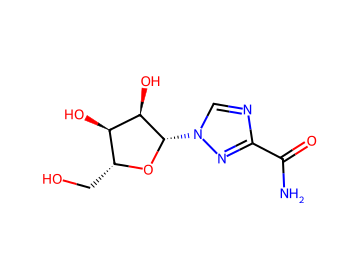
IDENTITY
COMPUTED
PROPERTIES
-1.85
log Kow = -1.85
-2.6
Odorless
Tasteless
Colorless
White crystalline powder
greater than or equal to 100 mg/mL at 66 °F (NTP, 1992)
Soluble
Water-soluble
Slightly soluble in alcohol.
In water, 142 mg/mL at 25 °C
3.32e+01 g/L
When heated to decomposition it emits toxic fumes of /nitrogen oxides/.
345 to 349 °F (NTP, 1992)
174-176 °C
166-168 °C (aq ethanol); 174-176 °C (ethanol).
174 - 176 °C
Specific optical rotation: -36.5 deg at 25 °C/D
Ribavirin is a white powder. Exists in two polymorphic forms. (NTP, 1992)
Solid
Ribavirin solutions contain no preservatives and are stable for 24 hr when stored under sterile conditions at a room temperature of 20-30 °C. Following addition of the reconstituted solution to the reservoir of the SPAG-2 and further dilution with sterile water for injection or inhalation (additive free), the ribavirin solution for nebulization should be discarded within 24 hr.
152.15 Ų [M+Na]+ [CCS Type: TW; Method: calibrated with polyalanine and drug standards];149.81 Ų [M+H]+ [CCS Type: TW; Method: calibrated with polyalanine and drug standards];153.31 Ų [M+K]+ [CCS Type: TW; Method: calibrated with polyalanine and drug standards];142.23 Ų [M+H-H2O]+ [CCS Type: TW; Method: calibrated with polyalanine and drug standards]
Exists in two polymorphic forms
GHS
Danger
H317 (47.4%): May cause an allergic skin reaction [Warning Sensitization, Skin];H319 (49.1%): Causes serious eye irritation [Warning Serious eye damage/eye irritation];H335 (57.9%): May cause respiratory irritation [Warning Specific target organ toxicity, single exposure; Respiratory tract irritation];H341 (58.8%): Suspected of causing genetic defects [Warning Germ cell mutagenicity];H360 (51.8%): May damage fertility or the unborn child [Danger Reproductive toxicity];H361 (48.2%): Suspected of damaging fertility or the unborn child [Warning Reproductive toxicity];H373 (48.2%): May causes damage to organs through prolonged or repeated exposure [Warning Specific target organ toxicity, repeated exposure];H412 (47.4%): Harmful to aquatic life with long lasting effects [Hazardous to the aquatic environment, long-term hazard]
P203, P260, P261, P264+P265, P271, P272, P273, P280, P302+P352, P304+P340, P305+P351+P338, P318, P319, P321, P333+P317, P337+P317, P362+P364, P403+P233, P405, and P501 (click each P-code to see the statement)
Aggregated GHS information provided per 114 reports by companies from 11 notifications to the ECHA C&L Inventory. Each notification may be associated with multiple companies.;Information may vary between notifications depending on impurities, additives, and other factors. The percentage value in parenthesis indicates the notified classification ratio from companies that provide hazard codes. Only hazard codes with percentage values above 10% are shown. For more detailed information, please visit ECHA C&L website.
HAZARDS
Hazard Traits - Developmental Toxicity; Reproductive Toxicity;Authoritative List - Prop 65;Report - regardless of intended function of ingredient in the product
1H-1,2,4-Triazole-3-carboxamide, 1-.beta.-D-ribofuranosyl-: Does not have an individual approval but may be used as a component in a product covered by a group standard. It is not approved for use as a chemical in its own right.
Flash point data for this chemical are not available; however, it is probably combustible. (NTP, 1992)
SYMPTOMS: Symptoms of exposure to this compound may include headache, abdominal cramps, fatigue, reversible anemia and elevation of bilirubin concentrations. In infants, it may cause deterioration of respiratory function. In adults, it may cause chronic obstructive lung disease or asthma, dyspnea, chest soreness, pulmonary function deterioration, bacterial pneumonia, pneumothorax, apnea, ventilator dependence, cardiac arrest, hypotension, digitalis toxicity, reticulocytosis, rash and conjunctivitis.;ACUTE/CHRONIC HAZARDS: When heated to decomposition this compound emits toxic fumes of nitrogen oxides. (NTP, 1992)
Manufacturers, packers, and distributors of drug and drug products for human use are responsible for complying with the labeling, certification, and usage requirements as prescribed by the Federal Food, Drug, and Cosmetic Act, as amended (secs 201-902, 52 Stat. 1040 et seq., as amended; 21 U.S.C. 321-392).
The Approved Drug Products with Therapeutic Equivalence Evaluations List identifies currently marketed prescription drug products, incl ribavirin, approved on the basis of safety and effectiveness by FDA under sections 505 and 507 of the Federal Food, Drug, and Cosmetic Act.
Alcohols and Polyols;Amides and Imides;Amines, Phosphines, and Pyridines
RIBAVIRIN may be sensitive to prolonged exposure to light.
Water soluble.
Skin Sens. 1 (47.4%);Eye Irrit. 2 (49.1%);STOT SE 3 (57.9%);Muta. 2 (58.8%);Repr. 1B (51.8%);Repr. 2 (48.2%);STOT RE 2 (48.2%);Aquatic Chronic 3 (47.4%)
SAFETY
Fires involving this material can be controlled with a dry chemical, carbon dioxide or Halon extinguisher. (NTP, 1992)
EYES: First check the victim for contact lenses and remove if present. Flush victim's eyes with water or normal saline solution for 20 to 30 minutes while simultaneously calling a hospital or poison control center. Do not put any ointments, oils, or medication in the victim's eyes without specific instructions from a physician. If symptoms (such as redness or irritation) develop, immediately transport the victim to a hospital.;SKIN: IMMEDIATELY flood affected skin with water while removing and isolating all contaminated clothing. Gently wash all affected skin areas thoroughly with soap and water. If symptoms such as redness or irritation develop, IMMEDIATELY call a physician and be prepared to transport the victim to a hospital for treatment.;INHALATION: IMMEDIATELY leave the contaminated area; take deep breaths of fresh air. If symptoms (such as wheezing, coughing, shortness of breath, or burning in the mouth, throat, or chest) develop, call a physician and be prepared to transport the victim to a hospital. Provide proper respiratory protection to rescuers entering an unknown atmosphere. Whenever possible, Self-Contained Breathing Apparatus (SCBA) should be used; if not available, use a level of protection greater than or equal to that advised under Protective Clothing.;INGESTION: DO NOT INDUCE VOMITING. If the victim is conscious and not convulsing, give 1 or 2 glasses of water to dilute the chemical and IMMEDIATELY call a hospital or poison control center. Be prepared to transport the victim to a hospital if advised by a physician. If the victim is convulsing or unconscious, do not give anything by mouth, ensure that the victim's airway is open and lay the victim on his/her side with the head lower than the body. DO NOT INDUCE VOMITING. IMMEDIATELY transport the victim to a hospital. (NTP, 1992)
Commercially available ribavirin powder for inhalation solution should be stored in tight containers in a dry place at 15-25 °C. ... Ribavirin inhalation solutions contain no preservatives and are stable for 24 hours when stored under sterile conditions at a room temperature of 20-30 °C. ... Ribavirin capsules or tablets should be stored at 25 °C, but may be exposed temperatures ranging from 15-30 °C. Ribavirin oral solution should be stored at 2-8 °C or at 25 °C, but may be exposed to temperatures ranging from 15-30 °C.
SMALL SPILLS AND LEAKAGE: If you spill this chemical, you should dampen the solid spill material with water, then transfer the dampened material to a suitable container. Use absorbent paper dampened with water to pick up any remaining material. Seal your contaminated clothing and the absorbent paper in a vapor-tight plastic bag for eventual disposal. Wash all contaminated surfaces with a soap and water solution. Do not reenter the contaminated area until the Safety Officer (or other responsible person) has verified that the area has been properly cleaned.;STORAGE PRECAUTIONS: You should protect this material from exposure to light, and store it in a refrigerator. (NTP, 1992)
SRP: The most favorable course of action is to use an alternative chemical product with less inherent propensity for occupational exposure or environmental contamination. Recycle any unused portion of the material for its approved use or return it to the manufacturer or supplier. Ultimate disposal of the chemical must consider: the material's impact on air quality; potential migration in soil or water; effects on animal, aquatic, and plant life; and conformance with environmental and public health regulations.
Ribavirin can precipitate on contact lenses of health-care personnel exposed to aerosolized drug, and such precipitation may be associated with conjunctivitis. Therefore, it has been suggested that contact lens wearers use eyeglasses rather than contact lenses or, alternatively, use protective goggles while potentially in contact with aerosolized ribavirin.
Because of uncertainties about potential risk, procedures to minimize environmental exposure to aerosolized ribavirin generally should be developed. Whenever possible, patients receiving ribavirin inhalation therapy should be located in rooms where potential exposure of personnel and other patients is minimized (e.g., private rooms with adequate ventilation or, preferably, the National Institute for Occupational Safety and Health [NIOSH] recommends isolation rooms that are under negative pressure and have adequate air exchange and exhaust to the outside).
In deciding the method of administration of ribavirin inhalation therapy, current data on associated exposure levels should be considered, and, whenever possible, methods associated with the lowest levels of exposure employed. Except when immediate care is necessary, the small-particle aerosol generator should be turned off (using a remote switch) temporarily, but for at least 5-10 minutes before entering the room, when attending to the patient and when handling the respiratory apparatus. In addition, the air pressure of the ribavirin treatment room should be evaluated (e.g., using tissue paper at the ajar doorway) and ideally be negative relative to the hallway prior to initiation of a treatment session. An aerosol delivery hood intended for use in administering oxygen and aerosolized ribavirin and that includes a vacuum exhaust filtration system has recently become available from the manufacturer of ribavirin (Valeant) and reportedly can substantially reduce the risk of aerosol emission into the environment during ribavirin inhalation therapy.
RECOMMENDED RESPIRATOR: Where the neat test chemical is weighed and diluted, wear a NIOSH-approved half face respirator equipped with an organic vapor/acid gas cartridge (specific for organic vapors, HCl, acid gas and SO2) with a dust/mist filter. (NTP, 1992)
Use of gowns, gloves, goggles, and masks, which already may be part of the usual procedures for minimizing nosocomial spread of RSV when in contact with infected patients, has been suggested, although the level of protection provided is not known. Some experts, including NIOSH, state that use of surgical masks by health-care personnel caring for ribavirin-treated patients probably is unlikely to provide an effective means for reducing environmental exposure to the drug, and therefore currently is not recommended by these experts as a primary protective measure. However, use of alternative, appropriately designed (e.g., for adequate particle-size filtration) and well-fitted face masks ... or powered air-purifying respirators may provide protection.
TOXICITY
In vitro and in vivo antiviral activity of ribavirin against some viruses (eg, influenza virus) may be enhanced by other antiviral agents (eg, amantadine, rimantadine).
Ribavirin may antagonize the in vitro antiviral activity of stavudine and zidovudine against HIV; concomitant use of ribavirin with either of these drugs should be avoided.
Coadministration /of didanosine/ with oral ribavirin is not recommended; cases of fatal hepatic failure, peripheral neuropathy, pancreatitis, and symptomatic hyperlactatemia/lactic acidosis have been reported in clinical trials.
Results of in vitro tests in various cell cultures and peripheral blood lymphocytes indicate that ribavirin may potentiate the antiretroviral activity of didanosine against human immunodeficiency virus (HIV; formerly HTLV-III/LAV) and Moloney murine sarcoma virus. Conversely, results of in vitro tests indicate that ribavirin antagonizes the antiviral activity of zidovudine and zalcitabine against HIV. Ribavirin appears to potentiate the antiretroviral effects of didanosine by promoting formation of didanosine-S'-triphosphate, the metabolically active metabolite of didanosine with antiviral activity. The mechanism by which ribavirin antagonizes the antiretroviral effects of zidovudine or zalcitabine has not been elucidated to date but it has been suggested that ribavirin may interfere with phosphorylation steps that convert the drugs to their active triphosphate metabolites, deoxythymidine triphosphate or dideoxycytidine-S'-triphosphate, respectively.
Oral therapy with ribavirin alone is rarely used and has not been associated with serum aminotransferase elevations. Because ribavirin is usually used in patients with underlying liver disease (hepatitis C), it is difficult to interpret increases in serum ALT levels during therapy, and typically ribavirin decreases serum ALT levels in patients with hepatitis C. Ribavirin does cause a dose dependent red cell hemolysis which can be severe. The onset of hemolysis is usually after 2 to 3 weeks of therapy and can present with symptoms of anemia and sudden decreases in hematocrit levels by 5% to 10%. The hemolysis is accompanied by a mild increase in indirect bilirubin, which may result in total bilirubin concentrations of 1.5 to 2.5 mg/dL. This indirect hyperbilirubinemia is generally benign and resolves rapidly once therapy is stopped. Patients with underlying Gilbert syndrome or with advanced liver disease may become visibly jaundiced. Patients with deficiencies in inosine triphosphatase activity (ITPA variants) are relatively protected against the hemolysis of ribavirin, probably because the increased levels of intracellular ITP provide an alternate source for intracellular guanosine and adenosine triphosphate which are depleted in red cells by ribavirin-triphosphate.;Rare instances of fatty liver with lactic acidosis and hepatic dysfunction have been reported in patients with HIV infection receiving antiretroviral therapy as well as ribavirin in combination with interferon or oral direct acting antiviral agents against hepatitis C. This complication has not been reported with use of ribavirin alone and drug-drug interactions are likely the cause, ribavirin increasing the risk of lactic acidosis from other nucleoside analogues used in the treatment of HIV infection (particularly stavudine, didanosine and zidovudine).;Treatment of patients with advanced cirrhosis with chronic hepatitis C using potent direct acting antiviral agents has resulted in several instances of acute hepatic decompensation, typically arising during the first few weeks of treatment. Many of these patients were also receiving ribavirin, but sudden decompensation has also been described in non-ribavirin containing regimens and no single antiviral agent appears to be responsible. Because ribavirin is generally used in combination with other antiviral agents its contribution to adverse events and particularly liver associated adverse events is difficult to assess. If ribavirin is capable of causing significant liver injury, this must be quite rare.;Likelihood score: E* (unproven although suspected rare cause of clinically apparent liver injury)
/SIGNS AND SYMPTOMS/ Rash, erythema of the eyelids, and conjunctivitis have occurred in patients receiving ribavirin inhalation therapy. These effects usually resolve within hours after ribavirin therapy is discontinued. In addition, hearing disorders (e.g., hearing loss, tinnitus), vertigo, hypertriglyceridemia, and fatal and nonfatal pancreatitis have been observed in patients receiving ribavirin in conjunction with interferon alfa-2b.
/SIGNS AND SYMPTOMS/ Coadministration /of didanosine/ with oral ribavirin is not recommended; cases of fatal hepatic failure, peripheral neuropathy, pancreatitis, and symptomatic hyperlactatemia/lactic acidosis have been reported in clinical trials.
/SIGNS AND SYMPTOMS/ Worsening of respiratory function has occurred, sometimes suddenly, during ribavirin inhalation therapy in infants with RSV infections or in adults with chronic obstructive pulmonary disease (COPD) or asthma. In infants with underlying life-threatening conditions, inhalation of the drug has been associated with aggravation and worsening of respiratory function, apnea, and physical dependence on assisted respiration. In adults with COPD or asthma, therapy with the drug frequently has been associated with deterioration in pulmonary function, and dyspnea and chest soreness have occurred in several adults with asthma. Minor pulmonary function abnormalities have also been observed in healthy adults receiving ribavirin inhalation. Bronchospasm, pulmonary edema, hypoventilation, cyanosis, dyspnea, bacterial pneumonia, pneumothorax, apnea, atelectasis, and ventilator dependence also have been associated with ribavirin inhalation therapy. Several deaths that were characterized as possibly related to ribavirin inhalation therapy by the treating physician occurred in infants who experienced worsening respiratory status related to bronchospasm while receiving the drug.
/SIGNS AND SYMPTOMS/ Ribavirin inhalation therapy in patients who require assisted respiration has resulted in mechanical problems caused by precipitation of the drug in the respiratory apparatus, including the endotracheal tube and other tubing, and may result in inadequate assisted respiration and gas exchange in these patients. Increases in positive inspiratory and end-expiratory pressures have occurred in these patients as a result of drug precipitation and subsequent malfunction or obstruction of valves in the respiratory apparatus, and pneumothorax can result from such alterations in the pressures of the apparatus. Accumulation of fluid in tubing of the apparatus ("rain out") has also occurred. There have been several deaths reported in infants with RSV who were undergoing assisted respiration while receiving ribavirin inhalation therapy. In these cases, death was attributed to mechanical ventilator malfunction caused by precipitation of the drug within the ventilator apparatus that led to excessively high pulmonary pressures and diminished oxygenation. Whenever ribavirin inhalation therapy is used in a patient requiring mechanical ventilator assistance, strict attention must be paid to procedures that have been shown to minimize the accumulation of drug precipitate.
For more Human Toxicity Excerpts (Complete) data for RIBAVIRIN (8 total), please visit the HSDB record page.
Drug Induced Liver Injury Rank (DILIrank 2.0)
Ribavirin
vLess-DILI-concern
7
Adverse reactions
DOI:10.1016/j.drudis.2016.02.015
/LABORATORY ANIMALS: Subchronic or Prechronic Exposure/ Cardiac lesions were observed in mice and rats receiving ribavirin inhalation dosages of 30 and 36 mg/kg daily, respectively, for 4 wk, and in monkeys and rats receiving oral dosages of 120 and 154-200 mg/kg daily, respectively, for 1-6 mon.
/LABORATORY ANIMALS: Chronic Exposure or Carcinogenicity/ Results of a chronic feeding study in rats receiving 16-100 mg/kg daily (estimated human equivalent of 2.3-14.3 mg/kg daily based on body surface area adjustment for the adult) suggest that ribavirin may induce benign mammary, pancreatic, pituitary, and adrenal tumors. Preliminary results of 2 oral gavage oncogenicity studies in mice and rats receiving 18-24 months of ribavirin are inconclusive as to the carcinogenic potential of the drug but demonstrate a relationship between chronic ribavirin exposure and increased incidences of vascular lesions (microscopic hemorrhages) in mice and retinal degeneration in rats. The mice and rats in these studies received 20-75 and 10-40 mg/kg, respectively, of ribavirin daily (estimated human equivalent of 1.67-6.25 and 1.43-5.71 mg/kg, respectively, daily based on body surface area adjustment for the adult).
/LABORATORY ANIMALS: Developmental or Reproductive Toxicity/ Ribavirin has been shown to produce testicular lesions (e.g., tubular atrophy) in adult rats receiving oral dosages of 16 mg/kg daily (estimated human equivalent of 2.29 mg/kg daily based on body surface area adjustment for the adult); lower dosages were not tested.
/LABORATORY ANIMALS: Developmental or Reproductive Toxicity/ In studies in mice, ribavirin dosages of 35-150 mg/kg daily (estimated human equivalent of 2.92-12.5 mg/kg daily based on body surface area adjustment for the adult) resulted in seminiferous tubule atrophy, decreased sperm concentrations, and increased numbers of sperm with abnormal morphology; partial recovery of sperm production was apparent 3-6 months after the drug was discontinued. ... In addition, sperm abnormalities have occurred in mice following oral ribavirin doses of 15-150 mg/kg daily (estimated human equivalent of 1.25-12.5 mg/kg/day, based on body surface area adjustment for a 60-kg adult; 0.1-0.8 times the maximum human 24-hour dose of ribavirin) administered for 3 or 6 months. Essentially total recovery from ribavirin-induced testicular toxicity was apparent within 1 or 2 spermatogenesis cycles following discontinuance of the drug. However, ribavirin is known to accumulate in intracellular components of cells from which the drug is cleared very slowly, and it is not yet known whether ribavirin contained in sperm will exert a potential teratogenic effect upon fertilization of the ova.
For more Non-Human Toxicity Excerpts (Complete) data for RIBAVIRIN (11 total), please visit the HSDB record page.
... Health care personnel in contact with patients undergoing ribavirin inhalation therapy.
While data specific to ribavirin were not located(SRC, 2006), the literature suggests that some pharmaceutically active compounds originating from human and veterinary therapy are not eliminated completely in municipal sewage treatment plants and are therefore discharged into receiving waters(1). Wastewater treatment processes often were not designed to remove them from the effluent(2). Selected organic waste compounds may be degrading to new and more persistent compounds that may be released instead of or in addition to the parent compound(2). Studies have indicated that several polar pharmaceutically active compounds can leach through subsoils into aquifers(1).
/SRP:/ Basic treatment: Establish a patent airway. Suction if necessary. Watch for signs of respiratory insufficiency and assist ventilations if needed. Administer oxygen by nonrebreather mask at 10 to 15 L/min. Monitor for pulmonary edema and treat if necessary ... . Monitor for shock and treat if necessary ... . Anticipate seizures and treat if necessary ... . For eye contamination, flush eyes immediately with water. Irrigate each eye continuously with normal saline during transport ... . Do not use emetics. For ingestion, rinse mouth and administer 5 ml/kg up to 200 ml of water for dilution if the patient can swallow, has a strong gag reflex, and does not drool ... . Cover skin burns with dry sterile dressings after decontamination ... . /Poison A and B/
/SRP:/ Advanced treatment: Consider orotracheal or nasotracheal intubation for airway control in the patient who is unconscious, has severe pulmonary edema, or is in respiratory arrest. Positive pressure ventilation techniques with a bag valve mask device may be beneficial. Monitor cardiac rhythm and treat arrhythmias as necessary ... . Start an IV with D5W /SRP: "To keep open", minimal flow rate/. Use lactated Ringer's if signs of hypovolemia are present. Watch for signs of fluid overload. Consider drug therapy for pulmonary edema ... . For hypotension with signs of hypovolemia, administer fluid cautiously. Watch for signs of fluid overload ... . Treat seizures with diazepam (Valium) ... . Use proparacaine hydrochloride to assist eye irrigation ... . /Poison A and B/
... This study was performed to determine the potential effects of ribavirin on the immune system of mice. ... Ribavirin ... was administered to female C57BL/6 mice by oral gavage at dosages of 0, 75, 150, or 300 mg/kg body weight at a volume of 0.1 ml/10 g body weight. Each animal received the test compound for ten days over a 14 day period. For each of the assays examined, 7-8 mice per group were employed. No positive control groups were included. ... There were no drug-related mortalities or overt signs of toxicity from ribavirin exposure. Likewise, there were no consistent treatment-related effects on body weight, measured organ weights, or lymphoid histology except for a decrease in thymus weights at the 150 mg/kg dose level. Serum chemistries examined included SGPT, BUN, glucose, total protein, albumin, globulin and albumin/globulin ratios. There was a dose-related decrease in albumin and albumin/globulin ratios after ribavirin treatment. Hematological values in ribavirin-treated mice were similar to controls, except for a slight decrease in hematocrit at the high dose level. ... The major immunological effect observed from ribavirin treatment was a dose-dependent decrease in the antibody response to sheep erythrocytes and DNP-Ficoll, the latter being a T-independent antigen. Antibody suppression was associated with only a slight decrease in splenic B cell numbers and no (i.e., LPS) or a slight (anti-Ig/IL-4) increase in lymphocyte blastogenesis. There were no effects on T lymphocyte functions as evidenced by normal CTL activity, lymphocyte mitogenesis, mixed leukocyte responsiveness and T cell numbers. Natural killer cell activity was apparently not altered by drug treatment, although the control response was well below historical control values making it difficult to interpret this response. Bone marrow cellularity and DNA synthesis were unaffected by ribavirin treatment but there was a dose-related increase in CFU- C1 and CFU-C2 progenitor cell formation. .
◉ Summary of Use during Lactation;Ribavirin has not been studied in nursing mothers being treated for hepatitis C infection. However, ribavirin is given directly to infants by inhalation to treat respiratory syncytial virus (RSV) infection. The amount in milk is likely to be lower than the doses received by infants treated with ribavirin for RSV infection.;Hepatitis C is not transmitted through breastmilk and breastmilk has been shown to inactivate hepatitis C virus (HCV). However, the Centers for Disease Control recommends that mothers with HCV infection should consider abstaining from breastfeeding if their nipples are cracked or bleeding. It is not clear if this warning would apply to mothers who are being treated for hepatitis C.;Infants born to mothers with HCV infection should be tested for HCV infection; because maternal antibody is present for the first 18 months of life and before the infant mounts an immunologic response, nucleic acid testing is recommended.;◉ Effects in Breastfed Infants;Relevant published information was not found as of the revision date.;◉ Effects on Lactation and Breastmilk;Relevant published information was not found as of the revision date.
LD50 Rat oral 5.3 g/kg
LD50 Mouse oral 2 g/kg
LD50 Mouse ip 0.9-1.3 g/kg
LD50 Rat ip 2 g/kg
REGULATORY
Hazard Traits - Developmental Toxicity; Reproductive Toxicity;Authoritative List - Prop 65;Report - regardless of intended function of ingredient in the product
1H-1,2,4-Triazole-3-carboxamide, 1-.beta.-D-ribofuranosyl-: Does not have an individual approval but may be used as a component in a product covered by a group standard. It is not approved for use as a chemical in its own right.
Manufacturers, packers, and distributors of drug and drug products for human use are responsible for complying with the labeling, certification, and usage requirements as prescribed by the Federal Food, Drug, and Cosmetic Act, as amended (secs 201-902, 52 Stat. 1040 et seq., as amended; 21 U.S.C. 321-392).
The Approved Drug Products with Therapeutic Equivalence Evaluations List identifies currently marketed prescription drug products, incl ribavirin, approved on the basis of safety and effectiveness by FDA under sections 505 and 507 of the Federal Food, Drug, and Cosmetic Act.
PHARMACOLOGY
J05AP01
J - Antiinfectives for systemic use;J05 - Antivirals for systemic use;J05A - Direct acting antivirals;J05AP - Antivirals for treatment of hcv infections;J05AP01 - Ribavirin
QJ - Antiinfectives for systemic use;QJ05 - Antivirals for systemic use;QJ05A - Direct acting antivirals;QJ05AP - Antivirals for treatment of hcv infections;QJ05AP01 - Ribavirin
J05AP01; J05AB04
No protein binding reported.
Ribavirin mediates direct antiviral activity against a number of DNA and RNA viruses by increasing the mutation frequency in the genomes of several RNA viruses. It is a member of the nucleoside antimetabolite drugs that interfere with duplication of the viral genetic material. The drug inhibits the activity of the enzyme RNA dependent RNA polymerase, due to its resemblence to building blocks of the RNA molecules.
Ribavirin is reported to have several mechanism of actions that lead to inhibition of viral RNA and protein synthesis. After activation by adenosine kinase to ribavirin mono-, di-, and triphosphate metabolites. Ribavirin triphosphate (RTP) is the predominant metabolite which directly inhibits viral mRNA polymerase by binding to the nucleotide binding site of the enzyme. This prevents the binding of the correct nucleotides, leading to a reduction in viral replication or to the production of defective virions. RTP also demonstrates an inhibitory action on viral mRNA guanylyltransferase and mRNA 2′-O-methyltransferase of dengue virus. Inhibition of these enzymes disrupts the posttranslational capping of the 5′ end of viral mRNA through ribavirin being incorporated at the 5′ end in place of guanosine and preventing the cap methylation step. Inhibition of host inosine monophosphate dehydrogenase (IMPDH) and subsequent depletion of GTP pool is proposed to be another mechanism of action of ribavirin. IMPDH catalyzes the rate-limiting step where inosine 5′-monophosphate is converted to xanthine monophosphate during guanosine monophosphate (GMP) synthesis. GMP is later converted to guanosine triphoshpate (GTP). Ribavirin monophosphate mimics inosine 5′-monophosphate and acts as a competitive inhibitor of IMPDH. Inhibited de novo synthesis of guanine nucleotides and decreased intracellular GTP pools leads to a decline in viral protein synthesis and limit replication of viral genomes. Ribavirin acts as a mutagen in the target virus to cause an 'error catastrophe' due to increased viral mutations. RTP pairs with cytidine triphosphate or uridine triphosphate with equal efficiency and to block HCV RNA elongation. It causes premature termination of nascent HCV RNA and increases mutagenesis by producing defective virions. Ribavirin also exerts an immunomodulatory action of the host to the virus by shifting a Th2 response in favor of a Th1 phenotype. Th2 response and production
The exact mechanism of action of the antiviral activity of ribavirin has not been fully elucidated, but the drug appears to exert its antiviral activity by interfering with RNA and DNA synthesis and subsequently inhibiting protein synthesis and viral replication. The antiviral activity of the drug results principally in an intracellular virustatic effect in cells infected with ribavirin sensitive RNA or DNA viruses; however, specific mechanisms of action of the drug may vary depending on the virus. In virus infected cells in vitro, ribavirin generally exhibits a greater affinity for inhibition of viral DNA and RNA synthesis than cellular (host cell) DNA and RNA synthesis. However, in vesicular stomatitis virus infected cells in vitro, the drug appeared to exhibit a greater affinity for inhibition of cellular than viral RNA synthesis. Inhibition of cellular RNA synthesis usually occurs only at in vitro concentrations higher than those necessary for inhibition of cellular DNA synthesis.
The antiviral activity of ribavirin appears to depend principally on intracellular conversion of the drug to ribavirin-5'-triphosphate and -monophosphate. Ribavirin-5'-diphosphate exhibits minimal antiviral activity compared with the monophosphate or triphosphate. Ribavirin is readily absorbed across the cellular plasma membrane, probably via a nucleoside transport mechanism. The drug is then converted via cellular enzymes to deribosylated ribavirin (the 1,2,4-triazole-3-carboxamide) and phosphorylated to ribavirin-5'-monophosphate, -diphosphate, and -triphosphate. Phosphorylation of ribavirin occurs principally in virus infected cells, but also occurs in uninfected cells. Ribavirin is converted to ribavirin-5'-monophosphate via adenosine kinase; the monophosphate is phosphorylated to the diphosphate and triphosphate via other cellular enzymes, including adenosine kinase. The enzyme deoxyadenosine kinase may also participate in the phosphorylation of ribavirin. Formation of ribavirin-5'-monophosphate appears to be the rate limiting step in the formation of ribavirin-5'-triphosphate. The extent of phosphorylation of ribavirin by both uninfected and virus-infected cells in vitro is directly related to the extracellular (eg, in the culture medium) concentration of the drug. Ribavirin-5'-triphosphate is the principal intracellular form of the drug,with only approximately 4 and 12% of the phosphorylated metabolites present as ribavirin-5'-diphosphate and -monophosphate, respectively. Transit of the drug out of cells appears to occur only after dephosphorylation via phosphatases.
In vitro studies with influenza virus indicate that ribavirin-5'-triphosphate functions as a preferential inhibitor of viral RNA polymerase. Ribavirin-5'-triphosphate competes with adenosine-5'-triphosphate and guanosine-5'-triphosphate for viral RNA polymerase. Inhibition of cellular (host cell) RNA polymerase reportedly is minimal and reversible. In vitro studies with influenza virus have shown that ribavirin-5'-triphosphate also inhibits viral replication by inhibiting guanylyltransferase and methyltransferase, enzymes necessary for the addition of guanosine triphosphate to the 5' terminus ("cap") of viral messenger RNA (mRNA), and by competing with guanosine for incorporation into the 5' terminus of viral mRNA. Although the rate of synthesis of mRNA does not appear to be affected, the efficiency of translation of mRNA inviral replication is decreased by about 80%. Viruses in which the 5' mRNA terminus is naturally absent (eg, poliovirus) are generally not substantially inhibited by ribavirin.
In vitro studies indicate that ribavirin inhibits phosphorylation of thymidine at drug concentrations of 2 umol/L (0.5 ug/mL) and that DNA synthesis is inhibited only at drug concentrations of 200 umol/L (50 ug/mL). Unlike acyclovir, ribavirin appears to be incorporated minimally, if at all, into growing chains of DNA and RNA. In vitro studies with vaccinia virus have shown that the virus DNA fails to coat in the presence of ribavirin, resulting in incomplete viral particles.
At lower dosages, stimulation of antibody formation against some viruses has been reported. The drug has been shown to stimulate T cells (T-lymphocytes) indirectly by inhibiting splenic suppressor cells and to produce a dose dependent inhibition of antigen and mitogen induced proliferation of lymphocytes without affecting cell survival. In human infants, antibody formation against respiratory syncytial virus has decreased during therapy with ribavirin, but the clinical importance of this finding is not known. The drug has been shown to have little, if any, effect on antibody formation against influenza A or B or measles virus in infected patients. Decreases in antibody formation during viral infections may result from decreases in antigenic stimulation secondary to ribavirin-induced inhibition of viral replication or from a direct inhibition of antibody formation by the drug. Ribavirin may indirectly inhibit respiratory syncytial virus specific immunoglobulin E and histamine, which are increased in infants who have wheezing in association with respiratory syncytial virus infection, by decreasing respiratory syncytial virus and attendant antigenic stimulation.
The terminal half-life of ribavirin following administration of a single oral dose of 1200 mg is about 120 to 170 hours.
Distribution: Intravenous: Approximately 0.2 hours. Elimination: inhalation: 9.5 hours. Intravenous and oral (single dose): 0.5 to 2 hours. In erythrocytes: 40 days. Terminal: Intravenous and oral: Single dose: 27 to 36 hours. Single oral dose tablet: 120 to 170 hours. Steady state: Approximately 151 hours. Mean :multiple oral dosing, capsule: 298 hours.
Based on limited data, the half-life of ribavirin in respiratory tract secretions following nasal and oral inhalation for 3 days reportedly is approximately 1.4-2.5 hr.
Following nasal and oral inhalation in a limited number of pediatric patients, the plasma half-life of ribavirin averaged about 9.5 (range: 6.5-11) hr. Following oral administration of a single dose of the drug in a limited number of healthy adults, plasma ribavirin concentrations declined in a multiphasic manner, with half-lives averaging 24 hr 10-80 hr after the dose and 48 hr or longer in the terminal phase.
First and as a step required for activation, ribavirin is phosphorylated intracellularly by adenosine kinase to ribavirin mono-, di-, and triphosphate metabolites. After activation and function, ribavirin undergoes two metabolic pathways where it is reversibly phosphorlyated or degraded via deribosylation and amide hydrolysis to yield a triazole carboxylic acid metabolite. In vitro studies indicate that ribavirin is not a substrate of CYP450 enzymes.
Ribavirin is metabolized principally to deribosylated ribavirin (the 1,2,4-triazole-3-carboxamide), probably in the liver; the antiviral activity of 1,2,4-triazole-3-carboxamide against various RNA and DNA viruses is reportedly similar to ribavirin. The drug is also metabolized to 1,2,4-triazole-3-carboxylic acid. In vitro, ribavirin has been shown to be metabolized to ribavirin-5'-monophosphate, -diphosphate, and -triphosphate, principally by intracellular phosphorylation of the drug via adenosine kinase and other cellular enzymes. It is likely that phosphorylation in vivo is necessary for the antiviral activity of the drug. Ribavirin also undergoes phosphorylation in erythrocytes, principally to ribavirin-5'-triphosphate; approximately 81, 16, and 3% of drug metabolized in erythrocytes is present as ribavirin-5'-triphosphate, -diphosphate, and -monophosphate, respectively. It has been suggested that prolonged distribution of the drug in erythrocytes may result from minimal phosphatase activity in these cells with transit of the drug out of cells dependent on dephosphorylation via phosphatases.
Ribavirin has two pathways of metabolism: (i) a reversible phosphorylation pathway in nucleated cells; and (ii) a degradative pathway involving deribosylation and amide hydrolysis to yield a triazole carboxylic acid metabolite. Ribavirin and its triazole carboxamide and triazole carboxylic acid metabolites are excreted renally.
49717AWG6K
RIBAVIRIN
Nucleoside Analog [EXT]
Established Pharmacologic Class [EPC] - Nucleoside Analog Antiviral
Ribavirin is a Nucleoside Analog Antiviral.
RIBAVIRIN
Drugs that are chemically similar to naturally occurring metabolites, but differ enough to interfere with normal metabolic pathways. (From AMA Drug Evaluations Annual, 1994, p2033)
Agents used in the prophylaxis or therapy of VIRUS DISEASES. Some of the ways they may act include preventing viral replication by inhibiting viral DNA polymerase; binding to specific cell-surface receptors and inhibiting viral penetration or uncoating; inhibiting viral protein synthesis; or blocking late stages of virus assembly.
Ribavirin is reported to be rapidly and extensively absorbed following oral administration. The average time to reach Cmax was 2 hours after oral administration of 1200 mg ribavirin. The oral bioavailability is 64% following a single oral dose administration of 600mg ribavirin.
The metabolites of ribavirin are renally excreted. After the oral administration of 600mg radiolabeled ribavirin, approximately 61% of the drug was detected in the urine and 12% was detected in the feces. 17% of administered dose was in unchanged form.
Ribavirin displays a large volume of distribution.
The total apparent clearance rate after a single oral dose administration of 1200 mg ribavirin is 26L/h.
Ribavirin is absorbed systemically from the respiratory tract following nasal and oral inhalation. The bioavailability of ribavirin administered via nasal and oral inhalation has not been determined but may depend on the method of drug delivery during nebulization (eg, oxygen hood, face mask, oxygen tent). At a constant flow rate, the amount of drug delivered to the respiratory tract theoretically is directly related to the concentration of nebulized drug solution and the duration of inhalation therapy. In addition, alterations in the method of aerosol delivery can affect the amount of drug reaching the respiratory tract. The fraction of an inhaled dose of ribavirin that is deposited in the respiratory tract during oral and nasal inhalation of a nebulized solution containing 190 ug/L using a small particle aerosol generator has been estimated to average about 70%, but the actual amount deposited depends on several factors including respiratory rate and tidal volume.
Peak plasma ribavirin concentrations generally appear to occur at the end of the inhalation period when the drug is inhaled orally and nasally using a small particle aerosol generator, and increase with increasing duration of the inhalation period. Following nasal and oral inhalation (via face mask) of 0.82 mg/kg/hr for 2.5 hr daily for 3 days in a limited number of pediatric patients, peak plasma ribavirin concentrations averaged 0.19 (range: 0.11-0.388) ug/mL. Peak plasma ribavirin concentrations averaged 0.275 (range: 0.21-0.35) or 1.1 (range: 0.45-2.18) ug/mL in a limited number of patients inhaling 0.82 mg/kg per hour for 5 or 8 hr daily, respectively, for 3 days, and averaged 1.7 (range: 0.38-3.58) ug/mL in a limited number of pediatric patients inhaling 0.82 mg/kg per hour via face mask, mist tent, or respirator for 20 hr daily for 5 days. Highest plasma concentrations for a given dosage of ribavirin appear to be achieved in patients receiving the drug from the aerosol generator via an endotracheal tube. ... Peak plasma ribavirin concentrations achieved with nasal and oral inhalation of usual dosages of the drug are less than concentrations that reportedly reduce respiratory syncytial virus plaque formation by 85-98%.
Cytoplasm;Membrane
USES
THERAP CAT: Antiviral
MEDICATION
Indicated for the aerosol treatment of carefully selected hospitalized infants and young children with severe lower respiratory tract infection due to respiratory syncytial virus.
Antimetabolites; Antiviral Agents
Broad spectrum of activity against many RNA and DNA viruses, both in vitro and in vivo
Use (kg; approx.) in Germany (2009): >1000;Use (kg; exact) in Germany (2009): 2249;Use (kg) in USA (2002): 9450;Consumption (g per capita; approx.) in Germany (2009): 0.0122;Consumption (g per capita; exact) in Germany (2009): 0.0275;Consumption (g per capita) in the USA (2002): 0.0335;Excretion rate: 0.33;Calculated removal (%): 92.1
Synthesis: Acid-catalyzed fusion of methyl 1,2,4-triazole-3-carboxylate and 1,2,3,5-tetra-O-acetyl--d-ribofuranose or 1-O-acetyl-2,3,5-tri-O-benzoyl--d-ribofuranose yields blocked methyl ester nucleosides. Ribavirin is obtained after treatment of the blocked nucleoside with methanolic NH3.
Vials, 6 g Delivered /as an aerosol/ to an infant oxygen hood (or administered by face mask or oxygen tent if necessary). Is administered using a small particle aerosol generator (model SPAG-2) ... .
Oral: Capsules: 200 mg Rebetol (Schering); Tablets, film-coated: 200 mg Copegus (Roche).
Nasal and Oral Inhalation: For inhalation solution: 6 g Virazole (Valeant).
Successfully administered by topical, parenteral, oral, and aerosol routes.
The first synthetic, non-interferon inducing, broad spectrum antiviral nucleoside.
ALIASES
REACTIONS
uspto-grants-1986_09 · 10.6084/m9.figshare.5104873.v1 · US04614719
查看
uspto-grants-1986_09 · 10.6084/m9.figshare.5104873.v1 · US04614719
查看
uspto-grants-1986_09 · 10.6084/m9.figshare.5104873.v1 · US04614719
查看
uspto-grants-1986_09 · 10.6084/m9.figshare.5104873.v1 · US04614719
查看
uspto-grants-1986_09 · 10.6084/m9.figshare.5104873.v1 · US04614719
查看
uspto-grants-1993_11 · 10.6084/m9.figshare.5104873.v1 · US05258301
查看
uspto-grants-1993_11 · 10.6084/m9.figshare.5104873.v1 · US05258301
查看
uspto-grants-2000_10 · 10.6084/m9.figshare.5104873.v1 · US06130326
查看