
uspto-grants-1987_02 · 10.6084/m9.figshare.5104873.v1 · US04643908
查看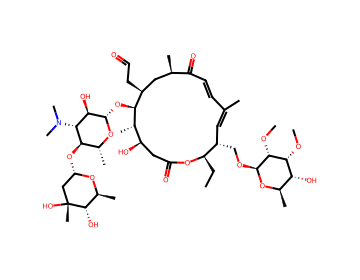
2-[(4R,5S,6S,7R,9R,11E,13E,15R,16R)-6-[(2R,3R,4R,5S,6R)-5-[(2S,4R,5S,6S)-4,5-dihydroxy-4,6-dimethyloxan-2-yl]oxy-4-(dimethylamino)-3-hydroxy-6-methyloxan-2-yl]oxy-16-ethyl-4-hydroxy-15-[[(2R,3R,4R,5R,6R)-5-hydroxy-3,4-dimethoxy-6-methyloxan-2-yl]oxymethyl]-5,9,13-trimethyl-2,10-dioxo-1-oxacyclohexadeca-11,13-dien-7-yl]acetaldehyde
IDENTITY
COMPUTED
PROPERTIES
log Kow = 1.63
Crystals from water
In water, 5 mg/mL at 25 °C
Freely soluble in methanol. Soluble in lower alcohols, esters and ketones, chloroform, dilute mineral acids, amyl acetate, chlorinated hydrocarbons, benzene, and ether.
When heated to decomposition it emits toxic fumes of /nitrogen oxide/.
128-132 °C
Specific optical rotation: -46 deg at 25 °C/D (c = 2 cm methanol)
Solid; [Merck Index] White to buff-colored powder with a mild musty odor; [USP MSDS]
Stable under recommended storage conditions.
7.73
pKa = 7.73
307.8 Ų [M+H]+ [CCS Type: TW; Method: calibrated with polyalanine and drug standards]
332.4 Ų [M+H]+ [CCS Type: TW]
304.23 Ų [M-H]-;319.79 Ų [M+H]+
Tylosin is a mixtures of the macrolides Tylosin A, Tylosin B (desmycin), Tylosin C (macrocin) and Tylosin D (relomycin) ... 80-90% of the parent compound is Tylosin A
Solutions are stable at pH 4-9; at pH <4 another active compound, desmycosin, is formed
Hydrolysis of tylosin yields 5-O-mycaminosyltylonolide
Crystals from ethanol + ether; mp 141-145 °C /Tylosin hydrochloride/
GHS
Danger
H317 (98.7%): May cause an allergic skin reaction [Warning Sensitization, Skin];H319 (44%): Causes serious eye irritation [Warning Serious eye damage/eye irritation];H330 (37.3%): Fatal if inhaled [Danger Acute toxicity, inhalation];H334 (61.3%): May cause allergy or asthma symptoms or breathing difficulties if inhaled [Danger Sensitization, respiratory];H351 (37.3%): Suspected of causing cancer [Warning Carcinogenicity];H361d (37.3%): Suspected of damaging the unborn child [Warning Reproductive toxicity];H373 (37.3%): May causes damage to organs through prolonged or repeated exposure [Warning Specific target organ toxicity, repeated exposure];H400 (89.3%): Very toxic to aquatic life [Warning Hazardous to the aquatic environment, acute hazard];H410 (41.3%): Very toxic to aquatic life with long lasting effects [Warning Hazardous to the aquatic environment, long-term hazard]
P203, P233, P260, P261, P264+P265, P271, P272, P273, P280, P284, P302+P352, P304+P340, P305+P351+P338, P316, P318, P319, P320, P321, P333+P317, P337+P317, P342+P316, P362+P364, P391, P403, P403+P233, P405, and P501 (click each P-code to see the statement)
Aggregated GHS information provided per 75 reports by companies from 7 notifications to the ECHA C&L Inventory. Each notification may be associated with multiple companies.;Information may vary between notifications depending on impurities, additives, and other factors. The percentage value in parenthesis indicates the notified classification ratio from companies that provide hazard codes. Only hazard codes with percentage values above 10% are shown. For more detailed information, please visit ECHA C&L website.
HAZARDS
Tylosin: Does not have an individual approval but may be used under an appropriate group standard
IMAP assessments - Tylosin: Environment tier I assessment;IMAP assessments - Tylosin: Human health tier I assessment
Occupational asthma has been reported; [Malo] Allergic contact dermatitis reported in farmers, feed mixers, and veterinarians; [Kanerva, p. 1844] An eye irritant; May cause contact dermatitis; May cause allergic reaction by inhalation, ingestion, or skin contact; Chronic exposure may cause hypersensitization; [USP MSDS]
Tolerances are established for residues of tylosin in edible products of animals as follows: (a) In chickens and turkeys: 0.2 part per million (negligible residue) in uncooked fat, muscle, liver, and kidney. (b) In cattle: 0.2 part per million (negligible residue) in uncooked fat, muscle, liver, and kidney. (c) In swine: 0.2 part per million (negligible residue) in uncooked fat, muscle, liver, and kidney. (d) In milk: 0.05 part per million (negligible residue). (e) In eggs: 0.2 part per million (negligible residue).
Tylosin. New animal drugs for use in animal feeds. Conditions of use for beef cattle, chickens and swine.
Tylosin. Oral dosage form new animal drugs. Conditions of use in chickens, turkeys, swine and honey bees.
Tylosin. Implantation or injectable dosage form new animal drug. Conditions of use in beef cattle and nonlactating dairy cattle; swine; and dogs and cats.
For more FDA Requirements (Complete) data for TYLOSIN (7 total), please visit the HSDB record page.
Skin Sens. 1 (98.7%);Eye Irrit. 2 (44%);Acute Tox. 1 (37.3%);Resp. Sens. 1 (61.3%);Carc. 2 (37.3%);Repr. 2 (37.3%);STOT RE 2 (37.3%);Aquatic Acute 1 (89.3%);Aquatic Chronic 1 (41.3%)
Incompatible materials: Strong oxidizing agents
SAFETY
Advice for firefighters: Wear self contained breathing apparatus for fire fighting if necessary.
Suitable extinguishing media: Use water spray, alcohol-resistant foam, dry chemical or carbon dioxide.
Conditions for safe storage, including any incompatibilities: Keep container tightly closed in a dry and well-ventilated place. Keep in a dry place. Keep in a dry place.
Store at room temperature 25 °C ( 77 °F). Excursions permitted to 40 °C. Avoid Moisture.
Accidental Release Measures. Personal precautions, protective equipment and emergency procedures: Use personal protective equipment. Avoid dust formation. Avoid breathing vapors, mist or gas. Ensure adequate ventilation. Evacuate personnel to safe areas. Avoid breathing dust. Environmental precautions: Do not let product enter drains. Methods and materials for containment and cleaning up: Pick up and arrange disposal without creating dust. Sweep up and shovel. Keep in suitable, closed containers for disposal.
SRP: Expired or waste pharmaceuticals shall carefully take into consideration applicable DEA, EPA, and FDA regulations. It is not appropriate to dispose by flushing the pharmaceutical down the toilet or discarding to trash. If possible return the pharmaceutical to the manufacturer for proper disposal being careful to properly label and securely package the material. Alternatively, the waste pharmaceutical shall be labeled, securely packaged and transported by a state licensed medical waste contractor to dispose by burial in a licensed hazardous or toxic waste landfill or incinerator.
Product: Offer surplus and non-recyclable solutions to a licensed disposal company. Contact a licensed professional waste disposal service to dispose of this material. Dissolve or mix the material with a combustible solvent and burn in a chemical incinerator equipped with an afterburner and scrubber. Contaminated packaging: Dispose of as unused product.
Appropriate engineering controls: Handle in accordance with good industrial hygiene and safety practice. Wash hands before breaks and at the end of workday.
Precautions for safe handling: Avoid contact with skin and eyes. Avoid formation of dust and aerosols. Provide appropriate exhaust ventilation at places where dust is formed.
Gloves must be inspected prior to use. Use proper glove removal technique (without touching glove's outer surface) to avoid skin contact with this product. Dispose of contaminated gloves after use in accordance with applicable laws and good laboratory practices. Wash and dry hands.
Tolerances are established for residues of tylosin in edible products of animals as follows: (a) In chickens and turkeys: 0.2 part per million (negligible residue) in uncooked fat, muscle, liver, and kidney. (b) In cattle: 0.2 part per million (negligible residue) in uncooked fat, muscle, liver, and kidney. (c) In swine: 0.2 part per million (negligible residue) in uncooked fat, muscle, liver, and kidney. (d) In milk: 0.05 part per million (negligible residue). (e) In eggs: 0.2 part per million (negligible residue).
Skin protection: Handle with gloves.
Eye/face protection Face shield and safety glasses: Use equipment for eye protection tested and approved under appropriate government standards such as NIOSH (US) or EN 166(EU).
Respiratory protection: For nuisance exposures use type P95 (US) or type P1 (EU EN 143) particle respirator.For higher level protection use type OV/AG/P99 (US) or type ABEK-P2 (EU EN 143) respirator cartridges. Use respirators and components tested and approved under appropriate government standards such as NIOSH (US) or CEN (EU).
Body Protection: Complete suit protecting against chemicals. The type of protective equipment must be selected according to the concentration and amount of the dangerous substance at the specific workplace.
TOXICITY
The interaction between bentonite and tylosin was investigated in broiler chickens, based on pharmacokinetic characteristics obtained in vivo. Simultaneous oral administration of bentonite and tylosin significantly lowered plasma levels of tylosin and reduced the area under the plasma concentration-time curve (AUC(0-inf)), maximal plasma concentration (C(max)), time to maximal plasma concentration (T(max)) and relative oral bioavailability. The results prove unambiguously the binding of tylosin by bentonite. Simultaneous administration of tylosin (in the drinking water or feed) and bentonite (mixed in the feed as a mycotoxin binder) should therefore be avoided.
In humans, clinically relevant drug-drug interactions occur with some macrolide antibiotics via the formation of stable metabolic intermediate (MI) complexes with enzymes of the cytochrome P4503A (CYP3A) subfamily. The formation of such complexes can result in a decreased biotransformation rate of simultaneously administered drugs. In previous studies it was shown that the veterinary antibiotic tiamulin was also able to form a stable MI complex in pigs and rats. In the present study the relative CYP3A inhibiting potency and MI complex formation of a series of macrolide antibiotics and tiamulin were studied in microsomal fractions of goat and cattle and in a cell-line expressing bovine CYP3A. Tiamulin and triacetyloleandomycin (TAO) were found to be effective inhibitors of CYP450 activity in all systems tested. Erythromycin and tilmicosin were found to be relatively less effective inhibitors of CYP450 activity in microsomes, and their activity in the bovine CYP3A4 expressing cell line was relatively weak. Tylosin was shown to be a weak inhibitor in microsomes and not in the cell line, whereas spiramycin had no effect at all. MI-complex formation measured by spectral analysis was seen with TAO, tiamulin, erythromycin and tylosin, but not with tilmicosin and spiramycin. Although additional factors play a role in vivo, these results may explain potential drug-drug interactions and differences between related compounds in this respect.
EC50; Species: Pseudokirchneriella subcapitata (Green Algae) exponential growth phase, nonaxenic culture 10000 cells/mL; Conditions: freshwater, static, pH 9.6-9.8; Concentration: 950 ug/L for 72 hr (95% confidence interval: 880-1030 ug/L); Effect: decreased population growth rate /formulation/
EC50; Species: Lemna gibba (Inflated Duckweed) age 4 frond; Conditions: freshwater, static renewal, 25 °C; Concentration: >1000 ug/L for 7 days; Effect: decreased population biomass /formulation/
EC50; Species: Lemna gibba (Inflated Duckweed) age 4 frond; Conditions: freshwater, static renewal, 25 °C; Concentration: >1000 ug/L for 7 days; Effect: decreased population carotenoid content /formulation/
EC50; Species: Lemna gibba (Inflated Duckweed) age 4 frond; Conditions: freshwater, static renewal, 25 °C; Concentration: >1000 ug/L for 7 days; Effect: decreased population Chlorophyll A concentration /formulation/
For more Ecotoxicity Values (Complete) data for TYLOSIN (6 total), please visit the HSDB record page.
TERRESTRIAL FATE: Based on a classification scheme(1), a Koc range of 553-7,988(2) indicates that tylosin is expected to have low to no mobility in soil(SRC). The pKa of tylosin is 7.73(3), indicating that this compound will exist partially in the cation form in the environment and cations generally adsorb more strongly to soils containing organic carbon and clay than their neutral counterparts(4). Volatilization of tylosin from moist soil surfaces is not expected to be an important fate process(SRC) given an estimated Henry's Law constant of 5.8X10-38 atm-cu m/mole(SRC), using a fragment constant estimation method(5). Tylosin is not expected to volatilize from dry soil surfaces(SRC) based upon an estimated vapor pressure of 2.0X10⁻³⁴ mm Hg at 25 °C(SRC), determined from a fragment constant method(6). Tylosin exhibited a half-life of 9.5-40 days, with a lag-phase of 31-40 days, using sediment surface water in the shake flask test(7), suggesting that biodegradation may be a moderate environmental process in soil(SRC).
FIELD STUDY: Tylosin was applied May 29, 2004 to an agricultural soil (54% sand, 43% silt, 3% clay; 60-80 mm rainfall/mo; avg summer temp 20 °C) in Northumberland County, Ontario, Canada (southern Ontario). Tylosin concentrations were 1.142 (in manure) and 1.408 (manure-free) ug/kg; manure was applied at 2 tons/acre. Dissipation in the 0-15 cm layer proceeded rapidly. At day 18, concentrations were reduced to 5-8% of the starting concentration. The average dissipation half-lives were 4.5 and 6.1 days in manure-amended and manure-free plots, respectively(1).
AQUATIC FATE: Based on a classification scheme(1), a Koc range of 553-7,988(2) indicates that tylosin is expected to adsorb to suspended solids and sediment(SRC). Volatilization of the neutral species from water surfaces is not expected(3) based upon an estimated Henry's Law constant of 5.8X10-38 atm-cu m/mole(SRC), developed using a fragment constant estimation method(4). A pKa of 7.73(5) indicates tylosin will exist partially in the cation form at pH values of 5 to 9 and, therefore, volatilization from water surfaces is not expected to be an important fate process(SRC). According to a classification scheme(6), an estimated BCF of 6(SRC), from a log Kow of 1.63(5) and a regression-derived equation(7), suggests the potential for bioconcentration in aquatic organisms is low(SRC). Tylosin exhibited a half-life of 9.5-40 days, with a lag-phase of 31-40 days, using sediment surface water in the shake flask test(8), suggesting that biodegradation may be a moderate environmental process in water(SRC).
ATMOSPHERIC FATE: According to a model of gas/particle partitioning of semivolatile organic compounds in the atmosphere(1), tylosin, which has an estimated vapor pressure of 2.0X10⁻³⁴ mm Hg at 25 °C(SRC), determined from a fragment constant method(2), is expected to exist solely in the particulate phase in the ambient atmosphere. Particulate-phase tylosin may be removed from the air by wet and dry deposition(SRC). Tylosin contains chromophores that absorb at wavelengths >290 nm(4) and, therefore, may be susceptible to direct photolysis by sunlight(SRC).
Tylosin was detected in one of 100 eggs commercially sold in the metropolitan area of Rio de Janeiro, Brazil(1).
Skin Sensitizer - An agent that can induce an allergic reaction in the skin.;Asthma - Reversible bronchoconstriction (narrowing of bronchioles) initiated by the inhalation of irritating or allergenic agents.
IDENTIFICATION AND USE: Tylosin is used as an aid in the treatment of chronic respiratory disease associated with Mycoplasma gallisepticum in chickens. It is also used for the reduction in severity of effects of infectious sinusitis associated with Mycoplasma gallisepticum in turkeys. In honey bees, it is used for the control of American Foulbrood (Paenibacillus larvae). Finally, tylosin is used for the treatment and control of swine dysentery associated with Brachyspira hyodysenteriae. HUMAN EXPOSURE AND TOXICITY: Contact dermatitis caused by tylosin has been reported by farm workers and individuals employed in veterinary medicine. ANIMAL STUDIES: Tylosin was placed in one eye of rabbits in an amount of 0.1 mL, 52 mg or 58 mg of Tylan 200 Injection, Tylosin Concentrate or Tylan Soluble, respectively. Tylan 200 Injection caused very slight conjunctival hyperemia, which cleared within 48 hr. Tylosin Concentrate caused corneal dullness, slight corneal opacity, slight to moderate iritis and moderate conjunctivitis within 1 hr post-exposure. However, all irritation cleared within 14 days. Tylan Soluble caused slight to moderate corneal opacity, marked iritis and moderate conjunctivitis within 1 hr. In this study, all irritation cleared within 7 days post exposure. Female rats were treated subcutaneously with tylosin up to 100 mg/kg bw per day for 28 days without any toxicological effects. Male and female rats were administered tylosin base in the diet for 1 year at levels of 0, 1000, 5000 and 10,000 mg/kg. Treated rats appeared moderately hyperirritable and hyperactive from 7 to 12 months on test, but there was no mortality attributable to treatment. Increased numbers of lymphocytes, decreased numbers of neutrophils and increased urine pH were observed in females given 5000 and 10,000 mg/kg diet. Microscopic examination revealed a slight increase in pituitary tumors in females of all treated groups: 1, 3, 4 and 3 adenomas and 0, 0, 1 and 0 carcinomas at 0, 1000, 5000 an
/AQUATIC SPECIES/ The growth-inhibiting and binary joint effects of 12 antibacterial agents on the freshwater green alga Pseudokirchneriella subcapitata (Korschikov) Hindak were investigated over 72-hr exposures. The toxicity values (the median inhibitory concentration value, in micromoles) in decreasing order of sensitivity were triclosan (0.0018) > triclocarban (0.054) > roxithromycin (0.056) > clarithromycin (0.062) > tylosin (0.20) > tetracycline (2.25) > chlortetracycline (3.49) > norfloxacin (5.64) > sulfamethoxazole (7.50) > ciprofloxacin (20.22) > sulfamethazine (31.26) > trimethoprim (137.78). Several of these antibacterial compounds would be toxic at the micrograms per liter concentrations reported in surface waters and sewage effluents. Simple additive effects were observed in binary mixtures of sulfonamides, and most tylosin, triclosan, or triclocarban combinations. Potentially synergistic effects were observed in binary mixtures of the same class, such as macrolides, tetracyclines, and fluoroquinolones, as well as in some combined drugs, such as trimethoprim and sulfonamides or tylosin and tetracyclines. Potentially antagonistic effects were only observed between tylosin and triclocarban, triclosan and norfloxacin, and triclocarban and norfloxacin. Although present at low concentrations in the aquatic environment, mixtures of these antibacterial agents can potentially affect algal growth in freshwater systems due to their combined action.
Tylosen was detected at <20 ng/L in four water samples one mile downstream from a wastewater treatment plant on Assupink Creek, Trenton, NJ, a stream that receives agricultural, municipal, and industrial wastewaters. It was present at <20 ng/L in 4 samples 2 miles further downstream(1). The compound was tested for but not detected (reporting limit = 0.05 ug/L) in a leachate plume downgradient of a municipal landfill, Norman OK, sampled on Sept 6, 2000; the landfill was closed in 1985(2). Tylosin was below the limit of quantitation in 45 sewage sludge samples collected from 20 cities in 13 provinces of China sampled during 2011(3).
Tylosin exhibited measured Koc values of 7,9880, 5,664, 553 and 771 in sandy loam (Askov; clay 11.3%, silt 10.7%, fine sand 37.9% OC 1.6%, pH 6.1), sand (Lundgaard; clay 5.2%, silt 4.8%, fine sand 24.4% OC 1.4%, pH 5.6) sandy loam (Flakkebjerg; clay 16.9%, silt 19.1%, fine sand 38.5% OC 1.1%, pH 5.6) and loamy sand (Borris; clay 5.8%, silt 8.7%, fine sand 42.6% OC 1.5%, pH 6.3), respectively(1). A Koc range of 1,350-95,532 has been reported using silty clay, clay, sand soils (pH 5.5-7.4, OC% 0.4-2.9)(2). Kd values of 66-92 have been reported using clay loam and sandy loam(3). According to a classification scheme(4), these Koc values suggest that tylosin is expected to have low to no mobility in soil(SRC). Tylosin is hydrophilic with reported Kd values at 8 to 128 L/kg(5). Tylosin was applied May 29, 2004 to an agricultural soil (54% sand, 43% silt, 3% clay; 60-80 mm rainfall/mo; avg summer temp 20 °C) in Northumberland County, Ontario, Canada (southern Ontario). Tylosin (monensin 1.118 1.465)concentrations were 1.142 (in manure) and 1.408 (manure-free) ug/kg; manure was applied at 2 tons/acre. It was not detected in any of the subsequent 25 to 35-cm depth samples(5). The compound is weakly alkaline and has an ionizable dimethylamine group. It is largely retained in soils and sediments(6). The pKa of tylosin is 7.73(7), indicating that this compound will exist partially in the cation and cations generally adsorb more strongly to soils containing organic carbon and clay than their neutral counterparts(8).
Tylosin Kd values in various soils of the Netherlands(1).[Table#6636]
Tylosin is produced by Streptoverticillium fradiae(1).
/CASE REPORTS/ Tylosin is a broad-spectrum macrolide antibiotic that is restricted to veterinary use. Allergic contact dermatitis (ACD) caused by tylosin has been reported in the literature from the farming industry and veterinary medicine. It is also reported as the most common antibiotic to cause ACD in the previously mentioned occupational settings. We present 2 cases of airborne ACD from tylosin among veterinary pharmaceutical compounding technicians. To our knowledge, only one other case of patch test-confirmed tylosin ACD has been reported in the manufacturing setting. Based on our results, cross-sensitization to other clinically relevant macrolides does not appear to be a concern. Our cases highlight the importance of patch testing among pharmaceutical compounders where the incidence of an airborne contact may be greater, given that the exposure is to the powdered form of potential allergens.
/CASE REPORTS/ Nine farmers suspected of having occupational contact dermatitis had positive patch tests to spiramycin and/or tylosin. After diagnosis the dermatitis cleared or improved markedly in seven patients; five of these stopped using the antibiotics in question, and two began to wear gloves while handling the drugs. The two patients who continued use of the drugs and took no precautionary measures had little change in the activity of the dermatitis.
/SURVEILLANCE/ This study aimed to determine the prevalence of contact dermatitis among pig feed handlers, explore the association with exposure to in-feed antibiotics, and determine farmers' awareness of product safety information. One representative from each piggery in Queensland's Wide Bay Burnett Region was interviewed by telephone. Just over 21% of respondents had experienced dermatitis symptoms within the previous two years; 14.8% within the previous 12 months: and 6.7% had current symptoms. Use of at least one in-feed antibiotic was reported by 83.7%. The only antibiotic to show an association with the occurrence of dermatitis was tylosin. Precautionary behaviors were more common among those with dermatitis. Only 18% of respondents were aware of material safety data sheets. The relatively high prevalence of contact dermatitis, high use of antibiotics, low level of precautionary behaviors and poor awareness of material safety data sheets indicates a need for farmer education.
Tylosin was tested for but not detected in Australian farmed yellowtail kingfish (Seriola lalandi); reporting limit = 0.1 mg/kg(1).
REGULATORY
Tylosin: Does not have an individual approval but may be used under an appropriate group standard
Tolerances are established for residues of tylosin in edible products of animals as follows: (a) In chickens and turkeys: 0.2 part per million (negligible residue) in uncooked fat, muscle, liver, and kidney. (b) In cattle: 0.2 part per million (negligible residue) in uncooked fat, muscle, liver, and kidney. (c) In swine: 0.2 part per million (negligible residue) in uncooked fat, muscle, liver, and kidney. (d) In milk: 0.05 part per million (negligible residue). (e) In eggs: 0.2 part per million (negligible residue).
Tylosin. New animal drugs for use in animal feeds. Conditions of use for beef cattle, chickens and swine.
Tylosin. Oral dosage form new animal drugs. Conditions of use in chickens, turkeys, swine and honey bees.
Tylosin. Implantation or injectable dosage form new animal drug. Conditions of use in beef cattle and nonlactating dairy cattle; swine; and dogs and cats.
For more FDA Requirements (Complete) data for TYLOSIN (7 total), please visit the HSDB record page.
PHARMACOLOGY
QJ - Antiinfectives for systemic use;QJ51 - Antibacterials for intramammary use;QJ51F - Macrolides and lincosamides for intramammary use;QJ51FA - Macrolides;QJ51FA90 - Tylosin
QJ - Antiinfectives for systemic use;QJ01 - Antibacterials for systemic use;QJ01F - Macrolides, lincosamides and streptogramins;QJ01FA - Macrolides;QJ01FA90 - Tylosin
The inhibition of peptide bond formation by tylosin, a 16-membered ring macrolide, was studied in a model system derived from Escherichia coli. In this cell-free system, a peptide bond is formed between puromycin (acceptor substrate) and AcPhe-tRNA (donor substrate) bound at the P-site of poly(U)-programmed ribosomes. It is shown that tylosin inhibits puromycin reaction as a slow-binding, slowly reversible inhibitor. Detailed kinetic analysis reveals that tylosin (I) reacts rapidly with complex C, i.e., the AcPhe-tRNA. poly(U).70S ribosome complex, to form the encounter complex CI, which then undergoes a slow isomerization and is converted to a tight complex, CI, inactive toward puromycin. These events are described by the scheme C + I <==> (K(i)) CI <==> (k(4), k(5)) CI. The K(i), k(4), and k(5) values are equal to 3 microM, 1.5 min(-1), and 2.5 x 10(-3) min(-1), respectively. The extremely low value of k(5) implies that the inactivation of complex C by tylosin is almost irreversible. The irreversibility of the tylosin effect on peptide bond formation is significant for the interpretation of this antibiotic's therapeutic properties; it also renders the tylosin reaction a useful tool in the study of other macrolides failing to inhibit the puromycin reaction but competing with tylosin for common binding sites on the ribosome. Thus, the tylosin reaction, in conjunction with the puromycin reaction, was applied to investigate the erythromycin mode of action. It is shown that erythromycin (Er), like tylosin, interacts with complex C according to the kinetic scheme C + Er <==> (K(er)) CEr <==> (k(6), k(7)) C*Er and forms a tight complex, CEr, which remains active toward puromycin. The determination of K(er), k(6), and k(7) enables us to classify erythromycin as a slow-binding ligand of ribosomes
Biological availability and pharmacokinetic properties of tylosin were determined in broiler chickens after oral and iv administration at a dose of 10 mg/kg. ... After intravenous injection, tylosin ... /had an/ elimination half-life value of 0.52 .. . After oral administration, tylosin /had an / elimination half-life of 2.07 hr ... .
The elimination half-life of tylosin is reportedly 54 minutes in small animals, 139 minutes in newborn calves, and 64 minutes in calves 2 months of age or older.
The tylosin-biosynthetic (tyl) gene cluster of Streptomyces fradiae contains ancillary genes that encode functions normally associated with primary metabolism. These can be disrupted without loss of viability, since equivalent genes (presumably used for 'housekeeping' purposes) are also present elsewhere in the genome. The tyl cluster also contains two genes that encode products unlike any proteins in the databases. Two ancillary genes, metF (encoding N5,N10-methylenetetrahydrofolate reductase) and metK, encoding S-adenosylmethionine synthase, flank one of the 'unknown' genes (orf9) in the tyl cluster. In a strain of S. fradiae in which all three of these genes were disrupted, tylosin production was reduced, although this effect was obscured in media supplemented with glycine betaine which can donate methyl groups to the tetrahydrofolate pool. Apparently, one consequence of the recruitment of ancillary genes into the tyl cluster is enhanced capacity for transmethylation during secondary metabolism.
Studies on the susceptibility of pathogenic Nocardia to macrolide antibiotics, chalcomycin and tylosin, showed that most of the Nocardia species examined were highly resistant to both antibiotics, although N. nova was moderately susceptible. N. asteroides IFM 0339 converted these macrolides into inactive metabolites by glycosylation at 2'-OH or glycosylation and reduction of the 20-formyl group. The structures of the metabolites were determined from NMR and MS data to be 2'-[O-(beta-D-glucopyranosyl)]chalcomycin (2), 2'-[O-(beta-D-glucopyranosyl)]tylosin (5) and 20-dihydro-2'-[O-(beta-D-glucopyranosyl)]tylosin (4).
Tylosin is produced by Streptomyces fradiae via a combination of polyketide metabolism and synthesis of three deoxyhexose sugars, of which mycaminose is the first to be added to the polyketide aglycone, tylactone (protylonolide). Previously, disruption of the gene (tylMII) encoding attachment of mycaminose to the aglycone unexpectedly abolished accumulation of the latter, raising the possibility of a link between polyketide metabolism and deoxyhexose biosynthesis in S. fradiae. However, at that time, it was not possible to eliminate an alternative explanation, namely, that downstream effects on the expression of other genes, not involved in mycaminose metabolism, might have contributed to this phenomenon. Here, it is shown that disruption of any of the four genes (tylMI--III and tylB) specifically involved in mycaminose biosynthesis elicits a similar response, confirming that production of mycaminosyl-tylactone directly influences polyketide metabolism in S. fradiae. Under similar conditions, when mycaminose biosynthesis was specifically blocked by gene disruption, accumulation of tylactone could be restored by exogenous addition of glycosylated tylosin precursors. Moreover, certain other macrolides, not of the tylosin pathway, were also found to elicit qualitatively similar effects. Comparison of the structures of stimulatory macrolides will facilitate studies of the stimulatory mechanism.
Three glycosyltransferases are involved in tylosin biosynthesis in Streptomyces fradiae. The first sugar to be added to the polyketide aglycone (tylactone) is mycaminose and the gene encoding mycaminosyltransferase is orf2* (tylM2). However, targeted disruption of orf2* did not lead to the accumulation of tylactone under conditions that normally favor tylosin production; instead, the synthesis of tylactone was virtually abolished. This may, in part, have resulted from a polar effect on the expression of genes downstream of orf2*, particularly orf4* (ccr) which encodes crotonyl-CoA reductase, an enzyme that supplies 4-carbon extender units for polyketide metabolism. However, that cannot be the entire explanation, since tylosin production was restored at about 10% of the wild-type level when orf2* was re-introduced into the disrupted strain. When glycosylated precursors of tylosin were fed to the disrupted strain, they were converted to tylosin, confirming that two of the three glycosyltransferase activities associated with tylosin biosynthesis were still intact. Interestingly, however, tylactone also accumulated under such conditions and, to a much lesser extent, when tylosin was added to similar fermentations. It is concluded that glycosylated macrolides exert a pronounced positive effect on polyketide metabolism in S. fradiae.
For more Metabolism/Metabolites (Complete) data for TYLOSIN (6 total), please visit the HSDB record page.
Substances that inhibit the growth or reproduction of BACTERIA.
The pharmacokinetics and oral bioavailability of tylosin tartrate and tylosin phosphate were carried out in broiler chickens according to a principle of single dose, random, parallel design. The two formulations of tylosin were given orally and intravenously at a dose level of 10 mg/kg b.w to chicken after an overnight fasting (n = 10 chickens/group). Serial blood samples were collected at different time points up to 24 hr postdrug administration. A high performance liquid chromatography method was used for the determination of tylosin concentrations in chicken plasma. The tylosin plasma concentration's time plot of each chicken was analyzed by the 3P97 software. The pharmacokinetics of tylosin was best described by a one-compartmental open model 1st absorption after oral administration. After intravenous administration the pharmacokinetics of tylosin was best described by a two-compartmental open model, and there were no significant differences between tylosin tartrate and tylosin phosphate. After oral administration, there were significant differences in the Cmax (0.18 + or - 0.01, 0.44 + or - 0.09) and AUC (0.82 + or - 0.05, 1.57 + or - 0.25) between tylosin phosphate and tylosin tartrate. The calculated oral bioavailability (F) of tylosin tartrate and tylosin phosphate were 25.78% and 13.73%, respectively. Above all, we can reasonably conclude that, the absorption of tylosin tartrate is better than tylosin phosphate after oral administration.
/MILK/ The aim of this study is to determine the pharmacokinetics of tylosin and tilmicosin in serum and milk in healthy Holstein breed cows (n = 12) and reevaluate the amount of residue in milk. Following the intramuscular administration of tylosin, the maximum concentrations (C max) in serum and milk were found to be 1.30 + or - 0.24 and 4.55 + or - 0.23 ug/mL, the time required to reach the peak concentration (t max) was found to be 2nd and 4th hour, and elimination half-live were found to be 20.46 + or - 2.08 and 26.36 + or - 5.55 hour, respectively. Following the subcutaneous administration of tilmicosin, the C max in serum and milk were found to be 0.86 + or - 0.20 and 20.16 + or - 1.13 ug/mL, the t max was found to be 1st and 8th hr, and the elimination half life were found to be 29.94 + or - 6.65 and 43.02 + or - 5.18 hr, respectively. AUCmilk/AUCserum and C max-milk/C max-serum rates, which are indicators for determining the rate of drugs that pass into milk, were, respectively, calculated as 5.01 + or - 0.72 and 3.61 + or - 0.69 for tylosin and 23.91 + or - 6.38 and 20.16 + or - 1.13 for tilmicosin. In conclusion, it may be stated that milk concentration of tylosin after parenteral administration is higher than expected like tilmicosin and needs more withdrawal period for milk than reported.
Biological availability and pharmacokinetic properties of tylosin were determined in broiler chickens after oral and iv administration at a dose of 10 mg/kg. The calculated bioavailability--F%, by comparing AUC values--oral and AUC--iv, ranged from 30%-34%. After intravenous injection tylosin was rapidly distributed in the organism, showing elimination half-life values of 0.52 hr and distribution volume (Vd) of 0.69 L/kg, at a clearance rate (Cl) of 5.30 +/- 0.59 mL/min/kg. After oral administration, tylosin has a similar distribution volume (Vd = 0.85 L/kg), while the elimination half-life of 2.07 hr was four times bigger than after iv administration at Cl = 4.40 +/- 0.27 mL/min/kg. The obtained value tmax = 1.5 hr for tylosin after oral administration indicates that using this antibiotic with drinking water in broiler chickens is the method of choice. However, a relatively low value Cmax = 1.2 micrograms/ml after oral administration of tylosin shows that dosing of this antibiotic in broiler chickens should be higher than in other food producing animals.
/MILK/ Antibiotic residues in milk above tolerance levels interfere with dairy product processing and pose potential health risks to consumers. Residue avoidance programmes include, among other components, the observance of withdrawal times indicated in label instructions. Persistence of antibiotics in milk following treatment is influenced by drug, dosage, route of administration, body weight and mammary gland health status. Compositional changes that take place during intramammary infection (IMI) can affect antibiotic excretion in milk, thus modifying milk withdrawal time. The objectives of this study were to validate sensitivity and specificity of a qualitative microbiological method (Charm AIM-96) to detect tylosin in bovine composite milk and to determine the influence of subclinical IMI in tylosin excretion following intramuscular administration. For test validation, two groups of approximately 120 cows were used; one received a single intramuscular injection of tylosin tartrate at a dose of 20 mg/kg, while the other group remained as untreated control. Test sensitivity and specificity were 100% and 94.1% respectively. To determine the influence of subclinical IMI in tylosin excretion, two groups of seven cows, one with somatic cell counts (SCC) < or =250 000 cells/ml and the other with SCC > or =900 000, were administered a single intramuscular injection of tylosin tartrate at a dose of 20 mg/kg. Milk samples were obtained every 12 h for 10 days following treatment. Milk tylosin excretion averaged between 5 and 9 days for cows with low and high SCC respectively (P < 0.0001). Compositional changes in cows with high SCC most likely affect the pharmacokinetic characteristics of tylosin, extending the presence of the antibiotic in milk, thus influencing milk withdrawal times.
For more Absorption, Distribution and Excretion (Complete) data for TYLOSIN (10 total), please visit the HSDB record page.
USES
Tylosin is a veterinary macrolide antibiotic. [Kanerva, p. 1844] A macrolide antibiotic from a Streptomycetes fradiae strain found in the soil in Thailand; [Merck Index]
Farming (Feed Additives) [Category: Industry]
Anti-Bacterial Agents
MEDICATION (VET)
Veterinary antimicrobial agent also used as prophylactics during surgery or at generally lower levels of administration to promote an animal's ability to withstand pathogenic challenge when under stress.
Used by injection or oral administration to treat Mycoplasma and gram-positive bacterial infections in poultry, swine, and other livestock.
Feed additive antibiotic ... 1989 market... dominated by tetracyclines and tylosin which are believed to account for over 50% of antibiotic sales for this use.
Macrolide antibiotic isolated frm a strain of Streptomycetes fradiae found in soil from Thailand.
Tylosin consists of one major factor, tylosin A. Three minor factors - desmycosin (tylosin B), macrocin (tylosin C) and relomycin (tylosin D)-may also be present in varying amounts, depending upon the manufacturing source.
Tylosin Injection: 50 mg/mL, 200 mg/mL; Tylan, generic (OTC)
Tylosin Tartrate Powder: Ingredient: Tylosin (as Tylosin Tartrate)...........100 g.
Tylosin is available in a soluble powder 100 g per pound, or approximately 3 grams per teaspoon (Tylosin-100 Type A medicated premix). Tylosin tartrate is equal to 800 ug per gram of tylosin base. It also is available as a 50- and 200-mg/mL injection (with propylene glycol).
Animal Drugs -> FDA Approved Animal Drug Products (Green Book) -> Active Ingredients
Veterinary Drug -> ANTIMICROBIAL_AGENT -> JECFA Functional Classes
Pharmaceuticals -> Animal Drugs -> Approved in Taiwan
Tylosin is a macrolide antibiotic containing a sixteen-membered lactone ring substituted with various sugar moieties. Tylosin is a mixture of four related compounds, designated tylosin A, B, C, and D, with tylosin A the major component.
Feed additive when in combination with monensin to improve rate of gain and comparable efficiency of feed conversion in finishing beef cattle.
ALIASES
REACTIONS
uspto-grants-1987_02 · 10.6084/m9.figshare.5104873.v1 · US04643908
查看
uspto-grants-1978_05 · 10.6084/m9.figshare.5104873.v1 · US04092473
查看
uspto-grants-1978_05 · 10.6084/m9.figshare.5104873.v1 · US04092473
查看
uspto-grants-1991_07 · 10.6084/m9.figshare.5104873.v1 · US05032581
查看
uspto-grants-1994_06 · 10.6084/m9.figshare.5104873.v1 · US05322937
查看
uspto-grants-1980_05 · 10.6084/m9.figshare.5104873.v1 · US04201843
查看
uspto-grants-1980_05 · 10.6084/m9.figshare.5104873.v1 · US04201843
查看
uspto-grants-1990_04 · 10.6084/m9.figshare.5104873.v1 · US04918058
查看