

Grundinformationen
- Standard-SMILES
CSCCC(O)C(=O)O- InChIKey
ONFOSYPQQXJWGS-UHFFFAOYSA-N- Summenformel
- C5H10O3S
- Durchschnittliche Molmasse
- 150,2 g/mol
- Monoisotopische Masse
- 150,03506518
Überblick
2-hydroxy-4-(methylthio)-butanoic acid is a light brown liquid. (USCG, 1999)
Namen und Bezeichner
- Bevorzugter Name
- alpha-Hydroxy-gamma-methylmercaptobutyric acid
- IUPAC
- 2-hydroxy-4-methylsulfanylbutanoic acid
- Lokaler Name
- 2-Hydroxy-4-(methylthio)buttersure
- Englischer Name
- 2-Hydroxy-4-(methylthio)butyric acid
- Summenformel
- C5H10O3S
- Molmasse
- 150.2
Namen und Synonyme
2-Hydroxy-4-methylthiobutanoic acidalpha-Hydroxy-gamma-methylmercaptobutyric acidRefChem:5858004-methylthio-2-hydroxybutyratealpha-hydroxy-gamma-methylthiobutyrate2-Hydroxy-4-(methylthio)butyric acid583-91-5DesmeninolAlimet2-Hydroxy-4-(methylthio)butanoic acidDesmeninol [INN]Butanoic acid, 2-hydroxy-4-(methylthio)-
Weitere Namen anzeigen
HMTBAmhaacidHMTBA-13C4Desmenidol-13C4(68-72% in Water)Ipradol (feed grade)MHA acid (feed grade)methioninehydroxyanalog
MHA acid2-hydroxy-4-(methylsulfanyl)butanoic acidMHA-FA2-hydroxy-4-methylsulfanylbutanoic acidMFCD000704902-Hydroxy-4-(methylthio) butanoic acidButyric acid, 2-hydroxy-4-(methylthio)-alpha-Hydroxy-gamma-(methylthio)butyric acid
Datenbank-Bezeichner
- CAS
120-91-2、583-91-5- PubChem CID
- 11427
- DTXSID
DTXSID50862236- ChEMBL
CHEMBL2104213- ChEBI
CHEBI:137228- UNII
- Z94465H1Y7
- EC Number
- 209-523-0
- Nikkaji
- J21.888J
Eigenschaften
Berechnete Struktureigenschaften
- XLogP
- 0,2
- Polarare Oberfläche (TPSA)
- 82,8 Ų
- H-Brücken-Donoren
- 2
- H-Brücken-Akzeptoren
- 4
- Frei drehbare Bindungen
- 4
- Schwere Atome
- 9
- Formalladung
- 0
- Komplexität
- 94,2
Experimentelle und physikochemische Eigenschaften
Chemical ClassesOther Uses -> Animal Feed Additives
LipidsFatty Acyls [FA] -> Fatty Acids and Conjugates [FA01] -> Hydroxy fatty acids [FA0105]
Density1.21 to 1.23 (USCG, 1999)
Flash Point250 °F (USCG, 1999)
Melting Point250 °C
Vapor Pressure16.0 [mmHg]
Physical Description
2-hydroxy-4-(methylthio)-butanoic acid is a light brown liquid. (USCG, 1999)
Light brown liquid; [CAMEO] Light brown to brown liquid with an odor of sulfur; [MSDSonline]
Solid
Collision Cross Section167.3 Ų [M-H]-
Autoignition Temperature320 °F (USCG, 1999)
Physikochemische Eigenschaften
- Siedepunkt
- 74 °C · 74°C
- Dichte
- 1.277 · 1.277±0.06 g/cm3 | Condition: Temp: 20 °C Press: 760 Torr
- Brechungsindex
- 1.5151 · 1.5151 (estimate)
- storage temp.
- Inert atmosphere,Room Temperature
- Löslichkeit
- 0 · Soluble in DMSO:0.0(Max Conc. mg/mL);0.0(Max Conc. mM)
- pka
- 3.67 · 3.67±0.10(Predicted)
- Aggregatzustand
- Liquid (Density: 1.22 g/cm3)
- Farbe
- Light yellow to brown
- Merck
- 14 · 14,5976
- InChI
- InChI=1S/C5H10O3S/c1-9-3-2-4(6)5(7)8/h4,6H,2-3H2,1H3,(H,7,8)
- InChIKey
- ONFOSYPQQXJWGS-UHFFFAOYSA-N
- SMILES
- C(O)(=O)C(O)CCSC
- CAS Datenbank
- 583 · 583-91-5(CAS DataBase Reference)
- EPA chemische Informationen
- 2 · 2-Hydroxy-4-(methylthio) butanoic acid (583-91-5)
Sicherheit und Regulatorisches
GHS-Klassifizierung
GHS Classification
Danger
H315 (100%): Causes skin irritation [Warning Skin corrosion/irritation]
P261, P264, P264+P265, P271, P273, P280, P302+P352, P304+P340, P305+P354+P338, P317, P319, P321, P332+P317, P362+P364, P403+P233, P405, and P501 (click each P-code to see the statement)
Aggregated GHS information provided per 5 reports by companies from 4 notifications to the ECHA C&L Inventory. Each notification may be associated with multiple companies.
Not Classified
Danger
Gefahrenhinweise
Regulatory Information
Regulation (EC) No 1831/2003 (amended)
2-Hydroxy-4-(methylthio)butanoic acid: Does not have an individual approval but may be used as a component in a product covered by a group standard. It is not approved for use as a chemical in its own right.
Other Safety InformationIMAP assessments - Butanoic acid, 2-hydroxy-4-(methylthio)-: Environment tier I assessment
Health HazardsCorrosive to the eyes and moderately irritating to the skin. (USCG, 1999)
Hazards SummaryAn irritant; [HSDB] A moderate skin irritant; Corrosive to eyes; [CAMEO] An irritant; Causes burns to eyes; [MSDSonline]
Reactive GroupAcids, Carboxylic
Reactivity Profile
An organosulfide, alcohol, and organic acid. Organosulfides are incompatible with acids, diazo and azo compounds, halocarbons, isocyanates, aldehydes, alkali metals, nitrides, hydrides, and other strong reducing agents. Reactions with these materials generate heat and in many cases hydrogen gas. Many of these compounds may liberate hydrogen sulfide upon decomposition or reaction with an acid. Flammable and/or toxic gases are generated by the combination of alcohols with alkali metals, nitrides, and strong reducing agents. They react with oxoacids and carboxylic acids to form esters plus water. Oxidizing agents convert them to aldehydes or ketones. Alcohols exhibit both weak acid and weak base behavior. They may initiate the polymerization of isocyanates and epoxides. Carboxylic acids donate hydrogen ions if a base is present to accept them. They react in this way with all bases, both organic (for example, the amines) and inorganic. Their reactions with bases, called "neutralizations", are accompanied by the evolution of substantial amounts of heat. Neutralization between an acid and a base produces water plus a salt.
Air and Water ReactionsNo rapid reaction with air. No rapid reaction with water.
Hazard Classes and Categories
Skin Irrit. 2 (100%)
Acute toxicity (Oral) - Category 5
Sicherheit und Schutzausrüstung
Fire FightingFire Extinguishing Agents: Water spray, alcohol foam, dry chemical, carbon dioxide. (USCG, 1999)
First AidEYES: Flush with plenty of water for at least 15 minutes.
Nonfire Spill ResponseNeutralizing Agents for Acids and Caustics: Sodium bicarbonate solution. Flush with water. (USCG, 1999)
Personal Protective Equipment (PPE)Wear approved respirator with full face piece, chemical resistant gloves and clothing. (USCG, 1999)
Sicherheitsdaten
- tsca
- TSCA listed
- hs_code
- 2930.90.4600
- RTECS-Nr.
- ET4731500
- risk_code
- 23/24/25
- Toxizität
- LD50 oral in rat: 3478mg/kg
- safety_code
- 26-36/37/39-45
- Giftige Stoffe Daten
- 583-91-5(Hazardous Substances Data)
Chemie und Industrie
Pharmakologische Informationen
Mechanism of Action
METHIONINE PRECURSORS & METHIONINE ANALOGS WERE TESTED FOR THEIR ABILITY TO REPLACE OR TO ANTAGONIZE L-METHIONINE IN THE GROWTH OF PHYSARUM POLYCEPHALUM. 2-HYDROXY-4-(METHYLTHIO)BUTANOIC ACID SUPPORTED GROWTH, WHEN SUBSTITUTED FOR L-METHIONINE.
Metabolism/Metabolites
CHICK LIVER HOMOGENATES CATALYZED THE OXIDATION OF 2-HYDROXY-4-(METHYLTHIO)BUTANOIC ACID TO KETOMETHIONINE & BOTH CHICK LIVER SUPERNATANTS & RAT LIVER SUPERNATANTS CONVERTED KETOMETHIONINE TO THE HYDROXY DERIVATIVE OR TO METHIONINE.
IN RAT TISSUE, BOTH FLAVINE COENZYME & GLUTAMINE ARE REQUIRED FOR THE CONVERSION OF 2-HYDROXY-4-METHYLTHIOBUTYRIC ACID INTO METHIONINE. PER GRAM OF TISSUE, THE KIDNEY POSSESSES GREATER CONVERSION ACTIVITY THAN THE LIVER, BRAIN, SMALL INTESTINE, & MUSCLE, ALTHOUGH ON A TOTAL ORGAN BASIS THE LIVER IS THE MOST IMPORTANT. MOST OF THE CONVERSION ACTIVITY IS LOCATED IN THE SUPERNATANT FRACTION OF THE LIVER.
Cellular LocationsCytoplasm
Verwendung und Herstellung
Uses
Methionine hydroxy analog is used as a livestock dietary supplement; [Merck Index]
Farming (Pesticides) [Category: Industry]
CALCIUM SALT IN POULTRY FEED
Methods of ManufacturingBLAKE, WINEMAN, US PATENTS 2,745,745 AND 2,938,053 (1956 AND 1960 TO MONSANTO)
General Manufacturing InformationButanoic acid, 2-hydroxy-4-(methylthio)-: ACTIVE
Anwendungen
VerwendenMethionine hydroxy analogue
Vor- und nachgelagerte Produkte
Vorgelagerte Rohstoffe
Nachgelagerte Produkte
Anbieter50 Anbieter
梯希爱(上海)化成工业发展有限公司021-67121386 · [email protected]
湖北永阔科技有限公司027-59223108 15972152991 · [email protected]
Shandong chuangyingchemical Co., Ltd.18853181302 · [email protected]
上海麦克林生化科技股份有限公司021-50706066 15221275939 · [email protected]
合肥翰刚医药科技有限公司+8618062405514 · [email protected]
上海毕得医药科技股份有限公司400-1647117 13681763483 · [email protected]
湖北云镁科技有限公司027-59206672 18995657604 · [email protected]
Dayang Chem (Hangzhou) Co.,Ltd.+86-0571-88938639 17705817739 · [email protected]
上海赛可锐生物科技有限公司021-58000709 13120558703 · [email protected]
毕佳索(上海毕得医药科技股份有限公司)400-6005915 · [email protected]
Syntechem Co.,Ltd[email protected]
Ark Pharm, Inc.847-367-3680 · [email protected]
北京索莱宝科技有限公司010-50973130 17801761073 · [email protected]
武汉易泰科技有限公司上海分公司18930552037 · [email protected]
河北鸿韬生物工程有限公司15512737321
广东方信生物科技有限公司0751-2838688 13376594225 · [email protected]
上海相辉医药科技有限公司13761987713; 13761987713 · [email protected]
Pure Chemistry Scientific Inc.001-857-928-2050 or 1-888-588-9418 · [email protected]
凯试(上海)科技有限公司021-50135380 · [email protected]
武汉丰泰威远科技有限公司+86-27-8746-5837 +86-18627785180 · [email protected]
武汉丰泰威远科技有限公司027-87465837 19945049750 · [email protected]
上海竺钥化工有限公司021-33559231 18964673308 · [email protected]
玛雅试剂+86 (573) 82222445 (0)18006601000 452520369 · [email protected]
南京化学试剂股份有限公司025-58369808 17895012682 · [email protected]
上海遐瑞医药科技有限公司+86 21 61551611
TCI AMERICA800-4238616 · [email protected]
TOKYO CHEMICAL INDUSTRY CO., LTD.03-36680489 · [email protected]
TCI Europe320-37350700 · [email protected]
深圳振强药物研发有限公司0755-66853366 13670046396 · [email protected]
上海将来实业股份有限公司400-0066400 13621662912 · [email protected]
上海将来实业股份有限公司021-61552785 · [email protected]
郑州阿尔法化工有限公司0371-53732842 15981811963 · [email protected]
北京奥秘佳得医药科技有限公司+86-13522808617 · [email protected]
成都零六生物科技有限公司400-1166-196 13458535857 · [email protected]
湖南华腾制药有限公司400-8592883 · [email protected]
上海鑫圭生物科技有限公司15121041756 · [email protected]
池州凯隆进出口贸易有限公司[email protected]
天津荣燊化工有限公司18317763565; 18317763565 · [email protected]
上海米修化工有限公司18101936766 · [email protected]
上海陶术生物科技股份有限公司+1-781-999-5354; +1-00000000000 · [email protected]
九鼎化学(上海)科技有限公司4009209199 · [email protected]
杭州鼎燕化工有限公司0571-87157530-8003 18267553885 · [email protected]
湖北军瑞生物科技有限公司13971166412 · [email protected]
上海阿拉丁生化科技股份有限公司6206333 13167063860 · [email protected]
陕西缔都医药化工有限公司029-029-81120477 17792793610 · [email protected]
湖北万业众诚化学试剂有限责任公司18671296875 · [email protected]
上海源叶生物科技有限公司13636370518 · [email protected]
湖北海嘉生物科技有限公司15071111164
山东西亚化学有限公司4009903999 13395398332 · [email protected]
郑州汇聚化工有限公司0371-55900031 18137872243 · [email protected]
Zugehörige Reaktionen
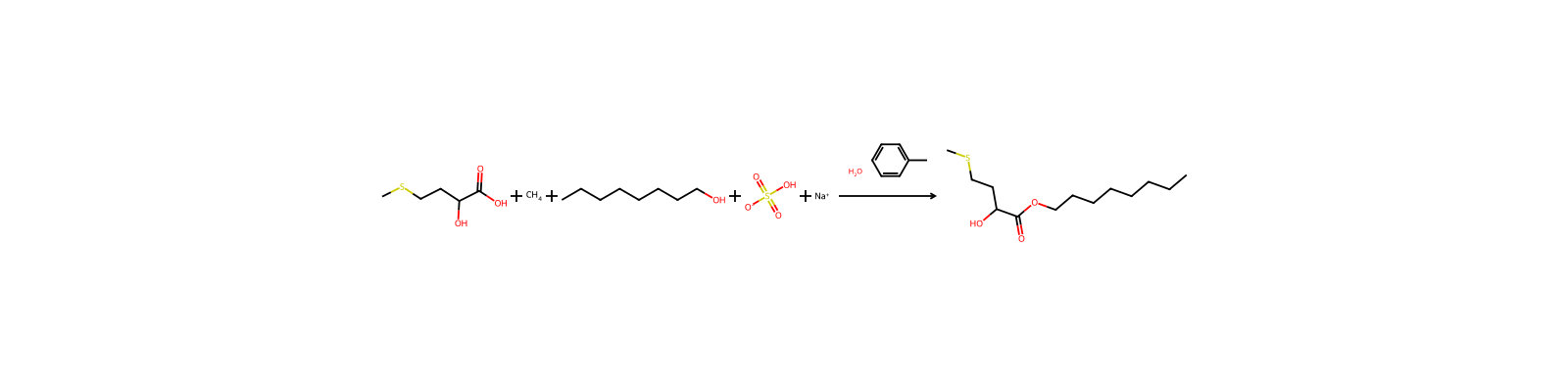
11






Verknüpfte Notizen
Wird geladen…