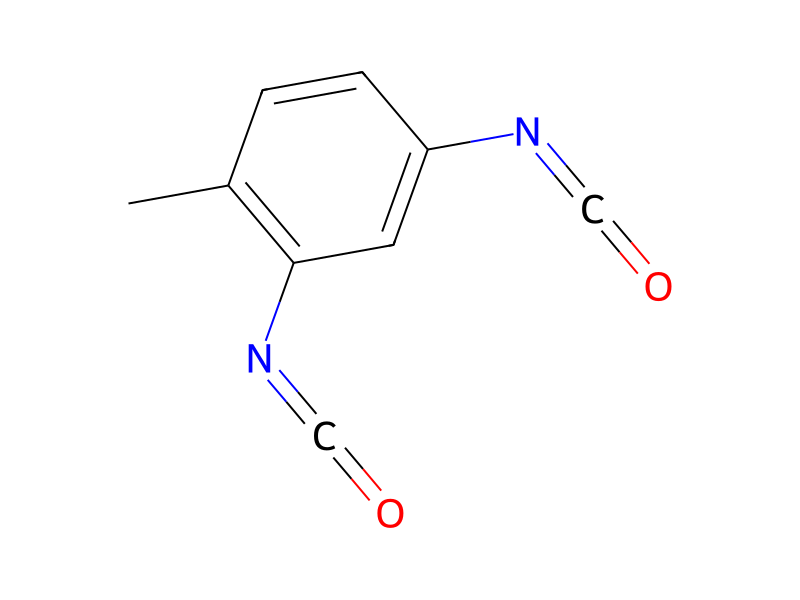
1321-38-6Cc1ccc(N=C=O)cc1N=C=ODVKJHBMWWAPEIU-UHFFFAOYSA-NToluene diisocyanate exists in two isomeric forms (2,4-toluene diisocyanate and 2,6-toluene diisocyanate) which have similar properties and effects. Toluene diisocyanate is produced commercially as an 80:20 (2,4-toluene diisocyanate:2,6-toluene diisocyanate) mixture of the two isomers. At room temperature, the mixture is a clear, pale yellow liquid with a sharp, pungent odor. It should be stored under refrigeration, away from light and moisture in a tightly closed container under an inert atmosphere. Toluene diisocyanate is insoluble in water and miscible with most common organic solvents.
Hazardous Air Pollutants (HAPs)
Carcinogens
Industrial compound
Plastics & Rubber -> Diisocyanates
1.2244 at 68 °F (EPA, 1998) - Denser than water; will sink
1.2244 at 20 °C/4 °C
Saturated liquid density: 75.879 lb/cu ft; liquid heat capacity: 0.398 Btu/lb-F; liquid thermal conductivity: 1.179 Btu-inch/hr-sq ft-F; liquid viscosity: 3.769 Centipoise (all at 85 °F)
Saturated vapor pressure: 0.004 lb/sq in; saturated vapor density: 0.00011 lb/cu ft (all at 130 °F)
Relative density (water = 1): 1.2
1.2244 at 68 °F
Water-white to pale yellow liquid
Clear faintly yellow liquid
Sicherheitsangaben dienen nur zur Orientierung und ersetzen weder das Sicherheitsdatenblatt (SDB) des Lieferanten noch geltende Vorschriften oder eine fachliche Bewertung.
Danger
H315: Causes skin irritation [Warning Skin corrosion/irritation]
P203, P233, P260, P261, P264, P264+P265, P271, P272, P273, P280, P284, P302+P352, P304+P340, P305+P351+P338, P316, P318, P319, P320, P321, P332+P317, P333+P317, P337+P317, P342+P316, P362+P364, P403, P403+P233, P405, and P501 (click each P-code to see the statement)
This chemical does not meet GHS hazard criteria for < 0.1% (1 of 1247) of reports.
Danger
H315 (> 99.9%): Causes skin irritation [Warning Skin corrosion/irritation]
Chemical: Benzene, 2,4-diisocyanato-1-methyl-
Chemical: Benzene, diisocyanatomethyl-
Benzene, 2,4-diisocyanato-1-methyl- is listed on the EPA's Chemical Data Reporting (CDR) system. Manufacturers and importers of Benzene, 2,4-diisocyanato-1-methyl- are required to report information about their production and use of this chemical to the EPA under the Toxic Substances Control Act (TSCA). (40 eCFR Part 711)
SP - indicates a substance that is identified in a proposed Significant New Use Rule.
REACH registered substance: 4-methyl-m-phenylene diisocyanate (EC: 209-544-5)
Restricted substance: 4-methyl-m-phenylene diisocyanate
When heated to decomposition it emits very toxic fumes of cyanide and nitrogen oxides. Reacts violently with amines, alcohol, bases and warm water causing fire and explosion hazards. Avoid strong oxidizers, water, acids, bases, amines, etc., cause foam and splatter. Avoid heating. Hazardous polymerization may occur. Concentrated alkaline compound such as sodium hydroxide or tertiary amines may cause run-away polymerization. Slow, not hazardous polymerization may occur above 235F. (EPA, 1998)
Exposure of workers to isocyanates may result in irritation and/or sensitization of the resp tract. An immunologic mechanism for sensitization has been presented. This investigation explored whether, as a possible mechanism for the irritation reaction, the toxic resp effect of isocyanates might be due to their ability to inhibit cholinesterase. Molar ratios of 50:1 or greater were required for 50% inhibition of purified human serum cholinesterase by 2,4-toluene diisocyanate. ...
... The sensitizing agent /such as toluene diisocyanate/ acts in vivo to haptenate self-proteins, and this haptenated self-protein serves as the stimulus for generation of the allergic immune response.
It ... has been reported that toluene diisocyanate forms antigenic complexes with proteins, transforms lymphocytes in sensitized individuals, induces skin-sensitizing antibodies in animals, and induces specific antibody formation.
Toluene diisocyanate (TDI) has ... been found to suppress the incr of intracellular cyclic adenosine monophosphate (cAMP) by the beta-agonist isoproterenol in peripheral blood lymphocytes indicative of a pharmacologic mechanism of action. Research data suggest that isocyanates may cause nonspecific inhibition of a variety of membrane receptors & enzyme systems. Both immunologic & nonimmunologic mechanisms appear to be involved. Although much research has been directed toward the mechanism of isocyanate-induced disease, the complete pathophysiology remains unknown. /Toluene diisocyanate/
Whole body: a few hours; [TDR, p. 1156]
The toxicokinetics of 2,4- and 2,6-toluenediisocyanates in 11 chronically exposed workers at two flexible foam polyurethane production plants have been reported. ... The half life in urine ranged from 5.8 to 11 days for 2,4 and 2.6 toluene diamines. The differences in exposure were reflected by the plasma toluene diamine concentrations. The mean half life in plasma was 21 (range, 14-34) days for 2,4-toluene diamine and 21 (16-26) days for 2,6-toluene diamine. The study showed that the half life in plasma of chronically exposed workers for 2,4- and 2,6-toluene diamine was twice as long as for volunteers with short term exposure.
Two men were exposed to toluene diisocyanate atmospheres at three different air concn (ca 25, 50 & 70 ug/cu m). The toluene diisocyanate atmospheres were generated by a gas-phase permeation method, & the exposures were performed in an 8-cu m stainless-steel test chamber. ... The isomeric composition of the air in the test chamber was 30% 2,4-toluene diisocyanate and 70% 2,6-toluene diisocyanate. ... In plasma, 2,4- & 2,6-toluenediamine showed a rapid-phase elimination half-time of ca 2-5 hr, & that for the slow phase was greater than 6 days. ... The cumulated amount of 2,4-toluenediamine excreted in the urine over 24 hr was ca 15%-19% of the estimated inhaled dose of 2,4-toluene diisocyanate, & that of 2,6-toluenediamine was ca 17%-23% of the inhaled dose of 2,6-toluene diisocyanate.
Wird geladen…
1321-38-6、26006-20-2、584-84-9DTXSID7026156CHEMBL1086446CHEBI:53556Colorless to pale yellow, solid or liquid (above 71 °F)
Liquid at room temperature ... Darkens on exposure to sunlight
Decomposes (NTP, 1992)
Very soluble in acetone, benzene, ethyl ether
Soluble in ether. acetone, and other organic solvents
Miscible with alcohol (decomposition). Miscible with ether, acetone, benzene, carbon tetrachloride, chlorobenzene, diglycol monomethyl ether, kerosene, olive oil
Solubility in water: reaction
Insoluble
270 °F (EPA, 1998)
127 °C
260 °F (127 °C)
127 °C c.c.
270 °F for an 80/20% 2,4/ 2,6 TDI mixture
260 °F
484 °F at 760 mmHg (EPA, 1998)
251 °C
BP: 126 °C at 11 mm Hg. Reacts with water with evolution of carbon dioxide.
Specific gravity: 1.22 at 25 °C; BP: 250 °C; FP: 11.3-13.5 °C /80% 2,4:20% 2,6/
251 °C
484 °F
67.1 to 70.7 °F (EPA, 1998)
20.5 °C
22 °C
67.1-70.7 °F
20.5 °C
71 °F
Combustible. Gives off irritating or toxic fumes (or gases) in a fire. Risk of fire and explosion as a result of decomposition when heated.
Can cause death. Contact with skin may cause allergic eczema. Substance is very corrosive to eyes. Chronic exposure may cause chronic lung disease. As a vapor TDI is a powerful irritant to the respiratory tract. Chronic loss of respiratory function may occur. Acute asthmatic bronchitis or frank asthma may occur. A splash in the eyes of workmen has caused keratitis and conjunctivitis. This compound causes inflammation of the skin, also chemical pneumonitis and pulmonary edema. (EPA, 1998)
Toluene diisocyanate exists in two isomeric forms (2,4-toluene diisocyanate and 2,6-toluene diisocyanate) which have similar properties and effects. Toluene diisocyanate is produced commercially as an 80:20 (2,4-toluene diisocyanate:2,6-toluene diisocyanate) mixture of the two isomers. At room temperature, the mixture is a clear, pale yellow liquid with a sharp, pungent odor. It should be stored under refrigeration, away from light and moisture in a tightly closed container under an inert atmosphere. Toluene diisocyanate is insoluble in water and miscible with most common organic solvents.
2,4-Toluene diisocyanate is primarily used as a chemical intermediate in the production of polyurenthane products. 2,4-Toluene diisocyanate is extremely toxic from acute (short-term) and chronic (long-term) exposures. Acute exposure to high levels of 2,4-toluene diisocyanate in humans, via inhalation, results in severe irritation of the skin and eyes and affects the respiratory, gastrointestinal, and central nervous systems (CNS). Chronic inhalation exposure to 2,4-toluene diisocyanate in humans has resulted in significant decreases in lung function in workers, an asthma-like reaction characterized by wheezing, dyspnea, and bronchial constriction. Animal studies have reported significantly increased incidences of tumors of the pancreas, liver, and mammary glands from exposure to 2,4-toluene diisocyanate via gavage (experimentally placing the chemical in the stomach). The International Agency for Research on Cancer (IARC) has classified 2,4-toluene diisocyanate as a Group 2B, possible human carcinogen.
Liquid causes second degree burns after contact for a few minutes. [CHRIS] May cause skin sensitization and pulmonary edema; [ICSC] Cases of hypersensitivity pneumonitis (TDI HP and MDI HP) have been reported. [Rom, p. 388-90] Can cause lacrimation, photophobia, and lid edema; [HSDB] Danger of airway sensitization; [MAK] No major toxicological differences between the various isomers and commercial mixtures of TDI; TLV Basis: asthma; pulmonary function; eye irritation; [ACGIH] See Sennbro CJ, et al. Biological monitoring of exposure to toluene diisocyanate. Scand J Work Environ Health 2004;30(5):371-378] See DIISOCYANATES.
Reacts with water; Inhalation is the most dangerous route of exposure; May cause skin sensitization; Reports of eye irritation, corneal edema, and conjunctivitis; Inhalation may cause systemic effects and hypersensitivity reactions; Animal studies have demonstrated that dermal exposure can cause pulmonary sensitization; Inhalation of concentrations above 3.5 mg/m3 may cause chemical pneumonitis; [INCHEM PIMs] See Toluene 2,4-diisocyanate.
If water gets below the surface of the liquid, it will turn to steam and cause frothing. Full protective clothing, including self-contained breathing apparatus, rubber gloves, boots and bands around legs, arms, and waist should be provided. No skin surface should be exposed.
Use powder, carbon dioxide, water in large amounts. In case of fire: keep drums, etc., cool by spraying with water. NO direct contact with water. Combat fire from a sheltered position.
Fresh air, rest. Half-upright position. Artificial respiration may be needed. Refer immediately for medical attention.
Remove contaminated clothes. Rinse and then wash skin with water and soap. Refer for medical attention .
First rinse with plenty of water for several minutes (remove contact lenses if easily possible), then refer for medical attention.
Rinse mouth. Refer immediately for medical attention.
Signs and Symptoms of Acute Toluene 2,4-Diisocyanate Exposure: Signs and symptoms of acute exposure to toluene 2,4-diisocyanate may be severe and include burning of the skin, eyes, nose, and throat. Cough, laryngitis, chest pain, tightness of the chest, bronchitis, asthma, emphysema, and enlargement of the right side of the heart may also occur. Gastrointestinal effects may include vomiting, diarrhea, and abdominal pain. Headache, insomnia, euphoria, depression, anxiety, paranoia, neuroses, and ataxia (incoordination) may also be noted.
(General first aid procedures)
Separated from food and feedstuffs. Separated from : see Chemical Dangers. Store between 20 °C and 25 °C. Dry. Keep in a well-ventilated room. Store in an area without drain or sewer access. Refer to the manufacturer's instructions for proper storage conditions.
Biological Exposure Indices (BEI) [ACGIH] - Toluene diamine in urine (with hydrolysis) = 5 ug/g creatine at end of shift; [TLVs and BEIs]
0.001 [ppm]
To fight fire, use dry chemical, ... /carbon dioxide/.
If material on fire or involved in fire: Do not extinguish fire unless flow can be stopped. Use water in flooding quantities as fog. Solid streams of water may be ineffective. Cool all affected containers with flooding quantities of water. Apply water from as far a distance as possible. Use "alcohol" foam, dry chemical, or carbon dioxide. Use water spray to knock-down vapors. /Toluene diisocyanate/
Where there is a fire involving isocyanates, carbon dioxide or powder extinguishers must be employed. Firemen must be equipped with self-contained breathing apparatus. /Isocyanates/
Store in a cool, dry, well-ventilated location. Separate from acids, alkalies, oxidizing materials, amines, and water. Immediately remove and properly dispose of any spilled material.
Storage temp: 75-100 °F
Protect containers against physical damage. Store in a cool, dry, well- ventilated location, away from all possible ignition sources. Outdoors, detached or isolated storage is preferred. If stored in tanks, it should be blanketed with an inert gas such as nitrogen or with dry air. Care should be taken to prevent contact between isocyanates and strong alkali, which cause uncontrollable polymerization.
Storage in polyethylene containers is hazardous due to absorption of water through the plastic.
Isocyanates are transported in railroad tank cars, tank trucks, tanks in ships, containers, and drums. They are stored in steel tanks and processed in steel equipment. For long-term storage stainless steel is recommended. To avoid contamination by atmospheric moisture, a dry air or inert gas blanket is essential. /Isocyanates/
Spillage: Neutralize with special mixt (50% water, 45% alc, 5% concn ammonia water), collect leaking liq in sealable containers (extra personal protection: self-contained breathing apparatus).
Decontamination of spilled isocyanates and disposal of isocyanate waste are best conducted by using aqueous ammonia (3-8% concentrated ammonia solution in 90-95% water with 0.2-5% liquid detergent) or aqueous sodium carbonate (5-10% sodium carbonate in 90-95% water and 0.2-5% liquid detergent). An alcoholic solution (50% ethanol, isopropyl alcohol, or butanol; 45% water; and 5% concentrated ammonia) may be preferred because of the low miscibility of isocyanates with water. /Isocyanates/
Generators of waste (equal to or greater than 100 kg/mo) containing this contaminant, EPA hazardous waste number U223, must conform with USEPA regulations in storage, transportation, treatment and disposal of waste.
Concentrated wastes from distillation equipment are preferably burnt in special waste incinerators. This also holds for complex and concentrated wastes, which cannot be regenerated by distillation. Because of the high reactivity of TDI /toluene diisocyanate/ waste waters contain only reaction products from the reaction with water. These can be biodegraded by treatment with activated sludge. Recommendable methods: Incineration, alkaline hydrolysis, discharge to sewer. Not recommendable: Landfill. Peer-review: Avoid contact or inhalation, add TDI to excess dilute alkali, and discharge to sewer. TDI can react explosively with moisture. (Peer-review conclusions of an IRPTC expert consultation (May 1985))
A potential candidate for rotary kiln incineration at a temperature range of 820 to 1,600 °C and residence times of seconds for liquids and gases, and hours for solids. A potential candidate for liquid injection incineration at a temperature range of 650 to 1,600 °C and a residence time of 0.1 to 2 seconds. A potential candidate for fluidized bed incineration at a temperature range of 450 to 980 °C and residence times of seconds for liquids and gases, and longer for solids.
This compound should be susceptible to removal from waste water by air stripping.
SRP: Wastewater from contaminant suppression, cleaning of protective clothing/equipment, or contaminated sites should be contained and evaluated for subject chemical or decomposition product concentrations. Concentrations shall be lower than applicable environmental discharge or disposal criteria. Alternatively, pretreatment and/or discharge to a permitted wastewater treatment facility is acceptable only after review by the governing authority and assurance that "pass through" violations will not occur. Due consideration shall be given to remediation worker exposure (inhalation, dermal and ingestion) as well as fate during treatment, transfer and disposal. If it is not practicable to manage the chemical in this fashion, it must be evaluated in accordance with EPA 40 CFR Part 261, specifically Subpart B, in order to determine the appropriate local, state and federal requirements for disposal.
SRP: Contaminated protective clothing should be segregated in such a manner so that there is no direct personal contact by personnel who handle, dispose, or clean the clothing. The completeness of the cleaning procedures should be considered before the decontaminated protective clothing is returned for reuse by the workers. Contaminated clothing should not be taken home at the end of shift, but should remain at employee's place of work for cleaning.
SRP: The scientific literature for the use of contact lenses by industrial workers is inconsistent. The benefits or detrimental effects of wearing contact lenses depend not only upon the substance, but also on factors including the form of the substance, characteristics and duration of the exposure, the uses of other eye protection equipment, and the hygiene of the lenses. However, there may be individual substances whose irritating or corrosive properties are such that the wearing of contact lenses would be harmful to the eye. In those specific cases, contact lenses should not be worn. In any event, the usual eye protection equipment should be worn even when contact lenses are in place.
SRP: Local exhaust ventilation should be applied wherever there is an incidence of point source emissions or dispersion of regulated contaminants in the work area. Ventilation control of the contaminant as close to its point of generation is both the most economical and safest method to minimize personnel exposure to airborne contaminants. Ensure that the local ventilation moves the contaminant away from the worker.
The worker should immediately wash the skin when it becomes contaminated.
For more Preventive Measures (Complete) data for 2,4-TOLUENE DIISOCYANATE (14 total), please visit the HSDB record page.
Antidotes to cyanide poisoning include hydroxocobalamin and sodium nitrite, which release the cyanide from the cytochrome system, and rhodanase, which is an enzyme occurring naturally in mammals that combines serum cyanide with thiosulfate, producing comparatively harmless thiocyanate. Oxygen therapy can also be administered. (L97)
If the compound has been ingested, rapid gastric lavage should be performed using 5% sodium bicarbonate. For skin contact, the skin should be washed with soap and water. If the compound has entered the eyes, they should be washed with large quantities of isotonic saline or water. In serious cases, atropine and/or pralidoxime should be administered. Anti-cholinergic drugs work to counteract the effects of excess acetylcholine and reactivate AChE. Atropine can be used as an antidote in conjunction with pralidoxime or other pyridinium oximes (such as trimedoxime or obidoxime), though the use of '-oximes' has been found to be of no benefit, or possibly harmful, in at least two meta-analyses. Atropine is a muscarinic antagonist, and thus blocks the action of acetylcholine peripherally.
2,4-Toluene diisocyanate exerted a nonspecific inhibitory effect on the beta-adrenergic adenylate cyclase system of frog erythrocyte membrane preparation stimulated by the beta-agonist isoproterenol in vitro. This inhibition was dose-dependent, ie, incr concn of toluene diisocyanate (TDI) produced progressively greater inhibition. The similarity in response between toluene diisocyanate and the isocyanates 1,6-diisocyanatohexane & diphenylmethane 4,4'-diisocyanate suggests that the isocyanate group plays a critical role in inhibiting the responsiveness of this system to beta-agonists.
Cancer, Respiratory (From the Nose to the Lungs)
Eyes, skin, respiratory system
Exposure to high levels of cyanide for a short time harms the brain and heart and can even cause coma, seizures, apnea, cardiac arrest and death. Chronic inhalation of cyanide causes breathing difficulties, chest pain, vomiting, blood changes, headaches, and enlargement of the thyroid gland. Skin contact with cyanide salts can irritate and produce sores. (L96, L97)
Acute exposure to cholinesterase inhibitors can cause a cholinergic crisis characterized by severe nausea/vomiting, salivation, sweating, bradycardia, hypotension, collapse, and convulsions. Increasing muscle weakness is a possibility and may result in death if respiratory muscles are involved. Accumulation of ACh at motor nerves causes overstimulation of nicotinic expression at the neuromuscular junction. When this occurs symptoms such as muscle weakness, fatigue, muscle cramps, fasciculation, and paralysis can be seen. When there is an accumulation of ACh at autonomic ganglia this causes overstimulation of nicotinic expression in the sympathetic system. Symptoms associated with this are hypertension, and hypoglycemia. Overstimulation of nicotinic acetylcholine receptors in the central nervous system, due to accumulation of ACh, results in anxiety, headache, convulsions, ataxia, depression of respiration and circulation, tremor, general weakness, and potentially coma. When there is expression of muscarinic overstimulation due to excess acetylcholine at muscarinic acetylcholine receptors symptoms of visual disturbances, tightness in chest, wheezing due to bronchoconstriction, increased bronchial secretions, increased salivation, lacrimation, sweating, peristalsis, and urination can occur. Certain reproductive effects in fertility, growth, and development for males and females have been linked specifically to organophosphate pesticide exposure. Most of the research on reproductive effects has been conducted on farmers working with pesticides and insecticdes in rural areas. In females menstrual cycle disturbances, longer pregnancies, spontaneous abortions, stillbirths, and some developmental effects in offspring have been linked to organophosphate pesticide exposure. Prenatal exposure has been linked to impaired fetal growth and development. Neurotoxic effects have also been linked to poisoning with OP pesticides causing four neurotoxic effects in humans: cholinergic syndrome, intermediate syndrome, organophosphate-induced delayed polyneuropathy (OPIDP), and chronic organophosphate-induced neuropsychiatric disorder (COPIND). These syndromes result after acute and chronic exposure to OP pesticides.
LC50; Species: Pimephales promelas (Fathead Minnow) length 3.2-4.2 cm; Conditions: freshwater, static, 22 °C, pH 7.2-7.9, hardness 40-48 mg/L CaCO3, alkalinity 30-35 mg/L CaCO3; Concentration: 194900 ug/L for 24 hr (95% confidence interval: 143800-278600 ug/L)
LC50; Species: Pimephales promelas (Fathead Minnow) length 3.2-4.2 cm; Conditions: freshwater, static, 22 °C, pH 7.2-7.9, hardness 40-48 mg/L CaCO3, alkalinity 30-35 mg/L CaCO3; Concentration: 172100 ug/L for 48 hr (95% confidence interval: 118100-250400 ug/L)
LC50; Species: Pimephales promelas (Fathead Minnow) length 3.2-4.2 cm; Conditions: freshwater, static, 22 °C, pH 7.2-7.9, hardness 40-48 mg/L CaCO3, alkalinity 30-35 mg/L CaCO3; Concentration: 164500 ug/L for 96 hr (95% confidence interval: 108800-240400 ug/L)
TERRESTRIAL FATE: 2,4-Toluene diisocyanate reacts readily with compounds containing active hydrogens, such as water, acids, and alcohols(1). 2,4-Toluene diisocyanate is not expected to volatilize from dry soil surfaces(SRC) based upon a vapor pressure of 8X10⁻³ mm Hg(2). Based on data for the mixture toluenediisocyanate (TDI) (2,4- plus 2,6-isomers), 2,4-toluene diisocyanate may not be stable in the terrestrial environment(SRC). In a simulated spill, 5 kg of TDI in a container was covered with 50 kg of sand and 5 kg of water at ambient temperatures and samples taken from the top and bottom of the sand pile(3). After 24 hr, 5.5% of the TDI remained unreacted and after 8 days 3.5% remained(5). The reaction product was largely polyureas(3). Ten days after a spill of 13 tons of TDI onto a swampy, wet forest soil, TDI and toluenediamines were found in the soil(2,3). The TDI solidified and the area was covered with sand. The soil concentration of TDI and toluenediamine combined declined from the parts per thousand to parts per million range between 10 days and 12 weeks after the spill(3). One year later, neither TDI nor toluenediamine could be found in soil samples(4). After 6 years, only TDI-derived polyureas were found at the site in soil samples at depths to 100 cm(4). A 0% theoretical BOD for 2,4-toluene diisocyanate incubated four weeks using an activated sludge inoculum in the Japanese MITI test(5) suggests that biodegradation of 2,4-toluene diisocyanate is not an important environmental fate process in soil(SRC).
AQUATIC FATE: 2,4-Toluene diisocyanate reacts readily with compounds containing active hydrogens, such as water, acids, and alcohols(1). Based on data for the mixture, 2,4-toluene diisocyanate may not be stable in the aquatic environment(SRC). When low concentrations of toluene diisocycanate (TDI) are released into model river or seaway systems, it hydrolyzes within a day(2). An experiment was performed to simulate a spill into running water by pouring 0.5 liter of TDI into 20 liters of slowly overflowing water(3). Barely detectable amounts of toluenediamine were present in the overflow samples. As in the stagnant water simulation, a crust formed that contained <0.5% of the original TDI after 35 days(3). A 0% theoretical BOD for 2,4-toluenediisocyante incubated four weeks using an activated sludge inoculum in the Japanese MITI test(4) suggests that biodegradation is not an important environmental fate process in water(SRC).
ATMOSPHERIC FATE: According to a model of gas/particle partitioning of semivolatile organic compounds in the atmosphere(1), 2,4-toluene diisocyanate, which has a vapor pressure of 8X10⁻³ mm Hg at 25 °C(2), is expected to exist solely as a vapor in the ambient atmosphere. Vapor-phase 2,4-toluene diisocyanate is degraded in the atmosphere by reaction with photochemically-produced hydroxyl radicals(SRC); the half-life for this reaction in air is estimated to be 1.7 days(SRC), calculated from its rate constant of 6.3X10⁻¹² cu cm/molecule-sec at 25 °C(SRC) determined using a structure estimation method(3). Atmospheric degradation may also occur through contact with clouds, fog or rain. 2,4-Toluene diisocyanate does not contain chromophores that absorb at wavelengths >290 nm(4), and therefore is not expected to be susceptible to direct photolysis by sunlight(SRC).
Dermatotoxin - Skin burns.
Skin Sensitizer - An agent that can induce an allergic reaction in the skin.
The substance can be absorbed into the body by inhalation of its vapour, by inhalation of its aerosol and by ingestion.
inhalation, ingestion, skin and/or eye contact
Oral (L96) ; inhalation (L96) ; dermal (L96)
Cyanide is an inhibitor of cytochrome c oxidase in the fourth complex of the electron transport chain (found in the membrane of the mitochondria of eukaryotic cells). It complexes with the ferric iron atom in this enzyme. The binding of cyanide to this cytochrome prevents transport of electrons from cytochrome c oxidase to oxygen. As a result, the electron transport chain is disrupted and the cell can no longer aerobically produce ATP for energy. Tissues that mainly depend on aerobic respiration, such as the central nervous system and the heart, are particularly affected. Cyanide is also known produce some of its toxic effects by binding to catalase, glutathione peroxidase, methemoglobin, hydroxocobalamin, phosphatase, tyrosinase, ascorbic acid oxidase, xanthine oxidase, succinic dehydrogenase, and Cu/Zn superoxide dismutase. Cyanide binds to the ferric ion of methemoglobin to form inactive cyanmethemoglobin. (L97)
2,4-Toluene diisocyanate is a cholinesterase or acetylcholinesterase (AChE) inhibitor. A cholinesterase inhibitor (or 'anticholinesterase') suppresses the action of acetylcholinesterase. Because of its essential function, chemicals that interfere with the action of acetylcholinesterase are potent neurotoxins, causing excessive salivation and eye-watering in low doses, followed by muscle spasms and ultimately death. Nerve gases and many substances used in insecticides have been shown to act by binding a serine in the active site of acetylcholine esterase, inhibiting the enzyme completely. Acetylcholine esterase breaks down the neurotransmitter acetylcholine, which is released at nerve and muscle junctions, in order to allow the muscle or organ to relax. The result of acetylcholine esterase inhibition is that acetylcholine builds up and continues to act so that any nerve impulses are continually transmitted and muscle contractions do not stop. Among the most common acetylcholinesterase inhibitors are phosphorus-based compounds, which are designed to bind to the active site of the enzyme. The structural requirements are a phosphorus atom bearing two lipophilic groups, a leaving group (such as a halide or thiocyanate), and a terminal oxygen.
Sore throat. Cough. Headache. Nausea. Vomiting. Shortness of breath. Laboured breathing. Symptoms may be delayed.
Redness. Blisters. Pain.
Redness. Pain. Blurred vision.
See Inhalation.
irritation eyes, skin, nose, throat; choke, paroxysmal cough; chest pain, retrosternal (occurring behind the sternum) soreness; nausea, vomiting, abdominal pain; bronchitis, bronchospasm, pulmonary edema; dyspnea (breathing difficulty), asthma; conjunctivitis, lacrimation (discharge of tears); dermatitis, skin sensitization; [potential occupational carcinogen]
Cyanide poisoning is identified by rapid, deep breathing and shortness of breath, general weakness, giddiness, headaches, vertigo, confusion, convulsions/seizures and eventually loss of consciousness. (L96, L97)
U223; As stipulated in 40 CFR 261.33, when toluene diisocyanate, as a commercial chemical product or manufacturing chemical intermediate or an off-specification commercial chemical product or a manufacturing chemical intermediate, becomes a waste, it must be managed according to Federal and/or State hazardous waste regulations. Also defined as a hazardous waste is any residue, contaminated soil, water, or other debris resulting from the cleanup of a spill, into water or on dry land, of this waste. Generators of small quantities of this waste may qualify for partial exclusion from hazardous waste regulations (40 CFR 261.5).
Pursuant to section 8(d) of TSCA, EPA promulgated a model Health and Safety Data Reporting Rule. The section 8(d) model rule requires manufacturers, importers, and processors of listed chemical substances and mixtures to submit to EPA copies and lists of unpublished health and safety studies. Benzene, 2,4-diisocyanato-1-methyl- is included on this list. Effective date: 6/1/87; Sunset date: 6/1/97.
This action promulgates standards of performance for equipment leaks of Volatile Organic Compounds (VOC) in the Synthetic Organic Chemical Manufacturing Industry (SOCMI). The intended effect of these standards is to require all newly constructed, modified, and reconstructed SOCMI process units to use the best demonstrated system of continuous emission reduction for equipment leaks of VOC, considering costs, non air quality health and environmental impact and energy requirements. Toluene 2,4-diisocyanate is produced, as an intermediate or a final product, by process units covered under this subpart.
Listed as a hazardous air pollutant (HAP) generally known or suspected to cause serious health problems. The Clean Air Act, as amended in 1990, directs EPA to set standards requiring major sources to sharply reduce routine emissions of toxic pollutants. EPA is required to establish and phase in specific performance based standards for all air emission sources that emit one or more of the listed pollutants. 2,4-Toluene diisocyanate is included on this list.
Persons in charge of vessels or facilities are required to notify the National Response Center (NRC) immediately, when there is a release of this designated hazardous substance, in an amount equal to or greater than its reportable quantity of 100 lb or 45.4 kg. The toll free number of the NRC is (800) 424-8802. The rule for determining when notification is required is stated in 40 CFR 302.4 (section IV. D.3.b).
Releases of CERCLA hazardous substances are subject to the release reporting requirement of CERCLA section 103, codified at 40 CFR part 302, in addition to the requirements of 40 CFR part 355. Toluene 2,4-diisocyanate is an extremely hazardous substance (EHS) subject to reporting requirements when stored in amounts in excess of its threshold planning quantity (TPQ) of 500 lbs.
65 % of quantitated urinary metabolites were acid-labile conjugates. Free /toluene diamine (TDA)/ and its mono - and diaceyl derivatives /were/ present in urine. 94 % of (14)C-dose /was present/ in urine, feces, tissues and carcass 48 hrs after dosing. 81 % in feces, 8 % in urine, 4 % tissues (highest in GI tract). ... /In/expired air (14)C, /was/ negligible. ... /Toluene diamine/
In man, tolylene-2,4-diisocyanate is metab into 2,4-diaminotoluene. ...
Inhalation exposure to toluene 2,4-diisocyanate results primarily in the formation of acid labile conjugates, with little or no toluene 2,4-diamine being formed.
Subjects exposed to 2,4-TDI and 2,6-TDI in a test chamber (5.5 ppb for 7.5 hours) had the corresponding amines in plasma and urine - identified by gas chromatography-mass spectrometry (GC-MS) after hydrolysis. Elimination from plasma was slow. Elimination in urine had a slow and a fast phase, the latter with a biological half time of one to two hours. Two persons were exposed to three concentrations in the range 3.4-9.7 ppb for 4 hours, and there was a correlation between TDI levels in air and TDA levels in plasma. Elimination from plasma had two phases. The biological half time was two to five hours for the fast phase and more than six days for the slow phase.
Cyanide is rapidly alsorbed through oral, inhalation, and dermal routes and distributed throughout the body. Cyanide is mainly metabolized into thiocyanate by either rhodanese or 3-mercaptopyruvate sulfur transferase. Cyanide metabolites are excreted in the urine. (L96)
... The route dependent metabolism of (14)C toluene 2,4-diisocyanate and (14)C toluene 2,4 diamine in Fischer 344 rats /was investigatd/. Forty-eight hours after an oral dose of 60 mg (14)C toluene 2,4 diisocyanate/kg bw, 81%, 8% and 4% of the radioactivity was found in the feces, urine and tissue/carcass/gastrointestinal tract contents, respectively. Markedly different results were obtained following inhalation exposure of rats to 2 ppm (14.2 mg/cu m) (14)C toluene 2,4 diisocyanate for 2 hr. Forty eight hours after exposure, 47%, 15% and 34% of the recovered radioactivity was in the feces, urine and tissue/carcass/gastrointestinal tract contents, respectively.
In comparative studies, (14)C toluene 2,4-diamine, the hydrolysis product of (14)C toluene 2,4-diisocyanate, was administered to rats at doses of 3 mg/kg bw (orally or intravenously) and 60 mg/kg bw orally. After 48 hr, the distribution of radioactivity was similar in all cases (urine, 64-72%; feces, 20-31%; and tissue/carcass/gastrointestinal tract, 2-5%). Comparison of the toluene 2,4-diisocyanate inhalation group with the oral toluene 2,4-diisocyanate and toluene 2,4-diamine treatment groups indicated that a larger percentage of the inhaled radioactivity was in the tissues/carcass and that excretion of radioactivity into the urine was slower following toluene 2,4-diisocyanate inhalation.
Following inhalation or oral exposure to (14)C toluene 2,4-diisocyanate, about 90% and 65% of the quantitated urinary metabolites were acid labile conjugates. In contrast, only 16 39% of the urinary metabolites were conjugated following oral administration of (14)C toluene 2,4-diamine.
Inhalation exposure to toluene 2,4-diisocyanate results primarily in the formation of acid labile conjugates, with little or no toluene 2,4-diamine being formed. This suggests that the disposition of inhaled toluene 2,4-diisocyanate is quite different from that of orally administered toluene 2,4-diisocyanate or of intravenously or orally administered toluene 2,4-diamine.
For more Absorption, Distribution and Excretion (Complete) data for 2,4-TOLUENE DIISOCYANATE (6 total), please visit the HSDB record page.
2,4-Toluene diisocyanate is used as a chemical intermediate in the production of polyurethane products such as foams, coatings, and elastomers.
Occupational asthma reported in floor varnishers and in workers manufacturing polyurethane foams and elastomers; [Malo]
Painting (Pigments, Binders, and Biocides) [Category: Paint]
This is the crude form of toluene 2,4-diisocyanate (2,4-TDI) with an unspecified isomer ratio commercially available but not usually used; [INCHEM PIMs] Used to make polyurethane foams and coatings, elastomeric coating systems, adhesives, and sealants; Occupational exposure occurs in adhesives production, insulation application, resin and lacquer production, chemical synthesis, paint spraying, polyurethane foam production, work with rubber, shipbuilding, textile processing, and wire coating; [INCHEM PIMs]
Textiles (Fiber & Fabric Manufacturing) [Category: Industry]
In the manufacture of polyurethane foams and other elastomers.
(1983) 2.00X10+7 G /FOR 2,4-TDI DIMER/
(1983) 8.94X10+8 G /FOR TDI(UNMIXED)/
(1983) 2.00X10+9 G /FOR 2,4 (AND 2,6) TDI/
2023: 100,000,000 - <500,000,000 lb
(1984) 2.41X10+11 G (EST FOR 2,4 ISOMER) /BASED ON VALUE FOR 80:20 MIXTURE 2,4-2,6 TDI/
Benzene, 2,4-diisocyanato-1-methyl- is listed as a High Production Volume (HPV) chemical (65FR81686). Chemicals listed as HPV were produced in or imported into the U.S. in >1 million pounds in 1990 and/or 1994. The HPV list is based on the 1990 Inventory Update Rule. (IUR) (40 CFR part 710 subpart B; 51FR21438).
Production volumes for non-confidential chemicals reported under the Inventory Update Rule. [Table#2322]
Production volume for non-confidential chemicals reported under the 2006 Inventory Update Rule. Chemical: Benzene, 2,4-diisocyanato-1-methyl-. Aggregated National Production Volume: 10 to < 50 million pounds.
Usually prepared from toluene-2,4-diamine and phosgene.
Toluene is the primary raw material for industrial TDI manufacture. The classical dinitration of toluene with mixed acid produces a mixture of 2,4- and 2,6-dinitro isomers in a ratio of 80:20. Catalytic reduction of these derivatives under hydrogen pressure leads to the corresponding diamines TDA, which are subsequently treated with phosgene to give TDI.
... (80% 2,4-isomer and 20% 2,6-isomer) is produced commercially by nitrating toluene with nitric acid-sulfuric acid mixture and catalytically reducing resultant dinitrotoluene ... to toluenediamine mixture. ... This is dissolved in monochlorobenzene or ortho-dichlorobenzene and treated with phosgene. ... /Mixture of 2,4- & 2,6-isomers/
Grades: 100% 2,4-isomer; 80% and 65% 2,4-isomer both mixed with 2,6-isomer.
Commonly used isomers are 2,4-toluene diisocyanate and 2,6-toluene diisocyanate, commercially avail in following 3 ratios: 1) 100% 2,4-; 2) 80% 2,4-: 20% 2,6-; 3) 65% 2,4-: 35% 2,6-; 80% 2,4-: 20% 2,6 mixture represents over 95% of industrial usage ... .
Miscellaneous Manufacturing
Benzene, 2,4-diisocyanato-1-methyl-: ACTIVE
Method of purification: distillation to remove hydrogen chloride.
Commercial toluene diisocyanate (TDI) typically contains 80% of 2,4-toluene diisocyanate.
... Many /spandex formulations/ are based on ... 2,4-toluene diisocyanate. ...