
1-Chlor-4-isothiocyanatobenzol
4-Chlorophenyl isothiocyanate
Daten werden ergänzt – lade die Seite später neu, um den aktuellen Stand zu sehen
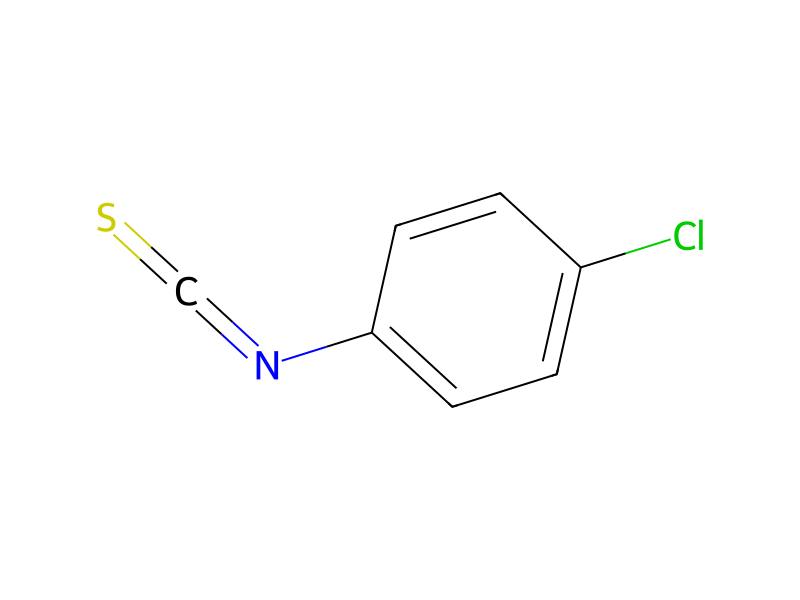
Grundinformationen
- CAS
2131-55-7- Standard-SMILES
S=C=Nc1ccc(Cl)cc1- InChIKey
MZZVFXMTZTVUFO-UHFFFAOYSA-N- Summenformel
- C7H4ClNS
- Durchschnittliche Molmasse
- 169,63 g/mol
- Monoisotopische Masse
- 168,97529781
Überblick
structure
Namen und Bezeichner
- Bevorzugter Name
- 4-Chlorophenyl isothiocyanate
- IUPAC
- 1-chloro-4-isothiocyanatobenzene
- Lokaler Name
- 1-Chlor-4-isothiocyanatobenzol
- Englischer Name
- 4-CHLOROPHENYL ISOTHIOCYANATE
- Summenformel
- C7H4ClNS
- Molmasse
- 169.63
Namen und Synonyme
4-Chlorophenyl isothiocyanate2131-55-71-CHLORO-4-ISOTHIOCYANATOBENZENEp-Chlorophenyl isothiocyanateBenzene, 1-chloro-4-isothiocyanato-Sch-20350NSC-20213DTXSID70175577393YTR4225RefChem:75421DTXCID9098068218-358-3
Weitere Namen anzeigen
AKOS BBS-000044374-Chloroisothiocyanatobenzene4-(Isothiocyanato)chlorobenzene4-ChlorophenylIsothiocyanate>4-Chlorophenyl isothiocyate, 99%4-Chlorophenyl isothiocyanate 99%
1-chloro-4-isothiocyanato-benzene4-ChlorophenylisothiocyanateIsothiocyanic acid, p-chlorophenyl ester4-Chlor-phenyl-isothiocyanatMFCD00004810Isothiocyanic acid, 4-chlorophenyl ester4-chlorobenzenisothiocyanateSch 20350
Datenbank-Bezeichner
- CAS
2131-55-7- PubChem CID
- 16480
- DTXSID
DTXSID70175577- UNII
- 393YTR4225
- EC Number
- 218-358-3
- Nikkaji
- J41.134E
Eigenschaften
Berechnete StruktureigenschaftenWird ergänzt
- XLogP
- 3,9
- Polarare Oberfläche (TPSA)
- 44,5 Ų
- H-Brücken-Donoren
- 0
- H-Brücken-Akzeptoren
- 2
- Frei drehbare Bindungen
- 1
- Schwere Atome
- 10
- Formalladung
- 0
- Komplexität
- 146
Experimentelle und physikochemische Eigenschaften
SpringerMaterials PropertiesDensity
LogP3.91
Physikochemische Eigenschaften
- Schmelzpunkt
- 42 · 42-44 °C(lit.)
- Siedepunkt
- 135 · 135-136 °C24 mm Hg(lit.)
- Dichte
- 1.3181 · 1.3181 (rough estimate)
- Brechungsindex
- 1.61 · 1.6100 (estimate)
- Flammpunkt
- 110 °C · 110 °C
- storage temp.
- Refrigerator (+4°C)
- Aggregatzustand
- powder to crystal
- Farbe
- White to Light yellow
- BRN
- 471610 · 471610
- InChI
- InChI=1S/C7H4ClNS/c8-6-1-3-7(4-2-6)9-5-10/h1-4H
- InChIKey
- MZZVFXMTZTVUFO-UHFFFAOYSA-N
Sicherheit und Regulatorisches
Sicherheitsangaben dienen nur zur Orientierung und ersetzen weder das Sicherheitsdatenblatt (SDB) des Lieferanten noch geltende Vorschriften oder eine fachliche Bewertung.
GHS-Klassifizierung
GHS Classification
Danger
H301 (89.6%): Toxic if swallowed [Danger Acute toxicity, oral]
P233, P260, P261, P262, P264, P264+P265, P270, P271, P272, P280, P284, P301+P316, P302+P352, P304+P340, P305+P351+P338, P316, P319, P321, P330, P332+P317, P333+P317, P337+P317, P342+P316, P361+P364, P362+P364, P403, P403+P233, P405, and P501 (click each P-code to see the statement)
Aggregated GHS information provided per 48 reports by companies from 8 notifications to the ECHA C&L Inventory. Each notification may be associated with multiple companies.
Gefahrenhinweise
Hazard Classes and CategoriesAcute Tox. 3 (89.6%)
Sicherheitsdaten
- F
- 10-21-19
- wgk
- 3
- ridadr
- UN 2206 6.1/PG 2
- hs_code
- 29309090
- RTECS-Nr.
- NX8473000
- risk_code
- 23/24-36/37/38-42-42/43-23/24/25
- hazard_code
- T
- safety_code
- 22-26-36/37/39-45-36/37
- hazard_class
- 8
- packing_group
- III
- Speicherklasse
- 6.1C - Combustible acute toxic Cat.3toxic compounds or compounds which causing chronic effects
- Hazard Classifications
- Acute Tox. 3 DermalAcute Tox. 3 InhalationAcute Tox. 3 OralEye Irrit. 2Resp. Sens. 1Skin Irrit. 2Skin Sens. 1STOT SE 3
Chemie und Industrie
Anwendungen
BeschreibungDer Isothiocyansäure-(4-chlorphenylester) kristallisiert aus Ethanol in Form weißer, wasserunlöslicher Nadeln. Die Substanz ist sehr feuchtigkeitsempfindlich und reizt die Haut und Schleimhäute sehr stark.
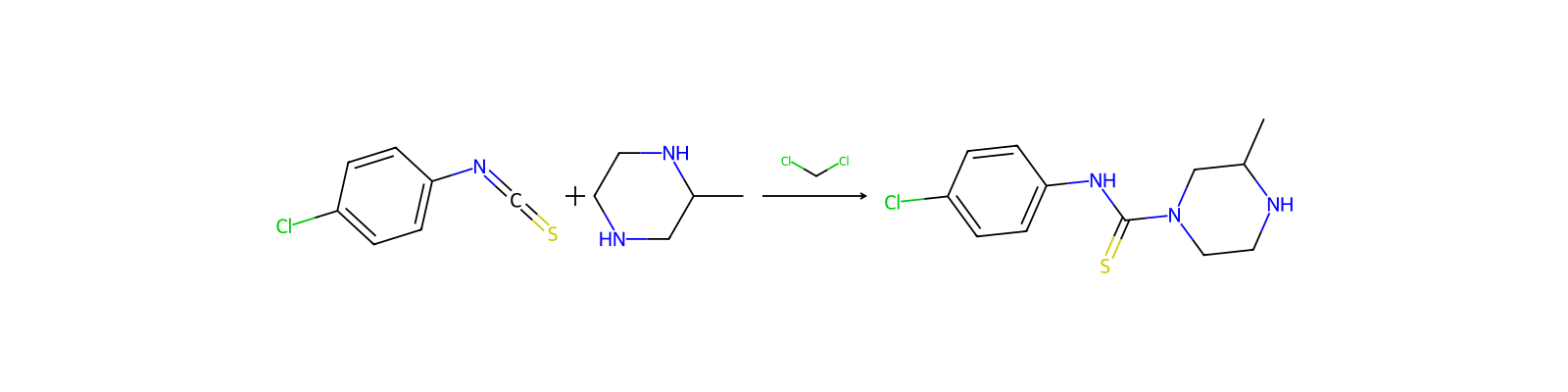
Verwenden4-Chlorophenyl isothiocyanate has been used in the synthesis of thiosemicarbazides. It was also used as building block for the synthesis of N-alkylated 2-arylaminobenzimidazoles.
Vor- und nachgelagerte Produkte
Nachgelagerte Produkte
Zugehörige Reaktionen
146


Notizen zur Verbindung
Wird geladen…