StartseiteMCPWorkbenchSkills
StartseiteWorkbenchBenachrichtigungenMein Bereich
llms.txt · MCP-AnleitungDatenschutz · Nutzungsbedingungen · Supportv1.8.0
  1. Startseite
  2. /Verbindung

Chlormethoxyethan

Chloromethyl ethyl ether

HCID 18523
Neue NotizNeue ReaktionAnfrage stellen
Druckvorschau

Daten werden ergänzt – lade die Seite später neu, um den aktuellen Stand zu sehen

GrundinformationenÜberblickNamen und BezeichnerEigenschaftenSicherheit und RegulatorischesChemie und IndustrieZugehörige ReaktionenNotizen zur Verbindung
TeilstruktursucheÄhnliche Strukturen suchen

Grundinformationen

CAS
3188-13-4
Standard-SMILES
CCOCCl
InChIKey
FCYRSDMGOLYDHL-UHFFFAOYSA-N
Summenformel
C3H7ClO
Durchschnittliche Molmasse
94,54 g/mol
Monoisotopische Masse
94,01854252

Überblick

Chloromethyl ethyl ether appears as a colorless liquid. Slightly denser than water and insoluble in water. May be moderately toxic by ingestion, inhalation or skin absorption. Severely irritates skin, eyes and mucous membranes.

Namen und Bezeichner

Bevorzugter Name
Chloromethyl ethyl ether
IUPAC
chloromethoxyethane
Lokaler Name
Chlormethoxyethan
Englischer Name
Chloromethyl ethyl ether
Summenformel
C3H7ClO
Molmasse
94.54

Namen und Synonyme

CHLOROMETHYL ETHYL ETHER3188-13-4Chloromethoxyethane(chloromethoxy)ethaneEthane, (chloromethoxy)-Ethoxymethyl chlorideEthyl chloromethyl etherEthoxychloromethaneEther, chloromethyl ethyl08T7N64Z04DTXSID7062902RefChem:125441
Weitere Namen anzeigen
chloromethoxy-ethaneClCH2OC2H5ethoxymethylchlorideChloromethyl ethyl e(chloromethoxy)-ethan
DTXCID3038436221-687-5chloromethylethyl ether(Chloromethyl)ethyl etherChloromethyl Ethyl Ether 90%MFCD00000887ChloromethylethyletherEthoxy methyl chloride

Datenbank-Bezeichner

CAS
3188-13-4
PubChem CID
18523
DTXSID
DTXSID7062902
UNII
08T7N64Z04
EC Number
221-687-5
Nikkaji
J75.045J

Eigenschaften

Berechnete StruktureigenschaftenWird ergänzt

XLogP
1,1
Polarare Oberfläche (TPSA)
9,2 Ų
H-Brücken-Donoren
0
H-Brücken-Akzeptoren
1
Frei drehbare Bindungen
2
Schwere Atome
5
Formalladung
0
Komplexität
16,4

Experimentelle und physikochemische Eigenschaften

Chemical Classes · 2 Einträge

Other Classes -> Halogenated Ethers

Flammable agents - 3rd degree

SpringerMaterials PropertiesSchoenflies notation
Density1.0188 at 15 °C/4 °C
Boiling Point83 °C
Vapor Pressure59.1 [mmHg]
Refractive IndexIndex of Refraction: 1.4040 @ 20 °C/D
Physical Description · 2 Einträge

Chloromethyl ethyl ether appears as a colorless liquid. Slightly denser than water and insoluble in water. May be moderately toxic by ingestion, inhalation or skin absorption. Severely irritates skin, eyes and mucous membranes.

Colorless liquid; [CAMEO]

Physikochemische Eigenschaften

Sicherheit und Regulatorisches

Sicherheitsangaben dienen nur zur Orientierung und ersetzen weder das Sicherheitsdatenblatt (SDB) des Lieferanten noch geltende Vorschriften oder eine fachliche Bewertung.

GHS-Klassifizierung

GHS Classification · 4 Einträge

Danger

H225 (100%): Highly Flammable liquid and vapor [Danger Flammable liquids]

P203, P210, P233, P240, P241, P242, P243, P261, P264, P264+P265, P270, P271, P280, P301+P317, P302+P352, P303+P361+P353, P304+P340, P305+P351+P338, P317, P318, P321, P330, P337+P317, P362+P364, P370+P378, P403+P235, P405, and P501 (click each P-code to see the statement)

Aggregated GHS information provided per 44 reports by companies from 4 notifications to the ECHA C&L Inventory. Each notification may be associated with multiple companies.

Gefahrenhinweise

Regulatory InformationThe New Jersey Worker and Community Right to Know Act requires public and private employers to provide information about hazardous substances at their workplaces. (N.J.S.A. 34:5A-1 et. seq.)
DOT LabelFlammable Liquid Poison
Fire Hazards · 2 Einträge

Excerpt from ERG Guide 131 [Flammable Liquids - Toxic]:

· HIGHLY FLAMMABLE: Will be easily ignited by heat, sparks or flames.

Fire PotentialA very dangerous fire and explosion hazard when exposed to heat or flame.
Health Hazards · 2 Einträge

Excerpt from ERG Guide 131 [Flammable Liquids - Toxic]:

· TOXIC; may be fatal if inhaled, ingested or absorbed through skin.

Hazards SummaryInhalation of high concentrations can cause CNS depression; [HSDB] A severe skin, eye, and mucous membrane irritant; [CAMEO] An eye irritant that causes lacrimation; Targets the CNS and liver; [MSDSonline]

Chemie und Industrie

Verwendung und Herstellung

Uses · 2 Einträge

No known commercial use or production; Possibly a byproduct of water chlorination; [HSDB]

Chloromethyl ethyl ether has been listed as a compound with no specific industrial manufacture or use.

General Manufacturing Information · 2 Einträge

Ethane, (chloromethoxy)-: ACTIVE

The compound has been listed as a possible byproduct of water chlorination; a probable precursor is methyl ethyl ether.

Anwendungen · 1 Eintrag

VerwendenChloromethyl ethyl ether can be used to prepare:6-Benzyl-1-(ethoxymethyl)-5-iodopyrimidine-2,4(1H,3H)-dione, a key intermediate in the preparation of MKC-442 analog.Acylation catalyst for alcohols named 1,3-bis-[(R)-1-(2-naphthyl)ethyl]imidazoliumchloride by reacting with glyoxal-bis-[(R)-1-(2-naphthyl)ethyl]imine.

Vor- und nachgelagerte Produkte

Vorgelagerte Rohstoffe

1,3,5-Trioxan

Nachgelagerte Produkte

2-Chlor-N-(ethoxymethyl)-N-(2-ethyl-6-methylphenyl)acetamidEthoxyessigsureCarbaMic acid, [1-[(4-chlorophenyl)Methyl]-3-butenyl](ethoxyMethyl)-, Methyl ester (9CI)1,3-Bis(2,4,6-trimethylphenyl)imidazolium chloride

Zugehörige Reaktionen

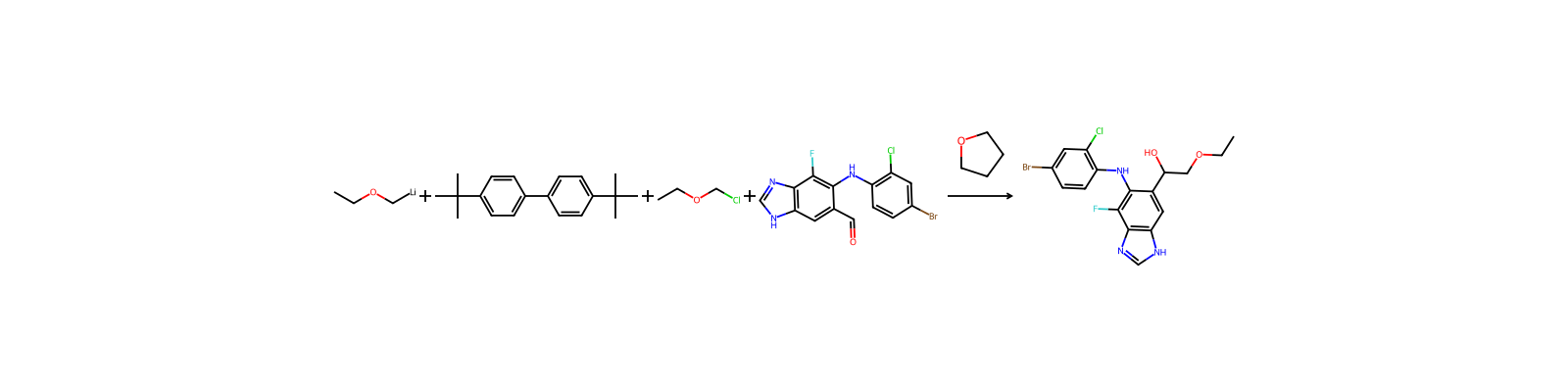
290
Reaktionsaufzeichnung erstellen
Reaktionsgleichung von HRID 1996
HRID 1996als Eduktuspto-grants-1998_03
Reaktionsgleichung von HRID 21600
HRID 21600als Eduktuspto-grants-1995_06
Reaktionsgleichung von HRID 28250
HRID 28250als Eduktuspto-grants-1980_09
Reaktionsgleichung von HRID 32015
HRID 32015als Eduktuspto-grants-2008_09
Reaktionsgleichung von HRID 35818
HRID 35818als Eduktuspto-grants-1995_05
Reaktionsgleichung von HRID 38027
HRID 38027als Eduktuspto-grants-2013_09
Reaktionsgleichung von HRID 46329
HRID 46329als Eduktuspto-grants-2013_09
Reaktionsgleichung von HRID 46408
HRID 46408als Eduktuspto-grants-1979_11
Seite 1 von 37

Notizen zur Verbindung

Wird geladen…

Auf dieser SeiteGrundinformationenÜberblickNamen und BezeichnerEigenschaftenSicherheit und RegulatorischesChemie und IndustrieZugehörige ReaktionenNotizen zur Verbindung
Weitere Aktionen
Neue NotizNeue ReaktionAnfrage stellen
Schmelzpunkt
-104 °C · -104°C
Siedepunkt
82 °C · 82 °C(lit.)
Dichte
1.019 g/mL · 1.019 g/mL at 25 °C(lit.)
Brechungsindex
20 · n20/D 1.404(lit.)
Flammpunkt
67 °F · 67 °F
storage temp.
0 · 0-6°C
Löslichkeit
Chloroform (Soluble), Ethyl Acetate (Slightly)
Aggregatzustand
Liquid
Wichte
1.019 · 1.019
Farbe
Clear colorless to pale yellow
InChI
InChI=1S/C3H7ClO/c1-2-5-3-4/h2-3H2,1H3
InChIKey
FCYRSDMGOLYDHL-UHFFFAOYSA-N
SMILES
CCOCCl
CAS Datenbank
3188 · 3188-13-4(CAS DataBase Reference)
NIST chemische Informationen
Ethane, (chloromethoxy)-(3188-13-4)
EPA chemische Informationen
Ethane, (chloromethoxy)- (3188-13-4)
DOT ID and Guide
2354 131
Reactive GroupEthers
Reactivity AlertsHighly Flammable
Reactivity Profile · 1 Eintrag

CHLOROMETHYL ETHYL ETHER tends to form unstable peroxides when exposed to oxygen or air. These products can sometimes be observed as clear crystals deposited on containers or along the surface of the liquid. Forms salts with strong acids and addition complexes with Lewis acids. May react violently with strong oxidizing agents.

DOT Emergency Guidelines · 5 Einträge

/GUIDE 131: FLAMMABLE LIQUIDS - TOXIC/ Fire or Explosion: HIGHLY FLAMMABLE: Will be easily ignited by heat, sparks or flames. Vapors may form explosive mixtures with air. Vapors may travel to source of ignition and flash back. Most vapors are heavier than air. They will spread along ground and collect in low or confined areas (sewers, basements, tanks). Vapor explosion and poison hazard indoors, outdoors or in sewers. Those substances designated with a (P) may polymerize explosively when heated or involved in a fire. Runoff to sewer may create fire or explosion hazard. Containers may explode when heated. Many liquids are lighter than water.

/GUIDE 131: FLAMMABLE LIQUIDS - TOXIC/ Health: TOXIC; may be fatal if inhaled, ingested or absorbed through skin. Inhalation or contact with some of these materials will irritate or burn skin and eyes. Fire will produce irritating, corrosive and/or toxic gases. Vapors may cause dizziness or suffocation. Runoff from fire control or dilution water may cause pollution.

/GUIDE 131: FLAMMABLE LIQUIDS - TOXIC/ Public Safety: CALL Emergency Response Telephone Number on Shipping Paper first. If Shipping Paper not available or no answer, refer to appropriate telephone number listed on the inside back cover. As an immediate precautionary measure, isolate spill or leak area for at least 50 meters (150 feet) in all directions. Keep unauthorized personnel away. Stay upwind. Keep out of low areas. Ventilate closed spaces before entering.

/GUIDE 131: FLAMMABLE LIQUIDS - TOXIC/ Protective Clothing: Wear positive pressure self-contained breathing apparatus (SCBA). Wear chemical protective clothing that is specifically recommended by the manufacturer. It may provide little or no thermal protection. Structural firefighters' protective clothing provides limited protection in fire situations ONLY; it is not effective in spill situations where direct contact with the substance is possible.

For more DOT Emergency Guidelines (Complete) data for CHLOROMETHYL ETHYL ETHER (8 total), please visit the HSDB record page.

DOT Hazard Classification · 5 Einträge

Chloromethyl ethyl ether

UN2354

Class 3 Flammable and combustible liquid (49 eCFR § 173.120)

Class 3 Flammable and combustible liquid (49 eCFR § 173.120)

PG II: the degree of danger presented by the material is medium

Sicherheit und Schutzausrüstung

Fire FightingExcerpt from ERG Guide 131 [Flammable Liquids - Toxic]:
Accidental Release Measures · 2 Einträge

· CALL 911. Then call emergency response telephone number on shipping paper. If shipping paper not available or no answer, refer to appropriate telephone number listed on the inside back cover.

· ELIMINATE all ignition sources (no smoking, flares, sparks or flames) from immediate area.

First Aid · 2 Einträge

Excerpt from ERG Guide 131 [Flammable Liquids - Toxic]:

General First Aid:

Exposure Control and Personal Protection· Wear positive pressure self-contained breathing apparatus (SCBA).
Nonfire Spill ResponseExcerpt from ERG Guide 131 [Flammable Liquids - Toxic]:
Disposal Methods · 2 Einträge

SRP: At the time of review, criteria for land treatment or burial (sanitary landfill) disposal practices are subject to significant revision. Prior to implementing land disposal of waste residue (including waste sludge), consult with environmental regulatory agencies for guidance on acceptable disposal practices.

This compound should be susceptible to removal from waste water by air stripping. /Bis(2-chloroethyl)ether/

Isolation and Evacuation · 2 Einträge

Excerpt from ERG Guide 131 [Flammable Liquids - Toxic]:

Immediate precautionary measure

Personal Protective Equipment (PPE)Excerpt from ERG Guide 131 [Flammable Liquids - Toxic]:
Emergency Response Planning GuidelinesCAUTION: The majority of these products have a very low flash point. Use of water spray when fighting fire may be inefficient.

Toxikologische Informationen

Environmental Fate · 3 Einträge

TERRESTRIAL FATE: The fate of chloromethyl ethyl ether in soil is unknown. However, due to its expected rapid hydrolysis rate in water, which is based upon measured hydrolysis rates for the structurally related chloromethyl methyl ether(1), chloromethyl ethyl ether would be expected to disappear rapidly from moist soil. Significant adsorption to soil, therefore, is not expected to occur.

AQUATIC FATE: If released to water, chloromethyl ethyl ether will hydrolyze rapidly based upon the hydrolysis half-life of <1 sec for the structurally related chloromethyl methyl ether in pure water at 20 °C(1). It will not, therefore, be expected to adsorb to sediment or suspended particulates, bioconcentrate in aquatic organisms, biodegrade, or significantly volatilize from water(SRC).

ATMOSPHERIC FATE: If released to the atmosphere, chloromethyl ethyl ether will be subject reaction with photochemically produced hydroxyl radicals with a half-life of 53 hours estimated for this process(1,SRC). It may be susceptible to surface catalyzed(2) hydrolysis in humid air, based upon observed hydrolysis of the structurally related chloromethyl methyl ether in humid air(3).

Adverse EffectsNeurotoxin - Acute solvent syndrome
Natural Pollution SourcesThere are no known natural sources of chloromethyl ethyl ether(1).
Human Toxicity Excerpts... /CNS effect/ causes loss of consciousness on appreciable exposure and, as good fat solvents, they cause dermatitis on repeated or prolonged skin contact. ... Enclosure and ventilation are to be employed /Chloromethyl ethers/
Artificial Pollution SourcesChloromethyl ethyl ether has been listed as a compound with no specific industrial manufacture or use(1). The compound has been listed as a possible byproduct of water chlorination; a probable precursor is methyl ethyl ether(1).
Environmental Biodegradation · 1 Eintrag

The hydrolysis half-life in water is expected to be sufficiently fast, based upon the hydrolysis half-life of <1 sec for the structurally related chloromethyl methyl ether in pure water at 20 °C(1), to preclude the possibility of biodegradation in the environment(SRC).

Environmental BioconcentrationBased upon the hydrolysis half-life of <1 sec for the structurally related chloromethyl methyl ether in pure water at 20 °C(1), bioconcentration of chloromethyl ethyl ether in the food chain is unlikely to occur(SRC).
Volatilization from Water/Soil · 1 Eintrag

Based upon the hydrolysis half-life of 18 sec for the structurally related chloromethyl methyl ether in pure water at 20 °C(1), significant volatilization from water is unlikely to occur(SRC). Based upon an estimated vapor pressure of 59 mm Hg(2), evaporation from surfaces and dry near-surface soil may be an important process(SRC).

Environmental Abiotic Degradation · 1 Eintrag

Hydrolysis of chloromethyl ethyl ether is expected to be very rapid(SRC), based upon the hydrolysis half-life of <1 sec for the structurally related chloromethyl methyl ether in pure water at 20 °C(1). It may be susceptible to surface catalyzed(2) hydrolysis in humid air, based upon observed hydrolysis of the structurally related chloromethyl methyl ether in humid air(1). The rate constant for the vapor phase reaction of chloromethyl ethyl ether with photochemically produced hydroxyl radicals has been estimated to be 7.2X10⁻¹² cu cm/molecule-sec at 25 °C which corresponds to an atmospheric half-life of 53 hours at an atmospheric concentration of 5X10+5 hydroxyl radicals per cu cm(3,SRC).

Environmental Water Concentrations · 1 Eintrag

DRINKING WATER: Chloromethyl ethyl ether has been listed in a literature review as a compound which has been found, but not quantified, in drinking water from unidentified sources(1), in the US(2) and in New Orleans(3); no dates were reported. Detection of considerable amounts of the compound in water is unlikely based upon the expected rapid hydrolysis in water based upon the hydrolysis half-life of 18 sec for the structurally related chloromethyl methyl ether in pure water at 20 °C(4).

Environmental Fate/Exposure Summary · 1 Eintrag

Chloromethyl ethyl ether has been listed as a compound with no specific industrial manufacture or use. Small amounts of it may be formed as a byproduct of water chlorination. The fate of chloromethyl ethyl ether in soil is unknown. However, due to its expected rapid hydrolysis rate in water, which is based upon measured hydrolysis rates for the structurally related chloromethyl methyl ether, it would be expected to disappear rapidly from moist soil. Significant adsorption to soil, therefore, is not expected to occur. If released to water, chloromethyl ethyl ether will hydrolyze rapidly based upon the hydrolysis half-life of <1 sec for the structurally related chloromethyl methyl ether in pure water at 20 °C. Adsorption to sediment or suspended particulates, bioconcentration in aquatic organisms, biodegradation, and volatilization from water are not expected to be important processes in natural waters compared to hydrolysis. If released to the atmosphere, chloromethyl ethyl ether will be subject to reaction with photochemically produced hydroxyl radicals with an estimated half-life of 53 hours. It may be susceptible to surfaces catalyzed hydrolysis in humid air, based upon observed hydrolysis of the structurally related chloromethyl methyl ether in humid air. Due to its expected rapid hydrolysis in water and its susceptibility to hydrolysis in humid air, exposure to significant amounts of chloromethyl ethyl ether is not expected to occur. (SRC)

Antidote and Emergency Treatment · 2 Einträge

Basic treatment: Establish a patent airway. Suction if necessary. Watch for signs of respiratory insufficiency and assist ventilations if necessary. Administer oxygen by nonrebreather mask at 10 to 15 L/min. Provide a low-stimulus environment. Monitor for shock and treat if necessary ... . Anticipate seizures and treat if necessary ... . For eye contamination, flush eyes immediately with water. Irrigate each eye continuously with normal saline during transport ... . Do not use emetics. For ingestion, rinse mouth and administer 5 mL/kg up to 200 mL of water for dilution if the patient can swallow, has a strong gag reflex, and does not drool ... . Treat frostbite by rapid rewarming ... . /Ethers and related compounds/

Advanced treatment: Consider orotracheal or nasotracheal intubation for airway control in the patient who is unconscious or in respiratory arrest. Monitor cardiac rhythm and treat arrhythmias if necessary ... . Start an IV with D5W TKO /SRP: To keep open, "minimal flow rate"/. Use lactated Ringer's if signs of hypovolemia are present. For hypotension with signs of hypovolemia, administer fluid cautiously. Consider vasopressors for hypotension with a normal fluid volume. Watch for signs of fluid overload ... . Treat seizures with diazepam ... . Use proparacaine hydrochloride to assist eye irrigation ... . /Ethers and related compounds/

Regulatorische Informationen

Clean Water Act RequirementsToxic pollutant designated pursuant to section 307(a)(1) of the Clean Water Act and is subject to effluent limitations. /Chloroalkyl ethers/

Sicherheitsdaten

wgk
3
tsca
TSCA listed
ridadr
UN 2354
hs_code
29091990
risk_code
11-20/21/22-36-40
hazard_code
F,Xn
safety_code
16-36/37-9-45-29
hazard_class
3
packing_group
II
Speicherklasse
3 - Flammable liquids
Giftige Stoffe Daten
3188-13-4(Hazardous Substances Data)
Hazard Classifications
Acute Tox. 4 DermalAcute Tox. 4 InhalationAcute Tox. 4 OralCarc. 2Eye Irrit. 2Flam. Liq. 2