

Grundinformationen
- CAS
12058-66-1- Standard-SMILES
O.O.O.[Na+].[Na+].[O]=[Sn]([O-])[O-]- InChIKey
SFXJSNATBHJIDS-UHFFFAOYSA-N- Summenformel
- H6Na2O6Sn
- Durchschnittliche Molmasse
- 266,73 g/mol
- Monoisotopische Masse
- 267,898179
Namen und Bezeichner
- Bevorzugter Name
- Sodium Stannate
- IUPAC
- disodium;dioxido(oxo)tin;trihydrate
- Lokaler Name
- Dinatriumzinntrioxid
- Englischer Name
- Sodium stannate
- Summenformel
- Na2O3Sn
- Molmasse
- 212.69
Namen und Synonyme
Sodium stannate trihydrateSodium stannate [VANDF]Disodium stannate, trihydrateSodium stannate [INCI]NJ7C1V83KGSodium stannate(IV) trihydrate [MI]DISODIUM STANNATE TRIHYDRATERefChem:887879Sodium tin oxide (8CI)Stannate (SnO32), disodiumSODIUM STANNATE(IV) TRIHYDRATEStannate (SnO32), sodium (1:2)
Weitere Namen anzeigen
sodiumtinoxidetinsodiumoxideNatrium stannatdisodiumstannateSODIUM M-STANNATEStannate disodiumsodiumstannate(iv)Sodiumstannate3H2OSODIUM TIN(IV) OXIDE
EINECS 234-724-5EINECS 235-030-5Sodium StannateSodium Stannate(Iv)SODIUM STANNATE(IV) [MI]Sodium tin oxideTin sodium oxide12209-98-2
Datenbank-Bezeichner
- CAS
12058-66-1、12209-98-2- PubChem CID
- 21977542
- UNII
- NJ7C1V83KG
- EC Number
- 638-769-5
Eigenschaften
Berechnete Struktureigenschaften
- Polarare Oberfläche (TPSA)
- 66,2 Ų
- H-Brücken-Donoren
- 3
- H-Brücken-Akzeptoren
- 6
- Frei drehbare Bindungen
- 0
- Schwere Atome
- 9
- Formalladung
- 0
- Komplexität
- 18
Experimentelle und physikochemische Eigenschaften
Physical DescriptionTrihydrate: Colorless or white solid; Gradually decomposed by air; [Merck Index] White to off-white crystals and powder; Odorless; Slowly decomposed by air to the oxide; [GFS Chemicals MSDS]
Physikochemische Eigenschaften
- Schmelzpunkt
- 140 °C · 140°C
- Dichte
- 4.68 g/cm3 · 4.68 g/cm3(Temp: 25 °C)
- Aggregatzustand
- Crystalline
- Geruch (Odor)
- Odorless
- Wasserlöslichkeit
- Slightly soluble in water.
- Merck
- 14 · 14,8677
- Stabilität
- Stable, but may be air sensitive.
- Kosmetik-Inhaltsstoffe Funktionen
- VISCOSITY CONTROLLINGLIGHT STABILIZER
- InChI
- InChI=1S/2Na.3O.Sn/q2*+1;;2*-1;
- InChIKey
- TVQLLNFANZSCGY-UHFFFAOYSA-N
- SMILES
- [Sn]([O-])([O-])=O.[Na+].[Na+]
- CAS Datenbank
- 12058 · 12058-66-1(CAS DataBase Reference)
- EPA chemische Informationen
- Stannate (SnO32-), disodium (12058-66-1)
Sicherheit und Regulatorisches
GHS-Klassifizierung
GHS Classification
This chemical does not meet GHS hazard criteria for 16.7% (1 of 6) of reports.
Danger
H314 (16.7%): Causes severe skin burns and eye damage [Danger Skin corrosion/irritation];H315 (66.7%): Causes skin irritation [Warning Skin corrosion/irritation];H318 (16.7%): Causes serious eye damage [Danger Serious eye damage/eye irritation];H319 (66.7%): Causes serious eye irritation [Warning Serious eye damage/eye irritation];H335 (66.7%): May cause respiratory irritation [Warning Specific target organ toxicity, single exposure; Respiratory tract irritation];H412 (16.7%): Harmful to aquatic life with long lasting effects [Hazardous to the aquatic environment, long-term hazard]
P260, P261, P264, P264+P265, P271, P273, P280, P301+P330+P331, P302+P352, P302+P361+P354, P304+P340, P305+P351+P338, P305+P354+P338, P316, P317, P319, P321, P332+P317, P337+P317, P362+P364, P363, P403+P233, P405, and P501 (click each P-code to see the statement)
Aggregated GHS information provided per 6 reports by companies from 3 notifications to the ECHA C&L Inventory. Each notification may be associated with multiple companies.;Reported as not meeting GHS hazard criteria per 1 of 6 reports by companies.;There are 2 notifications provided by 5 of 6 reports by companies with hazard statement code(s).;Information may vary between notifications depending on impurities, additives, and other factors. The percentage value in parenthesis indicates the notified classification ratio from companies that provide hazard codes. Only hazard codes with percentage values above 10% are shown. For more detailed information, please visit ECHA C&L website.
Gefahrenhinweise
Hazards SummaryMay cause irritation; Chronic inhalation may cause stannosis (pneumoconiosis); [GFS Chemicals MSDS] See Tin(IV) oxide.
Hazard Classes and CategoriesSkin Corr. 1B (16.7%);Eye Dam. 1 (16.7%);Aquatic Chronic 3 (16.7%)
Sicherheit und Schutzausrüstung
Threshold Limit Values (TLV)2.0 [mg/m3], as Sn
Permissible Exposure Limit (PEL)2.0 [mg/m3], as Sn
Protective Action Criteria (PAC)
13 [mg/m3]
110 [mg/m3]
680 [mg/m3]
Sicherheitsdaten
- wgk
- 3
- tsca
- TSCA listed
- RTECS-Nr.
- JN6345000
- risk_code
- 36-36/37/38
- hazard_code
- Xi
- safety_code
- 26
Chemie und Industrie
Verwendung und Herstellung
Uses
Permitted for use as an inert ingredient in non-food pesticide products; [EPA] Used as a mordant in dying and printing calico and for fireproofing curtains; [Merck Index]
Textiles (Printing, Dyeing, or Finishing) [Category: Industry]
Household ProductsInformation on 159 consumer products that contain Sodium stannate in the following categories is provided:;• Personal Care
Use ClassificationCosmetics -> Viscosity controlling; Stabilizing
Anwendungen
VerwendenMordant in dyeing, ceramics, glass, source of tin for electroplating and immersion plating, tex- tile fireproofing, stabilizer for hydrogen peroxide, blueprint paper, laboratory reagent.
Vor- und nachgelagerte Produkte
Vorgelagerte Rohstoffe
Anbieter100 Anbieter
国药集团化学试剂有限公司86-21-63210123 · [email protected]
阿诺西(上海)生物技术有限公司400-1107768 15058188853 · [email protected]
湖北万得化工有限公司15377098680 15377098680 · [email protected]
Career Henan Chemica Co+86-0371-86658258 +86-13203830695 · [email protected]
深圳市星凯越生物科技有限公司0755-18589069862 18589069862 · [email protected]
河北创海生物科技有限公司+86-86-13131129325 · [email protected]
湖北研科时代科技有限公司15780669880 · [email protected]
武汉科美沃化工有限公司+86-2785736489 +8618171418573 · [email protected]
Dayang Chem (Hangzhou) Co.,Ltd.+86-0571-88938639 17705817739 · [email protected]
武汉绿景丰华生物科技有限公司19972070065 · [email protected]
上海迈瑞尔生化科技有限公司4006356688 18621169109 · [email protected]
北京索莱宝科技有限公司010-50973130 17801761073 · [email protected]
武汉市聚舜化工有限公司027-02783261126 18971318572 · [email protected]
阿法埃莎(中国)化学有限公司400-6106006 · [email protected]
安耐吉化学&3A(安徽泽升科技股份有限公司)400-0056266 · [email protected]
上海瀚鸿科技股份有限公司021-54306202 13764082696 · [email protected]
广东方信生物科技有限公司0751-2838688 13376594225 · [email protected]
南京诺利斯医药科技有限公司13901585132 · [email protected]
湖北广奥生物科技有限公司027-02702759223056 18162699093 · [email protected]
唐山默内德贸易有限公司+86-315-8309571 +86-15633399667 · [email protected]
合肥天健化工有限公司551-65418679 15856988503;15837135945 · [email protected]
山东西亚化学有限公司13355009207 13355009207 · [email protected]
Xiamen AmoyChem Co., Ltd+86-86-5926051114 · [email protected]
南京化学试剂股份有限公司025-58369808 17895012682 · [email protected]
南京诺利斯医药科技有限公司13901585132 · [email protected]
北京环宇世纪化学科技有限公司hysj_bj.com
上海将来实业股份有限公司400-0066400 13621662912 · [email protected]
上海将来实业股份有限公司021-61552785 · [email protected]
HBCChem, Inc.+1-510-219-6317 · [email protected]
上海麦克林生化科技股份有限公司15221275939 15221275939 · [email protected]
宿迁南翔化学品制造有限公司21-39125199 13817939213 · [email protected]
康迪斯化工(湖北)有限公司13125172151 · [email protected]
陕西缔都医药化工有限公司029-81024372 17792795018 · [email protected]
Sigma-Aldrich西格玛奥德里奇(上海)贸易有限公司021-61415566 800-8193336 · [email protected]
天津荣燊化工有限公司18317763565; 18317763565 · [email protected]
上海谱振生物科技有限公司4001650900 13817534909 · [email protected]
厦门志信化学有限公司+86-5922680277 +86-13806087780 · [email protected]
上海玻尔化学试剂有限公司19102157732 · [email protected]
上海珈得尔化学技术有限公司021-4007787-550 400-7787-550 · [email protected]
启源(广东)医药化工有限公司18026564465 · [email protected]
山东崇成能源科技有限公司18253333366 · [email protected]
成都润泽本土化工有限公司028-88469284 18000562381 · [email protected]
陕西缔都医药化工有限公司+86-29-81139210 +86-17392587031 · [email protected]
南京择优新材料科技有限公司173-40521416 17340521416 · [email protected]
北京华威锐科化工科技有限公司89508211 18501085097 · [email protected]
上海西陇生化科技有限公司021-52907766-8042
上海源叶生物科技有限公司13636370518 · [email protected]
上海西格生物科技有限公司021-57810052 18930344717 · [email protected]
武汉市承天精细化工有限公司18164098996 · [email protected]
成都标样生物科技有限公司028-81700200 13308200041 · [email protected]
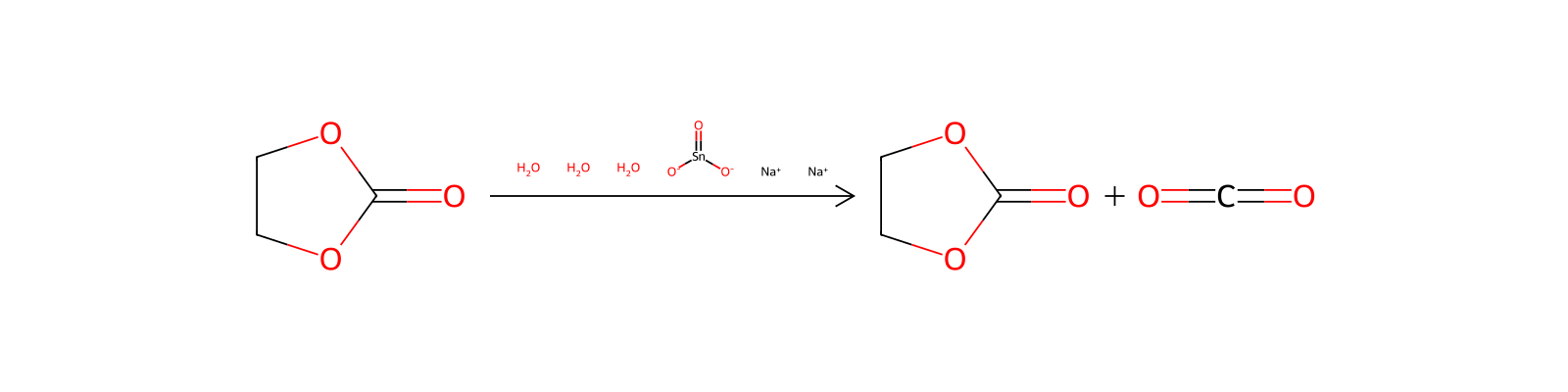
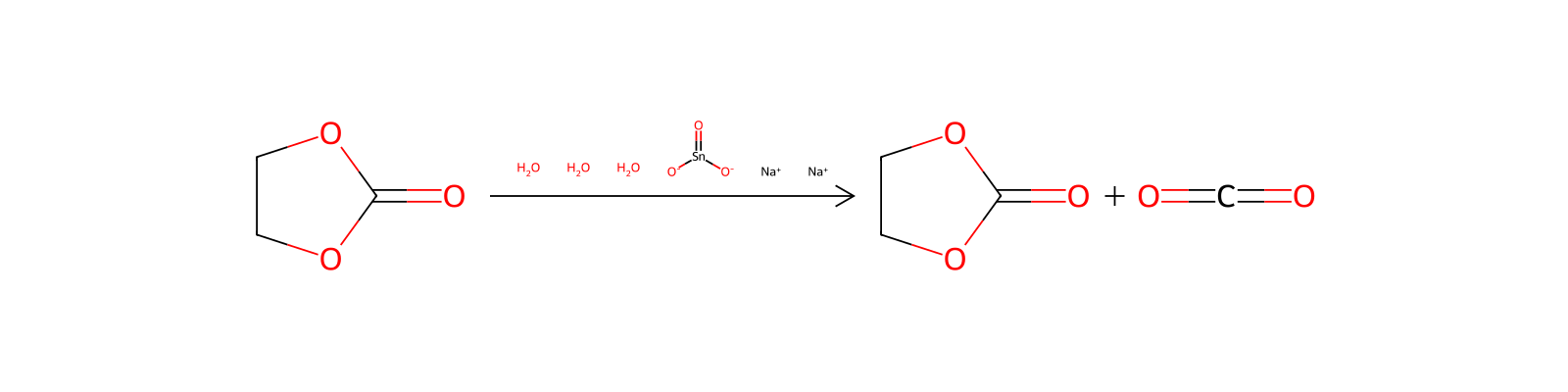
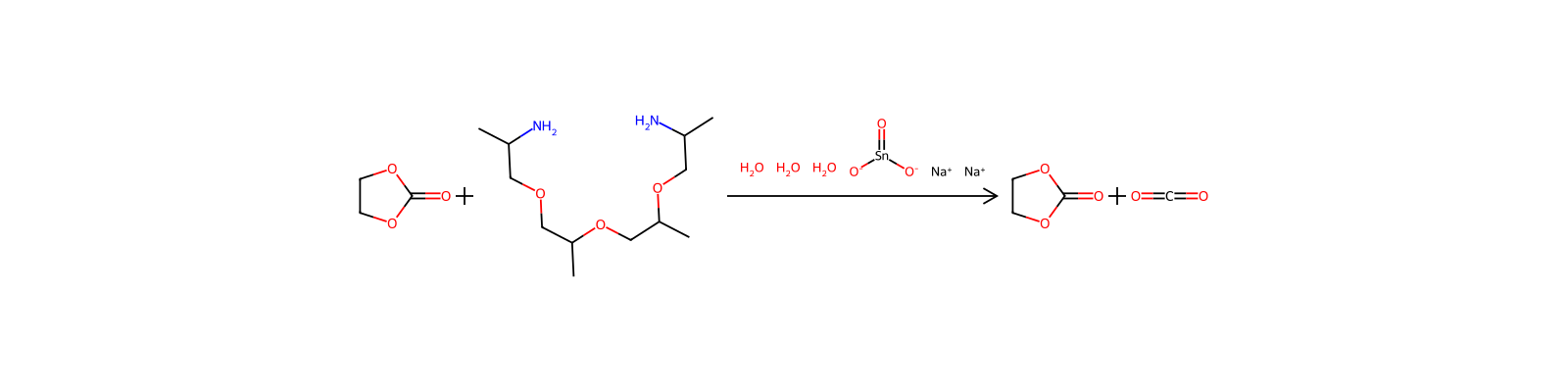
Zugehörige Reaktionen
6


Notizen zur Verbindung
Wird geladen…