StartseiteMCPWorkbenchSkills
StartseiteWorkbenchBenachrichtigungenMein Bereich
llms.txt · MCP-AnleitungDatenschutz · Nutzungsbedingungen · Supportv1.8.0
  1. Startseite
  2. /Verbindung

Perchlorsure

Perchloric Acid

HCID 24247
Neue NotizNeue ReaktionAnfrage stellen
Druckvorschau

Daten werden ergänzt – lade die Seite später neu, um den aktuellen Stand zu sehen
GrundinformationenÜberblickNamen und BezeichnerEigenschaftenSicherheit und RegulatorischesChemie und IndustrieZugehörige ReaktionenNotizen zur Verbindung
TeilstruktursucheÄhnliche Strukturen suchen

Grundinformationen

CAS
7601-90-3
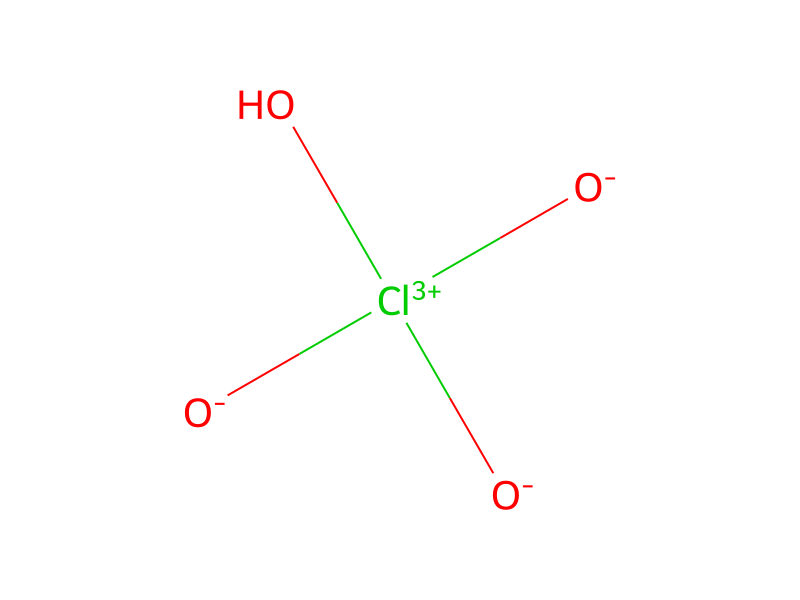
Standard-SMILES
[O-][Cl+3]([O-])([O-])O
InChIKey
VLTRZXGMWDSKGL-UHFFFAOYSA-N
Summenformel
ClHO4
Durchschnittliche Molmasse
100,46 g/mol
Monoisotopische Masse
99,95633619

Überblick

Perchloric acid, with more than 50% but not more than 72% acid appears as a clear colorless odorless aqueous solution. Corrosive to metals and tissue. Closed containers may rupture violently under prolonged exposure to heat.

Namen und Bezeichner

Bevorzugter Name
Perchloric Acid
IUPAC
perchloric acid
Lokaler Name
Perchlorsure
Englischer Name
PERCHLORIC ACID
Summenformel
ClHO4
Molmasse
100.46

Namen und Synonyme

PERCHLORIC ACID7601-90-3V561V90BG2CHEBI:29221DTXSID8047004RefChem:6111Dioxonium perchlorate solutionDTXCID6027004231-512-4HSDB 1140EINECS 231-512-4UN1802
Weitere Namen anzeigen
HCLO4PERCHLORIC ACID 70%Perchloric acid, ca. 70% Solution in WaterPerchloric acid, Puriss. p.a., ACS Reagent, 70% (Hg ?0.0000005%), packed in coated, shock- and leak-protected glass bottle70-72%GR,70-72%PerchlorsureFraude's reagentacideperchlorique
UNII-V561V90BG2MFCD00011325Perchloric Acid (60%)Perchloric Acid (70%)EC 231-512-4Perchloric acid, >72% acid by mass [Forbidden]Perchloric acid, >72% acid by mass0.5N Perchloric Acid

Datenbank-Bezeichner

CAS
7601-90-3
PubChem CID
24247

Eigenschaften

Berechnete StruktureigenschaftenWird ergänzt

XLogP
2,3
Polarare Oberfläche (TPSA)
71,4 Ų
H-Brücken-Donoren
1
H-Brücken-Akzeptoren
4
Frei drehbare Bindungen
0
Schwere Atome
5
Formalladung
0
Komplexität
114

Experimentelle und physikochemische Eigenschaften

Chemical Classes · 2 Einträge

Toxic Gases & Vapors -> Oxidizers

Reactive agents - 3rd degree

Odorodorless
Density · 5 Einträge

1.6 to 1.7 at 77 °F (USCG, 1999)

1.768 @ 22 °C

VERY HYGROSCOPIC; COMBINES VIGOROUSLY WITH WATER WITH EVOLUTION OF HEAT; AQ ACID IS VERY CAUSTIC; DECOMP WHEN DISTILLED @ ATMOSPHERIC PRESSURE; DENSITY OF AQ SOLN @ 25 °C: 65.0%= 1.597; 70.0%= 1.664; 75.0%= 1.731; DENSITY OF AQ SOLN @ 15 °C: 1%= 1.0050; 10%= 1.0597; 20%= 1.1279; 30%= 1.2067; 40%= 1.2991; 50%= 1.4103; 60%= 1.5389; 70%= 1.6736

Relative density (water = 1): 1.76 (22 °C)

1.77 @25 °C

Color/FormCOLORLESS, OILY LIQUID
Solubility · 2 Einträge

MISCIBLE IN COLD WATER

Solubility in water: miscible

Boiling Point19 °C @ 11 MM HG
Decomposition19 °C
Melting Point

Sicherheit und Regulatorisches

Sicherheitsangaben dienen nur zur Orientierung und ersetzen weder das Sicherheitsdatenblatt (SDB) des Lieferanten noch geltende Vorschriften oder eine fachliche Bewertung.

GHS-Klassifizierung

GHS Classification · 6 Einträge

Danger

H271: May cause fire or explosion; strong Oxidizer [Danger Oxidizing liquids; Oxidizing solids]

P210, P220, P260, P264, P280, P283, P301+P330+P331, P302+P361+P354, P304+P340, P305+P354+P338, P306+P360, P316, P321, P363, P370+P378, P371+P380+P375, P405, P420, and P501 (click each P-code to see the statement)

Danger

H271 (100%): May cause fire or explosion; strong Oxidizer [Danger Oxidizing liquids; Oxidizing solids]

P210, P220, P234, P260, P264, P270, P280, P283, P301+P317, P301+P330+P331, P302+P361+P354, P304+P340, P305+P354+P338, P306+P360, P316, P321, P330, P363, P370+P378, P371+P380+P375, P390, P405, P406, P420, and P501 (click each P-code to see the statement)

Gefahrenhinweise

Regulatory Information · 4 Einträge

Chemical: Perchloric acid

Status: Active Update: 30-05-2018 https://echa.europa.eu/registration-dossier/-/registered-dossier/8872

Perchloric acid: Does not have an individual approval but may be used under an appropriate group standard

The New Jersey Worker and Community Right to Know Act requires public and private employers to provide information about hazardous substances at their workplaces. (N.J.S.A. 34:5A-1 et. seq.)

Other Safety InformationIMAP assessments - Perchloric acid: Human health tier II assessment
DOT Label · 2 Einträge

Oxidizer Corrosive

Corrosive Oxidizer

Fire Hazards · 5 Einträge

Behavior in Fire: Above 160 °C (320 °F) will react with combustible material and increase intensity of fire. Containers may explode. (USCG, 1999)

Excerpt from ERG Guide 157 [Substances - Toxic and/or Corrosive (Non-Combustible / Water-Sensitive)]:

Chemie und Industrie

Verwendung und Herstellung

Uses · 6 Einträge

Used as an oxidizer in analytical chemistry; its salts are used in explosives and electroplating baths; [Merck Index] Used as a catalyst, to make various esters, and in electrolytic bathes for lead deposition; [HSDB]

Electroplating [Category: Plate]

IN ANALYTICAL CHEMISTRY AS AN OXIDIZER & FOR SEPARATION OF POTASSIUM FROM SODIUM

EXPLOSIVES & FOR PLATING OF METALS /PERCHLORATE SALTS/

TITRATION REAGENT IN DETERMINATION OF 1H-BENZOTRIAZOLE IN AIR

CATALYST; MFR OF VARIOUS ESTERS; INGREDIENT OF ELECTROLYTIC BATH IN DEPOSITION OF LEAD

U.S. Exports(1986) No Data
U.S. Imports(1986) No Data
U.S. Production(1986) No Data
Methods of Manufacturing · 2 Einträge

...FROM POTASSIUM PERCHLORATE & SULFURIC ACID: HANDBOOK OF PREPARATIVE INORGANIC CHEMISTRY VOL 1, G BRAUER, ED (ACADEMIC PRESS, NEW YORK, 2ND ED, 1963) PAGES 318-320. COMPREHENSIVE MONOGRAPH: JC SCHUMACHER, PERCHLORATES (REINHOLD, NEW YORK, 1960).

Chemical reaction of sodium perchlorate and hydrochloric acid; direct electrolytic oxidation of cold (18 °C), very dilute (0.5N) hydrochloric acid; irradiating aqueous solutions of chlorine dioxide; passing ozonized air through a solution of hydrochloric acid or sodium hypochloride; electrodialysis of perchlorate salts using ion-selective membranes

Formulations/Preparations · 4 Einträge

GRADES: TECHNICAL; CP

...MARKETED ONLY IN MIXTURE WITH WATER CONTAINING 60-70% PERCHLORIC ACID, DENSITY 1.5 & 1.6, RESPECTIVELY.

DIOXONIUM PERCHLORATE SOLUTION; PERCHLORIC ACID SOLUTION

Technical grade, CP; commercial aqueous solutions contain 65-70% HClO4

General Manufacturing Information · 2 Einträge

Perchloric acid: ACTIVE

METHOD OF PURIFICATION: RECTIFICATION

Zugehörige Reaktionen

1.030
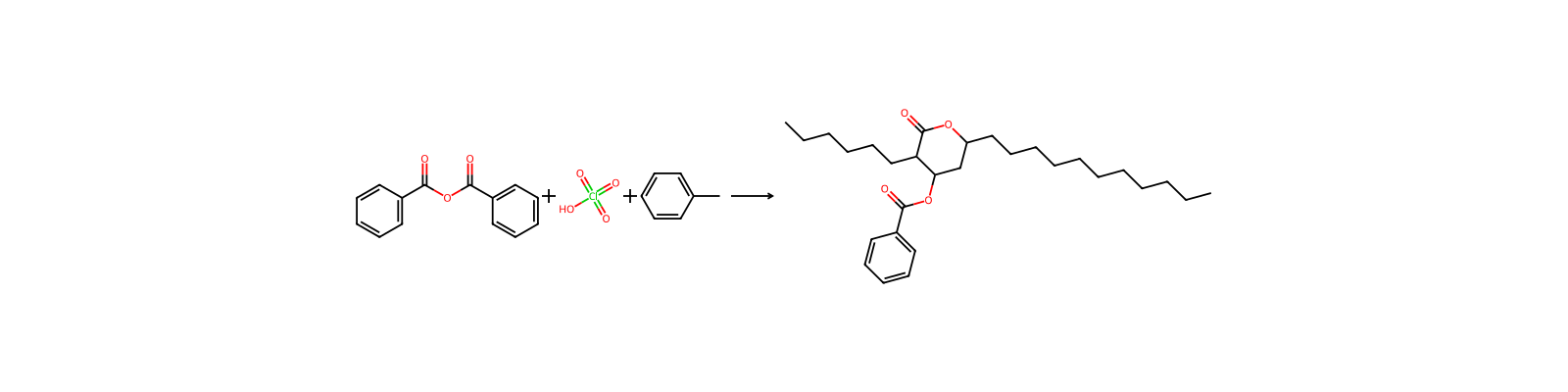
Reaktionsaufzeichnung erstellen
Reaktionsgleichung von HRID 1174
HRID 1174als Eduktuspto-grants-1998_03
Reaktionsgleichung von HRID 5620
HRID 5620als Eduktuspto-grants-1993_09
Reaktionsgleichung von HRID 5625
HRID 5625als Eduktuspto-grants-1993_09
Reaktionsgleichung von HRID 7507
HRID 7507als Lösungsmitteluspto-grants-2006_08
Reaktionsgleichung von HRID 7508
HRID 7508als Lösungsmitteluspto-grants-2006_08
Reaktionsgleichung von HRID 7509
HRID 7509als Lösungsmitteluspto-grants-2006_08
Reaktionsgleichung von HRID 7510
HRID 7510als Lösungsmitteluspto-grants-2006_08
Reaktionsgleichung von HRID 7511
HRID 7511als Lösungsmitteluspto-grants-2006_08
Seite 1 von 129

Notizen zur Verbindung

Wird geladen…

Auf dieser SeiteGrundinformationenÜberblickNamen und BezeichnerEigenschaftenSicherheit und RegulatorischesChemie und IndustrieZugehörige ReaktionenNotizen zur Verbindung
Weitere Aktionen
Neue NotizNeue ReaktionAnfrage stellen
DTXSID
DTXSID8047004
ChEBI
CHEBI:29221
UNII
V561V90BG2
EC Number
231-512-4
Nikkaji
J43.590B
· 4 Einträge

-170 °F (USCG, 1999)

-112 °C

-112 °C

-112 °C

Vapor DensityRelative vapor density (air = 1): 3.5
Vapor Pressure6.8 [mmHg]
Physical Description · 4 Einträge

Perchloric acid, with more than 50% but not more than 72% acid appears as a clear colorless odorless aqueous solution. Corrosive to metals and tissue. Closed containers may rupture violently under prolonged exposure to heat.

Perchloric acid, with not more than 50% acid appears as a clear colorless odorless aqueous solution. Corrosive to metals and tissue. Closed containers may rupture violently under prolonged exposure to heat.

Colorless, odorless oily liquid; [HSDB] Highly hygroscopic; [Merck Index]

COLOURLESS LIQUID WITH PUNGENT ODOUR.

Stability/Shelf Life · 4 Einträge

VOLATILE

ON STORAGE EVEN IN DARK, ANHYDROUS ACID BECOMES DISCOLORED OWING TO DECOMPOSITION PRODUCTS & MAY EXPLODE SPONTANEOUSLY

UNSTABLE IN CONCENTRATED FORM

fuming

Physikochemische Eigenschaften

Schmelzpunkt
-18 °C · -18 °C
Siedepunkt
203 °C · 203 °C
Dichte
1.664 g/mL · 1.664 g/mL at 25 °C
Dampfdichte
2.1 · ~2.1 (vs air)
Dampfdruck
6.8 mm · 6.8 mm Hg ( 25 °C)
Brechungsindex
1.419 · 1.419
Flammpunkt
104 °F · 104 °F
storage temp.
Flammables area
Löslichkeit
Water (Sparingly)
pka
-7 · -7[at 20 ℃]
Aggregatzustand
Solution
Farbe
10 · APHA: ≤10
Wichte
1.54 · approximate 1.54
Geruch (Odor)
Odorless
PH
0.1 · 0.1 (H2O, 20°C)
Wasserlöslichkeit
Miscible with water.
Merck
14 · 14,7153
Henry's Law Constant
9.9 · 9.9×103 mol/(m3Pa) at 25℃, Jaeglé et al. (1996)
Stabilität
Stable. Avoid heat. May form explosive peroxides. Incompatible with a wide variety of substances, including organic materials, alcohols, amines, strong acids, strong bases, acid anhydrides, finely powdered metals, strong reducing agents. Contact with wood, paper and other celullose products may lead to explosion, as may contact with a vari
InChI
1S/ClHO4/c2-1(3,4)5/h(H,2,3,4,5)
InChIKey
VLTRZXGMWDSKGL-UHFFFAOYSA-N
SMILES
OCl(=O)(=O)=O
LogP
-4.62 · -4.62
CAS Datenbank
7601 · 7601-90-3(CAS DataBase Reference)
NIST chemische Informationen
Perchloric acid(7601-90-3)
EPA chemische Informationen
Perchloric acid (7601-90-3)

· May explode from friction, heat or contamination.

· Non-combustible, substance itself does not burn but may decompose upon heating to produce corrosive and/or toxic fumes.

Not combustible but enhances combustion of other substances. Many reactions may cause fire or explosion. Gives off irritating or toxic fumes (or gases) in a fire. Risk of fire and explosion on contact with metals, reducing agents or organic materials.

Fire Potential · 5 Einträge

AQ ACID...MAY DEFLAGRATE IN CONTACT WITH OXIDIZABLE SUBSTANCES. /AQUEOUS SOLN/

WILL INCREASE THE INTENSITY OF A FIRE. MAY CAUSE FIRE ON CONTACT WITH COMBUSTIBLES. /AQUEOUS SOLN/

ANHYDROUS ACID IGNITES IN CONTACT WITH SODIUM IODIDE OR HYDRIODIC ACID. ...MIXTURES OF 2-METHYLPROPENE & PERCHLORIC ACID VAPOR (5:1 MOLAR) IN NITROGEN IGNITE SPONTANEOUSLY @ 250 °C.

ANHYDROUS ACID IGNITES SULFINYL CHLORIDE.

...will ignite...by shock or heat.

Health Hazards · 4 Einträge

Inhalation of vapors or mist causes burning sensation of nose and throat, and lung irritation with coughing; prolonged or excessive exposure could cause vomiting and severe coughing. Ingestion causes blistering and burns of mouth and stomach. Contact with eyes or skin causes blistering and burns. (USCG, 1999)

Excerpt from ERG Guide 157 [Substances - Toxic and/or Corrosive (Non-Combustible / Water-Sensitive)]:

· TOXIC; inhalation, ingestion or contact (skin, eyes) with vapors, dusts or substance may cause severe injury, burns or death.

· TOXIC and/or CORROSIVE; inhalation, ingestion or contact (skin, eyes) with vapors, dusts or substance may cause severe injury, burns or death.

Hazards Summary · 1 Eintrag

Highly corrosive to skin; [Quick CPC] High inhalation exposure can cause pneumonitis and pulmonary edema; Causes liver injury in high-dose animal studies; [HSDB] Evolves heat when mixed with water--may explode; [Merck Index] A strong oxidant--a fire and explosion hazard; Corrosive to skin, eyes, and respiratory tract; Inhalation may cause pulmonary edema; [ICSC]

DOT ID and Guide · 2 Einträge

1873 143

1802 157

Reactive Group · 2 Einträge

Acids, Strong Oxidizing

Acids, Strong Oxidizing

EC ClassificationSymbol: O, C; R: 5-8-35; S: (1/2)-23-26-36-45
UN ClassificationUN Hazard Class: 5.1; UN Subsidiary Risks: 8; UN Pack Group: I
Special Reports · 2 Einträge

A REVIEW OF THE TOXICITY & HEALTH HAZARD OF PERCHLORIC ACID (17 REFERENCES).[MOREL C ET AL; TOXICOLOGICAL PAPER, NO 141: PERCHLORIC ACID (HCLO4); CAH NOTES DOC 94: 173-6 (1979)]

This data sheet describes the hazards of perchloric acid and the procedures necessary to avoid physical harm. Contents: Properties; uses; containers; shipping regulations; storage; personal hazards; handling; personal protective equipment; ventilation; fire and explosion hazards; symptoms of poisoning; first aid; toxicity; medical examinations; waste disposal.[Perchloric acid; National Safety Council, 444 North Michigan Ave, Chicago, IL 60611, USA, 4 pages (1982)]

Sicherheit und Schutzausrüstung

Fire Fighting · 3 Einträge

Excerpt from ERG Guide 143 [Oxidizers (Unstable)]:

Excerpt from ERG Guide 157 [Substances - Toxic and/or Corrosive (Non-Combustible / Water-Sensitive)]:

In case of fire in the surroundings: water in large amounts, water spray. In case of fire: keep drums, etc., cool by spraying with water. Combat fire from a sheltered position.

First Aid Measures · 4 Einträge

Fresh air, rest. Half-upright position. Artificial respiration may be needed. Refer for medical attention.

Remove contaminated clothes. Rinse skin with plenty of water or shower. Refer for medical attention .

First rinse with plenty of water for several minutes (remove contact lenses if easily possible), then refer for medical attention.

Rinse mouth. Do NOT induce vomiting. Refer for medical attention .

Accidental Release Measures · 4 Einträge

· CALL 911. Then call emergency response telephone number on shipping paper. If shipping paper not available or no answer, refer to appropriate telephone number listed on the inside back cover.

· Keep combustibles (wood, paper, oil, etc.) away from spilled material.

· CALL 911. Then call emergency response telephone number on shipping paper. If shipping paper not available or no answer, refer to appropriate telephone number listed on the inside back cover.

· ELIMINATE all ignition sources (no smoking, flares, sparks or flames) from immediate area.

First Aid · 4 Einträge

Get medical attention following all exposures to this compound.

Excerpt from ERG Guide 157 [Substances - Toxic and/or Corrosive (Non-Combustible / Water-Sensitive)]:

General First Aid:

General First Aid:

Safe StorageFireproof. See Chemical Dangers. Well closed.
Firefighting HazardsASSUME THAT ORGANIC MATERIALS ARE INVOLVED & THAT AN EXPLOSION MAY OCCUR. USE CAUTION IN APPROACHING THE FIRE.
Exposure Control and Personal Protection · 2 Einträge

· Wear positive pressure self-contained breathing apparatus (SCBA).

· Wear positive pressure self-contained breathing apparatus (SCBA).

Fire Fighting Procedures · 2 Einträge

COMBAT FIRES FROM SAFE DISTANCE OR PROTECTED LOCATION. FLOOD DISCHARGE AREA WITH WATER. COOL EXPOSED CONTAINERS WITH WATER. /AQUEOUS SOLN/

USE WATER SPRAY.

Storage Conditions · 2 Einträge

REAGENT BOTTLE--MAX 1-LB, GLASS-STOPPERED, GLASS BOTTLE; KEPT IN A HEAVY GLASS TRAY WITH LARGER CAPACITY. ADDN LAB STORAGE SHOULD BE IN ORIGINAL BOTTLES INSIDE A GLASS CONTAINER PADDED WITH GLASS WOOL & HAVING GREATER CAPACITY THAN THE CONTAINER. CARBOYS & LARGE BOTTLES SHOULD BE STORED ON ACID-RESISTING NONCOMBUSTIBLE SHELVES, IN A NONCOMBUSTIBLE STRUCTURE. ALL STORAGE MUST BE SEPARATED FROM COMBUSTIBLE MATERIALS, ORG MATERIALS, STRONG DEHYDRATING AGENTS, OXIDIZING & REDUCING AGENTS. ...MUST BE STORED WHERE IT WILL NOT FREEZE... PROTECT AGAINST PHYSICAL DAMAGE. ELECTRICAL WIRING...IN STORAGE AREAS MUST BE OF WATERTIGHT TYPE TO PROTECT AGAINST CORROSIVE ACTION OF VAPORS.

...SHOULD BE STORED & USED IN GLASS OR OTHER INERT CONTAINERS (PREFERABLY UNBREAKABLE), & CORKS & RUBBER STOPPERS SHOULD NOT BE USED.

Cleanup Methods · 3 Einträge

NEUTRALIZING AGENTS FOR ACIDS & CAUSTICS: FLUSH WITH WATER & RINSE WITH DILUTE SODIUM BICARBONATE OR SODA ASH SOLUTION.

REMOVE SPILLED PERCHLORIC ACID BY IMMEDIATE & THOROUGH WASHING WITH LARGE AMT OF WATER.

RADIOACTIVE WASTEWATER CONTAINING PERCHLORIC ACID IS TREATED BY SN, TI3+ OR MOO3, & AQ HCL. AFTER 2 HR 92.3% OF PERCHLORIC ACID WAS REDUCED.

Nonfire Spill Response · 2 Einträge

Excerpt from ERG Guide 143 [Oxidizers (Unstable)]:

Excerpt from ERG Guide 157 [Substances - Toxic and/or Corrosive (Non-Combustible / Water-Sensitive)]:

Disposal Methods · 2 Einträge

SRP: At the time of review, criteria for land treatment or burial (sanitary landfill) disposal practices are subject to significant revision. Prior to implementing land disposal of waste residue (including waste sludge), consult with environmental regulatory agencies for guidance on acceptable disposal practices.

Neutralization, landfill, & discharge to sewer: Reduce perchloric acid with weak reducing agent (hypobisulfite or ferrous salt, plus sulfuric acid as accelerator have been recommended), neutralize with sodium carbonate or calcium oxide. The reduced neutralized slurry may be flushed to the drain with high dilution; otherwise deposit in an approved landfill.

Toxikologische Informationen

Ecotoxicity ValuesLC100 CYPRINUS CARPIO 180 PPM/24 HR @ 25 °C
Adverse EffectsOccupational hepatotoxin - Secondary hepatotoxins: the potential for toxic effect in the occupational setting is based on cases of poisoning by human ingestion or animal experimentation.
Exposure RoutesThe substance can be absorbed into the body by inhalation and by ingestion.
Signs and Symptoms · 4 Einträge

Sore throat. Burning sensation. Cough. Laboured breathing. Symptoms may be delayed.

Redness. Pain. Serious skin burns.

Redness. Pain. Loss of vision. Severe deep burns.

Sore throat. Abdominal pain. Burning sensation. Diarrhoea. Shock or collapse. Vomiting.

ICSC Environmental DataThe substance is harmful to aquatic organisms.
Human Toxicity Excerpts · 1 Eintrag

SYMPTOMATOLOGY (...INGESTION OR SKIN CONTACT): 1. CORROSION OF MUCOUS MEMBRANES OF MOUTH, THROAT AND ESOPHAGUS, WITH IMMEDIATE PAIN AND DYSPHAGIA. NECROTIC AREAS...GRAYISH WHITE BUT SOON ACQUIRE A BLACKISH DISCOLORATION (YELLOW IN CASE OF NITRIC ACID) & SOMETIMES SHRUNKEN OR WRINKLED TEXTURE... 2. EPIGASTRIC PAIN...MAY BE ASSOC WITH NAUSEA & VOMITING... AT TIMES, GASTRIC HEMORRHAGE MAY BE INTENSE, AND VOMITUS THEN CONTAINS FRESH BLOOD. PROFOUND THIRST. 3. ULCERATION OF ALL MEMBRANES AND TISSUES WITH WHICH THE ACID COMES IN CONTACT. AFTER THE INGESTION OF CONCN MINERAL ACID, THIS CORROSION MAY LEAD WITHIN A FEW HR OR A FEW DAYS TO GASTRIC PERFORATION AND PERITONITIS. 4. CIRCULATORY COLLAPSE WITH CLAMMY SKIN, WEAK & RAPID PULSE, SHALLOW RESP, AND SCANTY URINE. CIRCULATORY SHOCK IS OFTEN IMMEDIATE CAUSE OF DEATH. /ACIDS/

Non-Human Toxicity ExcerptsPERCHLORIC ACID, GIVEN ORALLY OR SC TO RATS & MICE, SHOWED IN ADDITION TO ITS IRRITATING EFFECT A SPECIFIC ANTITHYROID ACTION, & ALSO INDUCED ABNORMALITIES IN HEPATIC, RENAL, CARDIOVASCULAR, & HEMOPOIETIC FUNCTIONS.

Regulatorische Informationen

State Drinking Water Standards · 2 Einträge

(CA) CALIFORNIA 6 ug/L /Perchlorate ion/

(MA) MASSACHUSETTS 2 ug/L /Perchlorate ion/

State Drinking Water Guidelines · 2 Einträge

(CA) CALIFORNIA 6 ug/L /Perchlorate ion/

(ME) MAINE 1 ug/L /Perchlorate ion/

Sicherheitsdaten

F
3
wgk
1
tsca
TSCA listed
ridadr
UN 1873 5.1/PG I (PERCHLORIC ACID with more than 50 % but not more than 72 % acid, by mass)
hs_code
3822 00 00
RTECS-Nr.
SC7500000
risk_code
5-8-35-10-34-36/38
Toxizität
LD50 oral (rat) 1100 mg/kg LD50 oral (dog) 400 mg/kg
hazard_code
C,O,Xi
safety_code
23-26-36-45-36/37/39
hazard_class
8
packing_group
II
Speicherklasse
5.1A - Strongly oxidizing hazardous materials
Giftige Stoffe Daten
7601-90-3(Hazardous Substances Data)
Hazard Classifications
Acute Tox. 4 OralEye Dam. 1Met. Corr. 1Ox. Liq. 1Skin Corr. 1ASTOT RE 2
Selbstentzündungstemperatur
485 °C
Anwendungen · 1 Eintrag

VerwendenPerchloric acid salts are used as explosivesand in metal plating. They are also used as anoxidizer and as a reagent in chemical analysis. These salts are produced by distillingpotassium chlorate with concentrated H2SO4under reduced pressure..

Vor- und nachgelagerte Produkte

Vorgelagerte Rohstoffe

BariumhydroxidNatriumchloratHydrogenchloridDihyperchloric anhydrideAmmoniumperchloratSilberDistickstoffoxidHydroxylammoniumperchlorat

Nachgelagerte Produkte

3-Methyl-2-pent-2-enylcyclopent-2-enon5-AMINO-2-FLUOROPYRIMIDINE(R)-3-tert-Butyloxycarbonyl-2-methylpropanoic acid(+)-DISPARLUREPOLYTHIOPHENE3-nitro-4-piperazin-1-ylbenzonitrile4-BROMO-3-NITROBENZONITRILEtert-ButylcarbamatALPHA-D-GLUCOPYRANOSE 1-PHOSPHATE DIPOTASSIUM SALT HYDRATEO-Mesitylenesulfonylhydroxylamine1-BOC-4-(4-CARBOXY-2-NITROPHENYL)PIPERAZINEBis(α,α-dimethylbenzyl)peroxid3-Amino-p-anissaeure5-AMINO-PYRIMIDINE-2-CARBOXYLIC ACIDLithiumperchloratWasserstoffperoxidOzon