
Grundinformationen
- Standard-SMILES
CC1(C)OB(c2ccc(N)cc2)OC1(C)C- InChIKey
ZANPJXNYBVVNSD-UHFFFAOYSA-N- Summenformel
- C12H18BNO2
- Durchschnittliche Molmasse
- 219,09 g/mol
- Monoisotopische Masse
- 219,14305922
Namen und Bezeichner
- Bevorzugter Name
- 4-(Tetramethyl-1,3,2-dioxaborolan-2-yl)aniline
- IUPAC
- 4-(4,4,5,5-tetramethyl-1,3,2-dioxaborolan-2-yl)aniline
- Englischer Name
- 4-(4,4,5,5-Tetramethyl-1,3,2-dioxaborolan-2-yl)aniline
- Summenformel
- C12H18BNO2
- Molmasse
- 219.09
Namen und Synonyme
4-(tetramethyl-1,3,2-dioxaborolan-2-yl)anilineRefChem:516993629-061-7214360-73-34-Aminophenylboronic acid pinacol ester4-(4,4,5,5-Tetramethyl-1,3,2-dioxaborolan-2-yl)anilineMFCD020937214-Aminophenylboronic acid, pinacol ester(4-aminophenyl)boronic acid pinacol ester4-aminophenylboronic acid pinacolate4-(4,4,5,5-tetramethyl-1,3,2-dioxaborolan-2-yl)benzenamine4-aminobenzeneboronic acid, pinacol ester
Weitere Namen anzeigen
4-Aminophenylboronic acid pinacol ester 97%4-(4,4,5,5-TetraMethyl-[1,3,2]dioxaborolan-2-yl)-phenylaMineCAS:214360-73-3BenzenaMine, 4-(4,4,5,5-te4-Aminophenylboronic acid pinacolTriamcinolone Acetonide Impurity 13
4-(4,4,5,5-TETRAMETHYL-1,3,2-DIOXABOROLAN-2-YL)PHENYLAMINE4-(4,4,5,5-Tetramethyl-1,3,2-dioxaborolan-2-yl)-aniline[4-(4,4,5,5-Tetramethyl-1,3,2-dioxaborolan-2-yl)phenyl]amine(4,4,5,5-Tetramethyl-1,3,2-dioxaborolan-2-yl)aniline; 2-(4-Aminophenyl)-4,4,5,5-tetramethyl-1,3,2-dioxaborolane; 4-(4,4,5,5-Tetramethyl-1,3,2-dioxaborolan-2-yl)aniline; 4-(4,4,5,5-Tetramethyl-1,3,2-dioxaborolan-2-yl)benzeneamine; 4-Aminophenylboronic Acid Pinacol Ester2-(4-AMINOPHENYL)-4,4,5,5-TETRAMETHYL-1,3,2-DIOXABOROLANE;4-(4,4,5,5-TETRAMETHYL-1,3,2-DIOXABOROLAN-2-YL)ANILINE;4-(4,4,5,5-TETRAMETHYL-1,3,2-DIOXABOROLAN-2-Y)ANILINE;4-AMINOPHENYLBORONIC ACID PINACOLATE;4-AMINOPHENYLBORONIC ACID PINACOL CYCLIC ESTER;4-AMPinacol cyclic esterBENZENAMINE, 4-(4,4,5,5-TETRAMETHYL-1,3,2-DIOXABOROLAN-2-YL)-SCHEMBL55445
Datenbank-Bezeichner
- CAS
214360-73-3- PubChem CID
- 2734620
- DTXSID
DTXSID30370400- EC Number
- 629-061-7
- Nikkaji
- J2.124.758H
Eigenschaften
Berechnete Struktureigenschaften
- Polarare Oberfläche (TPSA)
- 44,5 Ų
- H-Brücken-Donoren
- 1
- H-Brücken-Akzeptoren
- 3
- Frei drehbare Bindungen
- 1
- Schwere Atome
- 16
- Formalladung
- 0
- Komplexität
- 244
Physikochemische Eigenschaften
- Schmelzpunkt
- 165 · 165-169 °C (lit.)
- Siedepunkt
- 340 · 340.0±25.0 °C(Predicted)
- Dichte
- 1.05 · 1.05±0.1 g/cm3(Predicted)
- storage temp.
- Keep in dark place,Sealed in dry,Room Temperature
- Löslichkeit
- Chloroform
- pka
- 4.24 · 4.24±0.10(Predicted)
- Aggregatzustand
- Crystalline Powder
- Farbe
- Almost white to light beige
- Wasserlöslichkeit
- Insoluble
- InChI
- InChI=1S/C12H18BNO2/c1-11(2)12(3,4)16-13(15-11)9-5-7-10(14)8-6-9/h5-8H,14H2,1-4H3
- InChIKey
- ZANPJXNYBVVNSD-UHFFFAOYSA-N
- SMILES
- C1(N)=CC=C(B2OC(C)(C)C(C)(C)O2)C=C1
- CAS Datenbank
- 214360 · 214360-73-3(CAS DataBase Reference)
Sicherheit und Regulatorisches
GHS-Klassifizierung
GHS Classification
Warning
H315 (97.9%): Causes skin irritation [Warning Skin corrosion/irritation]
P261, P264, P264+P265, P271, P280, P302+P352, P304+P340, P305+P351+P338, P319, P321, P332+P317, P337+P317, P362+P364, P403+P233, P405, and P501 (click each P-code to see the statement)
Aggregated GHS information provided per 47 reports by companies from 10 notifications to the ECHA C&L Inventory. Each notification may be associated with multiple companies.
Gefahrenhinweise
Hazard Classes and CategoriesSkin Irrit. 2 (97.9%)
Sicherheitsdaten
- wgk
- 3
- tsca
- No
- hs_code
- 29319090
- risk_code
- 36/37/38
- hazard_code
- Xi
- safety_code
- 26-36-37/39
- hazard_class
- IRRITANT
- Speicherklasse
- 11 - Combustible Solids
- Hazard Classifications
- Eye Irrit. 2Skin Irrit. 2STOT SE 3
Chemie und Industrie
Anwendungen
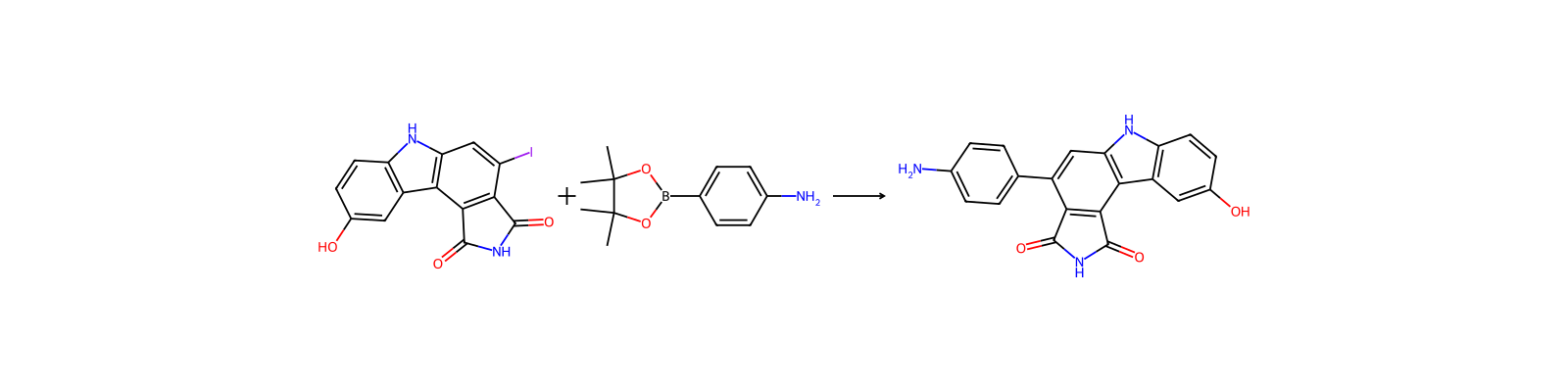
Beschreibung4-(4,4,5,5-Tetramethyl-1,3,2-dioxaborolan-2-yl)aniline is an important organic reagent with an appearance ranging from white to yellow to orange powder to crystal. This compound can be used as a chemical reaction reagent or for preparing fluorescent probes.
Verwenden4-Aminophenylboronic acid pinacol ester can be used as a reagent for:The preparation of substituted 3-phenyl-4H-1-benzopyran-4-ones by reacting with iodochromones via Pd catalyzed Suzuki-Miyaura cross-coupling reaction. Mercury(II) detection by fluorometry with new fluorogenic indicators based on through-bond energy transfer from pentaquinone to rhodamine. Rhodium-catalyzed amination reactions. Palladium-catalyzed Suzuki cross-coupling to synthesize potential antitubercular and antimicrobial compounds. It can also be used to prepare: Hexaphenylbenzene derivatives as a potential bioprobe and multichannel keypad system.Pyromellitic diimide-based polymer as matrix for solution-processable n-channel field-effect transistors. Alternating copolymers of oligoarylenes and naphthalene bisimides as low band-gap semiconductors with electrochemical and spectroelectrochemical behavior. γ-secretase modulators in the treatment of amyloid β formation.
Vor- und nachgelagerte Produkte
Vorgelagerte Rohstoffe
Nachgelagerte Produkte
Anbieter50 Anbieter
国药集团化学试剂有限公司86-21-63210123 · [email protected]
北京华美互利生物化工010-56205725 · [email protected]
梯希爱(上海)化成工业发展有限公司021-67121386 · [email protected]
衢州润东化工有限公司0570-8789886 18892685668 · [email protected]
上海阿拉丁生化科技股份有限公司400-6206333 13167063860 · [email protected]
郑州海阔光电材料有限公司67759225 13526468238 · [email protected]
INTATRADE GmbH+49 3493/605464 · [email protected]
T&W GROUP021-61551611 13296011611 · [email protected]
爱斯特(成都)生物制药股份有限公司+86-28-85122536 85324413 · [email protected]
韶远科技(上海)有限公司021-50795510 4000665055 · [email protected]
科瑞迪化学400-821-5857 021-64326257 · [email protected]
上海迈瑞尔生化科技有限公司4006356688 18621169109 · [email protected]
宇瑞(上海)化学有限公司02150456736 18602143071 · [email protected]
河北松辰医药科技有限公司0319-5801333-8008 15630992918 · [email protected]
阿法埃莎(中国)化学有限公司400-6106006 · [email protected]
安耐吉化学&3A(安徽泽升科技股份有限公司)400-0056266 · [email protected]
武汉凯威斯科技有限公司86-027-67849912 · [email protected]
上海瀚鸿科技股份有限公司021-54306202 13764082696 · [email protected]
上海萃森医药科技有限公司13472757003
上海相辉医药科技有限公司13761987713 · [email protected]
上海景颜化工科技有限公司13817811078 · [email protected]
嘉兴市艾森化工有限公司0573-85285100 18627885956 · [email protected]
Pure Chemistry Scientific Inc.001-857-928-2050 or 1-888-588-9418 · [email protected]
上海隆盛化工有限公司58099637 13585536065 · [email protected]
南京爱珂医药科技有限公司025-58395930 · [email protected]
上海攀鸿化工科技有限公司021-56491756 13512199871 · [email protected]
上海升华医药科技有限公司021-50793966 18917198199
济南精合医药科技有限公司0531-88811783 · [email protected]
四川库利南科技有限公司400-1166-196 18981987031 · [email protected]
天津希恩思生化科技有限公司400 638 7771 · [email protected]
广州科瑞生物技术有限公司20-66003216 18666003216 · [email protected]
上海乔木化学科技有限公司021-60451683 15021268886 · [email protected]
河南多贝化工有限公司0370-2785118 17550508557 · [email protected]
上海源叶生物科技有限公司13636370518 · [email protected]
艾科试剂4008-755-333 18080918076 · [email protected]
大连金之门生物科技有限公司137328113 15524772882 · [email protected]
天津科创医药中间体技术生产力促进有限公司022-60116533 13207668525 · [email protected]
赛默飞世尔科技(中国)有限公司800-810-5118 · [email protected]
北京伊诺凯科技有限公司400-810-7969 010-59572699 · [email protected]
上海遐瑞医药科技有限公司+86 21 61551611
南京诺利斯医药科技有限公司13901585132 · [email protected]
江苏艾康生物医药研发有限公司025-66113011 13913916777 · [email protected]
上海健超生物科技有限公司150-2103-5486 18017383231 · [email protected]
TOKYO CHEMICAL INDUSTRY CO., LTD.03-36680489 · [email protected]
上海贤鼎生物科技有限公司4009209199 · [email protected]
上海仁曲医药科技有限公司18171398856 2968382473 · [email protected]
常州凯立医药科技有限公司0519-81096292 15312577869 · [email protected]
深圳康特腾科技有限公司86-0755-86635001 · [email protected]
Shanghai Witofly Chemical Co.,Ltd[email protected]
越林试剂021-62960152 · [email protected]
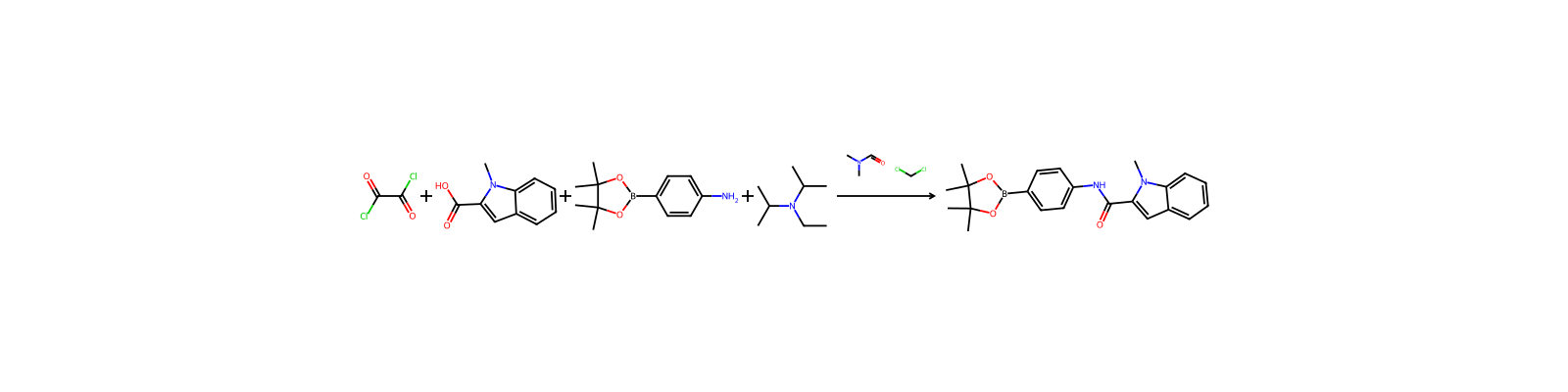
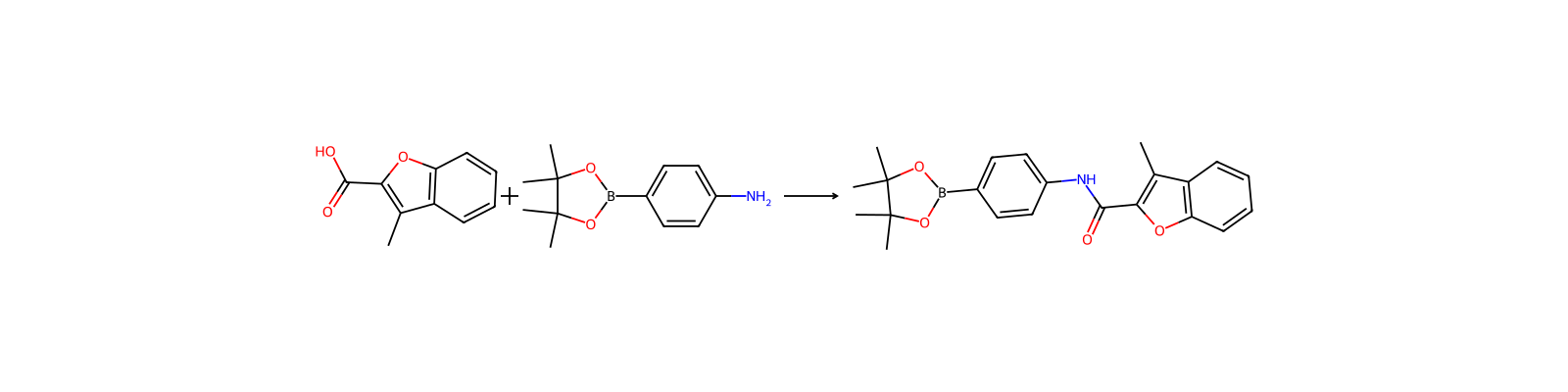
Zugehörige Reaktionen
347





Verknüpfte Notizen
Wird geladen…