

Grundinformationen
- Standard-SMILES
Nc1nnc(-c2cccc(Cl)c2Cl)c(N)n1- InChIKey
PYZRQGJRPPTADH-UHFFFAOYSA-N- Summenformel
- C9H7Cl2N5
- Durchschnittliche Molmasse
- 256,09 g/mol
- Monoisotopische Masse
- 255,00785058
Überblick
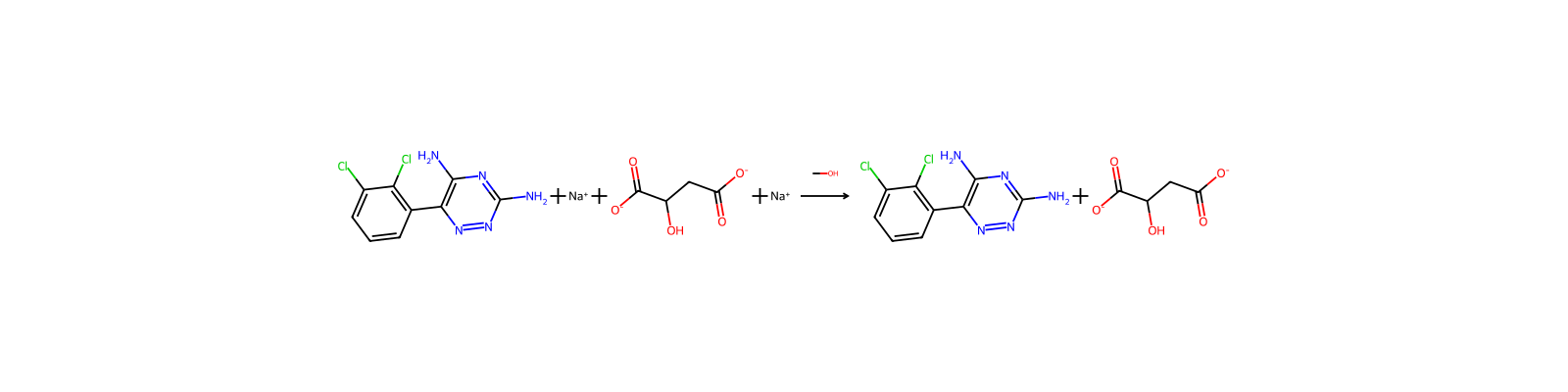
Lamotrigine is a member of the class of 1,2,4-triazines in which the triazene skeleton is substituted by amino groups at positions 3 and 5, and by a 2,3-dichlorophenyl group at position 6. It has a role as a geroprotector, an antidepressant, an antimanic drug, a non-narcotic analgesic, an anticonvulsant, a xenobiotic, a calcium channel blocker, an excitatory amino acid antagonist, an EC 3.4.21.26 (prolyl oligopeptidase) inhibitor and an environmental contaminant. It is a dichlorobenzene, a member of 1,2,4-triazines and a primary arylamine.
Namen und Bezeichner
- Bevorzugter Name
- Lamotrigine
- IUPAC
- 6-(2,3-dichlorophenyl)-1,2,4-triazine-3,5-diamine
- Englischer Name
- Lamotrigine
- Summenformel
- C9H7Cl2N5
- Molmasse
- 256.09
Namen und Synonyme
lamotrigine84057-84-16-(2,3-Dichlorophenyl)-1,2,4-triazine-3,5-diamineLamictalLamictal CdLamotriginaLamictal XRLamotriginumBW 430C3,5-Diamino-6-(2,3-dichlorophenyl)-1,2,4-triazineBW-430CLamictal ODT
Weitere Namen anzeigen
LAMOTRIGINLTGTNFSFBW-430PRO726UNQ391
1,2,4-Triazine-3,5-diamine, 6-(2,3-dichlorophenyl)-3,5-Diamino-6-(2,3-dichlorophenyl)-as-triazineDTXSID2023195BW430CNSC-759171SUBVENITECHEBI:6367GW 273293
Datenbank-Bezeichner
- CAS
84057-84-1- PubChem CID
- 3878
- DTXSID
DTXSID2023195- ChEMBL
CHEMBL741- ChEBI
CHEBI:6367- UNII
- U3H27498KS
- EC Number
- 281-901-8、658-035-8
- Nikkaji
- J25.814H
Eigenschaften
Berechnete Struktureigenschaften
- XLogP
- 1,4
- Polarare Oberfläche (TPSA)
- 90,7 Ų
- H-Brücken-Donoren
- 2
- H-Brücken-Akzeptoren
- 5
- Frei drehbare Bindungen
- 1
- Schwere Atome
- 16
- Formalladung
- 0
- Komplexität
- 242
Experimentelle und physikochemische Eigenschaften
Drugs
Pharmaceuticals
Pharmaceuticals -> Antiepileptic
Pharmaceuticals -> Listed in ZINC15
Pharmaceuticals -> Used in Switzerland
Pharmaceutical
LogP
log Kow = 2.57
2.5
1.6
Color/FormWhite to pale cream-colored powder. Crystals from isopropanol
Solubility
In water, 170 mg/L at 25 °C
Solubility in 0.1M hydrochloric acid: 4.1 mg/mL at 25 °C
4.88e-01 g/L
Human Drugs
Breast Feeding; Lactation; Milk, Human; Anticonvulsants; Antimanic Agents; Antidepressive Agents
FDA approved drugs -> Active ingredient
FDA approved drugs -> Active ingredient
Pharmaceuticals
Antiseizure medicines
Boiling Point503.1±60.0
Melting Point
177-181
216-218 °C (uncorr)
216 - 218 °C (uncorr.)
Physical DescriptionSolid
Dissociation Constants
5.7
pKa = 5.7
Collision Cross Section
150.6 Ų [M+H]+ [CCS Type: TW; Method: calibrated with polyalanine and drug standards]
149.56 Ų [M+H]+ [CCS Type: TW; Method: calibrated with polyalanine and drug standards]
151.2 Ų [M+H]+ [CCS Type: TW; Method: Major Mix IMS/Tof Calibration Kit (Waters)]
Physikochemische Eigenschaften
- Schmelzpunkt
- 177 · 177-181°C
- Siedepunkt
- 503.1 · 503.1±60.0 °C(Predicted)
- Dichte
- 1.572 · 1.572±0.06 g/cm3(Predicted)
- Flammpunkt
- 9 ℃ · 9℃
- storage temp.
- 2 · 2-8°C
- Löslichkeit
- 20 mg/mL · DMSO: 20 mg/mL at 60 °C, soluble
- pka
- 5.7 · 5.7(at 25℃)
- Aggregatzustand
- powder
- Farbe
- white
- Merck
- 14 · 14,5353
- BCS Class
- 2 · 2
- InChI
- InChI=1S/C9H7Cl2N5/c10-5-3-1-2-4(6(5)11)7-8(12)14-9(13)16-15-7/h1-3H,(H4,12,13,14,16)
- InChIKey
- PYZRQGJRPPTADH-UHFFFAOYSA-N
- SMILES
- N1C(C2=CC=CC(Cl)=C2Cl)=C(N)N=C(N)N=1
- CAS Datenbank
- 84057 · 84057-84-1(CAS DataBase Reference)
Sicherheit und Regulatorisches
GHS-Klassifizierung
GHS Classification
Danger
H301 (100%): Toxic if swallowed [Danger Acute toxicity, oral]
P264, P270, P273, P301+P316, P321, P330, P405, and P501 (click each P-code to see the statement)
Aggregated GHS information provided per 68 reports by companies from 6 notifications to the ECHA C&L Inventory. Each notification may be associated with multiple companies.
Danger
H319 (100%): Causes serious eye irritation [Warning Serious eye damage/eye irritation]
Gefahrenhinweise
Regulatory InformationLamotrigine: Does not have an individual approval but may be used under an appropriate group standard
FDA Requirements
The Approved Drug Products with Therapeutic Equivalence Evaluations identifies currently marketed prescription drug products, including lamotrigine, approved on the basis of safety and effectiveness by FDA under sections 505 of the Federal Food, Drug, and Cosmetic Act.
Toxic Combustion ProductsSpecial hazards arising from the substance or mixture: Carbon oxides, nitrogen oxides (NOx), Hydrogen chloride gas
Hazard Classes and CategoriesAcute Tox. 3 (100%)
Sicherheit und Schutzausrüstung
Fire Fighting Procedures
Advice for firefighters: Wear self contained breathing apparatus for fire fighting if necessary.
Suitable extinguishing media: Use water spray, alcohol-resistant foam, dry chemical or carbon dioxide.
Storage ConditionsConditions for safe storage, including any incompatibilities: Keep container tightly closed in a dry and well-ventilated place. Recommended storage temperature: 2 - 8 degC Keep in a dry place.
Cleanup Methods
ACCIDENTAL RELEASE MEASURES. Personal precautions, protective equipment and emergency procedures: Wear respiratory protection. Avoid dust formation. Avoid breathing vapours, mist or gas. Ensure adequate ventilation. Evacuate personnel to safe areas. Avoid breathing dust.; Environmental precautions: Prevent further leakage or spillage if safe to do so. Do not let product enter drains.; Methods and materials for containment and cleaning up Pick up and arrange disposal without creating dust. Sweep up and shovel. Keep in suitable, closed containers for disposal.
Disposal Methods
SRP: Expired or waste pharmaceuticals shall carefully take into consideration applicable DEA, EPA, and FDA regulations. It is not appropriate to dispose by flushing the pharmaceutical down the toilet or discarding to trash. If possible return the pharmaceutical to the manufacturer for proper disposal being careful to properly label and securely package the material. Alternatively, the waste pharmaceutical shall be labeled, securely packaged and transported by a state licensed medical waste contractor to dispose by burial in a licensed hazardous or toxic waste landfill or incinerator.
Preventive Measures
Gloves must be inspected prior to use. Use proper glove removal technique (without touching glove's outer surface) to avoid skin contact with this product. Dispose of contaminated gloves after use in accordance with applicable laws and good laboratory practices. Wash and dry hands.
Appropriate engineering controls: Avoid contact with skin, eyes and clothing. Wash hands before breaks and immediately after handling the product.
Precautions for safe handling: Avoid contact with skin and eyes. Avoid formation of dust and aerosols. Provide appropriate exhaust ventilation at places where dust is formed.
Personal Protective Equipment (PPE)
Respiratory protection: Where risk assessment shows air-purifying respirators are appropriate use a full-face particle respirator type N99 (US) or type P2 (EN 143) respirator cartridges as a backup to engineering controls. If the respirator is the sole means of protection, use a full-face supplied air respirator. Use respirators and components tested and approved under appropriate government standards such as NIOSH (US) or CEN (EU).
Body Protection: Complete suit protecting against chemicals, The type of protective equipment must be selected according to the concentration and amount of the dangerous substance at the specific workplace.
Skin protection: Handle with gloves.
Eye/face protection: Face shield and safety glasses Use equipment for eye protection tested and approved under appropriate government standards such as NIOSH (US) or EN 166(EU).
Toxikologische Informationen
Treatment
There are no specific antidotes for lamotrigine. Following a suspected overdose, hospitalization of the patient is advised. General supportive care is indicated, including frequent monitoring of vital signs and close observation of the patient. If indicated, emesis should be induced or gastric lavage should be performed; usual precautions should be taken to protect the airway. (A308)
Interactions
Rash, including serious and potentially life-threatening rash, appears to be more likely to occur in patients receiving concomitant valproic acid. Valproic acid can decrease clearance and increase plasma concentrations of lamotrigine more than twofold; exceeding the recommended reduced initial dosage of lamotrigine or the subsequent recommended schedule for escalation of lamotrigine dosage, particularly in patients receiving valproic acid, may increase the incidence of rash, including serious rash, in lamotrigine-treated patients. In clinical trials, 1% of adults and 1.2% of children receiving a drug regimen including immediate-release lamotrigine concomitantly with valproic acid experienced a rash requiring hospitalization, while 0.16% of adults and 0.6% of children receiving a drug regimen of lamotrigine without valproic acid were hospitalized because of rash.
The concomitant use of valproic acid and/or hepatic enzyme-inducing anticonvulsant drugs (e.g., phenobarbital, primidone, carbamazepine, phenytoin) can increase or decrease the metabolism and elimination of lamotrigine, requiring dosage adjustments to maintain efficacy and/or avoid toxicity. Addition of valproic acid to lamotrigine therapy reduces lamotrigine clearance and increases steady-state plasma lamotrigine concentrations by slightly more than 50% whether or not hepatic enzyme-inducing anticonvulsant drugs are given concomitantly. Conversely, steady-state plasma concentrations of lamotrigine are decreased by about 40% when phenobarbital, primidone, or carbamazepine is added to lamotrigine therapy and by about 45-54% when phenytoin is added to lamotrigine therapy; the magnitude of the effect with phenytoin is dependent on the total daily dosage of phenytoin (from 100-400 mg daily). Discontinuance of an enzyme-inducing anticonvulsant drug can be expected to increase, and discontinuance of valproic acid can be expected to decrease, the elimination half-life and plasma concentrations of lamotrigine. Although the manufacturers state that a therapeutic plasma concentration range has not been established for lamotrigine and that dosage should be based on therapeutic response, the change in plasma lamotrigine concentrations resulting from addition or discontinuance of enzyme-inducing anticonvulsant drugs or valproic acid should be considered when these drugs are added to or withdrawn from an existing anticonvulsant drug regimen that includes lamotrigine.
Addition of lamotrigine to existing therapy with phenytoin or carbamazepine generally does not appreciably alter the steady-state plasma concentrations of these concomitantly administered drugs. Addition of lamotrigine to carbamazepine therapy reportedly has resulted in increased plasma concentrations of a pharmacologically active metabolite of carbamazepine (carbamazepine-10,11-epoxide) and an increased incidence of some adverse effects (e.g., dizziness, headache, diplopia, blurred vision, ataxia, nausea, nystagmus). However, elevations in carbamazepine-10,11-epoxide plasma concentrations and/or increased toxicity have not been consistently observed with concomitant administration of lamotrigine and carbamazepine, and the mechanism of the interaction between these drugs remains unclear.
Addition of lamotrigine to valproic acid therapy in healthy individuals resulted in a 25% reduction in trough steady-state plasma concentrations of valproic acid over a 3-week period, followed by stabilization of these concentrations.
For more Interactions (Complete) data for LAMOTRIGINE (11 total), please visit the HSDB record page.
Health Effects
Serious skin rashes, acute multiorgan failure, blood dyscrasias, sudden unexplained death in epilepsy, withdrawal seizures. (A308) May cause a potentially dangerous rash that may develop into Stevens Johnson syndrome, an extremely rare but potentially fatal skin disease.
Hepatotoxicity
Prospective studies suggest that less than 1% of subjects develop elevations in serum aminotransferase levels during long term lamotrigine therapy. However, clinically apparent hepatotoxicity from lamotrigine is well known and is estimated to occur in one in 2,000 to 10,000 treated patients. The liver injury is usually part of a systemic immuno-allergic reaction (anticonvulsant hypersensitivity syndrome [AHS] or drug rash with eosinophilia and systemic symptoms [DRESS] syndrome). The latency is typically short, ranging from one to several weeks. Presenting symptoms are a diffuse maculopapular rash, followed in a few days by high fever, nausea and vomiting. The rash can develop into a systemic hypersensitivity reaction and multiorgan failure or be associated with jaundice and hepatitis. Eosinophilia is common, and facial edema, lymphadenopathy and atypical lymphocytosis can occur. The pattern of liver enzyme elevations is usually hepatocellular and severity ranges from mild-to-moderate ALT elevations accompanying the generalized hypersensitivity reaction, to an icteric hepatitis, to a severe hepatitis and acute liver failure. Liver biopsy shows portal inflammation, hepatocellular necrosis and bile duct proliferation. In some instances of severe hypersensitivity syndrome with acute multiorgan failure, the hepatic involvement may represent ischemic injury.
Environmental Fate
TERRESTRIAL FATE: Based on a classification scheme(1), an estimated Koc value of 1900(SRC), determined from a structure estimation method(2), indicates that lamotrigine is expected to have low mobility in soil(SRC). The pKa1 and pKa2 of lamotrigine are 8.53 and 9.21(3), respectively, indicating that this compound will exist partially in the cation form in the environment and cations generally adsorb more strongly to soils containing organic carbon and clay than their neutral counterparts(4). Volatilization of lamotrigine from moist soil surfaces is not expected to be an important fate process(SRC) given an estimated Henry's Law constant of 2.2X10⁻¹¹ atm-cu m/mole(SRC), using a fragment constant estimation method(5). Lamotrigine is not expected to volatilize from dry soil surfaces(SRC) based upon an estimated vapor pressure of 9.4X10⁻⁹ mm Hg at 25 °C(SRC), determined from a fragment constant method(2). Biodegradation data in soil were not available(SRC, 2015).
AQUATIC FATE: Based on a classification scheme(1), an estimated Koc value of 1900(SRC), determined from a structure estimation method(2), indicates that lamotrigine is expected to adsorb to suspended solids and sediment(SRC). Volatilization from water surfaces is not expected(3) based upon an estimated Henry's Law constant of 2.2X10⁻¹¹ atm-cu m/mole(SRC), developed using a fragment constant estimation method(4). According to a classification scheme(5), an estimated BCF of 23(SRC), from its log Kow of 2.57(6) and a regression-derived equation(2), suggests the potential for bioconcentration in aquatic organisms is low(SRC). Biodegradation data in water were not available(SRC, 2015).
ATMOSPHERIC FATE: According to a model of gas/particle partitioning of semivolatile organic compounds in the atmosphere(1), lamotrigine, which has an estimated vapor pressure of 9.4X10⁻⁹ mm Hg at 25 °C(SRC), determined from a fragment constant method(2), is expected to exist solely in the particulate phase in the ambient atmosphere. Particulate-phase lamotrigine may be removed from the air by wet and dry deposition(SRC). Lamotrigine does not contain chromophores that absorb at wavelengths >290 nm(3) and, therefore, is not expected to be susceptible to direct photolysis by sunlight(SRC).
Adverse Effects
United States Boxed Warning: Lamotrigine can cause serious rashes requiring hospitalization and discontinuation of this medication. Rash severity varies but includes a risk for Stevens-Johnson syndrome. The incidence of Stevens-Johnson syndrome in the pediatric population is 0.3%-0.8%, and 0.03%-0.08% in adults. The number of cases associated with toxic epidermal necrolysis is too low to report an estimated incidence. Nearly all cases of a rash occur 2 to 8 weeks after the initiation of lamotrigine. It should also be noted that discontinuing lamotrigine may not prevent a rash from becoming life-threatening. Patient education should include continuous monitoring of the rash for improvement after discontinuing the medication.
Exposure RoutesInhalation (A308); dermal (A308); ingestion (A308).
Milk ConcentrationsLamotrigine is distributed into breast milk.
Toxicity Summary
IDENTIFICATION AND USE: Lamotrigine is a white to pale cream-colored powder. Lamotrigine is an anticonvulsant medication that also has utility in the treatment of bipolar disorder. HUMAN EXPOSURE AND TOXICITY: Lamotrigine has been associated with many side effects, including rashes that can progress to Stevens-Johnson syndrome or toxic epidermal necrolysis. It has also been associated with the development of motor tics, most commonly in the head, neck, and shoulders. Cases of life-threatening rashes associated with lamotrigine almost always have occurred within 2-8 weeks of treatment initiation; however, severe rashes rarely have presented following prolonged treatment (e.g., 6 months). Lamotrigine-associated rashes do not appear to have distinguishing features. Because it is not possible to distinguish benign rashes from those that may become severe and/or life-threatening, lamotrigine generally should be discontinued at the first sign of rash (unless the rash is known not to be drug related). However, a rash may become life-threatening or permanently disabling or disfiguring despite discontinuance of the drug. Discontinuance of lamotrigine because of rash was required in 3% of adults receiving the drug as adjunctive therapy and 4.5% of adults receiving the drug as monotherapy in controlled clinical trials; 4.4% of pediatric patients receiving lamotrigine in controlled clinical trials discontinued the drug because of the development of rash. Multiorgan failure and various degrees of hepatic failure, in some cases fatal, have been reported rarely with lamotrigine as adjunctive therapy. The possibility of such potentially fatal adverse effects should be considered in patients who exhibit signs and symptoms associated with multiorgan and/or hepatic impairment following initiation of lamotrigine as adjunctive therapy. During the premarketing development of lamotrigine, 20 sudden and unexplained deaths were reported among a cohort of 4700 patients with epilepsy receiving adjunctive therapy with the drug (5747 patient-years of exposure). Although the rate of these deaths exceeds that expected to occur in a healthy (nonepileptic) population matched for age and gender, this rate was similar to that occurring in a similar population of epileptic patients receiving a chemically unrelated anticonvulsant agent. Among 414 first-trimester exposures to lamotrigine monotherapy, 12 outcomes with major birth defects were reported. Among the 88 first-trimester exposures to lamotrigine polytherapy including valproate, 11 outcomes with major birth defects were reported. Among 182 first-trimester exposures to lamotrigine polytherapy excluding valproate, 5 outcomes with major birth defects were reported. No distinctive pattern of major birth defects was apparent among the offspring exposed to lamotrigine monotherapy or polytherapy. The risk of all major birth defects after first-trimester exposure to lamotrigine monotherapy (2.9%) was similar to that in the general population and in other registries enrolling women exposed to antiepileptic monotherapy (3.3% to 4.5%). Lamotrigine also did not increase the incidence of structural or numerical chromosomal abnormalities in the in vitro human lymphocyte assay. ANIMAL STUDIES: In animal studies, no evidence of carcinogenicity was seen following oral administration of lamotrigine for up to 2 years at maximum tolerated doses (30 mg/kg of body weight per day in mice and 10 to 15 mg/kg per day in rats). Lamotrigine administered i.p. at high doses can induce intrauterine growth retardation and at low multiple doses causes a dose-dependent increase in embryonic resorption, craniofacial and caudal malformations as well as maternal toxicity in the mouse. A study of the teratogenic activity of lamotrigine was carried out in the brain of fetuses of rats who had received the drug. Results showed that fetuses of the experimental group had reduced body weight at birth, increased volume and diameter of the cerebral structure, increased density of the subcortical layer, and ventricle dilatation. A behavioral teratology study was conducted in rats dosed during the period of organogenesis. At day 21 postpartum, offspring of dams receiving 5 mg/kg per day or higher displayed a significantly longer latent period for open field exploration and a lower frequency of rearing. In a swimming maze test performed on days 39 to 44 postpartum, time to completion was increased in offspring of dams receiving 25 mg/kg per day. No evidence of mutagenicity was demonstrated by lamotrigine in vitro in the Ames Salmonella microbial mutagen test or the mammalian mouse lymphoma assay. Lamotrigine also did not increase the incidence of structural or numerical chromosomal abnormalities in the in vivo rat bone marrow assay.
With excessive lamotrigine overdoses, some reportedly as high as 16 g, fatalities have occurred following complications, including seizures, coma, and conduction abnormalities. Immediate-release lamotrigine is rapidly absorbed, and inducing emesis may not be the appropriate intervention in this instance. However, hospitalization and supportive care are indicated, along with the usual airway-protective precautions. As of this writing, there is no known specific antidote for lamotrigine toxicity.
One proposed mechanism of action of Lamotrigine, the relevance of which remains to be established in humans, involves an effect on sodium channels. <i>in vitro</i> pharmacological studies suggest that lamotrigine inhibits voltage-sensitive sodium channels and/or calcium channels, thereby stabilizing neuronal membranes and consequently modulating presynaptic transmitter release of excitatory amino acids (e.g., glutamate and aspartate). Studies on lamotrigine show binding to sodium channels similar to local anesthetics.
Signs and SymptomsSymptoms of overdose include decreased level of consciousness, coma, delayed heartbeat, increased seizures, lack of coordination, and rolling eyeballs.
Soil Adsorption/Mobility
Using a structure estimation method based on molecular connectivity indices(1), the Koc of lamotrigine can be estimated to be 1900(SRC). According to a classification scheme(2), this estimated Koc value suggests that lamotrigine is expected to have low mobility in soil. The pKa1 and pKa2 of lamotrigine are 8.53 and 9.21(3), respectively, indicating that this compound will exist partially in the cation form in the environment and cations generally adsorb more strongly to soils containing organic carbon and clay than their neutral counterparts(4).
Human Toxicity Excerpts
/SIGNS AND SYMPTOMS/ Cases of life-threatening rashes associated with lamotrigine almost always have occurred within 2-8 weeks of treatment initiation; however, severe rashes rarely have presented following prolonged treatment (e.g., 6 months). Lamotrigine-associated rashes do not appear to have distinguishing features. Because it is not possible to distinguish benign rashes from those that may become severe and/or life-threatening, lamotrigine generally should be discontinued at the first sign of rash (unless the rash is known not to be drug related). However, a rash may become life-threatening or permanently disabling or disfiguring despite discontinuance of the drug. Discontinuance of lamotrigine because of rash was required in 3% of adults receiving the drug as adjunctive therapy and 4.5% of adults receiving the drug as monotherapy in controlled clinical trials; 4.4% of pediatric patients receiving lamotrigine in controlled clinical trials discontinued the drug because of the development of rash. The potential for development of a rash at the beginning of lamotrigine therapy may be decreased by employing low initial dosages and by gradual escalation of dosage to avoid initially high plasma concentrations of the drug.
/SIGNS AND SYMPTOMS/ Rashes severe enough to cause hospitalization, including Stevens-Johnson syndrome, toxic epidermal necrolysis, erythema multiforme, angioedema, and a hypersensitivity syndrome (usually consisting of fever, rash, facial swelling, and hematologic, hepatic, and/or lymphatic involvement), occurred in 0.3% of adults receiving lamotrigine in premarketing controlled and uncontrolled clinical trials and in about 0.8% of pediatric patients receiving the drug in clinical trials; death associated with rash has been reported rarely in postmarketing use of lamotrigine. Erythema multiforme has been reported in patients receiving lamotrigine in premarketing controlled and uncontrolled clinical trials in the US, while lupus-like syndrome and vasculitis have been reported during postmarketing experience with the drug and/or in worldwide uncontrolled clinical trials.
/CASE REPORTS/ ... The finding of Stevens-Johnson syndrome in two cases out of three treated with lamotrigine plus aripiprazole, however, has a much higher index of suspicion and it is correct to warn of its possible raised risk. ...
/CASE REPORTS/ A young woman receiving concomitant valproic acid and carbamazepine developed a possible hypersensitivity syndrome consisting of headache, fever, and a maculopapular rash 3 weeks following addition of lamotrigine to therapy; fulminant hepatic failure and hepatic coma developed within 3 days, and despite subsequent clinical improvement, the patient died of a massive pulmonary embolus 2 months later.
For more Human Toxicity Excerpts (Complete) data for LAMOTRIGINE (48 total), please visit the HSDB record page.
Regulatorische Informationen
FDA Requirements
The Approved Drug Products with Therapeutic Equivalence Evaluations identifies currently marketed prescription drug products, including lamotrigine, approved on the basis of safety and effectiveness by FDA under sections 505 of the Federal Food, Drug, and Cosmetic Act.
Sicherheitsdaten
- wgk
- 3
- ridadr
- UN 2811 6.1/PG 3
- hs_code
- 29336990
- RTECS-Nr.
- XY5850700
- risk_code
- 25-36/37/38-39/23/24/25-23/24/25-11
- Toxizität
- LD50 in mice, rats (mg/kg): 250, >640 orally (Sawyer)
- hazard_code
- T,Xi,F
- safety_code
- 45-36-26-36/37-16
- hazard_class
- 6.1(b)
- packing_group
- III
- Speicherklasse
- 6.1C - Combustible acute toxic Cat.3toxic compounds or compounds which causing chronic effects
- Giftige Stoffe Daten
- 84057-84-1(Hazardous Substances Data)
- Hazard Classifications
- Acute Tox. 3 Oral
Chemie und Industrie
Pharmakologische Informationen
ATC Code
N03AX09
N - Nervous system
QN - Nervous system
N03AX09
Protein BindingThe plasma protein binding of lamotrigine is estimated at 55%. This drug is not expected to undergo clinically significant interactions with other drugs via competition for protein binding sites due its lower protein binding.
Pharmacodynamics
Lamotrigine likely prevents seizures and prevents mood symptoms via stabilizing presynaptic neuronal membranes and preventing the release of excitatory neurotransmitters such as glutamate, which contribute to seizure activity. A note on cardiovascular effects The metabolite of lamotrigine, 2-N-methyl metabolite (formed by glucuronidation), is reported to cause dose-dependent prolongations of the PR interval, widening of the QRS complex, and at higher doses, complete AV block. Although this harmful metabolite is only found in trace amounts in humans, plasma concentrations may increase in conditions that cause decreased drug glucuronidation, such as liver disease.
Mechanism of Action
The exact mechanism of action of lamotrigine is not fully elucidated, as it may exert cellular activities that contribute to its efficacy in a range of conditions. Although chemically unrelated, lamotrigine actions resemble those of phenytoin and carbamazepine, inhibiting voltage-sensitive sodium channels, stabilizing neuronal membranes, thereby modulating the release of presynaptic excitatory neurotransmitters. Lamotrigine likely acts by inhibiting sodium currents by selective binding to the inactive sodium channel, suppressing the release of the excitatory amino acid, glutamate. The mechanism of action of lamotrigine in reducing anticonvulsant activity is likely the same in managing bipolar disorder. Studies on lamotrigine have identified its binding to sodium channels in a fashion similar to local anesthetics, which could explain the demonstrated clinical benefit of lamotrigine in some neuropathic pain states. Lamotrigine displays binding properties to several different receptors. In laboratory binding assays, it demonstrates weak inhibitory effect on the serotonin 5-HT3 receptor. Lamotrigine also weakly binds to Adenosine A1/A2 receptors, α1/α2/β adrenergic receptors, dopamine D1/D2 receptors, GABA A/B receptors, histamine H1 receptors, κ-opioid receptor (KOR), mACh receptors and serotonin 5-HT2 receptors with an IC50>100 µM. Weak inhibitory effects were observed at sigma opioid receptors. An in vivo study revealed evidence that lamotrigine inhibits Cav2.3 (R-type) calcium currents, which may also contribute to its anticonvulsant effects.
Spectrophotometry with the Ca(++)-sensitive dye fura-2 was used to study the effect of lamotrigine (LAG) on the depolarization-evoked Ca++ influx in the acutely isolated basolateral amygdala neurons. Depolarization of the neurons with high K+ resulted in the elevation of intracellular Ca++ concentration [Ca++]i in a concentration-dependent manner. The K(+)-induced Ca++ influx was completely blocked in the Ca(++)-free solution or by Cd++, indicating that depolarization-induced increases in [Ca++]i were triggered largely, if not completely, by Ca++ entry from extracellular space and Ca++ entry occurred through voltage-dependent Ca++ channels. Application of LAG reduced the depolarization-evoked Ca++ influx in a concentration-dependent manner. The effect of LAG was markedly reduced in the presence of N-type Ca++ channel blocker omega-conotoxin-GVIA (omega-CgTX). These results suggest that the action of LAG is mediated, at least in part, by the modulation of N-type Ca++ channels.
Lamotrigine (LAG) is an antiepileptic drug which is believed to suppress seizures by inhibiting the release of excitatory neurotransmitters. The present study was aimed at investigating the effect of LAG on the 4-aminopyridine (4AP)-evoked glutamate release in cerebrocortical nerve terminals (synaptosomes). LAG inhibited the release of glutamate evoked by 4AP in a concentration-dependent manner. This inhibitory effect was associated with a reduction in the depolarization-evoked increase in the cytoplasmic free Ca2+ concentration ([Ca2+]C). In addition, LAG did not alter the resting synaptosomal membrane potential or 4AP-evoked depolarization. Furthermore, ionomycin-evoked glutamate release was not affected by LAG. Based on these results, we suggest that presynaptic calcium influx blockade and inhibition of glutamate release may underlie the mechanism of action of LAG. These action may also contribute to their neuroprotective properties in excitotoxic injury.
Biological Half-Life
The average elimination half-life of lamotrigine ranges from approximately 14-59 hours. The value is dependent on the dose administered, concomitant drug therapy, as well as disease status. One pharmacokinetic study revealed a half-life of 22.8 to 37.4 hours in healthy volunteers. It also reported that enzyme-inducing antiepileptic drugs such as pheobarbital, phenytoin, or carbamazepine decrease the half-life of lamotrigine. On the other hand, valproic acid increases the half-life of lamotrigine (in the range of 48-59 hours).
/Investigators/ describe the findings in a patient following the deliberate ingestion of a large amount of lamotrigine (stated 4.5 g, absorbed estimated 2.9 g) ... Peak measured concentration of lamotrigine was 35.8 mg/L and half-life 19.5 hours, suggesting linear kinetics in overdose.
The plasma half-life of a single dose is 24 to 35 hr. Administration of phenytoin, carbamazepine, phenobarbital, or primidone reduces the half-life of lamotrigine to approximately 15 hr and reduces plasma concentrations of lamotrigine.
Metabolism/Metabolites
Lamotrigine is mainly glucuronidated, forming 2-N-glucuronide conjugate, a pharmacologically inactive metabolite. The total radioactivity detected after a 240mg radiolabeled dose of lamotrigine during clinical trials were as follows: lamotrigine as unchanged drug(10%), a 2-N-glucuronide (76%), a 5-N-glucuronide (10%), a 2-N-methyl metabolite (0.14%), as well as various other minor metabolites (4%).
The metabolites of [(14)C]lamotrigine (78 micromol/kg, iv) in adult male Wistar rats were characterized with particular reference to thioether derivatives of an epoxide intermediate. Biliary recovery of radioactivity from anesthetized and cannulated animals was 7.3 +/- 3.0% (mean +/- SD, n = 4) of the dose over 4 hr; 5.5 +/- 0.5% was recovered in bladder urine after 4 hr. Bile contained [(14)C]lamotrigine (1.4 +/- 0.3%), a glutathione adduct of [(14)C]dihydrohydroxylamotrigine (1.8 +/- 0.3%), i.e., an adduct of an arene oxide, and the glutathione (1.5 +/- 0.7%), cysteinylglycine (1.9 +/- 0.5%), and N-acetylcysteine (0.4 +/- 0.2%) adducts of [(14)C]lamotrigine. Formation of the thioether metabolites was partially blocked by the cytochrome P450 inhibitor, ketoconazole. Urine contained [(14)C]lamotrigine (4.5 +/- 0.5%) and [(14)C]lamotrigine N-oxide (0.9 +/- 0.2%). The radiolabeled material in skin (15.6 +/- 1.4%) was almost entirely [(14)C]lamotrigine. ...
Lamotrigine is metabolized predominantly by glucuronic acid conjugation. The major metabolite is an inactive 2-N-glucuronide conjugate. Exretion occur in the urine and the feces with unchanged lamotrigine (10%), the 2-N-glucuronide (76%), a 5-N-glucuronide (10%), a 2-N-methyl metabolite (0.14%), and other unidentified minor metabolites (4%). (A308) Half Life: 25 +/- 10 hours (healthy individuals); 42.9 hours (chronic renal failure)
FDA Pharmacological Classification
U3H27498KS
LAMOTRIGINE
Established Pharmacologic Class [EPC] - Anti-epileptic Agent
Physiologic Effects [PE] - Decreased Central Nervous System Disorganized Electrical Activity
Established Pharmacologic Class [EPC] - Mood Stabilizer
Mechanisms of Action [MoA] - Organic Cation Transporter 2 Inhibitors
MeSH Pharmacological Classification
Drugs used to prevent SEIZURES or reduce their severity.
A class of drugs that act by selective inhibition of calcium influx through cellular membranes.
Agents that control agitated psychotic behavior, alleviate acute psychotic states, reduce psychotic symptoms, and exert a quieting effect. They are used in SCHIZOPHRENIA; senile dementia; transient psychosis following surgery; or MYOCARDIAL INFARCTION; etc. These drugs are often referred to as neuroleptics alluding to the tendency to produce neurological side effects, but not all antipsychotics are likely to produce such effects. Many of these drugs may also be effective against nausea, emesis, and pruritus.
A class of drugs that act by inhibition of sodium influx through cell membranes. Blockade of sodium channels slows the rate and amplitude of initial rapid depolarization, reduces cell excitability, and reduces conduction velocity.
Absorption, Distribution and Excretion
Lamotrigine is rapidly and entirely absorbed with minimal first-pass metabolism effects, with a bioavailability estimated at 98%. Cmax is reached in the range of 1.4 to 4.8 hours post-dose, but this depends on the dose administered, concomitant medications, and epileptic status. The rate and extent of lamictal absorption is considered equivalent between the compressed tablet form taken with water to that of the chewable dispersible tablets, taken with or without water.
Lamotrigine is excreted in both the urine and feces. Following oral administration of 240 mg radiolabelled lamotrigine, about 94% of total drug and its metabolites administered is recovered in the urine and 2% is recovered in the feces. One pharmacokinetic study recovered 43 to 87% of a lamotrigine dose in the urine mainly as glucuronidated metabolites. 2-N-glucuronide is mainly excreted in the urine.
The mean apparent volume of distribution (Vd/F) of lamotrigine following oral administration ranges from 0.9 to 1.3 L/kg and is independent of dose administered. Lamotrigine accumulated in the kidney of the male rat, and likely behaves in a similar fashion in humans. Lamotrigine also binds to tissues containing melanin, such as the eyes and pigmented skin.
The mean apparent plasma clearance (Cl/F) ranges from 0.18 to 1.21 mL/min/kg. The values vary depending on dosing regimen, concomitant antiepileptic medications, and disease state of the individual. In one study, healthy volunteers on lamictal monotherapy showed a clearance of about 0.44 mL/min/kg after a single dose.
/MILK/ Lamotrigine is distributed into milk. Because of the potential for serious adverse reactions to lamotrigine in nursing infants, a decision should be made whether to discontinue nursing or the drug, taking into account the importance of the drug to the woman.
/MILK/ To investigate the pharmacokinetics of lamotrigine (LTG) during delivery, during the neonatal period, and lactation. High-performance liquid chromatography was used to determine plasma and milk levels of LTG in nine pregnant women with epilepsy treated with LTG, and plasma levels in their 10 infants. Samples were obtained at delivery, the first 3 days postpartum, and at breast-feeding 2-3 weeks after delivery. At delivery, maternal plasma LTG concentrations were similar to those from the umbilical cord, indicating extensive placental transfer of LTG. There was a slow decline in the LTG plasma concentration in the newborn. At 72 hr postpartum, median LTG plasma levels in the infants were 75% of the cord plasma levels (range, 50-100%). The median milk/maternal plasma concentration ratio was 0.61 (range, 0.47-0.77) 2-3 weeks after delivery, and the nursed infants maintained LTG plasma concentrations of approximately 30% (median, range 23-50%) of the mother's plasma levels. Maternal plasma LTG concentrations increased significantly during the first 2 weeks after parturition, the median increase in plasma concentration/dose ratio being 170%.
Cellular LocationsMembrane
Verwendung und Herstellung
Uses
MEDICATION
Anticonvulsants; Calcium Channel Blockers; Excitatory Amino Acid Antagonists; Voltage-Gated Sodium Channel Blockers
Use (kg) in Switzerland (2009): >1000
For the adjunctive treatment of partial seizures in epilepsy and generalized seizures of Lennox-Gastaut syndrome. Also for the maintenance treatment of bipolar I disorder and depression. Off-label uses include the treatment of peripheral neuropathy, trigeminal neuralgia, cluster headaches, migraines, and reducing neuropathic pain. (A308, L1155)
Methods of Manufacturing
Reaction of 2,3-dichlorobenzoyl chloride with cyanide ion forms the benzoylcyanide derivative that is then treated with aminoguanidine to form a Schiff base through loss of water between the carbonyl group and the one primary amine function of the guanidine. Ring closure by addition of the lone free primary amino group remaining on the guanidine moiety of the nitrile function is accomplished by base catalysis and yields the product.
The reaction of the Grignard compound of 2,3-dichloroiodobenzene with CO2 in diethyl ether gives 2,3-dichlorobenzoic acid, which is converted to the corresponding acyl chloride by refluxing with SOCl2. The reaction of 2,3-dichlorobenzoyl chloride with cuprous cyanide and KI in refluxing xylene yields 2,3-dichlorobenzoyl cyanide. Finally, this compound is cyclized with aminoguanidine in DMSO to yield lamotrigine.
Hydrogenation of 2,3-dichloronitrobenzene with H2 over Raney nickel in methanol gives 2,3-dichloroaniline, which is diazotized with NaNO2 and HCl and treated with CuCN to yield 2,3-dichlorobenzonitrile. Hydrolysis of the nitrile with NaOH in refluxing methanol/water affords 2,3-dichlorobenzoic acid, which is treated with hot SOCl2 to provide the corresponding acyl chloride. Reaction of 2,3-dichlorobenzoyl chloride with CuCN and KI in refluxing chlorobenzene gives 2,3-dichlorobenzoyl cyanide, which is condensed with aminoguanidine by means of H2SO4/TsOH in hot toluene to yield 2,3-dichlorobenzoyl cyanide amidinohydrazone. Finally, this compound is cyclized by treatment with NaOMe in refluxing methanol to yield lamotrigine.
Preparation: M. G. Baxter et al., European Patent Office patent 21121 (1981 to Wellcome Foundation); D. A. Sawyer et al., USA patent 4602017 (1986).
Formulations/PreparationsTable: Lamotrigine Preparations [Table#7220]
Use ClassificationPharmaceuticals
Anwendungen
BeschreibungLamotrigine, also known by the brand name Lamictal®, is a second-generation antiepileptic drug (AED) manufactured by GlaxoSmithKline in the UK and USA. Lamotrigine is a new mazine, glutamate inhibitor anticonvulsant that significantly reduces the incidence of refractory partial seizures. The drug is reported to produce fewer CNS side effects than diazepam or sodium phenytoin. It is also indicated as add-on therapy for the treatment of generalized seizures not satisfactorily controlled by other anti-epileptics.
HistoryThe development of lamotrigine began in the early 1980s, accidentally discovered by a group of chemists at the Wellcome Research Laboratory while searching for novel antifolate compounds. Initially synthesized as an antifolate analog, subsequent animal model screening revealed its significant anticonvulsant activity, demonstrating its potential as an antiepileptic drug. In 1980, the Wellcome Foundation filed the first synthetic method and related patent applications for lamotrigine (e.g., European Patent EP 0021121), mentioning researchers such as M. G. Baxter. During clinical development, the efficacy of lamotrigine (trade name: lamotrigine tablets) was confirmed, and it was first launched in Ireland in 1991. Subsequently, it was approved by the U.S. Food and Drug Administration (FDA) for the treatment of epilepsy in 1994. In subsequent studies, the clinical applications of lamotrigine have continued to expand, particularly its efficacy as a mood stabilizer. Researchers such as Richard H. Weissler have advanced the application of lamotrigine in the treatment of bipolar disorder, especially in the maintenance treatment of bipolar depression, through clinical observation and research.
VerwendenLamotrigine is an anticonvulsant that works by Inhibits glutamate release, possibly through inhibition of Sodium, Potassium, and Calcium currents. Used in the treatment of bipolar depression, partial seizures in epilepsy, and generalized seizures of Lennox-Gastaut syndrome. Additionally, it is used for the maintenance treatment of bipolar I disorder and depression.
Darstellung
synthetischeThe preparation method of Lamotrigine involves several steps. 2,3-dichlorobenzoic acid is chlorinated to 2,3-dichlorobenzoyl chloride, then reacted with cuprous cyanide, condensed with aminoguanidine, and finally cyclized under the action of potassium hydroxide Lamotrigine.Two key methods for the synthesis of lamotrigine have been reported.https://www.sciencedirect.com/topics/chemistry/lamotrigine A novel process for the synthesis of lamotrigine and its intermediatehttps://patents.google.com/patent/WO2007069265A1/en
Vor- und nachgelagerte Produkte
Vorgelagerte Rohstoffe
Anbieter50 Anbieter
北京华美互利生物化工010-56205725 · [email protected]
梯希爱(上海)化成工业发展有限公司021-67121386 · [email protected]
上海阿拉丁生化科技股份有限公司400-6206333 13167063860 · [email protected]
Shanghai Biolang Biotechnology Co., Ltd.+86-15970428662 +86-13397199602 · [email protected]
合肥翰刚医药科技有限公司+8618062405514 · [email protected]
广州隽沐生物科技股份有限公司020-36607679; 13502246435 · [email protected]
湖北金梭生物科技有限公司00123456789 · [email protected]
INTATRADE GmbH+49 3493/605464 · [email protected]
VladaChem GmbH+49-7246-3082843 +86-18411632868 · [email protected]
河北展药生物科技有限公司15369953316 +8615369953316 · [email protected]
Baoji Guokang Healthchem co.,ltd+8615604608665 15604608665 · [email protected]
Dayang Chem (Hangzhou) Co.,Ltd.+86-0571-88938639 17705817739 · [email protected]
Jai Radhe Sales+(91)-(79)-26431096/65255722 · [email protected]
LGM Pharma1-(800)-881-8210 · [email protected]
Syntechem Co.,Ltd[email protected]
上海迈瑞尔生化科技有限公司4006356688 18621169109 · [email protected]
武汉易泰科技有限公司上海分公司18930552037 · [email protected]
扬州思域化工有限公司0514-87325867 · [email protected]
太原市瑞和丰科贸有限公司+86 351 7031519 · [email protected]
安耐吉化学&3A(安徽泽升科技股份有限公司)400-0056266 · [email protected]
广州市亿邦医药科技有限公司+86 (20) 28996708,29078958,28139708,29076128,28133708,28139728,28139738,28133718,021-31663278,021-31663578,021-60538387
上海柯维化学技术有限公司021-64609169 18901607656 · [email protected]
河北缤享新材料科技有限公司+8618633865755 · [email protected]
Pure Chemistry Scientific Inc.001-857-928-2050 or 1-888-588-9418 · [email protected]
武汉丰泰威远科技有限公司+86-27-8746-5837 +86-18627785180 · [email protected]
Zhejiang J&C Biological Technology Co.,Limited+1-2135480471 · [email protected]
上海瀚香生物科技有限公司177-54423994 17754423994 · [email protected]
武汉丰泰威远科技有限公司027-87465837 19945049750 · [email protected]
孝感深远化工有限公司15527621225; 15527621225 · [email protected]
斯百全化学(上海)有限公司021-021-021-67601398-809-809-809 15221380277 · [email protected]
上海源叶生物科技有限公司13636370518 · [email protected]
AdooQ BioScience, LLC+1 (866) 930-6790 · [email protected]
上海遐瑞医药科技有限公司+86 21 61551611
TCI AMERICA800-4238616 · [email protected]
TOKYO CHEMICAL INDUSTRY CO., LTD.03-36680489 · [email protected]
TCI Europe320-37350700 · [email protected]
深圳振强药物研发有限公司0755-66853366 13670046396 · [email protected]
广州爱纯医药科技有限公司020-39119399 18927568969 · [email protected]
安徽科迪达化工有限公司0554-2106669 · [email protected]
HBCChem, Inc.+1-510-219-6317 · [email protected]
成都零六生物科技有限公司400-1166-196 13458535857 · [email protected]
雷丁试剂0510-85629785 18013409632 · [email protected]
上海永叶生物科技有限公司86-021-61559134 15921386130 · [email protected]
南京百鑫德诺生物科技有限公司025-58849295 · [email protected]
广州市慈铭生物科技有限公司020-38082199,29065168,38082986,29878298,29866629,4000192398
凯试(上海)科技有限公司021-50135380 · [email protected]
湖北巨胜科技有限公司027-59599241 18871490274 · [email protected]
池州凯隆进出口贸易有限公司[email protected]
Sigma-Aldrich西格玛奥德里奇(上海)贸易有限公司021-61415566 800-8193336 · [email protected]
南京熙泽医药科技有限公司025-66023220 15250997978 · [email protected]
Ergänzende Hinweise
DefinitionChEBI: Lamotrigine is a member of the class of 1,2,4-triazines in which the triazene skeleton is substituted by amino groups at positions 3 and 5, and by a 2,3-dichlorophenyl group at position 6. It has a role as an anticonvulsant, an antimanic drug, an antidepressant, a non-narcotic analgesic, a calcium channel blocker, an excitatory amino acid antagonist, an EC 3.4.21.26 (prolyl oligopeptidase) inhibitor, an environmental contaminant, a xenobiotic and a geroprotector. It is a member of 1,2,4-triazines, a primary arylamine and a dichlorobenzene.
Zugehörige Reaktionen
17


Verknüpfte Notizen
Wird geladen…