StartseiteMCPWorkbenchSkills
StartseiteWorkbenchBenachrichtigungenMein Bereich
llms.txt · MCP-AnleitungDatenschutz · Nutzungsbedingungen · Supportv1.8.0
  1. Startseite
  2. /Verbindung

Kaliumtetrahydroborat

Potassium borohydride

HCID 4192641
Neue NotizNeue ReaktionAnfrage stellen
Druckvorschau

Daten werden ergänzt – lade die Seite später neu, um den aktuellen Stand zu sehen
GrundinformationenÜberblickNamen und BezeichnerEigenschaftenSicherheit und RegulatorischesChemie und IndustrieZugehörige ReaktionenNotizen zur Verbindung
TeilstruktursucheÄhnliche Strukturen suchen

Grundinformationen

CAS
13762-51-1
Standard-SMILES
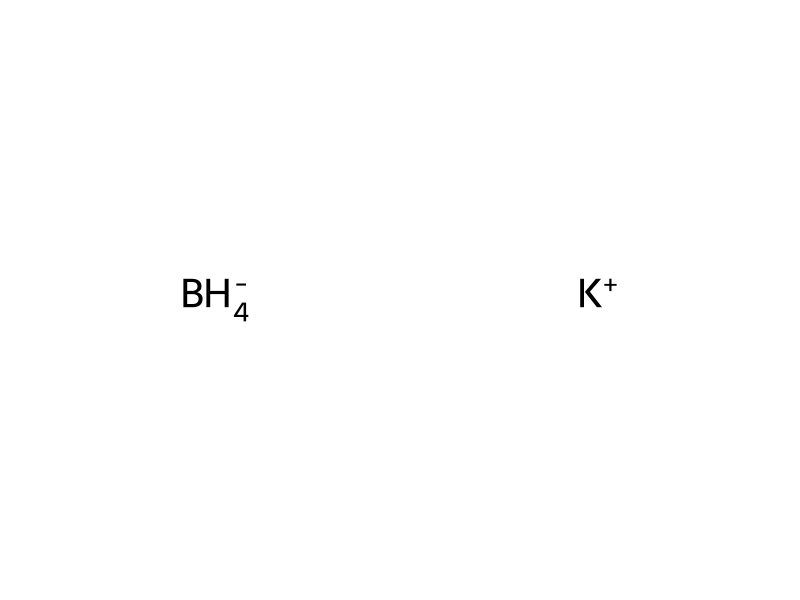
[BH4-].[K+]
InChIKey
ICRGAIPBTSPUEX-UHFFFAOYSA-N
Summenformel
BH4.K
Durchschnittliche Molmasse
53,94 g/mol
Monoisotopische Masse
54,00431221

Überblick

Potassium borohydride is a white crystalline or powdered solid. When exposed to water it may react violently and start a fire. It is toxic by ingestion. It is used to make other chemicals.

Namen und Bezeichner

Bevorzugter Name
Potassium borohydride
IUPAC
potassium boranuide
Lokaler Name
Kaliumtetrahydroborat
Englischer Name
Potassium borohydride
Summenformel
BH4K
Molmasse
53.94

Namen und Synonyme

KBH4RefChem:867736DTXCID101358594237-360-50WS230DTGF13762-51-1Borate(1-), tetrahydro-, potassiumBorohydrure de potassiumDTXSID50929853Potassium borohydratePotassium borohydridePotassium tetrahydroborate
Weitere Namen anzeigen
KBHK[BH4]POTASSIUMAMIDEKaliumborhydridPOTASSIUM BORANATEtassium Borohydridpotassium:boranuidepotassiumborohydrate
Potassium tetrahydroborate(1-)potassium;boranuidepotassiumborohydrideSCHEMBL48760Potassium borohydride, >=98%ICRGAIPBTSPUEX-UHFFFAOYSA-NAKOS024462594Potassium borohydride, purum, >=97.0% (RT)

Datenbank-Bezeichner

CAS
13762-51-1
PubChem CID
4192641
DTXSID
DTXSID50929853
EC Number
237-360-5

Eigenschaften

Berechnete StruktureigenschaftenWird ergänzt

Polarare Oberfläche (TPSA)
0 Ų
H-Brücken-Donoren
0
H-Brücken-Akzeptoren
1
Frei drehbare Bindungen
0
Schwere Atome
2
Formalladung
0
Komplexität
2

Experimentelle und physikochemische Eigenschaften

Chemical Classes · 2 Einträge

Metals -> Metals, Inorganic Compounds

Flammable agents - 3rd degree

SpringerMaterials Propertiesnuclear quadrupole moment
Physical Description · 2 Einträge

Potassium borohydride is a white crystalline or powdered solid. When exposed to water it may react violently and start a fire. It is toxic by ingestion. It is used to make other chemicals.

Solid; Not hygroscopic and stable in air; [Merck Index] White solid; [CAMEO] White odorless powder; [Kodak MSDS]

Physikochemische Eigenschaften

Schmelzpunkt
500 °C · 500 °C (dec.) (lit.)
Dichte
1.18 g/mL · 1.18 g/mL at 25 °C (lit.)
Brechungsindex
1.494 · 1.494
storage temp.
water-free area
Löslichkeit
2 O · soluble in H2O
Aggregatzustand
Powder
Wichte
1.178 · 1.178

Sicherheit und Regulatorisches

Sicherheitsangaben dienen nur zur Orientierung und ersetzen weder das Sicherheitsdatenblatt (SDB) des Lieferanten noch geltende Vorschriften oder eine fachliche Bewertung.

GHS-Klassifizierung

GHS Classification · 4 Einträge

Danger

H260 (88.9%): In contact with water releases flammable gases which may ignite spontaneously [Danger Substances and mixtures which in contact with water, emit flammable gases]

P223, P231+P232, P260, P262, P264, P264+P265, P270, P271, P280, P284, P301+P316, P301+P330+P331, P302+P335+P334, P302+P352, P302+P361+P354, P304+P340, P305+P354+P338, P316, P317, P320, P321, P330, P361+P364, P363, P370+P378, P402+P404, P403+P233, P405, and P501 (click each P-code to see the statement)

Aggregated GHS information provided per 162 reports by companies from 10 notifications to the ECHA C&L Inventory. Each notification may be associated with multiple companies.

Gefahrenhinweise

Regulatory Information · 4 Einträge

Chemical: Borate(1-), tetrahydro-, potassium

Status: Active Update: 02-10-2019 https://echa.europa.eu/registration-dossier/-/registered-dossier/24951

Borate(1-), tetrahydro-, potassium: HSNO Approval: HSR001291 Approved with controls

The New Jersey Worker and Community Right to Know Act requires public and private employers to provide information about hazardous substances at their workplaces. (N.J.S.A. 34:5A-1 et. seq.)

Other Safety InformationIMAP assessments - Borate(1-), tetrahydro-, potassium: Environment tier I assessment
DOT LabelDangerous When Wet
Fire Hazards · 2 Einträge

Excerpt from ERG Guide 138 [Substances - Water-Reactive (Emitting Flammable Gases)]:

· Produce flammable gases on contact with water.

Health Hazards · 2 Einträge

Excerpt from ERG Guide 138 [Substances - Water-Reactive (Emitting Flammable Gases)]:

Chemie und Industrie

Verwendung und Herstellung

Uses · 2 Einträge

Used as a reducing agent; [Merck Index] Used to make other chemicals; [CAMEO] Used to make plastics (foaming agent); [Hawley] Used as industrial photographic processing chemical; [Kodak MSDS]

Photographic Processing [Category: Other]

Anwendungen · 1 Eintrag

VerwendenSource of hydrogen, reducing agent for aldehydes, ketones, acid chlorides; foaming agent for plasticsPotassium borohydride is used as a selective reducing agent for ketones, aldehydes and acid chlorides. It is used as a precursor in the production of chloramphenicol, vitamin A, thiopenicol, atropine and scopolamine. It is used to prepare high dispersive copper nanoparticles by the chemical reduction method using potassium borohydride as a reducing agent.

Vor- und nachgelagerte Produkte

Vorgelagerte Rohstoffe

NatriumtetrahydroboratBorsureWasserstoffMethanolIsochinolin-1-carbonsure

Nachgelagerte Produkte

2-Amino-3,5-dibromobenzyl alcoholHexahydrocyclopenta[c]pyrrol-2(1H)-aminmonohydrochloridalpha-EthylbenzolmethanolDiniconazole

Zugehörige Reaktionen

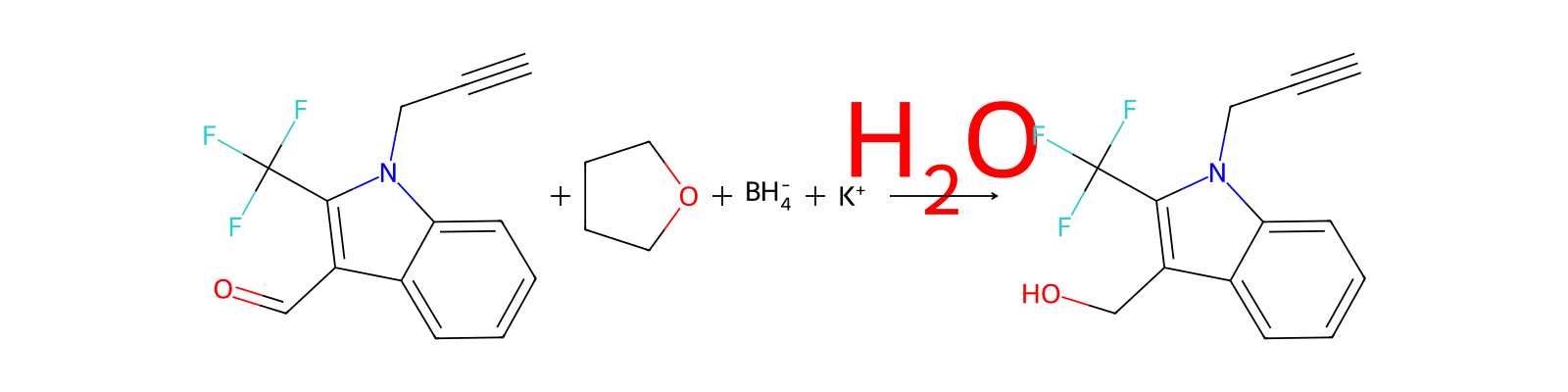
159
Reaktionsaufzeichnung erstellen
Reaktionsgleichung von HRID 6867
HRID 6867als Eduktuspto-grants-2006_08
Reaktionsgleichung von HRID 27590
HRID 27590als Eduktuspto-grants-1980_09
Reaktionsgleichung von HRID 65691
HRID 65691als Eduktuspto-grants-1978_12
Reaktionsgleichung von HRID 221213
HRID 221213als Eduktuspto-grants-2012_06
Reaktionsgleichung von HRID 231836
HRID 231836als Eduktuspto-grants-1989_07
Reaktionsgleichung von HRID 231838
HRID 231838als Eduktuspto-grants-1989_07
Reaktionsgleichung von HRID 259651
HRID 259651als Eduktuspto-grants-1977_07
Reaktionsgleichung von HRID 267193
HRID 267193als Eduktuspto-grants-1976_03
Seite 1 von 20

Notizen zur Verbindung

Wird geladen…

Auf dieser SeiteGrundinformationenÜberblickNamen und BezeichnerEigenschaftenSicherheit und RegulatorischesChemie und IndustrieZugehörige ReaktionenNotizen zur Verbindung
Weitere Aktionen
Neue NotizNeue ReaktionAnfrage stellen
Farbe
White
Wasserlöslichkeit
190 g/L · 190 g/L (25 ºC)
Spezifische Wärmekapazität
1.78 J/ · Cp(crystal): 1.78 J/(g·K), at 25℃
Merck
14 · 14,7616
InChI
1S/BH4.K/h1H4;/q-1;+1
InChIKey
ICRGAIPBTSPUEX-UHFFFAOYSA-N
SMILES
[K+].[H][B-]([H])([H])[H]
CAS Datenbank
13762 · 13762-51-1(CAS DataBase Reference)
NIST chemische Informationen
Potassium tetrahydroborate(13762-51-1)
EPA chemische Informationen
Borate(1-), tetrahydro-, potassium (1:1) (13762-51-1)

· Inhalation or contact with vapors, substance or decomposition products may cause severe injury or death.

Hazards Summary · 1 Eintrag

Reacts with water and moisture evolving flammable gases (may be violent and ignite on contact); Highly flammable and a strong reducing agent; [CAMEO] Causes spastic paralysis and dyspnea in lethal-dose studies of rabbits, rats, and mice (dermal, inhalation, and oral routes); [RTECS] Reacts violently with water (may form flammable or combustible mixture); A flammable reducing agent; May form explosive mixtures with air; Causes burns to skin and eyes; Dust is irritating to eyes and respiratory tract; Harmful by ingestion and inhalation; [Kodak MSDS]

DOT ID and Guide1870 138
Reactive GroupMetal Hydrides, Metal Alkyls, Metal Aryls, and Silanes
Reactivity AlertsStrong Reducing Agent
Reactivity ProfileA reducing agent. Reacts rapidly and dangerously with oxygen and with other oxidizing agents, even weak ones. Thus, they are likely to ignite on contact with alcohols. Hydrides are incompatible with acids, alcohols, amines, and aldehydes.
DOT Hazard Classification · 4 Einträge

Potassium borohydride

UN1870

Div 4.3 Dangerous when wet material (49 eCFR § 173.124)

PG I: the degree of danger presented by the material is great

Air and Water ReactionsHighly flammable. When exposed to water it may react violently and start a fire. Produce flammable gases on contact with water. May ignite on contact with water or moist air.

Sicherheit und Schutzausrüstung

Fire FightingExcerpt from ERG Guide 138 [Substances - Water-Reactive (Emitting Flammable Gases)]:
Accidental Release Measures · 2 Einträge

· CALL 911. Then call emergency response telephone number on shipping paper. If shipping paper not available or no answer, refer to appropriate telephone number listed on the inside back cover.

· ELIMINATE all ignition sources (no smoking, flares, sparks or flames) from immediate area.

First Aid · 2 Einträge

Excerpt from ERG Guide 138 [Substances - Water-Reactive (Emitting Flammable Gases)]:

General First Aid:

Exposure Control and Personal Protection· Wear positive pressure self-contained breathing apparatus (SCBA).
Nonfire Spill ResponseExcerpt from ERG Guide 138 [Substances - Water-Reactive (Emitting Flammable Gases)]:
Isolation and Evacuation · 2 Einträge

Excerpt from ERG Guide 138 [Substances - Water-Reactive (Emitting Flammable Gases)]:

Immediate precautionary measure

Personal Protective Equipment (PPE)Excerpt from ERG Guide 138 [Substances - Water-Reactive (Emitting Flammable Gases)]:
Emergency Response Planning Guidelines· DO NOT USE WATER OR FOAM.

Toxikologische Informationen

Adverse EffectsNeurotoxin - Other CNS neurotoxin
Toxicity DataLC50 (rat) = 46 mg/m3

Sicherheitsdaten

F
10
wgk
-
tsca
TSCA listed
ridadr
UN 1870
hs_code
2850 00 20
RTECS-Nr.
TS7525000
risk_code
14/15-24/25-34-11
Toxizität
LD50 orally in Rabbit: 167 mg/kg LD50 dermal Rabbit 230 mg/kg
hazard_code
F,T,C
safety_code
26-36/37/39-43-45-7/8-28A-16
hazard_class
4.3
packing_group
I
Speicherklasse
4.3 - Hazardous materials which set free flammable gases upon contact with water
Hazard Classifications
Acute Tox. 3 OralEye Dam. 1Repr. 1BSkin Corr. 1BWater-react 1
Paclobutrazol W.P.
1-(2-Chlorophenyl)-2-bromoethanol
N-Ethyl-alpha-methyl-3-(trifluor-methyl)benzolethanamin
Zopiclon
Estradiol
Nefopam
Clenbuterol
3-[1,1'-Biphenyl]-4-yl-1,2,3,4-tetrahydro-1-naphthol
3-(-Hydroxyphenethyl)-2-imino thiazolidine
Bromhexinhydrochlorid
Tropasure
Fluoxetine
1-(4-Chlorphenoxy)-3,3-dimethyl-1-(1H-1,2,4-triazol-1-yl)-butan-2-ol
Bromadiolon
21-Iodo-16-methylpregna-1,4,9(11)-trien-17-ol-3,20-dione
4-Hydroxy-3-(3-(4'-brom-4-biphenylyl)-1,2,3,4-tetrahydro-1-naphthyl)cumarin
Gliclazid
Paclobutrazol
Diclobutrazol
Methoxydienone
[1-Ethyl-1-phenyl-2-(3,4,5-trimethoxybenzoyloxy)ethyl]dimethylammoniumhydrogenmaleat
11β,17-Dihydroxypregna-1,4-dien-3,20-dion-17-propionat
3-(4'-Brom[1,1'-biphenyl]-4-yl)-1,2,3,4-tetrahydro-1-naphthol
13-Ethyl-3-methoxygona-2,5(10)-dien-17β-ol
Perhydroazocin
Diboran (6)
Ticlopidine
Terfenadin
Labetalol
α-(Hydroxymethyl)benzenacetic acid methyl ester
Lorcainide
1-[2-Hydroxy-2(2-thienyl)ethyl]pyridinium bromide
3-Nitrobenzylalkohol
Clorprenalin
17-Hydroxy-6-methylpregna-4,6-dien-3,20-dion-17-acetat
N-(4-Chlorphenyl)-1-isopropylpiperidin-4-amin