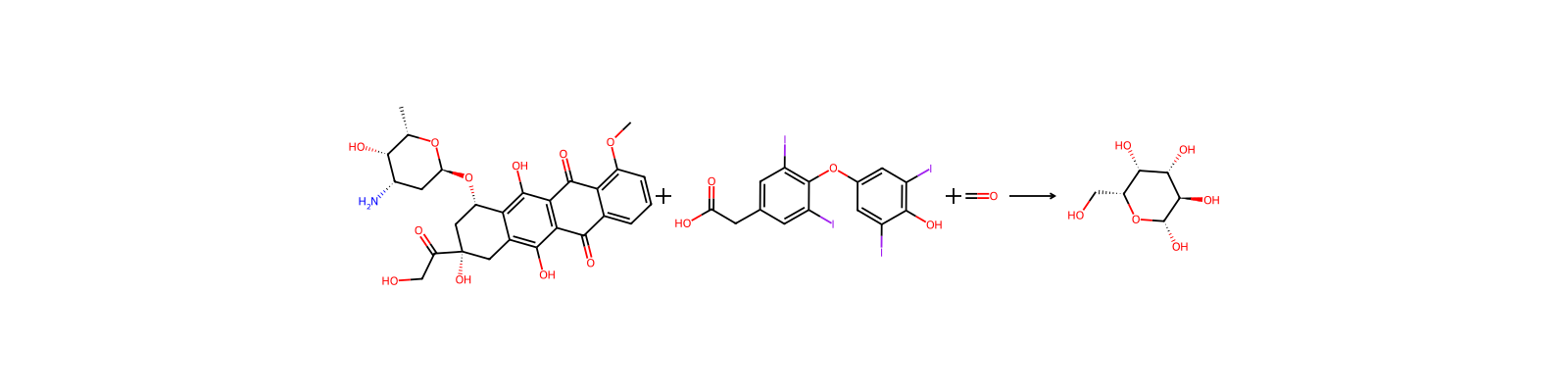
beta-D-Galactopyranose
Daten werden ergänzt – lade die Seite später neu, um den aktuellen Stand zu sehen

Grundinformationen
- CAS
7296-64-2- Standard-SMILES
OC[C@H]1O[C@@H](O)[C@H](O)[C@@H](O)[C@H]1O- InChIKey
WQZGKKKJIJFFOK-FPRJBGLDSA-N- Summenformel
- C6H12O6
- Durchschnittliche Molmasse
- 180,16 g/mol
- Monoisotopische Masse
- 180,0633881
Überblick
Beta-D-galactose is a D-galactopyranose having beta configuration at the anomeric centre. It has a role as an epitope and a mouse metabolite. It is an enantiomer of a beta-L-galactose.
Namen und Bezeichner
- Bevorzugter Name
- beta-D-Galactopyranose
- IUPAC
- (2R,3R,4S,5R,6R)-6-(hydroxymethyl)oxane-2,3,4,5-tetrol
- Englischer Name
- .beta.-D-Galactopyranose
- Summenformel
- C6H12O6
- Molmasse
- 180.16
Namen und Synonyme
beta-D-galactosebeta-D-galactopyranose7296-64-2beta-Galactose(2R,3R,4S,5R,6R)-6-(hydroxymethyl)oxane-2,3,4,5-tetrolRQ6K52J67ACHEBI:27667GlyTouCan:G65889KEDTXSID001015884RefChem:6900DTXCID701474039G65889KE
Weitere Namen anzeigen
β-D-Galactoseβ-D-galactopyranose-β-D-Galactose.beta.-D-Galactopyranose(2R,3R,4S,5S,6R)-6-(hydroxymethyl)oxane-2,3,4,5-tetrol
b-D-Galactosebeta-D-Galbeta-D-GalactosideGalactitol,1,5-anhydro-1-C-phenyl-beta-Galactosidase9031-11-2(2R,3R,4S,5R,6R)-6-(Hydroxymethyl)tetrahydro-2H-pyran-2,3,4,5-tetraolCHEMBL300520
Datenbank-Bezeichner
- CAS
7296-64-2、9031-11-2- PubChem CID
- 439353
- DTXSID
DTXSID001015884- ChEMBL
CHEMBL300520- ChEBI
CHEBI:27667- UNII
- RQ6K52J67A
- EC Number
- 232-864-1
- Nikkaji
- J292.886H
Eigenschaften
Berechnete StruktureigenschaftenWird ergänzt
- XLogP
- -2,6
- Polarare Oberfläche (TPSA)
- 110 Ų
- H-Brücken-Donoren
- 5
- H-Brücken-Akzeptoren
- 6
- Frei drehbare Bindungen
- 1
- Schwere Atome
- 12
- Formalladung
- 0
- Komplexität
- 151
Experimentelle und physikochemische Eigenschaften
Chemical ClassesBiological Agents -> Enzymes
SpringerMaterials PropertiesCrystal structure
SolubilitySlightly soluble
Physical Description
Powder; [Sigma-Aldrich MSDS]
Solid
Physikochemische Eigenschaften
- Schmelzpunkt
- 179 · 179-179.5 °C
- Siedepunkt
- 410.8 · 410.8±45.0 °C(Predicted)
- Dichte
- 1.732 · 1.732±0.06 g/cm3(Predicted)
- storage temp.
- Hygroscopic, Refrigerator, under inert atmosphere
- Löslichkeit
- Water (Slightly)
- Aggregatzustand
- Solid
- pka
- 12.12 · 12.12±0.70(Predicted)
- Farbe
- White to Off-White
- Stabilität
- Hygroscopic
Sicherheit und Regulatorisches
Sicherheitsangaben dienen nur zur Orientierung und ersetzen weder das Sicherheitsdatenblatt (SDB) des Lieferanten noch geltende Vorschriften oder eine fachliche Bewertung.
GHS-Klassifizierung
GHS Classification
Danger
H334 (99.9%): May cause allergy or asthma symptoms or breathing difficulties if inhaled [Danger Sensitization, respiratory]
P233, P260, P271, P284, P304+P340, P342+P316, P403, and P501 (click each P-code to see the statement)
Aggregated GHS information provided per 1506 reports by companies from 4 notifications to the ECHA C&L Inventory.
Gefahrenhinweise
Regulatory Information
Chemical: Galactosidase, .beta.-
Galactosidase, .beta.-: Does not have an individual approval but may be used under an appropriate group standard
.beta.-D-Galactopyranose: Does not have an individual approval but may be used under an appropriate group standard
Other Safety InformationIMAP assessments - Galactosidase, .beta.-: Environment tier I assessment
Hazards SummaryMay cause irritation; May cause allergic reactions in sensitive individuals; [Sigma-Aldrich MSDS] See ENZYMES.
Hazard Classes and CategoriesResp. Sens. 1 (99.9%)
Chemie und Industrie
Pharmakologische Informationen
ATC Code
A - Alimentary tract and metabolism
QA - Alimentary tract and metabolism
Protein BindingTilactase is not absorbed and thus the plasma protein binding is not possible.
Pharmacodynamics
The use of a single oral administration of tilactase has been shown to be highly effective in decreasing the symptoms and hydrogen excretion of hypolactasia in tests of lactose H(2)-breath. The analysis has shown a decrease of approximately 80% in both malabsorbers and intolerants.The administration of tilacatase also decreases the presence of bloating and flatus.
Mechanism of Action
Lactose is the primary disaccharide found in dairy products. Tilactase is a type of lactase which is the enzyme that is in charge of the breakdown of lactose to glucose and galactose which can be used by the body. Basically, tilactase acts by replacing the missing lactase in the body and allows avoidance of the reach of lactose to the small intestine and the normal bacteria and thus, preventing the symptoms of the lactose intolerance. Once tilactase has metabolized the lactose, the metabolism products are reabsorbed by the normal process of digestion.
Biological Half-LifeTilactase half-life at 35ºC is registered to be 123.77 min. This half-life can be affected by temperature in an inversely proportional manner.
Metabolism/MetabolitesTilactase is degraded by the stomach acid and by the normal flora bacterial metabolism.
Absorption, Distribution and Excretion
Tilactase is not absorbed in the GI tract and thus the pharmacokinetic parameters related to absorption are not relevant.
Tilactase is completely eliminated in the feces either unchanged or as metabolites.
Tilactase is not absorbed and thus the volume of distribution is not relevant.
Tilactase is not absorbed and thus the clearance rate is not relevant.
Tissue LocationsBladder
Cellular LocationsExtracellular
Verwendung und Herstellung
Uses
A group of enzymes that catalyzes the hydrolysis of terminal, non-reducing beta-D-galactose residues in beta-galactosides. Deficiency of beta-Galactosidase A1 may cause GANGLIOSIDOSIS, GM1. [ChemIDplus] Available commercially as a catalyst to hydrolyze milk lactose into glucose and galactose; [REPROTOX]
Anwendungen
Verwendenβ-D-Galactose s the beta anomer of D-Galactose (G155250), the C-4 epimer of Glucose (G595000). D-Galactose is found in milk and sugar beets as well as being synthesized by the body.
Vor- und nachgelagerte Produkte
Vorgelagerte Rohstoffe
Nachgelagerte Produkte
Ergänzende Hinweise
DefinitionChEBI: A D-galactopyranose having beta-configuration at the anomeric centre.
Zugehörige Reaktionen
6


Notizen zur Verbindung
Wird geladen…