
Grundinformationen
- Standard-SMILES
OC[C@H]1O[C@@H]2O[C@H]3[C@H](O)[C@@H](O)[C@@H](O[C@H]4[C@H](O)[C@@H](O)[C@@H](O[C@H]5[C@H](O)[C@@H](O)[C@@H](O[C@H]6[C@H](O)[C@@H](O)[C@@H](O[C@H]7[C@H](O)[C@@H](O)[C@@H](O[C@H]8[C@H](O)[C@@H](O)[C@@H](O[C@H]1[C@H](O)[C@H]2O)O[C@@H]8CO)O[C@@H]7CO)O[C@@H]6CO)O[C@@H]5CO)O[C@@H]4CO)O[C@@H]3CO- InChIKey
WHGYBXFWUBPSRW-FOUAGVGXSA-N- Summenformel
- C42H70O35
- Durchschnittliche Molmasse
- 1.135 g/mol
- Monoisotopische Masse
- 1.134,36976394
Überblick
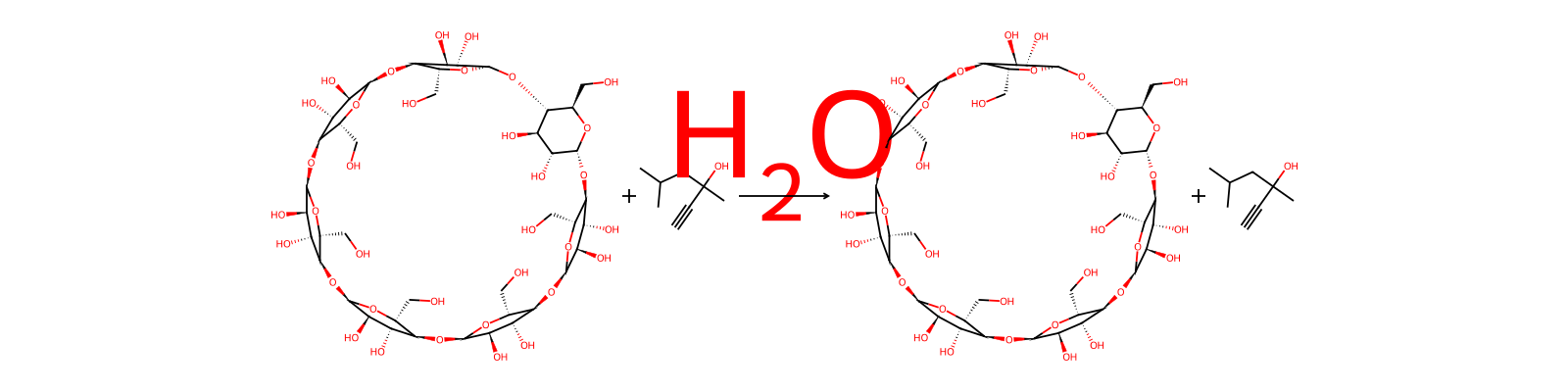
Beta-cyclodextrin is a cyclodextrin composed of seven alpha-(14) linked D-glucopyranose units.
Namen und Bezeichner
- Bevorzugter Name
- beta-Cyclodextrin
- IUPAC
- (1S,3R,5R,6S,8R,10R,11S,13R,15R,16S,18R,20R,21S,23R,25R,26S,28R,30R,31S,33R,35R,36R,37R,38R,39R,40R,41R,42R,43R,44R,45R,46R,47R,48R,49R)-5,10,15,20,25,30,35-heptakis(hydroxymethyl)-2,4,7,9,12,14,17,19,22,24,27,29,32,34-tetradecaoxaoctacyclo[31.2.2.23,6.28,11.213,16.218,21.223,26.228,31]nonatetracontane-36,37,38,39,40,41,42,43,44,45,46,47,48,49-tetradecol
- Lokaler Name
- Cycloheptapentylose
- Englischer Name
- β-Cyclodextrin
- Summenformel
- C42H70O35
- Molmasse
- 1134.99
Namen und Synonyme
beta-CYCLODEXTRIN7585-39-9BetadexCycloheptaamyloseCyclomaltoheptaoseCycloheptaglucanCycloheptaglucosanKleptosebeta-Cycloamylosebeta-DextrinKleptose BRhodocap N
Weitere Namen anzeigen
β-CyclodextrinB-CyclodextrinCyclodextrinsBCDCARAWAYBETA BYCLODEXTRINBETA-CYCLODEXTRINE
Ringdex BRingdex BLbeta-CycloheptaamyloseBetacdOristar bcdRingdex-bBeta cyclodextrinDTXSID1020358
Datenbank-Bezeichner
- CAS
7585-39-9- PubChem CID
- 444041
- DTXSID
DTXSID1020358- ChEMBL
CHEMBL415690- ChEBI
CHEBI:495055- UNII
- JV039JZZ3A
- EC Number
- 231-493-2
- Nikkaji
- J245.583H
Eigenschaften
Berechnete Struktureigenschaften
- XLogP
- -15
- Polarare Oberfläche (TPSA)
- 554 Ų
- H-Brücken-Donoren
- 21
- H-Brücken-Akzeptoren
- 35
- Frei drehbare Bindungen
- 7
- Schwere Atome
- 77
- Formalladung
- 0
- Komplexität
- 1.480
Experimentelle und physikochemische Eigenschaften
PolymersBiological Agents -> Polysaccharides
CosmeticsChelating; Absorbent
Food AdditivesFLAVORING AGENT OR ADJUVANT, FORMULATION AID -> FDA Substance added to food
SolubilitySparingly soluble in water; freely soluble in hot water; slightly soluble in ethanol
Optical Rotation[α]D/25 + 160° to + 164° (1 % solution)
Physical Description
Dry Powder
Virtually odourless white or almost white crystalline solid
White virtually odorless solid; [JECFA] White powder; [Sigma-Aldrich MSDS]
Collision Cross Section319.7 Ų [M+Na]+ [CCS Type: DT; Method: stepped-field]
Physikochemische Eigenschaften
- Schmelzpunkt
- 290 · 290-300 °C (dec.) (lit.)
- Siedepunkt
- 844.96 °C · 844.96°C (rough estimate)
- Dichte
- 1.2296 · 1.2296 (rough estimate)
- Brechungsindex
- 1.75 · 1.7500 (estimate)
- FEMA
- 4028 · 4028 | BETA-CYCLODEXTRIN
- storage temp.
- room temp
- Löslichkeit
- 1 M · 1 M NaOH: 50 mg/mL
- Aggregatzustand
- powder
- pka
- 11.73 · 11.73±0.70(Predicted)
- Farbe
- white
- PH
- 5 · 5.0-8.0 (1% in solution, Ph Eur)
- Geruch (Odor)
- 100 % · at 100.00 %. odorless
- Geruchsart
- odorless
- Biologische Quelle
- plant
- Wasserlöslichkeit
- Soluble in water and ammonium hydroxide.
- Merck
- 14 · 14,2718
- BRN
- 78623 · 78623
- Stabilität
- Stable. Incompatible with strong oxidizing agents.
- Kosmetik-Inhaltsstoffe Funktionen
- CHELATINGABSORBENT
- InChIKey
- WHGYBXFWUBPSRW-FOUAGVGXSA-N
- LogP
- -9.06 · -9.06
- EPA chemische Informationen
- .beta.-Cyclodextrin (7585-39-9)
- Absorption
- 0.05 at · ≤0.05 at 350-750nm in solution at 1%≤0.1 at 230-350nm in solution at 1%
Sicherheit und Regulatorisches
GHS-Klassifizierung
GHS Classification
This chemical does not meet GHS hazard criteria for 99.3% (151 of 152) of all reports.
Not Classified
Aggregated GHS information provided per 152 reports by companies from 3 notifications to the ECHA C&L Inventory.
Gefahrenhinweise
Regulatory Information
Chemical: .beta.-Cyclodextrin
Regulation (EC) No 257/2010
.beta.-Cyclodextrin is listed on the EPA's Chemical Data Reporting (CDR) system. Manufacturers and importers of .beta.-Cyclodextrin are required to report information about their production and use of this chemical to the EPA under the Toxic Substances Control Act (TSCA). (40 eCFR Part 711)
Status: Active Update: 21-01-2022 https://echa.europa.eu/registration-dossier/-/registered-dossier/1942
Beta-cyclodextrin: Does not have an individual approval but may be used under an appropriate group standard
Other Safety InformationIMAP assessments - .beta.-Cyclodextrin: Human health tier I assessment
Hazards Summary
Composed of 7 glucose units joined together; Acceptable daily intake (ADI) of 0-5 mg/kg; [JECFA] Causes zonal hepatitis and acute tubular necrosis in 52-week constant oral studies of rats; Causes diffuse and zonal hepatitis in 7-week constant oral studies of rats; [RTECS] Causes mild skin and eye irritation in rabbits; Not a skin sensitizer in guinea pigs; [Sigma-Aldrich MSDS] See alpha-Cyclodextrin.
EPA Safer ChemicalChemical: Cyclodextrin
Hazard Classes and CategoriesNot Classified
Toxikologische Informationen
Adverse EffectsOccupational hepatotoxin - Secondary hepatotoxins: the potential for toxic effect in the occupational setting is based on cases of poisoning by human ingestion or animal experimentation.
Toxicity DataLC50 (rat) > 4,900 mg/m3/4hr
Sicherheitsdaten
- wgk
- 2
- tsca
- TSCA listed
- hs_code
- 29400000
- RTECS-Nr.
- GU2293000
- risk_code
- 36/37/38-20
- hazard_code
- Xi
- safety_code
- 26-36-24/25
- Speicherklasse
- 11 - Combustible Solids
Chemie und Industrie
Pharmakologische Informationen
MeSH Pharmacological Classification
Substances used in the processing or storage of foods or animal feed including ANTIOXIDANTS; FOOD PRESERVATIVES; FOOD COLORING AGENTS; FLAVORING AGENTS; ANTI-INFECTIVE AGENTS; EXCIPIENTS and other similarly used substances. Many of the same substances are used as PHARMACEUTIC AIDS.
Compounds that bind to and reduce the biological availability of a chemical or pharmaceutical agent.
Verwendung und Herstellung
UsesPermitted for use as an inert ingredient in non-food pesticide products; [EPA] Used as flavoring agent and formulation aid; [FDA] Used as a thickening agent and an encapsulation agent for food additives, flavoring, and vitamins; [JECFA]
U.S. Production2023: 1,000,000 - <8,500,000 lb
Consumer UsesDeodorizer
Industry UsesDispersing agent
Use Classification
EPA Safer Chemical Functional Use Classes -> Uncategorized
Safer Chemical Classes -> Green circle - The chemical has been verified to be of low concern
Food additives
Food Additives -> ADJUVANT -> JECFA Functional Classes
Food Additives -> ADJUVANT -> JECFA Functional Classes
Food Additives -> ADJUVANT -> JECFA Functional Classes
General Manufacturing Information
All Other Chemical Product and Preparation Manufacturing
.beta.-Cyclodextrin: ACTIVE
Anwendungen
OccurrenceA derivative of naturally occurring starch.
Verwendenβ-Cyclodextrin is a cyclic oligosaccharide produced from starch via enzymatic conversion. β-Cyclodextrin is commonly used to produce HPLC columns allowing chiral enantiomers separation.
Darstellung
synthetischeUsually produced commercially from Bacillus macerans or B. circulans fermentation of starch or starch hydrolysate.
Vor- und nachgelagerte Produkte
Vorgelagerte Rohstoffe
Nachgelagerte Produkte
Anbieter50 Anbieter
国药集团化学试剂有限公司86-21-63210123 · [email protected]
北京华美互利生物化工010-56205725 · [email protected]
梯希爱(上海)化成工业发展有限公司021-67121386 · [email protected]
山西锦洋药用辅料有限公司18234787927
衢州润东化工有限公司0570-8789886 18892685668 · [email protected]
上海阿拉丁生化科技股份有限公司400-6206333 13167063860 · [email protected]
山东中环众杰生物科技有限公司19353585069 19353585069
淄博千汇生物科技有限公司0533-3780068 18653397376 · [email protected]
T&W GROUP021-61551611 13296011611 · [email protected]
上海如吉生物科技发展有限公司+86-21-65211385-8001 36031160 · [email protected]
南京兰亚化工贸易有限公司+86-25-8331-5620 · [email protected]
韶远科技(上海)有限公司021-50795510 4000665055 · [email protected]
上海将来实业股份有限公司400-0066400 13621662912 · [email protected]
上海迈瑞尔生化科技有限公司4006356688 18621169109 · [email protected]
上海拓克化学科技有限公司+86-021-69895597 13776836200 +86-13776836200 · [email protected]
大连美仑生物技术有限公司0411-62910999 13889544652 · [email protected]
安耐吉化学&3A(安徽泽升科技股份有限公司)400-0056266 · [email protected]
上海瀚鸿科技股份有限公司021-54306202 13764082696 · [email protected]
上海柯维化学技术有限公司021-64609169 18901607656 · [email protected]
上海景颜化工科技有限公司13817811078 · [email protected]
上海泰坦科技股份有限公司400-6009262 15618770481 · [email protected]
武汉赛沃尔化工有限公司027-85613400 18707177243 · [email protected]
合肥天健化工有限公司551-65418679 15856988503;15837135945 · [email protected]
武汉丰泰威远科技有限公司027-87465837 19945049750 · [email protected]
孝感深远化工有限公司15527621225; 15527621225 · [email protected]
山东西亚化学有限公司13355009207 13355009207 · [email protected]
玛雅试剂+86 (573) 82222445 (0)18006601000 452520369 · [email protected]
四川库利南科技有限公司400-1166-196 18981987031 · [email protected]
天津希恩思生化科技有限公司400 638 7771 · [email protected]
湖南汇百侍生物科技有限公司0731-85526065 13308475853 · [email protected]
斯百全化学(上海)有限公司021-021-021-67601398-809-809-809 15221380277 · [email protected]
上海源叶生物科技有限公司13636370518 · [email protected]
艾科试剂4008-755-333 18080918076 · [email protected]
上海思域化工科技有限公司86-21-34053660 · [email protected]
上海遐瑞医药科技有限公司+86 21 61551611
上海健超生物科技有限公司150-2103-5486 18017383231 · [email protected]
TCI AMERICA800-4238616 · [email protected]
TOKYO CHEMICAL INDUSTRY CO., LTD.03-36680489 · [email protected]
TCI Europe320-37350700 · [email protected]
深圳振强药物研发有限公司0755-66853366 13670046396 · [email protected]
南京生利德生物科技有限公司025-57798810 18652991625 · [email protected]
深圳市石金谷科技有限公司(0086)755-61930359 (0086)18038192047 · [email protected]
上海倍卓生物科技有限公司021-61119791,13386096464 · [email protected]
湖北鑫源顺医药化工有限公司13971561712, 13995564702, 027-50664929 · [email protected]
上海将来实业股份有限公司400-0066400 13621662912 · [email protected]
上海将来实业股份有限公司021-61552785 · [email protected]
安徽科迪达化工有限公司0554-2106669 · [email protected]
HBCChem, Inc.+1-510-219-6317 · [email protected]
日照力德士化工有限公司010-51268198 · [email protected]
上海爱蝶实业有限公司021-58957966 18930537195 · [email protected]
Zugehörige Reaktionen
70


Verknüpfte Notizen
Wird geladen…