

Grundinformationen
- CAS
21732-17-2- Standard-SMILES
O=C(O)Cn1cnnn1- InChIKey
GRWAIJBHBCCLGS-UHFFFAOYSA-N- Summenformel
- C3H4N4O2
- Durchschnittliche Molmasse
- 128,09 g/mol
- Monoisotopische Masse
- 128,03342537
Überblick
Tetrazol-1-acetic acid appears as a solid or liquid. May be liable to extremely rapid burning or a minor blast effect. Explosive effects largely confined to the package. No projection of fragments of appreciable size or range expected.
Namen und Bezeichner
- Bevorzugter Name
- 1-Tetrazolylacetic acid
- IUPAC
- 2-(tetrazol-1-yl)acetic acid
- Lokaler Name
- 1H-Tetrazol-1-essigsure
- Englischer Name
- 1H-Tetrazole-1-acetic acid
- Summenformel
- C3H4N4O2
- Molmasse
- 128.09
Namen und Synonyme
1H-Tetrazole-1-acetic acid21732-17-22-(tetrazol-1-yl)acetic acid2-(1H-Tetrazol-1-yl)acetic acid1-Tetrazolylacetic acid2-(1H-1,2,3,4-Tetrazol-1-yl)acetic acid1H-Tetrazol-1-acetic acidTetrazol-1-acetic acid0Z73YK18GGDTXSID9057686tetrazolylacetic acidEINECS 244-551-7
Weitere Namen anzeigen
Tetrazolium acetic acid1H-Tetrazol-1-ylacetic acid-1-acetic acidCBI-BB ZERO/005907Cefazolin USP RC A
DTXCID0031475EC 244-551-7RefChem:436831244-551-7Tetrazole-1-acetic acid1H-Tetrazolyl-1-acetic acid1-Tetrazoleacetic acidUNII-0Z73YK18GG
Datenbank-Bezeichner
- CAS
21732-17-2- PubChem CID
- 543207
- DTXSID
DTXSID9057686- ChEMBL
CHEMBL3182642- UNII
Eigenschaften
Berechnete Struktureigenschaften
- XLogP
- -0,7
- Polarare Oberfläche (TPSA)
- 80,9 Ų
- H-Brücken-Donoren
- 1
- H-Brücken-Akzeptoren
- 5
- Frei drehbare Bindungen
- 2
- Schwere Atome
- 9
- Formalladung
- 0
- Komplexität
- 116
Experimentelle und physikochemische Eigenschaften
Physical DescriptionTetrazol-1-acetic acid appears as a solid or liquid. May be liable to extremely rapid burning or a minor blast effect. Explosive effects largely confined to the package. No projection of fragments of appreciable size or range expected.
Physikochemische Eigenschaften
- Schmelzpunkt
- 127 · 127-129°C
- Siedepunkt
- 381.1 · 381.1±44.0 °C(Predicted)
- Dichte
- 1.78 · 1.78±0.1 g/cm3(Predicted)
- Löslichkeit
- DMSO (Soluble), Methanol (Slightly)
- pka
- 2.67 · 2.67±0.10(Predicted)
- Aggregatzustand
- Solid
- Farbe
- White to Off-White
- InChI
- InChI=1S/C3H4N4O2/c8-3(9)1-7-2-4-5-6-7/h2H,1H2,(H,8,9)
- InChIKey
- GRWAIJBHBCCLGS-UHFFFAOYSA-N
- SMILES
- N1(CC(O)=O)C=NN=N1
- CAS Datenbank
- 21732 · 21732-17-2(CAS DataBase Reference)
Sicherheit und Regulatorisches
GHS-Klassifizierung
GHS Classification
Warning
H204 (96.4%): Fire or projection hazard [Warning Explosives]
P210, P230, P234, P236, P240, P250, P261, P264, P264+P265, P271, P280, P302+P352, P304+P340, P305+P351+P338, P319, P321, P332+P317, P337+P317, P362+P364, P370+P380+P375, P401, P403+P233, P405, P501, and P503 (click each P-code to see the statement)
Aggregated GHS information provided per 55 reports by companies from 7 notifications to the ECHA C&L Inventory. Each notification may be associated with multiple companies.
Gefahrenhinweise
Regulatory Information
Status: Active Update: 05-07-2019 https://echa.europa.eu/registration-dossier/-/registered-dossier/17014
The New Jersey Worker and Community Right to Know Act requires public and private employers to provide information about hazardous substances at their workplaces. (N.J.S.A. 34:5A-1 et. seq.)
DOT LabelExplosive 1.4C
Fire HazardsExcerpt from ERG Guide 114 [Explosives - Division 1.4 or 1.6]:
Health HazardsExcerpt from ERG Guide 114 [Explosives - Division 1.4 or 1.6]:
Reactive GroupAcids, Carboxylic
Reactivity AlertsExplosive
Reactivity Profile
TETRAZOL-1-ACETIC ACID is an azo compound. Some materials in this group can detonate. This applies in particular to organic azides that have been sensitized by the addition of metal salts or strong acids. Toxic gases are formed by mixing materials of this class with acids, aldehydes, amides, carbamates, cyanides, inorganic fluorides, halogenated organics, isocyanates, ketones, metals, nitrides, peroxides, phenols, epoxides, acyl halides, and strong oxidizing or reducing agents. Flammable gases are formed by mixing materials in this group with alkali metals. Explosive combination can occur with strong oxidizing agents, metal salts, peroxides, and sulfides.
Chemie und Industrie
Vor- und nachgelagerte Produkte
Vorgelagerte Rohstoffe
Nachgelagerte Produkte
Anbieter100 Anbieter
天津始加生物医药科技有限公司15022261580 · [email protected]
Shandong chuangyingchemical Co., Ltd.18853181302 · [email protected]
济南百隆化学有限公司[email protected] · [email protected]
Zugehörige Reaktionen
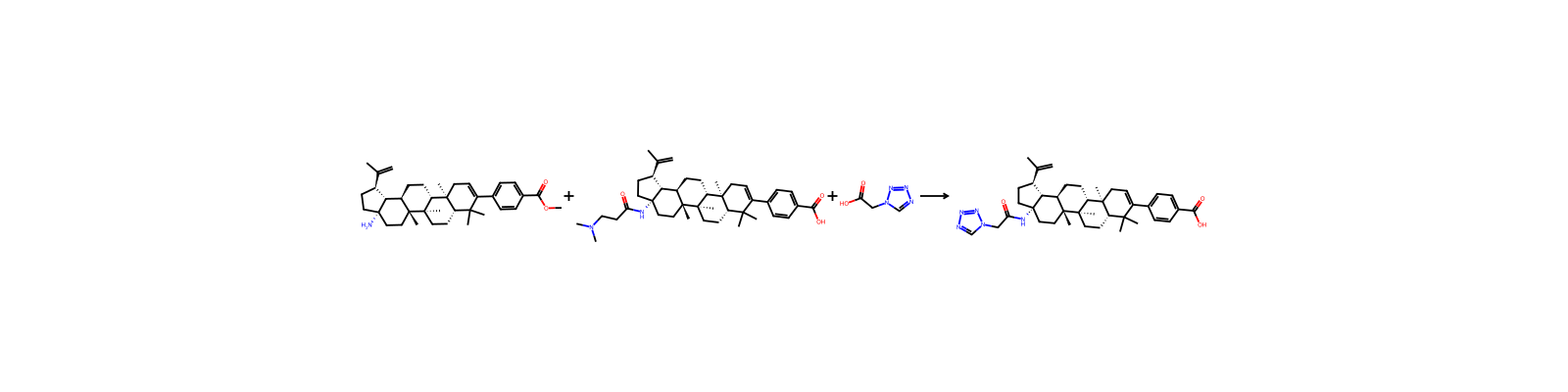
24


Notizen zur Verbindung
Wird geladen…