
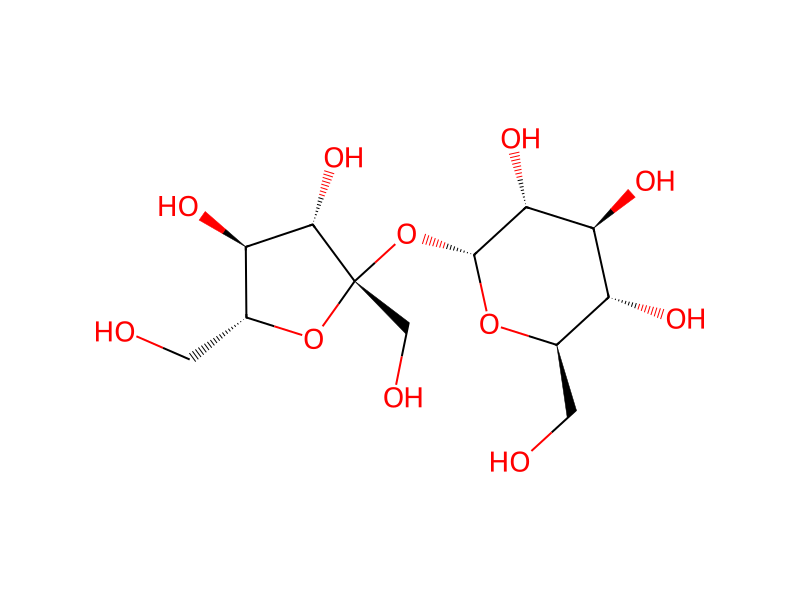
Grundinformationen
- Standard-SMILES
OC[C@H]1O[C@@](CO)(O[C@H]2O[C@H](CO)[C@@H](O)[C@H](O)[C@H]2O)[C@@H](O)[C@@H]1O- InChIKey
CZMRCDWAGMRECN-UGDNZRGBSA-N- Summenformel
- C12H22O11
- Durchschnittliche Molmasse
- 342,3 g/mol
- Monoisotopische Masse
- 342,11621152
Überblick
Sucrose appears as white odorless crystalline or powdery solid. Denser than water.
Namen und Bezeichner
- Bevorzugter Name
- Sucrose
- IUPAC
- (2R,3R,4S,5S,6R)-2-[(2S,3S,4S,5R)-3,4-dihydroxy-2,5-bis(hydroxymethyl)oxolan-2-yl]oxy-6-(hydroxymethyl)oxane-3,4,5-triol
- Englischer Name
- Beet sugar
- Summenformel
- C12H22O11
- Molmasse
- 0
Namen und Synonyme
sucrose57-50-1saccharosesugarTable sugarCane sugarWhite sugarSaccharumMicroseRock candyAmerfandConfectioner's sugar
Weitere Namen anzeigen
Ai3-090851-alpha-D-Glucopyranosyl-2-beta-D-fructofuranoside
SucraloxumAmerfondbeta-D-Fructofuranosyl-alpha-D-glucopyranosidebeta-D-Fructofuranosyl alpha-D-glucopyranosideDTXSID2021288alpha-D-Glucopyranosyl beta-D-fructofuranosideNCI-C56597(+)-Sucrose
Datenbank-Bezeichner
- CAS
57-50-1、92004-84-7- PubChem CID
- 5988
- DTXSID
DTXSID2021288- ChEMBL
CHEMBL253582- ChEBI
CHEBI:17992- UNII
- C151H8M554
- EC Number
- 200-334-9、618-806-1
- Nikkaji
- J4.581K
Eigenschaften
Berechnete Struktureigenschaften
- XLogP
- -3,7
- Polarare Oberfläche (TPSA)
- 190 Ų
- H-Brücken-Donoren
- 8
- H-Brücken-Akzeptoren
- 11
- Frei drehbare Bindungen
- 5
- Schwere Atome
- 23
- Formalladung
- 0
- Komplexität
- 395
Experimentelle und physikochemische Eigenschaften
Chemical ClassesBiological Agents -> Disaccharides
DrugsPharmaceuticals -> Listed in ZINC15
Cosmetics
Cosmetic ingredients (Sucrose) -> CIR (Cosmetic Ingredient Review)
Soothing; Humectant; Skin conditioning
pHSoln are neutral to litmus
SpringerMaterials PropertiesChemical diffusion
Pesticides
Agrochemicals -> Pesticide active substances
Active substance -> EU Pesticides database: Approved
LogP
log Kow = -3.70
-3.70
-3.67
-2.7
Odor
Characteristic caramel
... Odorless ... [Note: May have a characteristic caramel odor when heated].
TasteSweet
Food AdditivesNUTRITIVE SWEETENER -> FDA Substance added to food
Density
1.59 at 68 °F (USCG, 1999) - Denser than water; will sink
1.5805 g/cu cm @ 17 °C
1.6 g/cm³
1.59
1.59
Color/Form
Monoclinic sphenoidal crystals, crystalline masses, blocks, or powder
Hard, white ... crystals, lumps, or powder ...
Sicherheit und Regulatorisches
GHS-Klassifizierung
GHS Classification
This chemical does not meet GHS hazard criteria for 95.7% (423 of 442) of all reports.
Not Classified
Aggregated GHS information provided per 442 reports by companies from 8 notifications to the ECHA C&L Inventory.
Gefahrenhinweise
Regulatory Information
Chemical: .alpha.-D-Glucopyranoside, .beta.-D-fructofuranosyl
.alpha.-D-Glucopyranoside, .beta.-D-fructofuranosyl is listed on the EPA's Chemical Data Reporting (CDR) system. Manufacturers and importers of .alpha.-D-Glucopyranoside, .beta.-D-fructofuranosyl are required to report information about their production and use of this chemical to the EPA under the Toxic Substances Control Act (TSCA). (40 eCFR Part 711)
Reg. (EU) No 916/2014
Sucrose: Does not have an individual approval but may be used under an appropriate group standard
Other Safety InformationIMAP assessments - .alpha.-D-Glucopyranoside, .beta.-D-fructofuranosyl: Human health tier I assessment
Fire Hazards
Special Hazards of Combustion Products: Irritating fumes may form in fires.
Combustible. Finely dispersed particles form explosive mixtures in air.
Health HazardsNone (USCG, 1999)
Hazards SummaryMay cause mechanical irritation.; [ICSC]
FDA RequirementsSubstance added directly to human food affirmed as generally recognized as safe (GRAS).
Reactive GroupAlcohols and Polyols
Special ReportsINFORMATICS INC; SCIENTIFIC LITERATURE REVIEWS ON GENERALLY RECOGNIZED AS SAFE (GRAS) FOOD INGREDIENTS: SUCROSE; US NTIS PB REPORT PB-228 548, 202 PP. (1973). LITERATURE REVIEW OF SUCROSE AND ITS USE IN FOOD PRODUCTS.
EPA Safer ChemicalChemical: Sucrose
FIFRA Requirements
Residues of sucrose are exempted from the requirement of a tolerance when used as a solid diluent, carrier or safener in accordance with good agricultural practices as inert (or occasionally active) ingredients in pesticide formulations applied to growing crops or to raw agricultural commodities after harvest.
Sucrose is exempted from the requirement of a tolerance when used as a solid diluent or carrier in accordance with good agricultural practice as inert (or occasionally active) ingredients in pesticide formulations applied to animals.
OSHA Standards
Permissible Exposure Limit: Table Z-1 8-hr Time Weighted Avg: 15 mg/cu m. /Total dust/
Permissible Exposure Limit: Table Z-1 8-hr Time Weighted Avg: 5 mg/cu m. /Respirable fraction/
Reactivity Profile
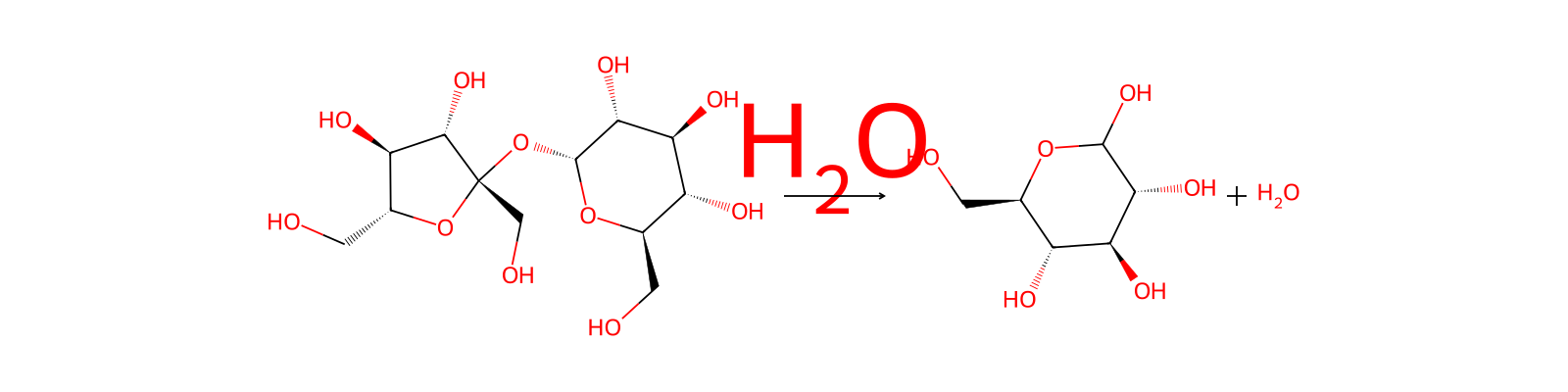
SUCROSE is a reducing agent. Can react explosively with oxidizing agents such as chlorates and perchlorates. Is hydrolyzed by dilute acids and by invertase (a yeast enzyme) (NTP, 1992). Chars rapidly and exothermically when mixed with concentrated sulfuric acid.
Sicherheit und Schutzausrüstung
Fire Fighting
Fire Extinguishing Agents: Water (USCG, 1999)
Use water spray, powder, alcohol-resistant foam, carbon dioxide. In case of fire: keep drums, etc., cool by spraying with water.
First Aid Measures
Fresh air, rest.
Rinse skin with plenty of water or shower.
First rinse with plenty of water for several minutes (remove contact lenses if easily possible), then refer for medical attention.
First Aid
EYES: First check the victim for contact lenses and remove if present. Flush victim's eyes with water or normal saline solution for 20 to 30 minutes while simultaneously calling a hospital or poison control center. Do not put any ointments, oils, or medication in the victim's eyes without specific instructions from a physician. If symptoms (such as redness or irritation) develop, immediately transport the victim to a hospital.
(General first aid procedures)
Safe StorageSeparated from strong oxidants.
Firefighting HazardsIrritating fumes may form in fires.
Fire Fighting ProceduresWater
Nonfire Spill Response
SMALL SPILLS AND LEAKAGE: If you spill this chemical, you should dampen the solid spill material with water, then transfer the dampened material to a suitable container. Use absorbent paper dampened with water to pick up any remaining material. Seal your contaminated clothing and the absorbent paper in a vapor-tight plastic bag for eventual disposal. Wash all contaminated surfaces with a soap and water solution. Do not reenter the contaminated area until the Safety Officer (or other responsible person) has verified that the area has been properly cleaned.
Disposal Methods
SRP: At the time of review, criteria for land treatment or burial (sanitary landfill) disposal practices are subject to significant revision. Prior to implementing land disposal of waste residue (including waste sludge), consult with environmental regulatory agencies for guidance on acceptable disposal practices.
Spillage DisposalSweep spilled substance into covered containers. If appropriate, moisten first to prevent dusting.
Eye PreventionWear safety goggles.
Fire PreventionNO open flames. Closed system, dust explosion-proof electrical equipment and lighting. Prevent deposition of dust.
Skin PreventionProtective gloves.
Toxikologische Informationen
Target OrgansEyes, respiratory system
Adverse EffectsACGIH Carcinogen - Not Classifiable.
Exposure Routes
The substance can be absorbed into the body by inhalation and by ingestion.
inhalation, skin and/or eye contact
Toxicity SummarySafe in the present practices of use and concentration. Ingredient, concentration, and use information are available in documents discoverable at https://cir-reports.cir-safety.org
Signs and Symptoms
Cough.
Redness. Roughness.
Redness.
irritation eyes, skin, upper respiratory system; cough
Natural Pollution Sources
Occurs in low percentages in honey and maple sap
Sugar cane contains from 15-20% and sugar beet from 10-17% sucrose
The quantity of sucrose synthesized by all plants on earth is estimated to be 150X10+9 t/a.
Human Toxicity Excerpts
Liquid medicines, particularly those intended for children, often formulated as syrups, usually based on sucrose. Total sugar content may be up to 80% (w/v). Complicated diabetes management. Increased dental caries especially in chronically sick children (eg, asthmatics or epileptics) who frequently take liquid medicine.
Sucrose is reported to be capable of producing dermatoses in bakers, candy makers, and related occupations. It is well established that uncontrolled glucose conc in maternal blood are associated with elevated embryonic and fetal death and increased neonatal morbidity and mortality.
Non-Human Toxicity Excerpts
EVIDENCE EXISTS THAT HIGHLY CONCN SOLN ARE LETHAL TO NEMATODES IN SOIL.
DIFFUSE PATHOLOGICAL CHANGES /IN POISONED ANIMALS/ INCL SHRINKAGE, SWELLING & NECROSIS OF RENAL TUBULAR EPITHELIUM, ARTERIOLITIS, MILD HEPATITIS, MYOCARDITIS, CONGESTIVE ENCEPHALITIS & SOME ADRENAL HYPERTROPHY.
SUCROSE HAS SHOWN NO TOXICITY TO CORNEAS OF RABBITS WHEN APPLIED FOR 3 TO 7 HR IN NEUTRAL AQ SOLN...
...CANE SUGAR...OBSERVED TO CAUSE DIARRHEA, COLIC, INFLAMMATION OF KIDNEYS &...PETECHIAL HEMORRHAGES IN SPINAL DURA MATER OF HORSES.
For more Non-Human Toxicity Excerpts (Complete) data for SUCROSE (14 total), please visit the HSDB record page.
Populations at Special RiskPatients with severe malabsorption secondary to disease or resection ... may have deficiency of other disaccharidases and large amounts of sucrose should be avoided /in enteral formulations/.
Evidence for CarcinogenicityA4: Not classifiable as a human carcinogen.
Non-Human Toxicity ValuesLD50 Rat oral 29,700 mg/kg
Regulatorische Informationen
FDA RequirementsSubstance added directly to human food affirmed as generally recognized as safe (GRAS).
FIFRA Requirements
Residues of sucrose are exempted from the requirement of a tolerance when used as a solid diluent, carrier or safener in accordance with good agricultural practices as inert (or occasionally active) ingredients in pesticide formulations applied to growing crops or to raw agricultural commodities after harvest.
Sucrose is exempted from the requirement of a tolerance when used as a solid diluent or carrier in accordance with good agricultural practice as inert (or occasionally active) ingredients in pesticide formulations applied to animals.
Chemie und Industrie
Pharmakologische Informationen
MeSH Pharmacological ClassificationSubstances that sweeten food, beverages, medications, etc., such as sugar, saccharine or other low-calorie synthetic products. (From Random House Unabridged Dictionary, 2d ed)
Tissue LocationsAdipose Tissue
Cellular LocationsExtracellular
Metabolite PathwaysGalactose Metabolism
Verwendung und Herstellung
Uses
CIR ingredient: Sucrose
Obtained from cane sugar, sugar beet, and sorghum; Used as a sweetener; [ChemIDplus]
For Sucrose (USEPA/OPP Pesticide Code: 000023) there are 0 labels match. /SRP: Not registered for current use in the U.S., but approved pesticide uses may change periodically and so federal, state and local authorities must be consulted for currently approved uses./
FLAVOR BLENDER, ACCENTUATOR, MODIFIER & DISPERSING AGENT, SWEETENING, TEXTURE & BODYING AGENT FOR FOODS & BEVERAGES; RAW MATERIAL FOR NUMEROUS ORG CHEM & YEAST PRODN; LUBRICANT IN FOODS
Sweetener in foods and soft drinks, manufacture of syrups, source of invert sugar, confectionary, preserves and jams, demulcent, pharmaceutical products, caramel, chemical intermediate for detergents, emulsifying agents, and other sucrose derivatives.
Sweetening agent and food. Starting material in fermentative prodn of ethanol, butanol, glycerol, citric and levulinic acids. Used in pharmaceuticals as a flavor, as a preservative, as antioxidant (in form of invert sugar), as demulcent, as substitute for glycerol, as granulation agent and excipient for tablets, as coating for tablets. In plastics and cellulose industry, in rigid polyurethane foams, manuf of ink and of transparent soaps.
U.S. Exports
(1972) 7.06X10+8 G (CANE/BEET, RAW & REFINED)
(1975) 1.87X10+11 G
(1984) 2.79X10+10 g /Sugar cane, beet, crystalline structure or dry amorphous form, refined/
U.S. Imports
(1972) 4.77X10+12 G (CANE/BEET SUGAR & SYRUP)
(1975) 3.62X10+12 G
(1984) 3.28X10+12 g /Cane or beet sugars, syrups, molasses, NSPF (Raw Value)/
U.S. Production
2023: 250,000 - <550,000 lb
(1972) 5.01X10+13 G (CANE & BEET SUGAR)
(1975) 5.19X10+13 G (CANE AND BEET SUGAR)
Consumption Patterns
(DELIVERIES OF REFINED SUGAR): 35% WAS CONSUMED DIRECTLY FOR SWEETENING FOODS & BEVERAGES; THE REMAINING 65% WAS USED INDUSTRIALLY IN BEVERAGES (22%); IN BAKERY & CEREAL PRODUCTS (12%); IN CONFECTIONS (9%); IN CANNED, BOTTLED, & FROZEN FOODS (6%); IN ICE CREAM & DAIRY PRODUCTS (5%); IN MISC FOODS (5%); & IN NON-FOOD & UNSPECIFIED USES (6%) (1976)
Consumer UsesNot Known or Reasonably Ascertainable
Industry UsesAdhesion/cohesion promoter
Methods of Manufacturing
Obtained from sugar cane (Saccharum officinarum L, Gramineae) and sugar beet (Beta valgaris L, Chenopodiaceae). Sugar cane contains from 15-20% and sugar beet form 10-17% sucrose. Structure: Avery et al, J Chem Soc 1927, 2308; Beevers, Cochrane, Proc Roy Soc 190a, 257 (1947).
By crushing and extraction of sugarcane (Saccharum officinarum) with water or extraction of the sugar beet (Beta vulgaris) with water, evaporating, and purifying with lime, carbon, and various liquids. Also obtainable from sorghum by conventional methods.
Sucrose is extracted commercially from sugar maple
Formulations/Preparations
USEPA/OPP Pesticide Code 000023; Trade Names: None.
Grade: Reagent, USP, technical, refined.
Also sold as syrup .. liquid sugar
Household ProductsInformation on 74 consumer products that contain Sucrose in the following categories is provided:
Use Classification
EPA Safer Chemical Functional Use Classes -> Processing Aids and Additives
Safer Chemical Classes -> Green circle - The chemical has been verified to be of low concern
Cosmetics -> Soothing; Humectant; Skin conditioning
General Manufacturing Information
Construction
.alpha.-D-Glucopyranoside, .beta.-D-fructofuranosyl: ACTIVE
CARBOHYDRATE (QV) PRODUCT OF PHOTOSYNTHESIS COMPRISED OF 1, 2, OR MORE SACCHAROSE GROUPS. ... SUGAR IS IMPORTANT SOURCE OF METABOLIC ENERGY IN FOODS, & ITS FORMATION IN PLANTS IS ESSENTIAL FACTOR IN LIFE PROCESS.
Sucrose is the most important industrial sugar
Sucrose was first synthesized enzymatically in the laboratory from potassium D-glucosyl-1-phosphate and D-fructose. The first chemical synthesis was accomplished by reaction of 3,4,6-tri-O-acetyl-1,2-anhydro-alpha-D-glucopyranose with 1,3,4,6-tetra-O-acetyl-D-fructofuranose
Traditionally, the standard /sweetening agent/ is sucrose, both in terms of quality of taste and taste profile
Zugehörige Reaktionen
240




Verknüpfte Notizen
Wird geladen…