

Grundinformationen
- Standard-SMILES
O=C1C(=O)c2cccc3cccc1c23- InChIKey
AFPRJLBZLPBTPZ-UHFFFAOYSA-N- Summenformel
- C12H6O2
- Durchschnittliche Molmasse
- 182,17 g/mol
- Monoisotopische Masse
- 182,03677943
Überblick
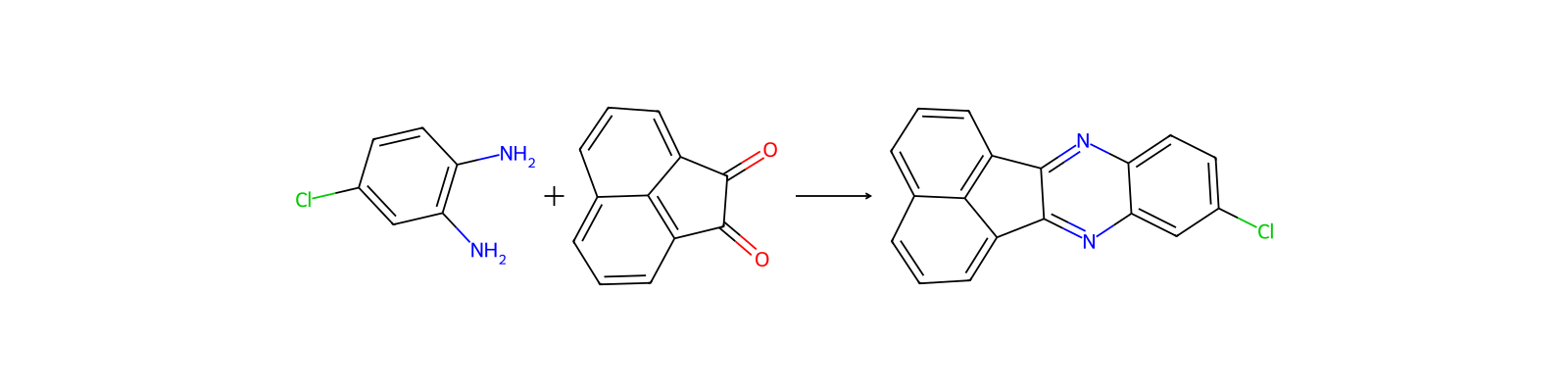
Acenaphthoquinone is an orthoquinone that is the 1,2-dioxo derivative of acenaphthene. It has a role as an epitope and a chain carrier. It derives from a hydride of an acenaphthene.
Namen und Bezeichner
- Bevorzugter Name
- Acenaphthenequinone
- IUPAC
- acenaphthylene-1,2-dione
- Lokaler Name
- Acenaphthenchinon
- Englischer Name
- Acenaphthenequinone
- Summenformel
- C12H6O2
- Molmasse
- 182.17
Namen und Synonyme
Acenaphthenequinone82-86-0acenaphthylene-1,2-dione1,2-ACENAPHTHYLENEDIONEAcenaphthoquinoneAcenaphthenedione1,2-AcenaphthenedioneAcenaphthaquinone1,2-AcenaphthenequinoneAcenaphthylenequinoneAcenaphthylene-1,2-quinone1,2-Diketoacenaphthene
Weitere Namen anzeigen
ACQACENAPHTHEQUINONEAKOS 92207
DTXSID70494293950D6UEIQCHEBI:15342NSC-7656DTXCID6029389RefChem:411067201-441-3MFCD00003805
Datenbank-Bezeichner
- CAS
82-86-0- PubChem CID
- 6724
- DTXSID
DTXSID7049429- ChEMBL
CHEMBL395653- ChEBI
CHEBI:15342- UNII
- 3950D6UEIQ
- EC Number
- 201-441-3
- Nikkaji
- J192.605E
Eigenschaften
Berechnete Struktureigenschaften
- XLogP
- 1,9
- Polarare Oberfläche (TPSA)
- 34,1 Ų
- H-Brücken-Donoren
- 0
- H-Brücken-Akzeptoren
- 2
- Frei drehbare Bindungen
- 0
- Schwere Atome
- 14
- Formalladung
- 0
- Komplexität
- 267
Experimentelle und physikochemische Eigenschaften
SpringerMaterials PropertiesCrystal structure
PesticidesPesticides -> Fungicides
LogP1.95
Color/FormYELLOW NEEDLES FROM ACETIC ACID
SolubilityINSOL IN WATER; SLIGHTLY SOL IN ACETIC ACID; SLIGHTLY SOL IN ALC, HOT BENZENE; HOT PETROLEUM ETHER
Melting Point261 °C
Vapor Pressure0.0000157 [mmHg]
Physical DescriptionYellow solid; [HSDB] Yellow powder; [MSDSonline]
Collision Cross Section
145.51 Ų [M+H]+ [CCS Type: DT; Method: stepped-field]
143.8 Ų [M+H]+
Physikochemische Eigenschaften
- Schmelzpunkt
- 249 · 249-252 °C (dec.) (lit.)
- Siedepunkt
- 67 C · 67 C
- Dichte
- 1.48 · 1.4800
- Brechungsindex
- 1.6086 · 1.6086 (estimate)
- storage temp.
- Refrigerator
- Löslichkeit
- Chloroform
- Aggregatzustand
- Powder and Granules
- Farbe
- Ochre
- Wasserlöslichkeit
- INSOLUBLE
- BRN
- 879172 · 879172
- InChI
- InChI=1S/C12H6O2/c13-11-8-5-1-3-7-4-2-6-9(10(7)8)12(11)14/h1-6H
- InChIKey
- AFPRJLBZLPBTPZ-UHFFFAOYSA-N
- SMILES
- C1(=O)C2C3C(C=CC=2)=CC=CC=3C1=O
- CAS Datenbank
- 82 · 82-86-0(CAS DataBase Reference)
- NIST chemische Informationen
- 1 · 1,2-Acenaphthylenedione(82-86-0)
- EPA chemische Informationen
- 1 · 1,2-Acenaphthylenedione (82-86-0)
Sicherheit und Regulatorisches
GHS-Klassifizierung
GHS Classification
Warning
H315 (100%): Causes skin irritation [Warning Skin corrosion/irritation]
P261, P264, P264+P265, P271, P280, P302+P352, P304+P340, P305+P351+P338, P319, P321, P332+P317, P337+P317, P362+P364, P403+P233, P405, and P501 (click each P-code to see the statement)
Aggregated GHS information provided per 47 reports by companies from 6 notifications to the ECHA C&L Inventory. Each notification may be associated with multiple companies.
Gefahrenhinweise
Regulatory InformationAcenaphthenequinone: Does not have an individual approval but may be used under an appropriate group standard
Hazards SummaryAn irritant; [MSDSonline]
Hazard Classes and CategoriesSkin Irrit. 2 (100%)
Toxikologische Informationen
Human Toxicity ExcerptsQUINONES...SHOWN TO BE RESPONSIBLE FOR BROWN DISCOLORATION OF CORNEA & EXPOSED BULBAR CONJUNCTIVA WHICH GRADUALLY DEVELOPED IN WORKERS WHO WERE EXPOSED TO VAPORS ASSOCIATED WITH MFR...OF SYNTHETIC ANILINE DYES. /QUINONES/
Non-Human Toxicity ExcerptsCONJUGATED DOUBLE BONDS IN QUINONE RINGS ARE VERY REACTIVE CHEM, ESP WITH SULFHYDRYL GROUPS. PRESUMABLY AS RESULT OF THIS REACTIVITY, QUINONES COMMONLY INHIBIT MITOTIC PROCESSES, INACTIVATE ENZYMES, & DENATURE PROTEINS. /QUINONES/
Non-Human Toxicity ValuesLD50 ALTERNARIA SOLAN: 10 PPM ON SLIDES
Sicherheitsdaten
- wgk
- 3
- tsca
- TSCA listed
- ridadr
- UN 2920
- hs_code
- 29146990
- RTECS-Nr.
- AB1024500
- risk_code
- 36/37/38
- Toxizität
- LD50 unr-rat: 728 mg/kg RPTOAN 41,146,78
- hazard_code
- Xi
- safety_code
- 26-36-37/39
- Speicherklasse
- 11 - Combustible Solids
- Giftige Stoffe Daten
- 82-86-0(Hazardous Substances Data)
- Hazard Classifications
- Eye Irrit. 2Skin Irrit. 2STOT SE 3
Chemie und Industrie
Verwendung und Herstellung
Uses
Used as fungicide; [HSDB]
Farming (Pesticides) [Category: Industry]
FUNGICIDE
DYE SYNTHESIS /QUINONES/
General Manufacturing Information1,2-Acenaphthylenedione: ACTIVE
Anwendungen
VerwendenAcenaphthenequinone is used in the preparation of acetylcholinesterase inhibitory agents. It is also used in the preparation of turn-on sensors for cysteine/homocysteine and its application in bioimaging. Further, it is used as an intermediate in manufacturing of dyes and pharmaceuticals. In addition to this, it is used in chemical research as a drug and therapeutic agent.
Vor- und nachgelagerte Produkte
Vorgelagerte Rohstoffe
Nachgelagerte Produkte
Anbieter50 Anbieter
国药集团化学试剂有限公司86-21-63210123 · [email protected]
梯希爱(上海)化成工业发展有限公司021-67121386 · [email protected]
郑州阿尔法化工有限公司+86-18530059196 · [email protected]
衢州润东化工有限公司0570-8789886 18892685668 · [email protected]
上海阿拉丁生化科技股份有限公司400-6206333 13167063860 · [email protected]
上海康朗生物科技有限公司021-61998208 18217752821 · [email protected]
山东利尔邦新材料有限公司15253390963 15853386234 · [email protected]
INTATRADE GmbH+49 3493/605464 · [email protected]
爱斯特(成都)生物制药股份有限公司+86-28-85122536 85324413 · [email protected]
上海如吉生物科技发展有限公司+86-21-65211385-8001 36031160 · [email protected]
Dayang Chem (Hangzhou) Co.,Ltd.+86-0571-88938639 17705817739 · [email protected]
科瑞迪化学400-821-5857 021-64326257 · [email protected]
上海将来实业股份有限公司400-0066400 13621662912 · [email protected]
Syntechem Co.,Ltd[email protected]
上海迈瑞尔生化科技有限公司4006356688 18621169109 · [email protected]
武汉易泰科技有限公司上海分公司18930552037 · [email protected]
阿法埃莎(中国)化学有限公司400-6106006 · [email protected]
烟台凯博医药科技有限公司0535-6385396 · [email protected]
上海瀚鸿科技股份有限公司021-54306202 13764082696 · [email protected]
山东洛克化工有限公司17653113209 13065062079 · [email protected]
上海钰康生物科技有限公司+86-18930848214 +86-021-56762820 · [email protected]
嘉兴市艾森化工有限公司0573-85285100 18627885956 · [email protected]
郑州研德生物科技有限公司0371-63682289 15538176268 · [email protected]
四川库利南科技有限公司400-1166-196 18981987031 · [email protected]
天津希恩思生化科技有限公司400 638 7771 · [email protected]
艾科试剂4008-755-333 18080918076 · [email protected]
上海思域化工科技有限公司86-21-34053660 · [email protected]
赛默飞世尔科技(中国)有限公司800-810-5118 · [email protected]
北京伊诺凯科技有限公司400-810-7969 010-59572699 · [email protected]
张家港保税区凯利特化工有限公司18606289633 15862625988 · [email protected]
QINGDAO KAIENSI INTERNATIONAL TRADE CO.,LTD.+86-0532-8699-9256 +86-18518128472 · [email protected]
TCI AMERICA800-4238616 · [email protected]
TOKYO CHEMICAL INDUSTRY CO., LTD.03-36680489 · [email protected]
TCI Europe320-37350700 · [email protected]
南京杜莱生物技术有限公司025-84699383-8003;025-846993838003-8003 18013301590 · [email protected]
无锡中坤生化科技有限公司+86 0510-85629785
上海将来实业股份有限公司400-0066400 13621662912 · [email protected]
安徽科迪达化工有限公司0554-2106669 · [email protected]
郑州海阔光电材料有限公司0371-67759225 13526468238 · [email protected]
HBCChem, Inc.+1-510-219-6317 · [email protected]
上海笛柏生物科技有限公司400-008-9730,021-54359730 400-008-9730 · [email protected]
成都零六生物科技有限公司400-1166-196 13458535857 · [email protected]
湖南华腾制药有限公司400-8592883 · [email protected]
上海御略医药科技有限公司021-60345187 13671753212 · [email protected]
上海鑫圭生物科技有限公司15121041756 · [email protected]
上海麦克林生化科技股份有限公司15221275939 15221275939 · [email protected]
杭州杰恒化工有限公司0571-87396432 · [email protected]
江苏艾康生物医药研发有限公司025-66028182 17714375163 · [email protected]
凯试(上海)科技有限公司021-50135380 · [email protected]
湖北巨胜科技有限公司027-59599241 18871490274 · [email protected]
Ergänzende Hinweise
DefinitionChEBI: A member of the class of orthoquinones that is the 1,2-dioxo derivative of acenaphthene.
Zugehörige Reaktionen
15




Verknüpfte Notizen
Wird geladen…