StartseiteMCPWorkbenchSkills
StartseiteWorkbenchBenachrichtigungenMein Bereich
llms.txt · MCP-AnleitungDatenschutz · Nutzungsbedingungen · Supportv1.8.0
  1. Startseite
  2. /Verbindung

1-Chlorbutan

Butyl Chloride

HCID 8005
Neue NotizNeue ReaktionAnfrage stellen
Druckvorschau
GrundinformationenÜberblickNamen und BezeichnerEigenschaftenSicherheit und RegulatorischesChemie und IndustrieZugehörige ReaktionenNotizen zur Verbindung
TeilstruktursucheÄhnliche Strukturen suchen

Grundinformationen

CAS
109-69-3
Standard-SMILES
CCCCCl
InChIKey
VFWCMGCRMGJXDK-UHFFFAOYSA-N
Summenformel
C4H9Cl
Durchschnittliche Molmasse
92,57 g/mol
Monoisotopische Masse
92,03927797

Überblick

Butyl chloride appears as a water white liquid with a sharp odor. Flash point 20 °F. Boiling point 77-78 °C (173 °F). Density 7.5 lb / gal. Slightly soluble in water. Vapors are heavier than air. Used in the manufacture of a variety of organic chemicals.

Namen und Bezeichner

Bevorzugter Name
Butyl Chloride
IUPAC
1-chlorobutane
Lokaler Name
1-Chlorbutan
Englischer Name
1-Chlorobutane
Summenformel
C4H9Cl
Molmasse
92.57

Namen und Synonyme

1-Chlorobutane109-69-3Butyl chlorideN-BUTYL CHLORIDEChlorure de butyleButane, 1-chloro-NBC wormerN-Propylcarbinyl chlorideSure ShotNCI-C06155DTXSID8020206NSC-8419
Weitere Namen anzeigen
n-Chlorobutane1-butyl chloride1-CHLOROBUTANE, 99%1-CHLOROBUTANE, 99%1-CHLOROBUTANE, 99%1-CHLOROBUTANE, 99%n-C4H9Clorobutane
ZP7R667SGDDTXCID00206NBC Kaps WormerRefChem:57812Happy Jack Worm Capsules203-696-6chlorobutane1-CHLORO-BUTANE

Datenbank-Bezeichner

CAS
109-69-3、25154-42-1
PubChem CID
8005
DTXSID
DTXSID8020206
ChEMBL
CHEMBL47259
UNII
ZP7R667SGD
EC Number
203-696-6
Nikkaji
J2.435J

Eigenschaften

Berechnete Struktureigenschaften

XLogP
2,6
Polarare Oberfläche (TPSA)
0 Ų
H-Brücken-Donoren
0
H-Brücken-Akzeptoren
0
Frei drehbare Bindungen
2
Schwere Atome
5
Formalladung
0
Komplexität
13,1

Experimentelle und physikochemische Eigenschaften

Chemical ClassesFlammable agents - 3rd degree
SolventsSolvents -> Chlorinated Aliphatics
SpringerMaterials PropertiesSchoenflies notation
PesticidesPesticide -> EPA IRIS
LogP · 3 Einträge

log Kow= 2.39

2.82

2.39

OdorUnpleasant
Density · 4 Einträge

0.8862 at 68 °F (USCG, 1999) - Less dense than water; will float

0.88098 @ 25 °C/4 °C; 0.89197 @ 15 °C/4 °C; 0.88648 @ 20 °C/4 °C

Relative density (water = 1): 0.89 (20 °C)

0.892 @ 15°C

Viscosity · 2 Einträge

0.0045 POISE @ 20 °C

0.45 mPa*s at 20 °C

Color/FormCOLORLESS LIQ
Solubility · 3 Einträge

Sicherheit und Regulatorisches

Sicherheitsangaben dienen nur zur Orientierung und ersetzen weder das Sicherheitsdatenblatt (SDB) des Lieferanten noch geltende Vorschriften oder eine fachliche Bewertung.

GHS-Klassifizierung

GHS Classification · 6 Einträge

Danger

H225: Highly Flammable liquid and vapor [Danger Flammable liquids]

P210, P233, P240, P241, P242, P243, P280, P303+P361+P353, P370+P378, P403+P235, and P501 (click each P-code to see the statement)

Danger

H225 (100%): Highly Flammable liquid and vapor [Danger Flammable liquids]

P210, P233, P240, P241, P242, P243, P273, P280, P303+P361+P353, P370+P378, P403+P235, and P501 (click each P-code to see the statement)

Gefahrenhinweise

Regulatory Information · 5 Einträge

Chemical: Butane, 1-chloro-

Butane, 1-chloro- is listed on the EPA's Chemical Data Reporting (CDR) system. Manufacturers and importers of Butane, 1-chloro- are required to report information about their production and use of this chemical to the EPA under the Toxic Substances Control Act (TSCA). (40 eCFR Part 711)

Status: Active Update: 16-12-2022 https://echa.europa.eu/registration-dossier/-/registered-dossier/13696

Butane, 1-chloro-: HSNO Approval: HSR001101 Approved with controls

The New Jersey Worker and Community Right to Know Act requires public and private employers to provide information about hazardous substances at their workplaces. (N.J.S.A. 34:5A-1 et. seq.)

DOT LabelFlammable Liquid
Fire Hazards · 3 Einträge

Special Hazards of Combustion Products: May produce phosgene gas in fire (USCG, 1999)

· HIGHLY FLAMMABLE: Will be easily ignited by heat, sparks or flames.

Highly flammable. Gives off irritating or toxic fumes (or gases) in a fire. Vapour/air mixtures are explosive.

Fire PotentialFLAMMABLE, DANGEROUS FIRE RISK.
Health Hazards

Chemie und Industrie

Verwendung und Herstellung

Uses · 6 Einträge

Used as a solvent, intermediate, and veterinary anthelmintic; [HSDB]

SOLVENT; INT IN SYNTHESIS OF ALKYLATED ANILINES

Key intermediate for organotin stabilizer

Reacts with lithium metal in hydrocarbon media, eg, hexane and cyclohexane, to yield n-butyl lithium /the most important organolithium compound/

Reacts with magnesium metal in a hydrocarbon solvent to produce di-n-butylmagnesium (DNBM)

For more Uses (Complete) data for N-BUTYL CHLORIDE (7 total), please visit the HSDB record page.

U.S. Production · 3 Einträge

2023: 100,000 - <250,000 lb

(1977) PROBABLY GREATER THAN 4.54X10+6 GRAMS

(1979) PROBABLY GREATER THAN 4.54X10+6 GRAMS

Consumer UsesIntermediate
Industry UsesCatalyst
Methods of Manufacturing · 2 Einträge

IRRADIATION OF ETHYLENE AND HYDROGEN CHLORIDE WITH COBALT 60

PREPD FROM N-BUTYL ALC BY HEATING WITH HYDROCHLORIC ACID & ANHYDROUS ZINC CHLORIDE.

Formulations/PreparationsGRADES: NF; TECHNICAL.
Use ClassificationAnimal Drugs -> FDA Approved Animal Drug Products (Green Book) -> Active Ingredients
General Manufacturing Information · 2 Einträge

All other Petroleum and Coal Products Manufacturing

Butane, 1-chloro-: ACTIVE

Anwendungen · 2 Einträge

Beschreibung1-Chlorbutan bildet eine farblose, wasserunlösliche Flüssigkeit mit süßlichem Geruch. Es ist eine häufig in der organischen Synthesechemie eingesetzte Verbindung.

Zugehörige Reaktionen

152
Reaktionsaufzeichnung erstellen
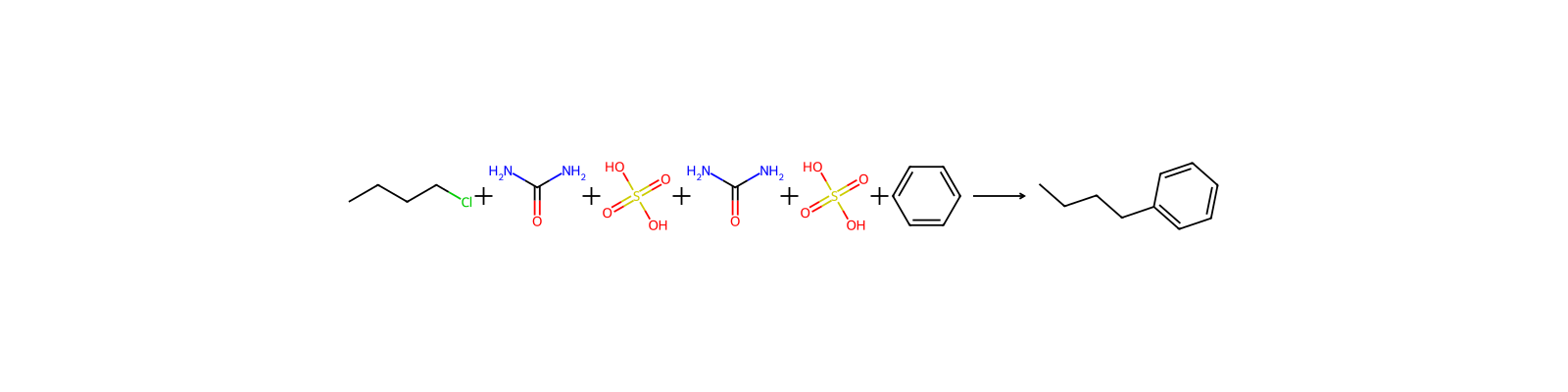
Reaktionsgleichung von HRID 3904
HRID 3904als Eduktuspto-grants-1988_02
Reaktionsgleichung von HRID 19678
HRID 19678als Lösungsmitteluspto-grants-2010_06
Reaktionsgleichung von HRID 47944
HRID 47944als Eduktuspto-grants-2004_03
Reaktionsgleichung von HRID 64577
HRID 64577als Lösungsmitteluspto-grants-1986_09
Reaktionsgleichung von HRID 66444
HRID 66444als Lösungsmitteluspto-grants-1982_08
Reaktionsgleichung von HRID 76243
HRID 76243als Lösungsmitteluspto-grants-2014_09
Reaktionsgleichung von HRID 90185
HRID 90185als EduktTraining data from https://doi.org/10.1039/C8SC04228D (2/10)
Reaktionsgleichung von HRID 90670
HRID 90670als EduktTraining data from https://doi.org/10.1039/C8SC04228D (2/10)
Seite 1 von 19

Notizen zur Verbindung

Wird geladen…

Auf dieser SeiteGrundinformationenÜberblickNamen und BezeichnerEigenschaftenSicherheit und RegulatorischesChemie und IndustrieZugehörige ReaktionenNotizen zur Verbindung
Weitere Aktionen
Neue NotizNeue ReaktionAnfrage stellen

less than 1 mg/mL at 59 °F (NTP, 1992)

PRACTICALLY INSOL IN WATER (0.066% @ 12 °C); MISCIBLE WITH ALC, ETHER

Solubility in water, g/l at 25 °C: 0.87 (practically insoluble)

Flash Point · 3 Einträge

20 °F (NTP, 1992)

15 °F (-9 °C) (Closed Cup)

-12 °C

Animal DrugsActive Ingredients (N-butyl Chloride) -> FDA Greenbook

Physikochemische Eigenschaften

Schmelzpunkt
-123 °C · -123 °C (lit.)
Siedepunkt
77 · 77-78 °C (lit.)
Dichte
0.886 g/mL · 0.886 g/mL at 25 °C (lit.)
Dampfdichte
3.2 · 3.2 (vs air)
Dampfdruck
80.1 mm · 80.1 mm Hg ( 78.4 °C)
Brechungsindex
20 · n20/D 1.402(lit.)
Flammpunkt
-12 °F · -12 °F
storage temp.
2 · 2-8°C
Löslichkeit
0.11 g/L · water: soluble0.11g/L at 20°C
Aggregatzustand
Viscous Liquid
Farbe
White to pink to light brown
Geruch (Odor)
Unpleasant odor
Explosionsgrenze
1.8 · 1.8-10.1%(V)
Wasserlöslichkeit
0.5 g/L · 0.5 g/L (20 ºC)
Merck
14 · 14,1560
BRN
1730909 · 1730909
Henry's Law Constant
5.6 · 5.6×10-4 mol/(m3Pa) at 25℃, Brockbank (2013)
Dielectric constant
9.6 · 9.6(20℃)
Stabilität
Stable. Highly flammable. Note low flash point and wide explosion limit range. Incompatible with strong oxidizing agents, strong bases.
InChI
1S/C4H9Cl/c1-2-3-4-5/h2-4H2,1H3
InChIKey
VFWCMGCRMGJXDK-UHFFFAOYSA-N
SMILES
CCCCCl
LogP
2.66 at · 2.66 at 20℃
Oberflächenspannung
23.74 mN/m · 23.74mN/m at 293.15K
CAS Datenbank
109 · 109-69-3(CAS DataBase Reference)
NIST chemische Informationen
1 · Butane, 1-chloro-(109-69-3)
EPA chemische Informationen
1 · 1-Chlorobutane (109-69-3)
· 2 Einträge

Mildly irritating to the skin and eyes, liquid may cause rash due to removal of skin oils. Ingestion or skin absorbtion may cause intestinal upset, cramping, and central nervous system depression. (USCG, 1999)

· May cause toxic effects if inhaled or absorbed through skin.

Hazards Summary · 1 Eintrag

Dangerous fire risk; [Hawley] Reacts slowly with water evolving hydrochloric acid; A skin, eye, and respiratory tract irritant; The substance may cause effects on the nervous system. [ICSC] A skin and eye irritant; [HSDB] A mild skin and eye irritant based on animal studies; [CHEMINFO] An irritant; Effects in high-dose animal studies (subacute and chronic) include convulsions or effect on seizure threshold; [MSDSonline]

DOT ID and Guide1127 130
FDA RequirementsSpecification and dosage requirements for n-butyl chloride are given in detail for the removal of ascarids and hookworms in dogs, puppies, cats, and kittens.
Reactive GroupHalogenated Organic Compounds
UN ClassificationUN Hazard Class: 3; UN Pack Group: II
Special ReportsDHHS/NTP; Toxicology & Carcinogenesis Studies of n-Butyl Chloride in F344/N Rats and B6C3F1 Mice Technical Report Series No. 312 (1986) NIH Publication No. 86-2568
Reactivity AlertsHighly Flammable

Sicherheit und Schutzausrüstung

Fire Fighting · 2 Einträge

Excerpt from ERG Guide 130 [Flammable Liquids (Water-Immiscible / Noxious)]:

Use powder, foam, carbon dioxide. In case of fire: keep drums, etc., cool by spraying with water.

First Aid Measures · 4 Einträge

Fresh air, rest. Refer for medical attention.

Remove contaminated clothes. Rinse and then wash skin with water and soap.

First rinse with plenty of water for several minutes (remove contact lenses if easily possible), then refer for medical attention.

Rinse mouth. Do NOT induce vomiting. Refer for medical attention .

Accidental Release Measures · 2 Einträge

· CALL 911. Then call emergency response telephone number on shipping paper. If shipping paper not available or no answer, refer to appropriate telephone number listed on the inside back cover.

· ELIMINATE all ignition sources (no smoking, flares, sparks or flames) from immediate area.

First Aid · 2 Einträge

EYES: First check the victim for contact lenses and remove if present. Flush victim's eyes with water or normal saline solution for 20 to 30 minutes while simultaneously calling a hospital or poison control center. Do not put any ointments, oils, or medication in the victim's eyes without specific instructions from a physician. IMMEDIATELY transport the victim after flushing eyes to a hospital even if no symptoms (such as redness or irritation) develop.

General First Aid:

Safe StorageFireproof. Separated from incompatible materials. Well closed. Keep in a well-ventilated room. Store in an area without drain or sewer access. See Chemical Dangers.
Exposure Control and Personal Protection· Wear positive pressure self-contained breathing apparatus (SCBA).
Fire Fighting Procedures · 3 Einträge

To fight fire: Foam, carbon dioxide, dry chemical.

If material /is/ on fire or involved in /a/ fire do not extinguish fire unless flow can be stopped. Use water in flooding quantities as fog. Solid streams of water may spread fire. Cool all affected containers with flooding quantities of water. Apply water from as far a distance as possible. Use foam, dry chemial or carbon dioxide.

If fire becomes uncontrollable or container is exposed to direct flame-consider evacuation of one-third (1/3) mile radius.

Nonfire Spill ResponseExcerpt from ERG Guide 130 [Flammable Liquids (Water-Immiscible / Noxious)]:
Spillage Disposal · 1 Eintrag

Personal protection: filter respirator for organic gases and vapours adapted to the airborne concentration of the substance. Collect leaking and spilled liquid in sealable containers as far as possible. Absorb remaining liquid in sand or inert absorbent. Then store and dispose of according to local regulations. Do NOT wash away into sewer. Do NOT let this chemical enter the environment.

Preventive Measures · 4 Einträge

If material /is/ not on fire and not involved in /a/ fire keep sparks, flames, and other sources of ignition away. Keep material out of water sources and sewers. Build dikes to contain flow as necessary. Attempt to stop leak if without undue personnel hazard. Use water spray to knock-down vapors.

Avoid breathing vapors. Keep upwind. Do not handle broken packages unless wearing appropriate personal protective equipment. Wash away any material which may have contacted the body with copious amounts of water or soap and water.

If material leaking (not on fire) consider evacuation from downwind area based on amount of material spilled, location and weather conditions.

SRP: The scientific literature for the use of contact lenses in industry is conflicting. The benefit or detrimental effects of wearing contact lenses depend not only upon the substance, but also on factors including the form of the substance, characteristics and duration of the exposure, the uses of other eye protection equipment, and the hygiene of the lenses. However, there may be individual substances whose irritating or corrosive properties are such that the wearing of contact lenses would be harmful to the eye. In those specific cases, contact lenses should not be worn. In any event, the usual eye protection equipment should be worn even when contact lenses are in place.

Isolation and Evacuation · 2 Einträge

Excerpt from ERG Guide 130 [Flammable Liquids (Water-Immiscible / Noxious)]:

Immediate precautionary measure

Eye PreventionWear safety spectacles or eye protection in combination with breathing protection.

Toxikologische Informationen

Ecotoxicity ValuesLC50 Poecilia reticulata (guppy) 97 ppm/7 days /Conditions of bioassay not specified/
Environmental Fate · 4 Einträge

TERRESTRIAL FATE: n-Butyl chloride has a very high vapor pressure, 100 mm Hg at 25 °C(1), indicating that volatilization from soil will be rapid and a primary removal process. It has an estimated low adsorptivity to soil (Koc = 93-102)(1-2) and therefore would be mobile in soil. Biodegradation in soil is unknown(SRC).

AQUATIC FATE: If released in water, n-butyl chloride will be lost rapidly by volatilization. Its estimated volatilization half-life in a model river and pond are 2.9 hr(1-2) and 34 hr(3), respectively. In groundwater, where volatilization may not occur, n-butyl chloride may be lost by hydrolysis. Based upon hydrolysis rates for alkyl chlorides, the half-life is estimated to be between 6 hr and 38 days at neutral pH(4). The half-life at higher pHs will be shorter. Photodegradation, adsorption to sediment, and bioconcentration in fish are not important aquatic fate processes(SRC).

ATMOSPHERIC FATE: n-Butyl chloride will degrade via reaction with photochemically produced hydroxyl radicals in the atmosphere. The half-life of n-butyl chloride in the atmosphere is estimated to be 7.0 days(1). n-Butyl chloride does not absorb radiation >290 nm and therefore it will not directly photolyze(2). Due to its water solubility, 1100 mg/l(3), washout by rain should occur. However, n-butyl chloride removed in this manner will revolatilize into the atmosphere(SRC).

Maximum permissible concentrations in open waters are 0.004 mg/l.

Adverse EffectsNeurotoxin - Acute solvent syndrome
Exposure RoutesThe substance can be absorbed into the body by inhalation of its vapour and by ingestion.
Signs and Symptoms · 4 Einträge

Cough. Sore throat. Drowsiness.

Redness. Dry skin.

Redness.

See Inhalation.

Ongoing Test Status · 1 Eintrag

The following link will take the user to the National Toxicology Program (NTP) Test Agent Search Results page, which tabulates all of the "Standard Toxicology & Carcinogenesis Studies", "Developmental Studies", and "Genetic Toxicity Studies" performed with this chemical. Clicking on the "Testing Status" link will take the user to the status (i.e., in review, in progress, in preparation, on test, completed, etc.) and results of all the studies that the NTP has done on this chemical. [http://ntp-apps.niehs.nih.gov/ntp_tox/index.cfm?fuseaction=ntpsearch.searchresults&searchterm=109-69-3]

Effluent ConcentrationsIn a study of 63 industrial effluents that discharge into surface waters, chlorobutane was found in one effluent at a concentration of <10 ug/l(1).
ICSC Environmental DataBioaccumulation of this chemical may occur along the food chain.
EPA IRIS Information1-Chlorobutane
Soil Adsorption/MobilityUsing the water solubility for n-butyl chloride, 1100 mg/l(1), the Koc can be estimated to be 93 and 102 using two recommended regression equations(2,SRC). These estimates indicate that n-butyl chloride will have high mobility in soil(3).
Atmospheric ConcentrationsSOURCE DOMINATED: n-Butyl chloride was identified, but not quantified, in one of 10 samples of ambient air in the Kanawna Valley, WV(1). Various locations were sampled during three trips.
Human Toxicity Excerpts · 2 Einträge

TOXIC ON PROLONGED INHALATION.

WEAKER CENTRAL NERVOUS DEPRESSANT ACTIONS THAN ETHYL CHLORIDE.

Regulatorische Informationen

FDA RequirementsSpecification and dosage requirements for n-butyl chloride are given in detail for the removal of ascarids and hookworms in dogs, puppies, cats, and kittens.
State Drinking Water Guidelines(FL) FLORIDA 2,800 ug/l

Sicherheitsdaten

F
1-10
wgk
2
tsca
TSCA listed
ridadr
UN 1127 (CHLOROBUTANES)
hs_code
29031990
RTECS-Nr.
EJ6300000
risk_code
11
Toxizität
LD50 orally in rats: 2.67 g/kg (Smyth)
hazard_code
F
safety_code
9-16-29
hazard_class
3
packing_group
II
Speicherklasse
3 - Flammable liquids
Giftige Stoffe Daten
109-69-3(Hazardous Substances Data)
Hazard Classifications
Aquatic Chronic 3Asp. Tox. 1Flam. Liq. 2
Selbstentzündungstemperatur
860 °F

Verwenden1-Chlorobutane is used as an intermediate for the production of other chemicals in the chemical industry. 1-chlorobutane is a common extraction solvent in the forensic toxicology arena. A benefit of 1-chlorobutane is that it is less dense than water and therefore settles above the aqueous layer. As butylating agent in organic synthesis, e.g., in the manufacture of butyl cellulose. 1-chlorobutane will be halogenated to produce dichlorobutane using sulfuryl chloride via a free-radical chain reaction mechanism.

Darstellung · 1 Eintrag

synthetische1-Chlorobutane is obtained by esterification of n-butanol with hydrogen chloride or hydrochloric acid at 100℃ either without a catalyst or utilizing the accelerating effect of zinc chloride, tripentylamine hydrochloride, or phosphorus pentachloride. n-Butyl chloride is also obtained, along with 2-chlorobutane, by the chlorination of butane over aluminum oxide at 200℃.

Vor- und nachgelagerte Produkte

Vorgelagerte Rohstoffe

ZinkchloridHydrogenchlorid1-Butanol

Nachgelagerte Produkte

AZIMILIDEOxobis(pentan-2,4-dionato-O,O')vanadiumDi-N-butylzinnoxid3,6,9,12-Tetraoxahexadecan-1-olBis(tributylzinn)oxid1-Butyl-1-methylpyrrolidinium bis(trifluoromethylsulfonyl)imide4-(4-Fluorophenyl)pyrimidine-2-thiol2-(4-Chlorophenyl)-hexanenitrileDiethylbutylmalonat1,4-Dichlorbutanα-Butyl-α-phenyl-1H-imidazol-1-propiononitrilMyclobutanil6-Bromopyridine-2-carbaldehydetert-Butylbenzoln-Butylamin2 -phenyl-HexanenitrileSisthsneMetsulfuron methylDibutylsulfidButyllithium