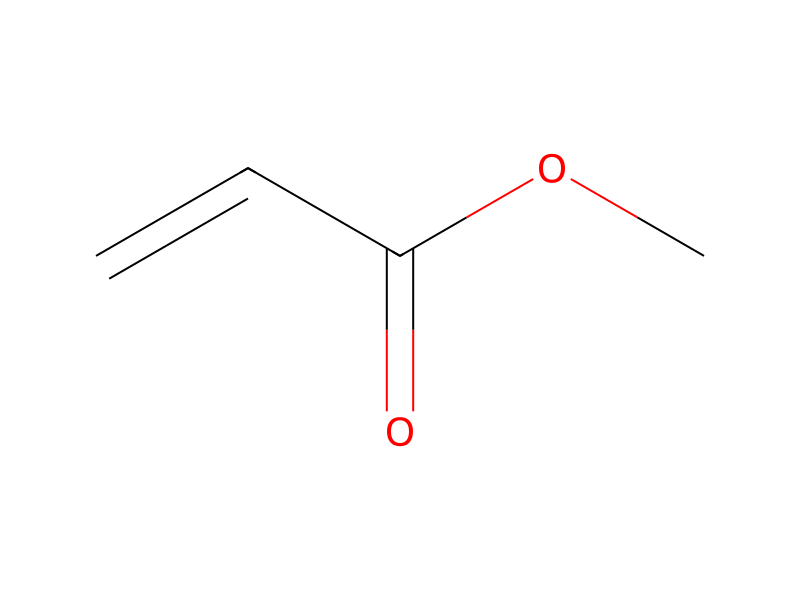
I[C:2]1[CH:3]=[C:4]2[C:9](=[CH:10][CH:11]=1)[O:8][CH:7]([C:12]([OH:14])=[O:13])[CH2:6][CH2:5]2.CN1CCCC1=O.[C:22]([O:26][CH3:27])(=[O:25])[CH:23]=[CH2:24].C(N(CC)CC)C>C([O-])(=O)C.[Pd+2].C([O-])(=O)C.O>[CH3:27][O:26][C:22](/[CH:23]=[CH:24]/[C:2]1[CH:3]=[C:4]2[C:9](=[CH:10][CH:11]=1)[O:8][CH:7]([C:12]([OH:14])=[O:13])[CH2:6][CH2:5]2)=[O:25]Palladium (II) acetate (0.15 g, 0.66 mmol) and the compound from Example 28 (2.00 g, 6.58 mmol) were put in a round bottom flask under an argon atmosphere. To the flask was added 1-methyl-2-pyrrolidinone (20 mL), methyl acrylate (0.74 mL, 8.22 mmol), and triethylamine (2.29 mL, 16.5 mmol). The mixture was heated to 70° C. and stirred for 400 h. The reaction was cooled to RT and poured into water (70 mL). The mixture was extracted with ethyl acetate (1×). The aqueous layer was then acidified with 1.0 N aqueous HCl to generate a cloudy mixture. The mixture was extracted with ethyl acetate (3×). The combined organics from the second extraction were dried (MgSO4) and concentrated to a tan solid (1.75 g, 100%). 1H NMR (300 MHz, acetone-d6) δ 11.28 (s, 1H), 7.57 (d, J=16.18 Hz, 1H), 7.43 (m, 1H), 7.40 (m, 1H), 6.86 (m, 1H), 6.37 (d, J=16.18 Hz, 1H), 4.88 (m, 1H), 3.70 (s, 3H), 2.85 (m, 2H), 2.24 (m, 2H); MS (ES) m/z 263 (MH+).