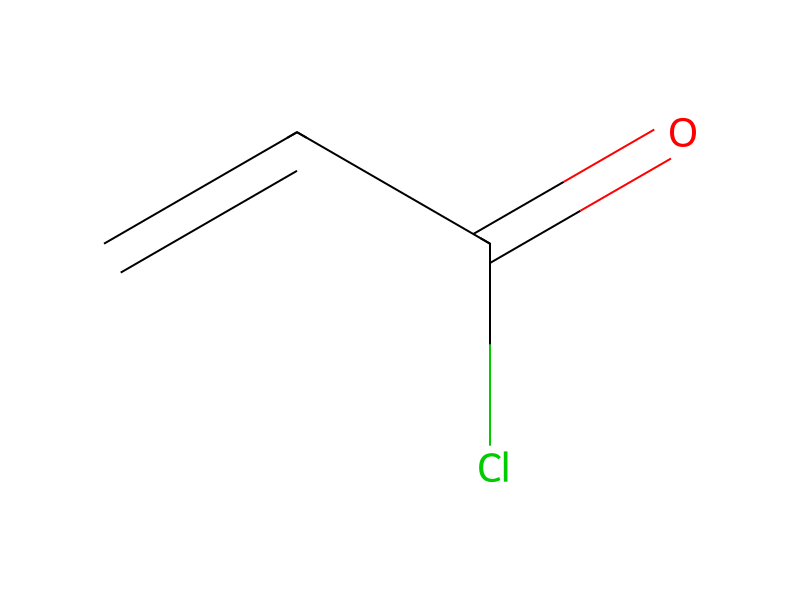
A solution of 6-(methyloxy)-7-nitro-1,2,3,4-tetrahydroisoquinoline (1.6 g, 7.7 mmol) in dichloromethane (30 mL) was treated with acryloyl chloride (1.9 mL, 23 mmol, TCl), triethylamine (3.2 mL, 23 mmol, Aldrich), and catalytic 4-dimethylaminopyridine (50 mg 0.41 mmol, Aldrich). The mixture was stirred for 16 h, diluted with excess water, and extracted with ethyl acetate. The organic layer was separated, dried over magnesium sulfate, filtered, and concentrated to provide 2-acryloyl-6-(methyloxy)-7-nitro-1,2,3,4-tetrahydroisoquinoline (1.7 g, 84%). 1H NMR (400 MHz, DMSO-d6) is complicated due to amide rotomers δ ppm 2.86-2.95 (two triplets at 2.88 and 2.93, 2 H), 3.72-3.82 (two triplets at 3.74 and 3.80, 2 H), 3.89 (m, 3 H), 4.63-4.80 (two singlets at 4.65 and 4.77, 2 H), 5.73 (app d, J=10.3 Hz, 1 H), 6.16 (dd, J=16.7, 2.4 Hz, 1 H), 6.89 (dd, J=16.9, 10.3 Hz, 1 H), 7.21 (s, 1 H), 7.78-7.84 (two singlets at 7.79 and 7.83, 1 H); ESIMS (M+H)+=263.