StartseiteMCPWorkbenchSkills
StartseiteWorkbenchBenachrichtigungenMein Bereich
llms.txt · MCP-AnleitungDatenschutz · Nutzungsbedingungen · Supportv1.8.0
  1. Startseite
  2. /Reaktion

Carbon tetrabromide → HCID 53304915, Verbindung

HRID 1019631
Notizen
Druckvorschau

Reaktionsgleichung

Reaktionsgleichung von HRID 1019631
C1(P(C2C=CC=CC=2)C2C=CC=CC=2)C=CC=CC=1.[Cl:20][C:21]1[CH:48]=[CH:47][C:24]([C:25]([O:27][CH2:28][C@@H:29]2[C@@H:33]([O:34][C:35](=[O:43])[C:36]3[CH:41]=[CH:40][C:39]([Cl:42])=[CH:38][CH:37]=3)[C@:32]([F:45])([CH3:44])[C@H:31](O)[O:30]2)=[O:26])=[CH:23][CH:22]=1.C(Br)(Br)(Br)[Br:50].C1(P(=O)(C2C=CC=CC=2)C2C=CC=CC=2)C=CC=CC=1>ClCCl>[Cl:42][C:39]1[CH:40]=[CH:41][C:36]([C:35]([O:34][C@H:33]2[C@:32]([F:45])([CH3:44])[C@@H:31]([Br:50])[O:30][C@@H:29]2[CH2:28][O:27][C:25](=[O:26])[C:24]2[CH:47]=[CH:48][C:21]([Cl:20])=[CH:22][CH:23]=2)=[O:43])=[CH:37][CH:38]=1
KomponentenReaktionsbedingungenVersuchsvorschriftAufarbeitungQuellen und NachweiseNotizen zur Reaktion

Komponenten

6

Edukt 4

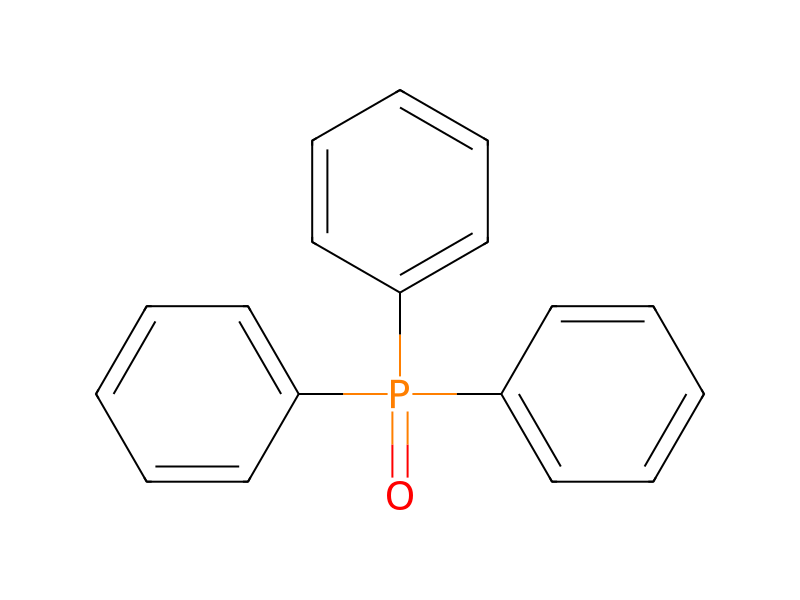
HCID 11205Carbon tetrabromideHCID 11776TriphenylphosphineHCID 13097Triphenylphosphine OxideHCID 53304768(2R,3R,4R,5R)-2-[(4-chlorobenzoyloxy)methyl]-4-fluoro-5-hydroxy-4-methyloxolan-3-yl 4-chlorobenzoate

Produkt 1

HCID 53304915HCID 53304915, Verbindung

Reagenzien, Katalysatoren, Lösungsmittel 1

HCID 6344DichloromethaneLösungsmittel

Reaktionsbedingungen

Temperatur
-22 °C

Versuchsvorschrift

Anhydrous dichloromethane (530 mL) was added to a 1 L of dry round-bottomed flask and cooled to −22° C. Triphenylphosphine (19.5 g, 74 mmol) was added and then added the β-lactol (2b, 23.5 g, 53 mmol). To that solution, carbon tetrabromide (26.3 g, 79.5 mmol, solid) was added portionwise over 5 min. at −22° C. The reaction was slowly warmed up to room temperature and once reaction was complete, the solution was passed through a short pad of silica gel (148 g in a 600 mL of fritted disc Buchner funnel) to remove any brown color polar impurities. The colorless filtrate was concentrated to dryness under reduced pressure and the solid residue was dissolved in ethyl ether (170 mL). Hexanes (50 mL) was added slowly until a precipitate started to form. The product was collected as a light yellow solid via filtration and dried (0.2 mm Hg, 25° C., 17 h) to afford 21.23 g, (79%) with an anomeric ratio of α/β>65:1. The product was contaminated with 3-4% of triphenylphosphine oxide which had no effect on the next reaction step. 1H NMR (CDCl3): δ 8.05 (m, 2H, arom.), 7.95 (m, 2H, arom.), 7.47-7.40 (m, 4H, arom.), 6.33 (s, 1H, C1-H), 5.22 (m, 1H, C3-H), 4.84 (m, 1H, C4-H), 4.76 (m, 1H, C5-Ha), 4.62 (m, 1H, C5-Hb), 1.69 (d, 3H, CH3, J=21.6 Hz).

Aufarbeitung

  1. temperatureThe reaction was slowly warmed up to room temperature
  2. customonce reaction
  3. customto remove any brown color polar impurities
  4. concentrationThe colorless filtrate was concentrated to dryness under reduced pressure
  5. dissolutionthe solid residue was dissolved in ethyl ether (170 mL)
  6. additionHexanes (50 mL) was added slowly until a precipitate
  7. customto form
  8. filtrationThe product was collected as a light yellow solid via filtration
  9. customdried (0.2 mm Hg, 25° C., 17 h)
  10. customto afford 21.23 g, (79%) with an anomeric ratio of α/β>65:1
  11. customon the next reaction step

Quellen und Nachweise

ORD-Eintrag
ord-ec1692346ba343f3a5e97a35e89956c1
Quelldatensatz
uspto-grants-2014_05
DOI
10.6084/m9.figshare.5104873.v1
Patentnummer
US08716263B2

Notizen zur Reaktion

Wird geladen…

Auf dieser SeiteKomponentenReaktionsbedingungenVersuchsvorschriftAufarbeitungQuellen und NachweiseNotizen zur Reaktion