StartseiteMCPWorkbenchSkills
StartseiteWorkbenchBenachrichtigungenMein Bereich
llms.txt · MCP-AnleitungDatenschutz · Nutzungsbedingungen · Supportv1.8.0
  1. Startseite
  2. /Reaktion

Potassium Carbonate → 2-(5-Fluoro-2-(hydroxymethyl)-3-(3-methyl-7-(5-(4-(oxetan-3-yl)piperazin-1-yl)pyridin-2-ylamino)-3H-benzo[d]imidazol-5-yl)phenyl)-3,4,6,7,8,9-hexahydropyrazino[1,2-a]indol-1(2H)-one

HRID 1024044
Notizen
Druckvorschau

Reaktionsgleichung

Reaktionsgleichung von HRID 1024044
Cl[C:2]1[CH:3]=[C:4]([NH:12][C:13]2[CH:18]=[CH:17][C:16]([N:19]3[CH2:24][CH2:23][N:22]([CH:25]4[CH2:28][O:27][CH2:26]4)[CH2:21][CH2:20]3)=[CH:15][N:14]=2)[C:5]2[N:9]=[CH:8][N:7]([CH3:10])[C:6]=2[CH:11]=1.C([O:32][CH2:33][C:34]1[C:39](B2OC(C)(C)C(C)(C)O2)=[CH:38][C:37]([F:49])=[CH:36][C:35]=1[N:50]1[CH2:62][CH2:61][N:53]2[C:54]3[CH2:55][CH2:56][CH2:57][CH2:58][C:59]=3[CH:60]=[C:52]2[C:51]1=[O:63])(=O)C.C(=O)([O-])[O-].[K+].[K+].C1(P(C2CCCCC2)C2CCCCC2)CCCCC1>C1C=CC(/C=C/C(/C=C/C2C=CC=CC=2)=O)=CC=1.C1C=CC(/C=C/C(/C=C/C2C=CC=CC=2)=O)=CC=1.C1C=CC(/C=C/C(/C=C/C2C=CC=CC=2)=O)=CC=1.[Pd].[Pd]>[F:49][C:37]1[CH:38]=[C:39]([C:2]2[CH:3]=[C:4]([NH:12][C:13]3[CH:18]=[CH:17][C:16]([N:19]4[CH2:20][CH2:21][N:22]([CH:25]5[CH2:26][O:27][CH2:28]5)[CH2:23][CH2:24]4)=[CH:15][N:14]=3)[C:5]3[N:9]=[CH:8][N:7]([CH3:10])[C:6]=3[CH:11]=2)[C:34]([CH2:33][OH:32])=[C:35]([N:50]2[CH2:62][CH2:61][N:53]3[C:54]4[CH2:55][CH2:56][CH2:57][CH2:58][C:59]=4[CH:60]=[C:52]3[C:51]2=[O:63])[CH:36]=1
KomponentenReaktionsbedingungenVersuchsvorschriftAufarbeitungQuellen und NachweiseNotizen zur Reaktion

Komponenten

6

Edukt 4

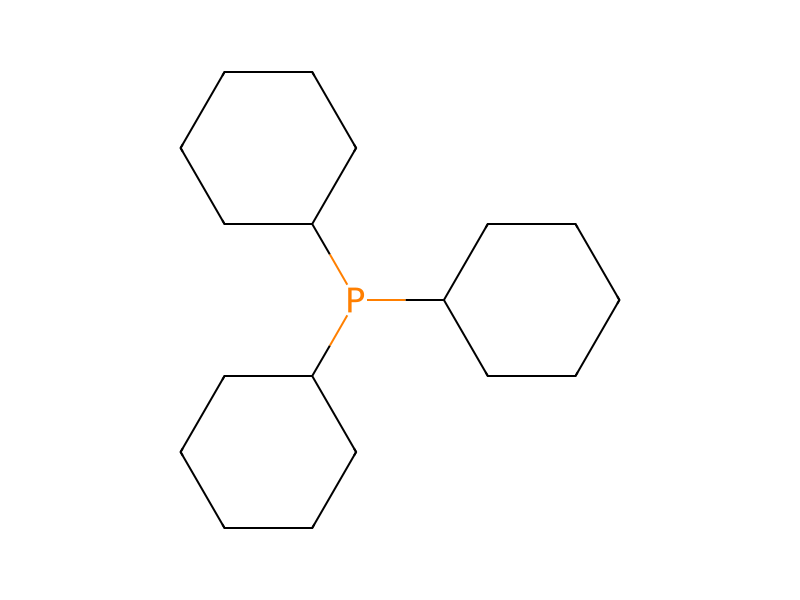
HCID 11430Potassium CarbonateHCID 75806TricyclohexylphosphineHCID 580442052-(4,4,5,5-Tetramethyl-[1,3,2]dioxaborolan-2-yl)-4-fluoro-6-(1-oxo-3,4,6,7,8,9-hexahydropyrazino[1,2-a]indol-2(1H)-yl)benzyl AcetateHCID 866841396-Chloro-1-methyl-N-(5-(4-(oxetan-3-yl)piperazin-1-yl)pyridin-2-yl)-1H-benzo[d]imidazol-4-amine

Produkt 1

HCID 71556982
2-(5-Fluoro-2-(hydroxymethyl)-3-(3-methyl-7-(5-(4-(oxetan-3-yl)piperazin-1-yl)pyridin-2-ylamino)-3H-benzo[d]imidazol-5-yl)phenyl)-3,4,6,7,8,9-hexahydropyrazino[1,2-a]indol-1(2H)-one
Ausbeute 14 %

Reagenzien, Katalysatoren, Lösungsmittel 1

HCID 9811564Bis(dibenzylideneacetone)palladiumKatalysator

Reaktionsbedingungen

Temperatur
110 °C

Versuchsvorschrift

A microwave vial equipped with a magnetic stirrer was charged with 109e (300 mg, 0.75 mmol), 4-fluoro-2-(1-oxo-3,4,6,7,8,9-Hexahydropyrazino[1,2-a]indol-2(1H)-yl)-6-(4,4,5,5-tetramethyl-1,3,2-dioxaborolan-2-yl)benzyl acetate 101l (545 mg, 1.13 mmol), potassium carbonate (414 mg, 3.0 mmol), tris(dibenzylideneacetone)dipalladium(0) (68 mg, 0.075 mmol), and tricyclohexylphosphine (210 mg, 0.75 mmol). After bubbling nitrogen through the suspension for 5 minutes, the reaction was heated at 110° C. for overnight. It was then cooled to room temperature and filtered. The filtrate was concentrated under reduced pressure and the residue was purified by reverse-phase prep-HPLC to afford 109 as a white solid (71 mg, 14%). LCMS: [M+H]+ 677.3. 1H NMR (500 MHz, DMSO) δ 8.64 (s, 1H), 8.23 (d, J=1.0, 1H), 8.18 (s, 1H), 7.88 (d, J=2.5, 1H), 7.38-7.39 (m, 1H), 7.33-7.35 (m, 1H), 7.24 (d, J=9.0, 1H), 7.18-7.19 (m, 2H), 6.52 (s, 1H), 4.85 (bs, 1H), 4.56 (t, J=6.0, 2H), 4.46 (t, J=6.0, 2H), 4.29 (s, 2H), 4.16-4.18 (m, 3H), 3.93-3.94 (m, 1H), 3.84 (s, 3H), 3.44-3.45 (m, 1H), 3.07 (t, J=4.0, 4H), 2.61-2.62 (m, 2H), 2.47 (t, J=6.0, 2H), 2.39 (t, J=4.0, 4H), 1.79-1.80 (m, 2H), 1.70-1.71 (m, 2H)

Aufarbeitung

  1. customA microwave vial equipped with a magnetic stirrer
  2. customAfter bubbling nitrogen through the suspension for 5 minutes
  3. temperatureIt was then cooled to room temperature
  4. filtrationfiltered
  5. concentrationThe filtrate was concentrated under reduced pressure
  6. customthe residue was purified by reverse-phase prep-HPLC

Quellen und Nachweise

ORD-Eintrag
ord-d3edfe1f584645c5ae797015d4ca1c4c
Quelldatensatz
uspto-grants-2014_05
DOI
10.6084/m9.figshare.5104873.v1
Patentnummer
US08722676B2

Notizen zur Reaktion

Wird geladen…

Auf dieser SeiteKomponentenReaktionsbedingungenVersuchsvorschriftAufarbeitungQuellen und NachweiseNotizen zur Reaktion