StartseiteMCPWorkbenchSkills
StartseiteWorkbenchBenachrichtigungenMein Bereich
llms.txt · MCP-AnleitungDatenschutz · Nutzungsbedingungen · Supportv1.8.0
  1. Startseite
  2. /Reaktion

Potassium Carbonate → Trans-2-(2-(Trifluoromethyl)Cyclopropyl)Naphthalene

HRID 1024551
Notizen
Druckvorschau

Reaktionsgleichung

Reaktionsgleichung von HRID 1024551
C1C2C(=CC=CC=2)C=CC=1OS([C:15]([F:18])([F:17])[F:16])(=O)=O.C1(P(C2CCCCC2)[C:26]2[CH:31]=[CH:30][CH:29]=[CH:28][C:27]=2[C:32]2[C:37](OC(C)C)=[CH:36][CH:35]=[CH:34][C:33]=2OC(C)C)CCCCC1.[C:52]([O-])([O-])=O.[K+].[K+]>C1(C)C=CC=CC=1.O.C([O-])(=O)C.[Pd+2].C([O-])(=O)C>[F:16][C:15]([F:18])([F:17])[C@@H:26]1[CH2:31][C@H:30]1[C:29]1[CH:28]=[CH:27][C:32]2[C:33](=[CH:34][CH:35]=[CH:36][CH:37]=2)[CH:52]=1
KomponentenReaktionsbedingungenVersuchsvorschriftAufarbeitungQuellen und NachweiseNotizen zur Reaktion

Komponenten

7

Edukt 3

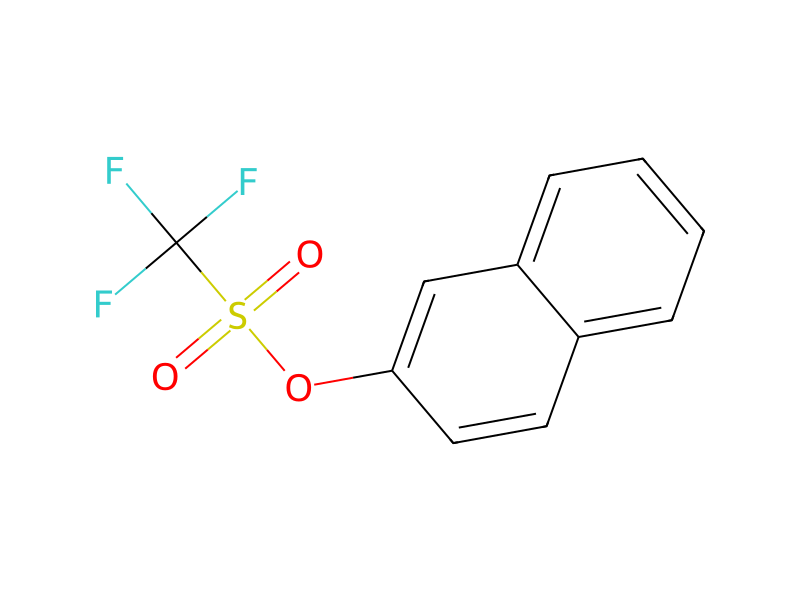
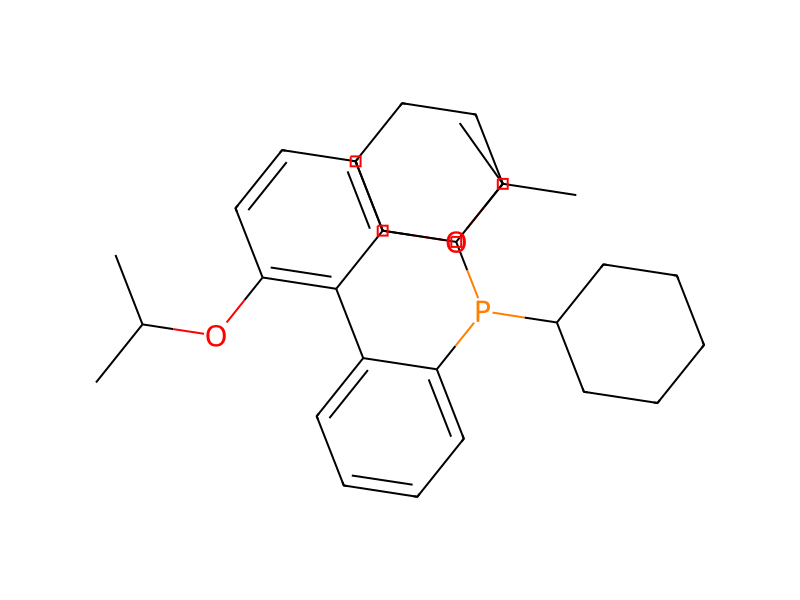
HCID 11430Potassium CarbonateHCID 45463412-Naphthyl TrifluoromethanesulfonateHCID 162179852-Dicyclohexylphosphino-2',6'-diisopropoxybiphenyl

Produkt 1

HCID 67775384Trans-2-(2-(Trifluoromethyl)Cyclopropyl)NaphthaleneAusbeute 388,6 %

Reagenzien, Katalysatoren, Lösungsmittel 3

HCID 167845
palladium(II) acetate
Katalysator
HCID 962WaterLösungsmittel
HCID 1140TolueneLösungsmittel

Reaktionsbedingungen

Temperatur
100 °C

Versuchsvorschrift

In an open vial with pressure-release top, a stirred mixture of 2-naphthyltrifluoromethanesulfonate (Aldrich, St. Louis, Mo.) (69 mg, 0.25 mmol), palladium(II) acetate (5.5 mg, 0.025 mmol), 2-dicyclohexylphosphino-2′,6′-diisopropoxybiphenyl (23 mg, 0.05 mmol), K2CO3 (138 mg, 1.0 mmol) and trans-2-(trifluoromethyl)cyclopropylboronic acid MIDA ester (99 mg, 0.38 mmol) in toluene (2.5 mL) and H2O (0.5 mL) was de-gassed with N2 for 15 minutes, then the reaction mixture placed under nitrogen, sealed and heated to 100° C. and stirred for 6 hours. After allowing to cool, the reaction mixture was diluted with H2O (15 mL) and EtOAc (20 mL), filtered through Celite and the filter cake washed with EtOAc (2×20 mL). The filtrate was partitioned and the aqueous layer extracted with EtOAc (2×15 mL). The combined organic extracts were dried (Na2SO4), filtered and concentrated under vacuum to leave a crude residue. The residue was purified by preparative thin-layer chromatography (2 prep TLC plates used) using EtOAc/hexane (1:99) as eluent to give the product (45.9 mg, 78%) as a solid.


Aufarbeitung

  1. customwas de-gassed with N2 for 15 minutes
  2. customsealed
  3. temperatureto cool
  4. additionthe reaction mixture was diluted with H2O (15 mL) and EtOAc (20 mL)
  5. filtrationfiltered through Celite
  6. washthe filter cake washed with EtOAc (2×20 mL)
  7. customThe filtrate was partitioned
  8. extractionthe aqueous layer extracted with EtOAc (2×15 mL)
  9. dry with materialThe combined organic extracts were dried (Na2SO4)
  10. filtrationfiltered
  11. concentrationconcentrated under vacuum
  12. customto leave a crude residue
  13. customThe residue was purified by preparative thin-layer chromatography (2 prep TLC plates used)

Quellen und Nachweise

ORD-Eintrag
ord-bdb790f423af44db82e29322d576eeeb
Quelldatensatz
uspto-grants-2014_05
DOI
10.6084/m9.figshare.5104873.v1
Patentnummer
US08722916B2

Notizen zur Reaktion

Wird geladen…

Auf dieser SeiteKomponentenReaktionsbedingungenVersuchsvorschriftAufarbeitungQuellen und NachweiseNotizen zur Reaktion