StartseiteMCPWorkbenchSkills
StartseiteWorkbenchBenachrichtigungenMein Bereich
llms.txt · MCP-AnleitungDatenschutz · Nutzungsbedingungen · Supportv1.8.3
  1. Startseite
  2. /Reaktion

Hydrochloric Acid → 4-{2,5-Dichloro-4-[3-(4-cyclopropyl-3,4-dihydro-2H-quinoxaline-1-carbonyl)-pyridin-4-yloxy]-benzoylamino}-1-methyl-1H-pyrrole-2-carboxylic acid

HRID 1025867
Drucken

Reaktionsgleichung

Reaktionsgleichung von HRID 1025867
C[O:2][C:3]([C:5]1[N:6]([CH3:43])[CH:7]=[C:8]([NH:10][C:11](=[O:42])[C:12]2[CH:17]=[C:16]([Cl:18])[C:15]([O:19][C:20]3[CH:25]=[CH:24][N:23]=[CH:22][C:21]=3[C:26]([N:28]3[C:37]4[C:32](=[CH:33][CH:34]=[CH:35][CH:36]=4)[N:31]([CH:38]4[CH2:40][CH2:39]4)[CH2:30][CH2:29]3)=[O:27])=[CH:14][C:13]=2[Cl:41])[CH:9]=1)=[O:4].O.O.[OH-].[Li+].Cl>O1CCOCC1.C(OCC)(=O)C>[Cl:41][C:13]1[CH:14]=[C:15]([O:19][C:20]2[CH:25]=[CH:24][N:23]=[CH:22][C:21]=2[C:26]([N:28]2[C:37]3[C:32](=[CH:33][CH:34]=[CH:35][CH:36]=3)[N:31]([CH:38]3[CH2:40][CH2:39]3)[CH2:30][CH2:29]2)=[O:27])[C:16]([Cl:18])=[CH:17][C:12]=1[C:11]([NH:10][C:8]1[CH:9]=[C:5]([C:3]([OH:4])=[O:2])[N:6]([CH3:43])[CH:7]=1)=[O:42]


KomponentenVersuchsvorschriftAufarbeitungQuellen und NachweiseNotizen zur Reaktion

Komponenten

7

Edukt 4

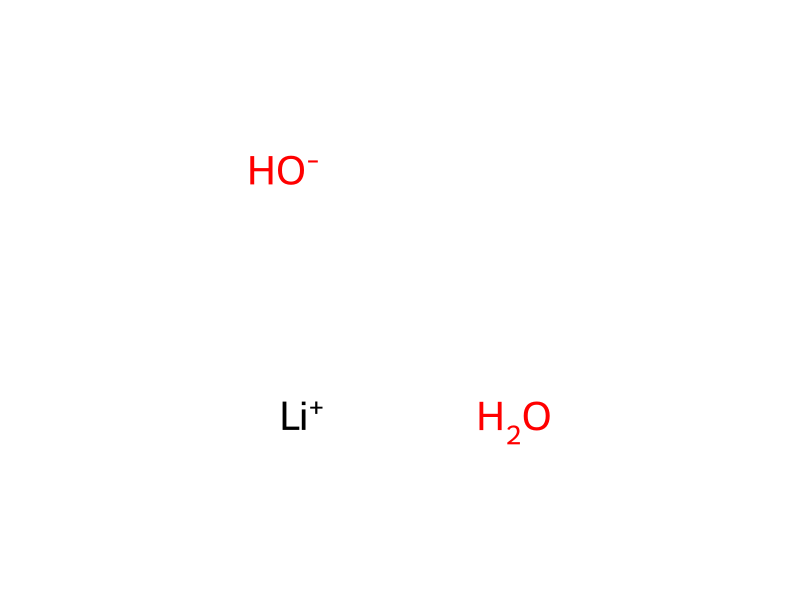
HCID 313Hydrochloric AcidHCID 962WaterHCID 168937Lithium hydroxide, monohydrate2×HCID 533123634-{2,5-Dichloro-4-[3-(4-cyclopropyl-3,4-dihydro-2H-quinoxaline-1-carbonyl)-pyridin-4-yloxy]-benzoylamino}-1-methyl-1H-pyrrole-2-carboxylic acid methyl ester

Produkt 1

HCID 53312364
4-{2,5-Dichloro-4-[3-(4-cyclopropyl-3,4-dihydro-2H-quinoxaline-1-carbonyl)-pyridin-4-yloxy]-benzoylamino}-1-methyl-1H-pyrrole-2-carboxylic acid
Ausbeute 35 %

Reagenzien, Katalysatoren, Lösungsmittel 2

HCID 8857Ethyl AcetateLösungsmittelHCID 312751,4-DioxaneLösungsmittel

Versuchsvorschrift

To a solution of 0.10 g (0.16 mmol) 4-{2,5-dichloro-4-[3-(4-cyclopropyl-3,4-dihydro-2H-quinoxaline-1-carbonyl)-pyridin-4-yloxy]-benzoylamino}-1-methyl-1H-pyrrole-2-carboxylic acid methyl ester (Example 41) in 1 mL dioxane were added 1 mL water and 0.008 g (0.19 mmol) lithiumhydroxide monohydrate. The resulting suspension was stirred for 2 hours at room temperature, then heated to 80° C. for 5.5 hours. Another 0.001 g (0.024 mmol) lithiumhydroxide monohydrate were added and the reaction mixture was heated for another 1.5 hours at 80° C. After stirring at room temperature for 64 hours the reaction mixture was poured on 1M aqueous hydrochloric acid and ethyl acetate and the layers were separated. The aqueous layer was extracted three times with ethyl acetate. The combined organic layers were washed with brine, dried over magnesium sulfate, filtered and evaporated. The residue was dissolved in N,N-dimethylformamide, filtered over a syringe microfilter and purified by preparative HPLC (Phenomenex Gemini column) with a gradient of acetonitrile:water (containing 0.05% formic acid) (10:90 to 98:2) to give the title compound as a light brown solid (0.034 g, 35%). MS (ESI): m/z=606.13 [M+H]+.

Aufarbeitung

  1. temperatureheated to 80° C. for 5.5 hours
  2. temperaturethe reaction mixture was heated for another 1.5 hours at 80° C
  3. stirringAfter stirring at room temperature for 64 hours the reaction mixture
  4. customthe layers were separated
  5. extractionThe aqueous layer was extracted three times with ethyl acetate
  6. washThe combined organic layers were washed with brine
  7. dry with materialdried over magnesium sulfate
  8. filtrationfiltered
  9. customevaporated
  10. dissolutionThe residue was dissolved in N,N-dimethylformamide
  11. filtrationfiltered over a syringe microfilter
  12. custompurified by preparative HPLC (Phenomenex Gemini column) with a gradient of acetonitrile

Quellen und Nachweise

ORD-Eintrag
ord-2e1517dbb37746b3ab45f0f928c9b3f6
Quelldatensatz
uspto-grants-2014_05
DOI
10.6084/m9.figshare.5104873.v1
Patentnummer
US08729091B2

Notizen zur Reaktion

Auf dieser SeiteKomponentenVersuchsvorschriftAufarbeitungQuellen und NachweiseNotizen zur Reaktion