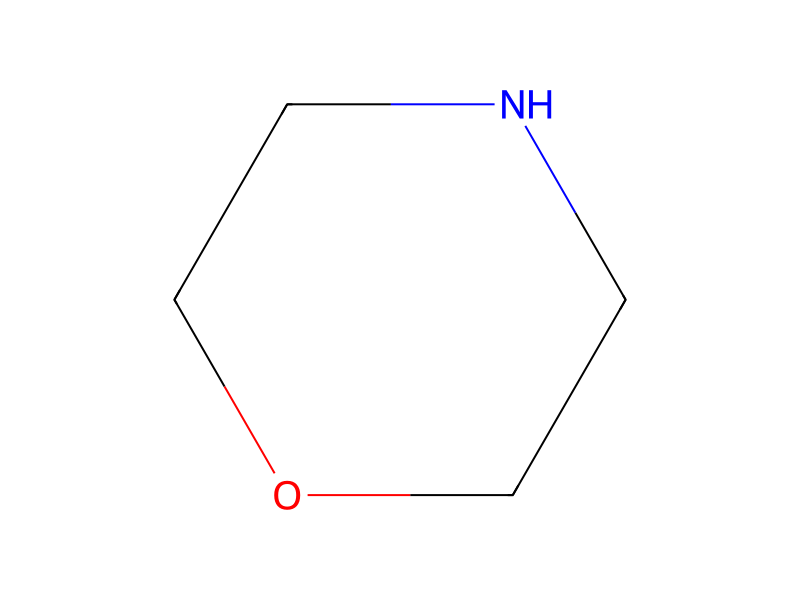
Br[CH2:2][C:3]1[N:4]=[C:5]([O:20][CH2:21][CH2:22][CH3:23])[C:6]2[N:11]=[C:10]([C:12]3[CH:17]=[C:16]([F:18])[CH:15]=[CH:14][C:13]=3[Cl:19])[O:9][C:7]=2[N:8]=1.[NH:24]1[CH2:29][CH2:28][O:27][CH2:26][CH2:25]1.C(=O)([O-])[O-].[K+].[K+].O>CN(C)C=O.ClCCl>[Cl:19][C:13]1[CH:14]=[CH:15][C:16]([F:18])=[CH:17][C:12]=1[C:10]1[O:9][C:7]2[N:8]=[C:3]([CH2:2][N:24]3[CH2:29][CH2:28][O:27][CH2:26][CH2:25]3)[N:4]=[C:5]([O:20][CH2:21][CH2:22][CH3:23])[C:6]=2[N:11]=1A mixture of 130 mg of 5-bromomethyl-2-(2-chloro-5-fluoro-phenyl)-7-propoxy-oxazolo[5,4-d]pyrimidine, 33.9 mg of morpholine and 135 mg of potassium carbonate in 3 ml of dimethylformamide was stirred at room temperature for 4 h. Then 50 ml water and 50 ml of dichloromethane were added. The phases were separated and the aqueous layer was extracted with 50 ml of dichloromethane. The combined organic layers were dried with sodium sulfate, filtered, and evaporated in vacuo. The residue was purified by preparative HPLC (Method HPLC1) to give 72 mg of the title compound in the form of 2-(2-chloro-5-fluoro-phenyl)-5-morpholin-4-ylmethyl-7-propoxy-oxazolo[5,4-d]pyrimidine trifluoroacetic acid salt.