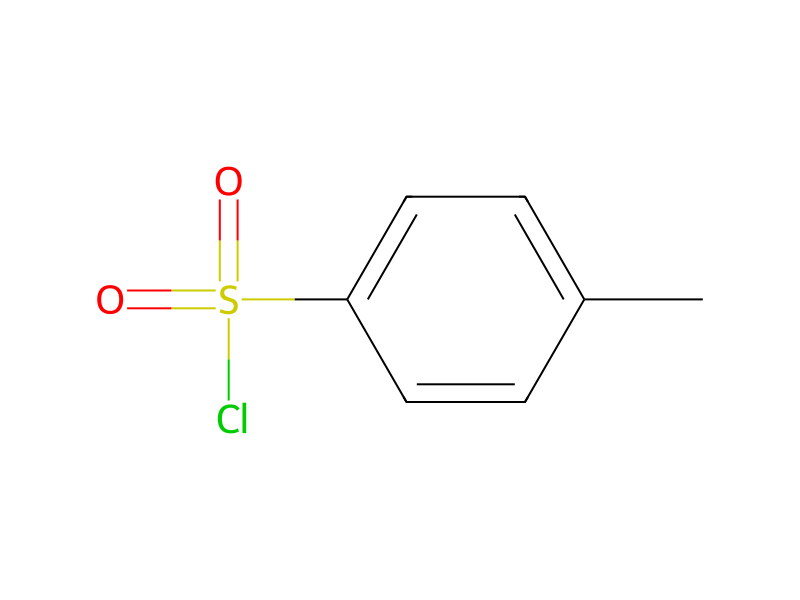
O[N:2]1[CH2:9][CH2:8][CH2:7][C@H:3]1[C:4]([OH:6])=[O:5].[S:10](Cl)([C:13]1[CH:19]=[CH:18][C:16]([CH3:17])=[CH:15][CH:14]=1)(=[O:12])=[O:11].[OH-:21].[Na+]>CCOCC>[OH:21][C@H:8]1[CH2:9][N:2]([S:10]([C:13]2[CH:19]=[CH:18][C:16]([CH3:17])=[CH:15][CH:14]=2)(=[O:12])=[O:11])[C@H:3]([C:4]([OH:6])=[O:5])[CH2:7]1To a solution of hydroxy-L-proline (80 g) in 2N NaOH (800 mL) was added tosyl chloride (136.1 g) in Et2O (700 mL). The reaction mixture was stirred at 0° C. for 11/2 h and continued for an additional 31/2 h at 23° C. The aqueous layer was separated, acidified with concentrated HCl to pH 1 and allowed to stand at -10° C. for 12 h. The precipitate was filtered, washed with cold water, and concentrated in vacuo to a volume of 300 mL. The precipitate obtained was combined with the previous precipitate. The combined solids were recrystallized from ethyl acetate. Drying in vacuo at 50° C. for 24 h afforded trans-4-hydroxy-1-(4-toluenesulfonyl)-L-proline (107.38 g, 62%).