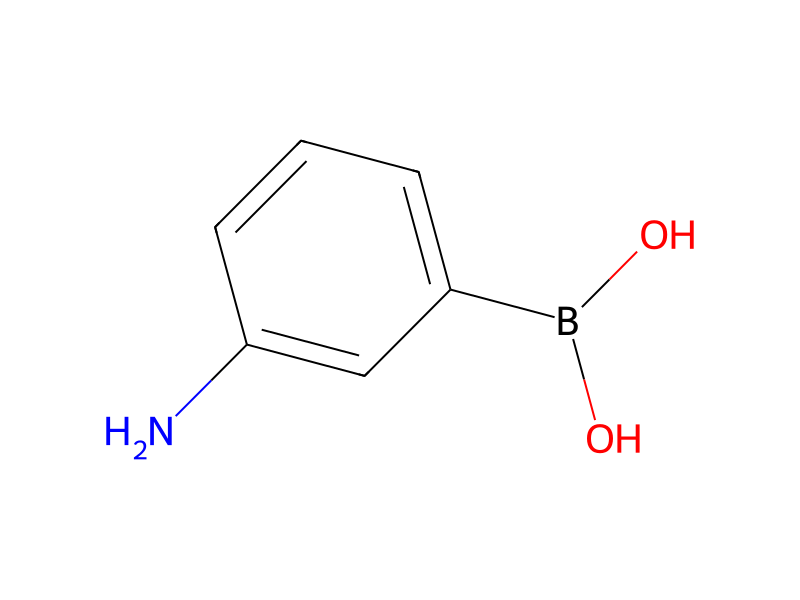
I[C:2]1[C:3]([CH3:8])=[N:4][O:5][C:6]=1[CH3:7].[NH2:9][C:10]1[CH:11]=[C:12](B(O)O)[CH:13]=[CH:14][CH:15]=1.C([O-])([O-])=O.[Na+].[Na+]>COCCOC.O.[Pd].C1(P(C2C=CC=CC=2)C2C=CC=CC=2)C=CC=CC=1.C1(P(C2C=CC=CC=2)C2C=CC=CC=2)C=CC=CC=1.C1(P(C2C=CC=CC=2)C2C=CC=CC=2)C=CC=CC=1.C1(P(C2C=CC=CC=2)C2C=CC=CC=2)C=CC=CC=1>[CH3:8][C:3]1[C:2]([C:14]2[CH:15]=[C:10]([CH:11]=[CH:12][CH:13]=2)[NH2:9])=[C:6]([CH3:7])[O:5][N:4]=1To a solution of 4-iodo-3,5-dimethylisoxazole (for a preparation see intermediate 1, 142 g, 640 mmol, 1 eq.) and (3-aminophenyl)boronic acid (100 g, 640 mmol, 1 eq.) in DME (600 ml) were added tetrakis(triphenylphosphine) palladium(0) (18.5 g, 16 mol) and a solution of Na2CO3 (203.5 g, 192 mmol, 3 eq.) in water (750 ml). The mixture was heated under reflux for 24 h. To complete the reaction intermediate 1 (0.2 eq.) and tetrakis(triphenylphosphine) palladium(0) (5 g) were added and the mixture was refluxed overnight. The cooled mixture was poured into water and extracted with DCM. The organic phase was washed with water, dried over Na2SO4 and filtered. Evaporation of the solvent in vacuo gave a crude oil which was precipitated with iPr2O to afford the title compound as a beige solid (102 g, 85%). [ES-MS] m/z: 189 MH+, Rt 2.20 min.