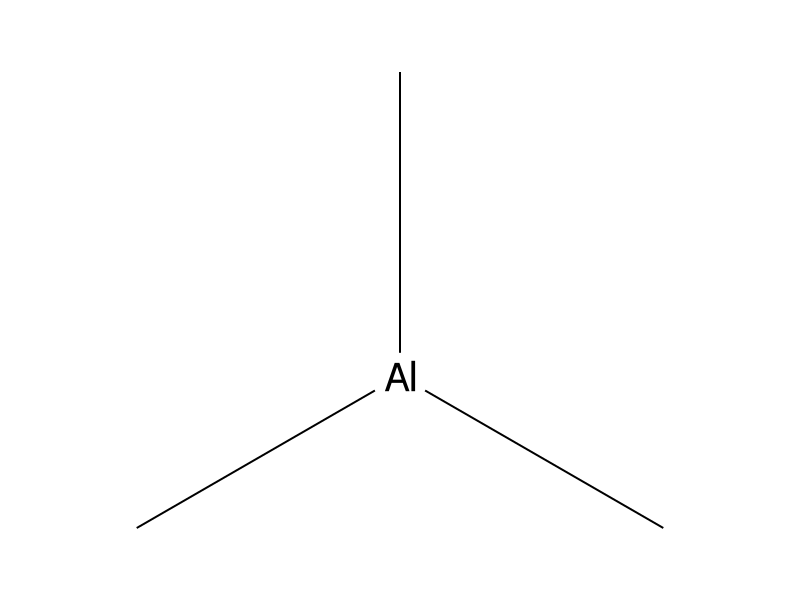
C[Al](C)C.[CH3:5]CCCCC.Br[C:12]1[CH:13]=[C:14]([CH:18]=[C:19]([S:21]([F:26])([F:25])([F:24])([F:23])[F:22])[CH:20]=1)[C:15]([OH:17])=[O:16].O>C1COCC1.C1C=CC([P]([Pd]([P](C2C=CC=CC=2)(C2C=CC=CC=2)C2C=CC=CC=2)([P](C2C=CC=CC=2)(C2C=CC=CC=2)C2C=CC=CC=2)[P](C2C=CC=CC=2)(C2C=CC=CC=2)C2C=CC=CC=2)(C2C=CC=CC=2)C2C=CC=CC=2)=CC=1>[CH3:5][C:12]1[CH:13]=[C:14]([CH:18]=[C:19]([S:21]([F:26])([F:25])([F:24])([F:23])[F:22])[CH:20]=1)[C:15]([OH:17])=[O:16]1.15 ml (2.29 mmol) of a 2 M solution of trimethylaluminium in a hexane fraction were added to a solution of 250 mg (0.764 mmol) of the compound of Example 15A and 27 mg (0.023 mmol) of tetrakis(triphenylphosphine)palladium(0) in 2.5 ml of anhydrous THF, and the mixture was then, under an argon atmosphere, heated in a microwave oven (Biotage Initiator, with Dynamic Field Tuning) at 150° C. for 120 min. After cooling to RT, about 10 ml of water were added, and the reaction mixture was extracted three times with in each case about 10 ml of ethyl acetate. The combined organic extracts were washed with saturated sodium chloride solution, dried over anhydrous magnesium sulphate, filtered and then concentrated to dryness on a rotary evaporator. The product was isolated by preparative HPLC (Method 9). Concentration of the product fractions and drying of the residue under high vacuum gave 98 mg (47% of theory, 95% pure) of the title compound.
Wird geladen…