StartseiteMCPWorkbenchSkills
StartseiteWorkbenchBenachrichtigungenMein Bereich
llms.txt · MCP-AnleitungDatenschutz · Nutzungsbedingungen · Supportv1.8.0
  1. Startseite
  2. /Reaktion

1,2-Dichloroethane → 1-((2R)-3,3-dimethyl-2-hydroxybutanoyl)-N-(2-(tert-butyloxycarbonylaminomethyl)-5-chlorobenzyl)-L-prolinamide

HRID 1058278
Notizen
Druckvorschau

Reaktionsgleichung

Reaktionsgleichung von HRID 1058278
[C:1]([O:5][C:6]([NH:8][CH2:9][C:10]1[CH:24]=[CH:23][C:22]([Cl:25])=[CH:21][C:11]=1[CH2:12][NH:13][C:14](=[O:20])[C@@H:15]1[CH2:19][CH2:18][CH2:17][NH:16]1)=[O:7])([CH3:4])([CH3:3])[CH3:2].[CH3:26][C:27]([CH3:34])([CH3:33])[C@@H:28]([OH:32])[C:29](O)=[O:30].C1C=C2N=NN(O)C2=CC=1.O.C(Cl)CCl.C(N(C(C)C)CC)(C)C>CN(C=O)C>[CH3:26][C:27]([CH3:34])([CH3:33])[C@@H:28]([OH:32])[C:29]([N:16]1[CH2:17][CH2:18][CH2:19][C@H:15]1[C:14]([NH:13][CH2:12][C:11]1[CH:21]=[C:22]([Cl:25])[CH:23]=[CH:24][C:10]=1[CH2:9][NH:8][C:6]([O:5][C:1]([CH3:4])([CH3:2])[CH3:3])=[O:7])=[O:20])=[O:30]
KomponentenVersuchsvorschriftAufarbeitungQuellen und NachweiseNotizen zur Reaktion

Komponenten

7

Edukt 5

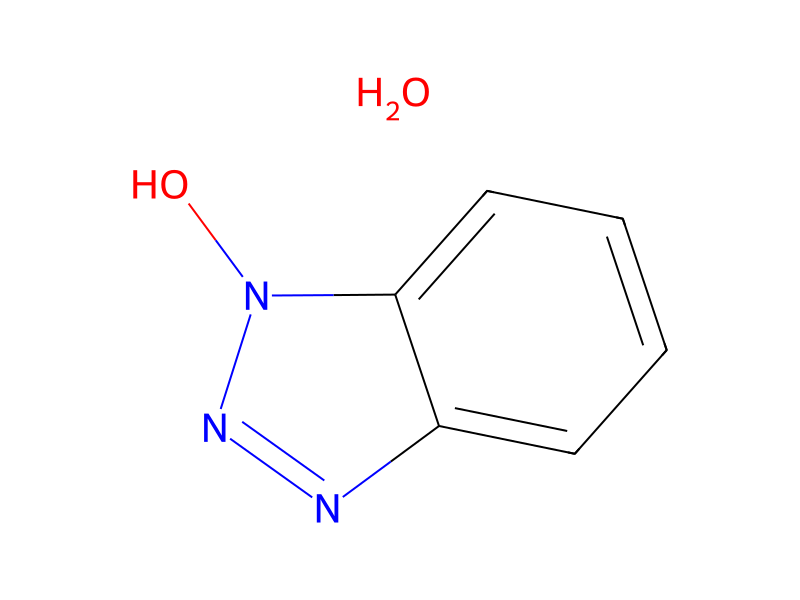
HCID 111,2-DichloroethaneHCID 81531DiisopropylethylamineHCID 27960291-Hydroxybenzotriazole hydrateHCID 11344038(2R)-2-hydroxy-3,3-dimethylbutanoic acidHCID 11428605L-prolin-N-(2-(tert-butyloxycarbonylaminomethyl)-5-chlorobenzyl)amide

Produkt 1

HCID 11306199
1-((2R)-3,3-dimethyl-2-hydroxybutanoyl)-N-(2-(tert-butyloxycarbonylaminomethyl)-5-chlorobenzyl)-L-prolinamide

Reagenzien, Katalysatoren, Lösungsmittel 1

HCID 6228DimethylformamideLösungsmittel

Versuchsvorschrift

To a stirred solution of L-prolin-N-(2-(tert-butyloxycarbonylaminomethyl)-5-chlorobenzyl)amide from step 2 (3.90 g, 10.6 mmol, HPLC RT=2.77 min), (2R)-3,3-dimethyl-R-hydroxybutyric acid from step 3 (1.40 g, 10.6 mmol), and HOBT hydrate (1.68 g, 11 mmol) in DMF (60 mL) was added EDC (2.65 g, 13.8 mmol). Diisopropylethylamine was then added slowly in portions (11.5 mL total) to bring the pH of the solution to 6-7 as measured on wetted E. Merck pH indicator strips. The mixture was stirred at ambient temperature for 6 h, at which time HPLC analysis indicated complete consumption of the proline starting material. Water (10 mL) was added and the solvents were removed under reduced pressure. The residue was partitioned between EtOAc (300 mL) and saturated aqueous NaHCO3 (200 mL). The EtOAc layer was separated, dried over anhydrous MgSO4, and filtered. The filtrate solvent was removed under reduced pressure and the residue was purified by flash chromatography using a gradient elution of 2:1, 4:1, and 1:0 EtOAc:hexanes. 1-((2R)-3,3-dimethyl-2-hydroxybutanoyl)-N-(2-(tert-butyloxycarbonylaminomethyl)-5-chlorobenzyl)-L-prolinamide was obtained as a colorless gum (4.65 g, 91%; TLC Rf=0.7 (EtOAc); HPLC RT=3.35 min, method A; LC-MS m/z=482).


Aufarbeitung

  1. customconsumption of the proline starting material
  2. additionWater (10 mL) was added
  3. customthe solvents were removed under reduced pressure
  4. customThe residue was partitioned between EtOAc (300 mL) and saturated aqueous NaHCO3 (200 mL)
  5. customThe EtOAc layer was separated
  6. dry with materialdried over anhydrous MgSO4
  7. filtrationfiltered
  8. customThe filtrate solvent was removed under reduced pressure
  9. customthe residue was purified by flash chromatography
  10. washa gradient elution of 2:1, 4:1, and 1:0 EtOAc

Quellen und Nachweise

ORD-Eintrag
ord-eaaab7d3860b46709e29a2f8f9e90a78
Quelldatensatz
uspto-grants-2003_02
DOI
10.6084/m9.figshare.5104873.v1
Patentnummer
US06515011B2

Notizen zur Reaktion

Wird geladen…

Auf dieser SeiteKomponentenVersuchsvorschriftAufarbeitungQuellen und NachweiseNotizen zur Reaktion