Reaktionsgleichung

[CH:1]1[N:9]([C@@H:10]2[O:14][C@H:13]([CH2:15][OH:16])O[CH2:11]2)[C:8]2[N:7]=[C:6](N)[N:5]=[C:4]([NH2:18])[C:3]=2[N:2]=1.[Sb](F)(F)[F:20].N([O:25][C:26](C)(C)C)=O.C(#N)C.O>ClC(Cl)C.CS(C)=O.C(O)(=O)C>[F:20][C:6]1[N:5]=[C:4]([NH2:18])[C:3]2[N:2]=[CH:1][N:9]([C:8]=2[N:7]=1)[C@@H:10]1[O:14][C@H:13]([CH2:15][OH:16])[C@@H:26]([OH:25])[CH2:11]1Komponenten
7
Edukt 4


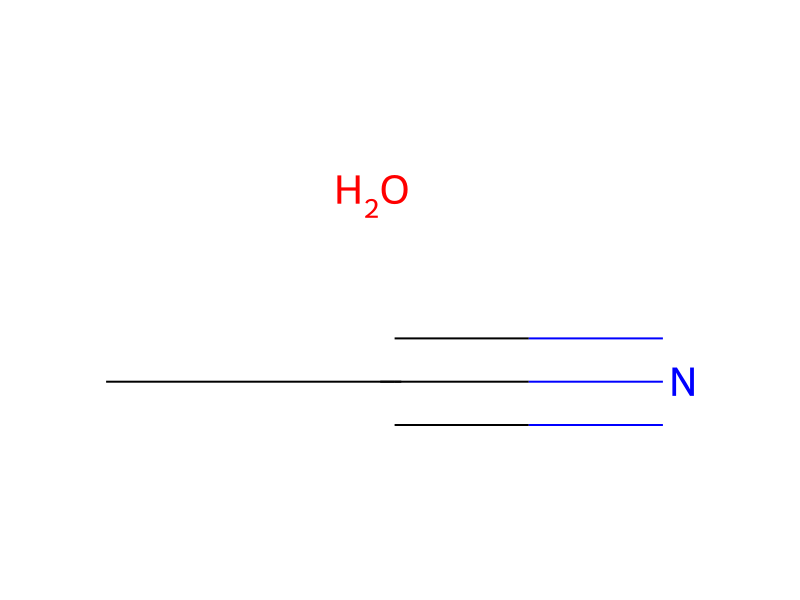
Produkt 1

Reagenzien, Katalysatoren, Lösungsmittel 2


Reaktionsbedingungen
- Temperatur
- 0 °C
Versuchsvorschrift
DAPD (2 g, 7.5 mmol) was suspended in 170 mL dichloroethane/DMSO (4:1) and cooled to 0° C. under an inert atmosphere. To this is added antimony trifluoride (1.88 g, 10.5 mmol) and tert-butyl nitrite (1.85 ml, 1.6 g, 15.5 mmol) followed by stirring while allowing the reaction to warm to room temperature. Analysis of the reaction mixture by HPLC [Novapak C-18; 5% acetonitrile/water, 0.1M TEA, pH 7 with acetic acid] revealed a new peak which eluted at 6.4 min, indicating the synthesis of 2-fluoro-2′-deoxyadenosine with concomitant loss of starting material. The reaction was stirred overnight and quenched with triethylamine. The conversion to product by HPLC was 8%.
Aufarbeitung
- customthe reaction
- temperatureto warm to room temperature
- washeluted at 6.4 min
- customthe synthesis of 2-fluoro-2′-deoxyadenosine with concomitant loss of starting material
- stirringThe reaction was stirred overnight
- customquenched with triethylamine
Quellen und Nachweise
- ORD-Eintrag
- ord-c386cb4fc67f42d5a6a8a9aa9e344f7b
- Quelldatensatz
- uspto-grants-2001_06
- Patentnummer
- US06252061B1
Verknüpfte Notizen
Wird geladen…