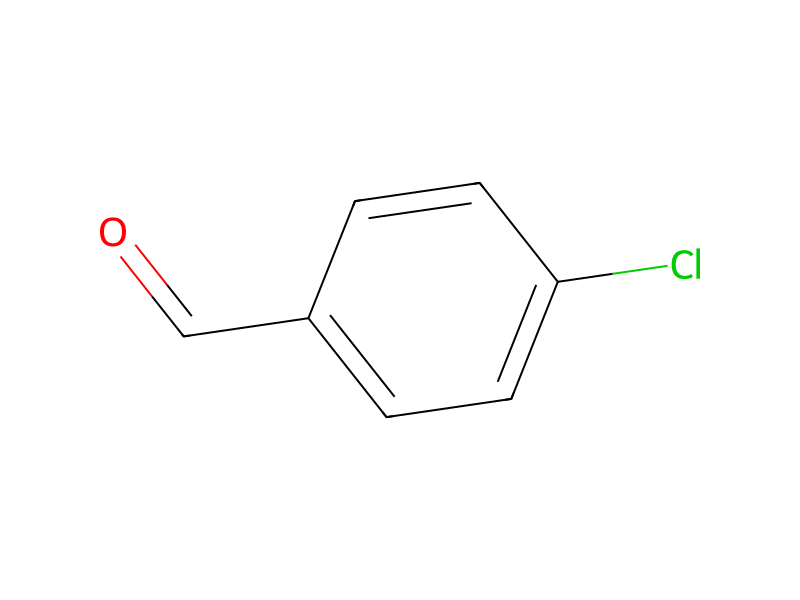
[Cl:1][C:2]1[CH:9]=[CH:8][C:5]([CH:6]=O)=[CH:4][CH:3]=1.[Cl:10][C:11]1[CH:32]=[CH:31][CH:30]=[CH:29][C:12]=1[CH2:13][C:14]([C:23]1[CH:28]=[CH:27][CH:26]=[CH:25][CH:24]=1)([C:20](=[O:22])[CH3:21])[CH2:15][CH2:16][C:17]([OH:19])=[O:18].[OH-].[Na+].Cl>C(O)C.O>[Cl:10][C:11]1[CH:32]=[CH:31][CH:30]=[CH:29][C:12]=1[CH2:13][C:14]([C:23]1[CH:28]=[CH:27][CH:26]=[CH:25][CH:24]=1)([C:20](=[O:22])[CH:21]=[CH:6][C:5]1[CH:8]=[CH:9][C:2]([Cl:1])=[CH:3][CH:4]=1)[CH2:15][CH2:16][C:17]([OH:19])=[O:18]p-Chlorobenzaldehyde (10.5 g., 0.075 mole) in ethanol (30 ml.) is added to a solution of levo-4-(2-chlorobenzyl)-4-phenyl-5-oxohexanoic acid (14.67 g., 0.045 mole) and sodium hydroxide (2.40 g., 0.06 mole) in water (150 ml.). The resulting mixture is heated on a steam bath for 24 hours. The reaction solution is cooled to room temperature, acidified with dilute hydrochloric acid (30 ml.), and the solid (yellow) which forms after scratching is filtered and air-dried to yield 24.1 g. of material with m.p. 150°-165°C. (sinters at 140°). Several recrystallizations from n-butyl chloride, followed by several recrystallizations from acetonitrile gives a white solid, m.p. 189°-190°C., [α]D25 = -61.5 (in 1% CHCl3).
Wird geladen…