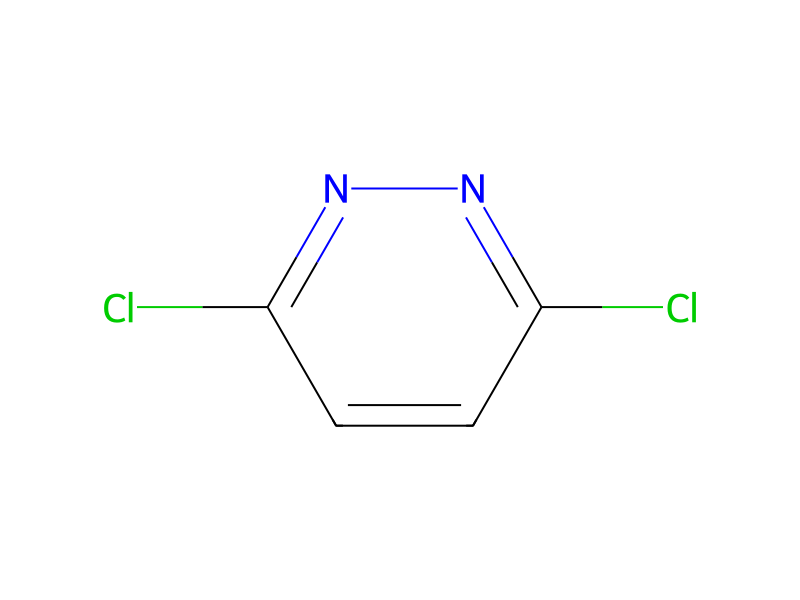
To a solution of 3,6-dichloropyridazine (50.0 mmol, 7.45 g) and 3-aminopropionic acid (60.0 mmol, 5.34 g) in absolute ethanol (20 mL) was added potassium carbonate (30.0 mmol, 4.15 g), and the suspension was heated to reflux for 3 hours. The mixture was allowed to cool to room temperature, and the light brown solid residue was partitioned between ethyl acetate (300 mL) and water (300 mL). The pH of the aqueous phase was adjusted to 3.5 with 2M aqueous hydrochloric acid, and the yellow solid was filtered and washed with absolute ethanol (10 mL) and diethyl ether (2×20 mL) to give 5.04 g (50%). The product was pure according to TLC Rf 0.31 (dichloromethane/methanol/acetic acid, 85:10:5).