Bromobenzene → HCID 12724477, Verbindung
Reaktionsgleichung

Br[C:2]1[CH:7]=[CH:6][CH:5]=[CH:4][CH:3]=1.C([Li])CCC.CCCCCC.[C:19]1([C:25]2[CH2:29][CH2:28][C:27](=O)[CH:26]=2)[CH:24]=[CH:23][CH:22]=[CH:21][CH:20]=1>O1CCCC1.O.CO>[C:2]1([C:27]2[CH2:28][CH:29]=[C:25]([C:19]3[CH:24]=[CH:23][CH:22]=[CH:21][CH:20]=3)[CH:26]=2)[CH:7]=[CH:6][CH:5]=[CH:4][CH:3]=1Komponenten
8
Edukt 4
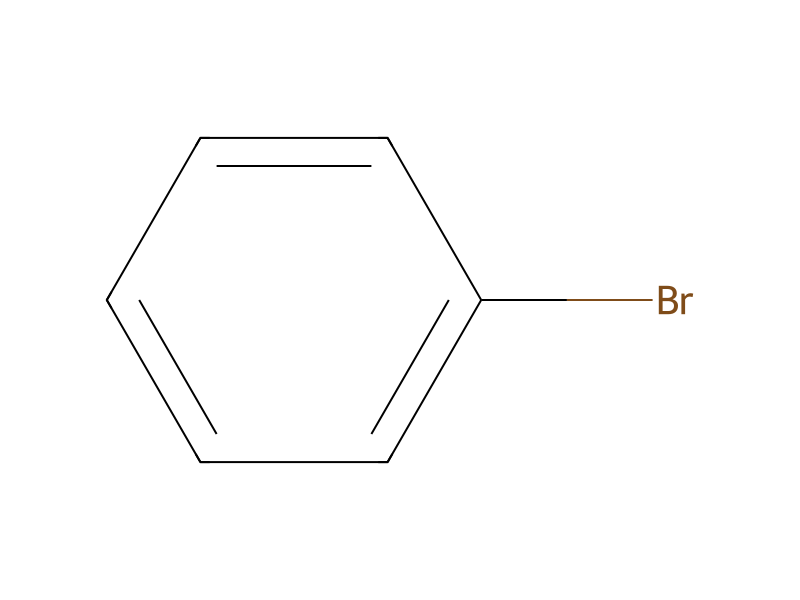



Produkt 1

Reagenzien, Katalysatoren, Lösungsmittel 3



Versuchsvorschrift
A mixture of 7.9 g (0.050 mole) of bromobenzene in 15 ml tetrahydrofuran was slowly added to a mixture of 34 ml of a solution of n-butyllithium in hexane (1.6 mole/liter, 0.055 mole n-butyllithium) and 40 ml of tetrahydrofuran at -80° C. At -40° C., 4.7 g (0.030 mole) of 3-phenylcyclopent-2-en-1-one in a small amount of tetrahydrofuran, was slowly added to the mixture. The resultant mixture was allowed to reach room temperature. Methanol and water were added. The 1,3-diphenylcyclopentadiene formed was recovered by extraction and crystallization.
Aufarbeitung
- customto reach room temperature
Quellen und Nachweise
- ORD-Eintrag
- ord-c2810afea1874cc98d72b106ce696407
- Quelldatensatz
- uspto-grants-1994_01
- Patentnummer
- US05279999
Notizen zur Reaktion
Wird geladen…