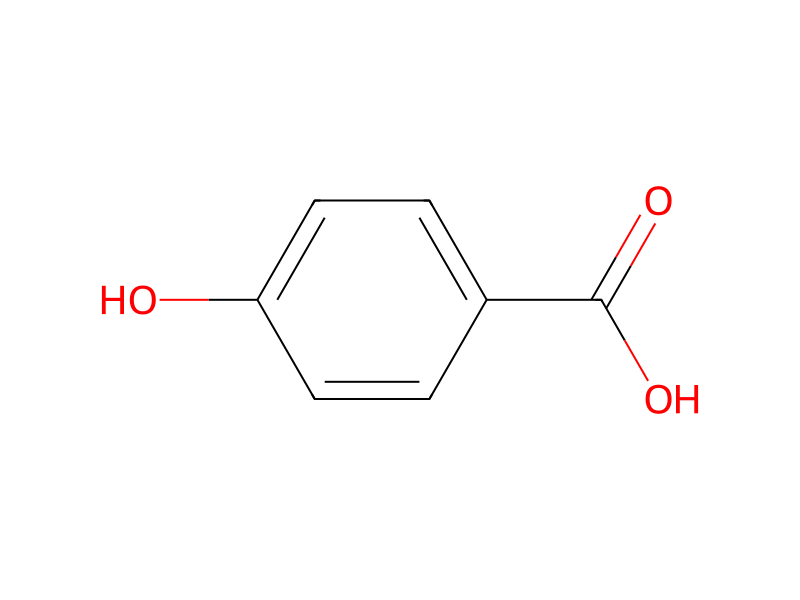
69.1 g (0.5 mol) of p-hydroxybenzoic acid were dissolved in 400 ml of ethanol and treated with a solution of 56.1 g (1 mol) of KOH in 250 ml of water. The reaction batch was heated under reflux. While so doing 74.26 g (0.55 mol) of 4-bromo-1-butene were slowly added dropwise. After 5 hours the ethanol was removed on a rotary evaporator. The aqueous phase was brought to a pH value of 10 with NaOH and extracted repeatedly with diethyl ether. The aqueous phase was poured into a mixture of 46 ml of concentrated HCl and 500 ml of ice-water. The separated acid was filtered off, washed with a small amount of water and recrystallized from methanol/water (2:1). After drying at 60° C. in a water-jet vacuum 40 g of 4-(but-3-enyloxy)-benzoic acid remained behind as a white powder; phase succession (° C.): C 120 N 141 I.