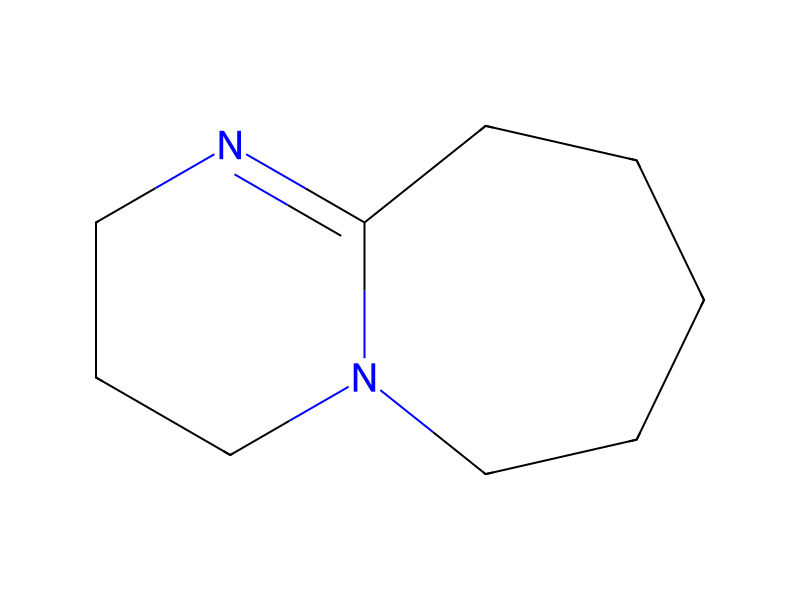
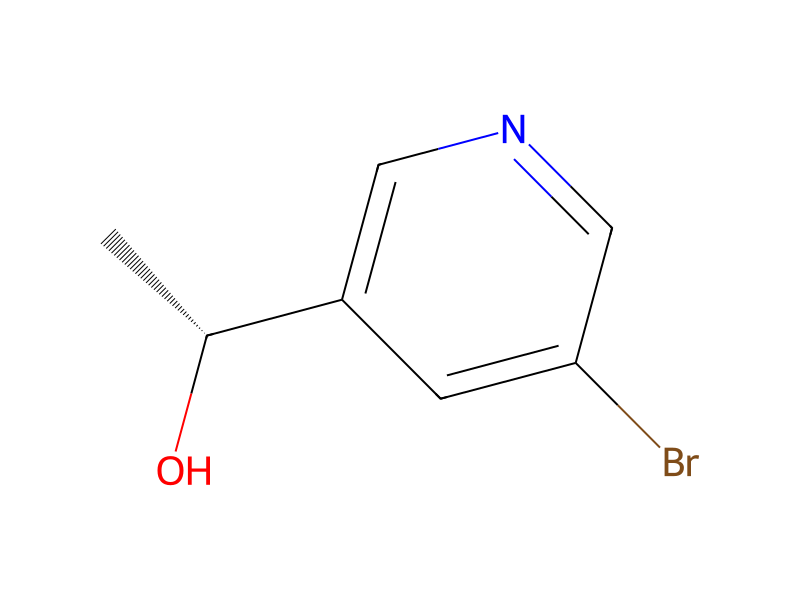
To a solution of (1R)-1-(5-bromopyridin-3-yl)ethanol (10 mmol) in tetrahydrofuran (40 mL), cooled to 0° C., was added diphenylphosphoryl azide (4.3 mL, 20 mmol) in one portion followed by 1,8-diazabicyclo[5.4.0]undec-7-ene (3 mL, 20 mmol) dropwise over 30 minutes. After this time the reaction mixture was allowed to warm slowly to room temperature and was stirred overnight. The mixture was diluted with ethyl acetate (50 mL) and water (50 mL), the two phases separated and the aqueous phase extracted with ethyl acetate (3×50 mL). The combined organic phases were washed with brine (50 mL), dried (MgSO4) and concentrated under reduced pressure to give a black liquid which was purified by flash chromatography (silica, ethyl acetate/hexanes) to give 3-[(1S)-1-azidoethyl]-5-bromopyridine (1.7 g, 75%) as a colourless liquid.