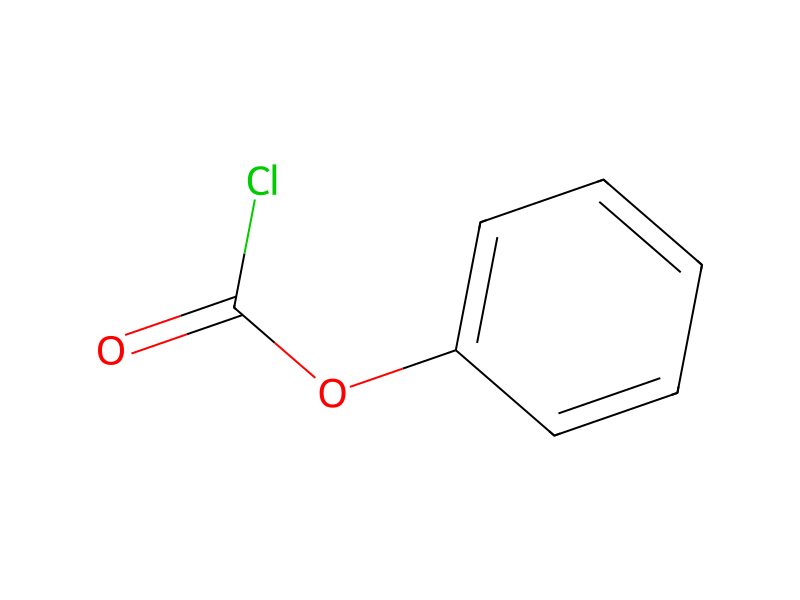
[CH3:1][O:2][C:3]1[CH:4]=[C:5]([OH:9])[CH:6]=[CH:7][CH:8]=1.[Cl-].[Al+3].[Cl-].[Cl-].Cl[C:15]([O:17][C:18]1[CH:23]=[CH:22][CH:21]=[CH:20][CH:19]=1)=[O:16].Cl>O.C(Cl)Cl>[OH:9][C:5]1[CH:4]=[C:3]([O:2][CH3:1])[CH:8]=[CH:7][C:6]=1[C:15]([O:17][C:18]1[CH:23]=[CH:22][CH:21]=[CH:20][CH:19]=1)=[O:16]To a 1,000-mL, three-neck, nitrogen-purged flask was added 26.5 g (0.21 mole) of 3-methoxyphenol, 215 mL of methylene chloride, 32 g (0.24 mole) of aluminum chloride and 32 mL (0.26 mole) of phenyl chloroformate. This mixture was heated to reflux. After 24 hours, the mixture was cooled to 20°-30° C. and 400 mL of water and 32 mL of 37% hydrochloric acid were added. The layers were separated and the organic layer washed with two 100-mL portions of 5N hydrochloric acid. The organic layer was dried with anhydrous magnesium sulfate, filtered, then the solvent stripped off under vacuum. The crude product was recrystallized from heptane. The yield of phenyl 2-hydroxy-4-methoxybenzoate (white, m.p. 61.5°-62.5° C.) obtained was 49%.
Wird geladen…