Reaktionsgleichung

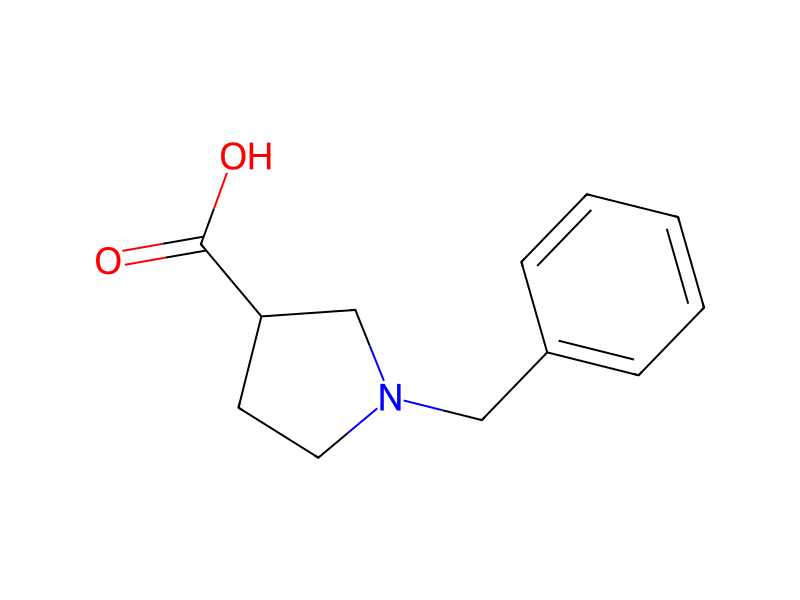
C(N1CCC(C(O)=O)C1)C1C=CC=CC=1.[NH:16]1[CH2:20][CH2:19][CH:18]([C:21]([OH:23])=[O:22])[CH2:17]1.C(N(CC)CC)C.[C:31]([O:35][C:36](N=[N+]=[N-])=[O:37])([CH3:34])([CH3:33])[CH3:32].[N-]=[N+]=[N-]>C(O)(=O)C.[Pd].CN(C=O)C.O>[C:31]([O:35][C:36]([N:16]1[CH2:20][CH2:19][CH:18]([C:21]([OH:23])=[O:22])[CH2:17]1)=[O:37])([CH3:34])([CH3:33])[CH3:32]Komponenten
Edukt 5



Produkt 1

Reagenzien, Katalysatoren, Lösungsmittel 3


Versuchsvorschrift
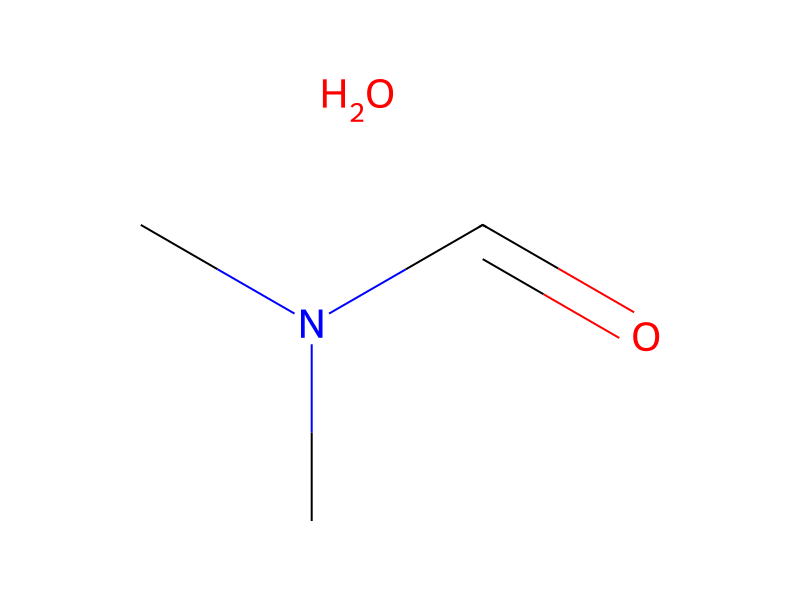
A solution of 205 g. (1 mol.) of N-benzylpyrrolidine-3-carboxylic acid (CA, 64 14173d) is dissolved in glacial acetic acid (1 l.) and hydrogenated in the presence of 40 g. of 10% palladium on charcoal until no more starting material is detected by TLC. The catalyst is filtered off and the filtrate is concentrated to dryness in vacuo. The residual 3-pyrrolidine carboxylic acid is dissolved in a mixture of DMF-H2O (2:1) (2 liters), triethylamine (1 mol.), t-butoxycarbonyl azide (1.5 mol.) is added and the mixture is stirred at room temperature for two days. Periodically the pH is tested with pH paper, and after twenty-four hours more azide (0.5 mol.) is added. The solvent is concentrated in vacuo to remove the DMF, the aqueous phase is acidified with citric acid (to pH 2-3) and extracted with ethyl acetate. The organic phase is concentrated to dryness in vacuo to yield the product 1-(t-butyloxycarbonyl)-3-pyrrolidinecarboxylic acid.
Aufarbeitung
- filtrationThe catalyst is filtered off
- concentrationthe filtrate is concentrated to dryness in vacuo
- additionis added
- concentrationThe solvent is concentrated in vacuo
- customto remove the DMF
- extractionextracted with ethyl acetate
- concentrationThe organic phase is concentrated to dryness in vacuo
Quellen und Nachweise
- ORD-Eintrag
- ord-dd959544468b462a8ddaf8774f1400b1
- Quelldatensatz
- uspto-grants-1976_08
- Patentnummer
- US03976660
Verknüpfte Notizen
Wird geladen…