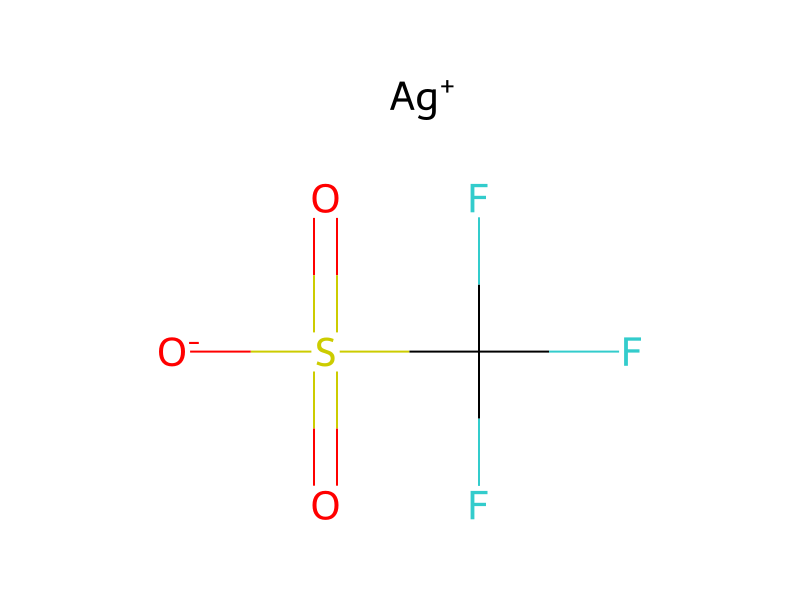
3-Nitrobiphenyl (3.0 g, 15 mmol), was dissolved in DMF (7.5 ml) and dry chloroform (16.5 mmol). This mixture was added dropwise to a stirred precooled mixture of potassium tert-butoxide (7.2 mg, 60 mmol) in DMF (20 ml) and THF (25 ml), at such a rate that the temperature was maintained between −69 and −73° C. When the addition was complete, the mixture was stirred for a further 1 minute then treated with acetic acid (1.5 ml) in methanol (5 ml) and allowed to warm to room temperature. The mixture was treated with saturated aqueous sodium bicarbonate (50 ml) and extracted with dichloromethane (3×5 ml), the combined organic phase dried (MgSO4), filtered and evaporated, then the residue purified by flash chromatography (ether-hexane). This gave a yellow material which consisted of between 30 and 50% of dichloromethylsubstituted 3-nitrobiphenyl and starting material. The mixture was dissolved in acetonitrile (10 ml) and treated with a solution of silver trifluoromethanesulphonate (15 mmol, 3.84 g) in water (5 ml). The mixture was heated to reflux for 16 h in the dark then cooled, the mixture concentrated in vacuo, filtered and the filtrate extracted with ether (3×50 ml). The combined organic phase was evaporated and purified by flash chromatography to give 3-nitrobiphenyl-4-carbaldehyde;