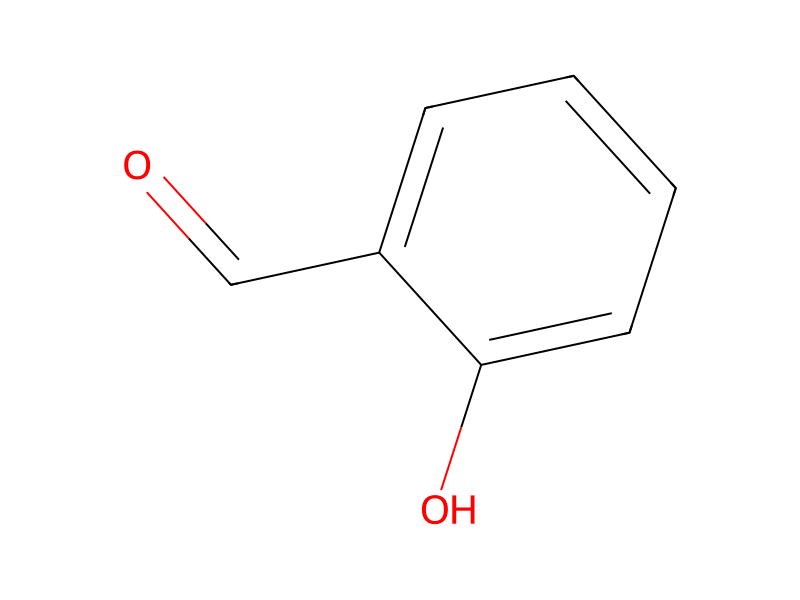
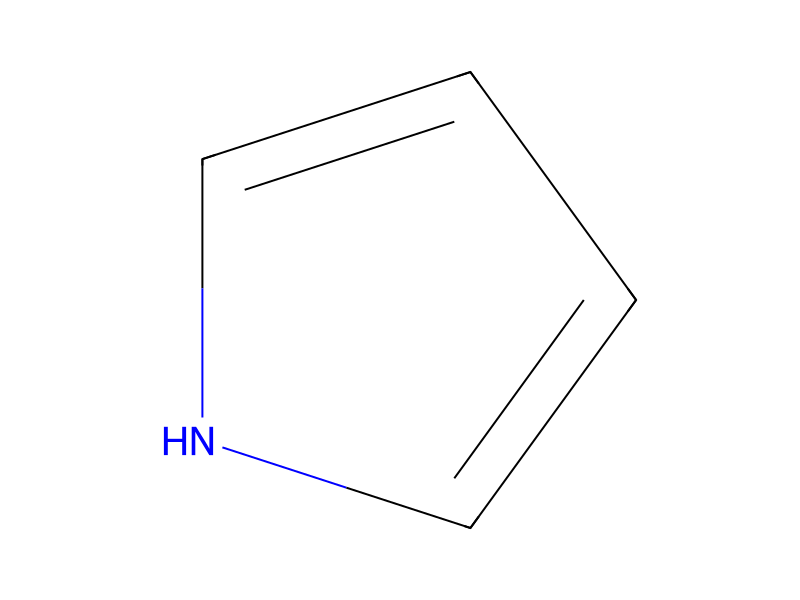
Salicylaldehyde → 5,10,15,20-Tetra(2-hydroxyphenyl)porphyrin
HRID 1353155
Reaktionsgleichung

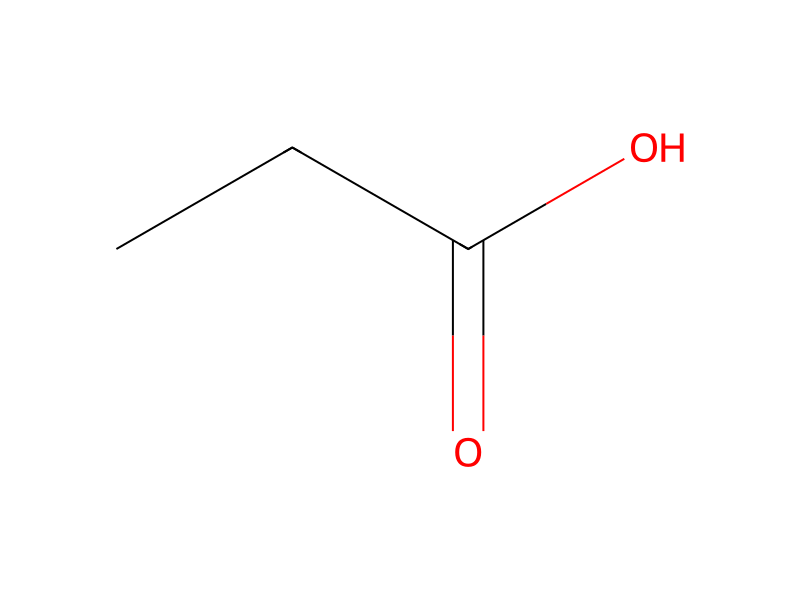
[NH:1]1[CH:5]=[CH:4][CH:3]=[CH:2]1.[CH:6](=O)[C:7]1[C:8](=[CH:10][CH:11]=[CH:12][CH:13]=1)[OH:9]>C(O)(=O)CC>[OH:9][C:8]1[CH:10]=[CH:11][CH:12]=[CH:13][C:7]=1[C:6]1[C:5]2[NH:1][C:2]([C:6]([C:7]3[CH:13]=[CH:12][CH:11]=[CH:10][C:8]=3[OH:9])=[C:2]3[N:1]=[C:5]([C:6]([C:7]4[CH:13]=[CH:12][CH:11]=[CH:10][C:8]=4[OH:9])=[C:2]4[NH:1][C:5](=[C:6]([C:7]5[CH:13]=[CH:12][CH:11]=[CH:10][C:8]=5[OH:9])[C:2]5[CH:3]=[CH:4][C:5]=1[N:1]=5)[CH:4]=[CH:3]4)[CH:4]=[CH:3]3)=[CH:3][CH:4]=2Komponenten
4
Edukt 2
Produkt 1

Reagenzien, Katalysatoren, Lösungsmittel 1
Versuchsvorschrift
Pyrrole (1.0 equivalents) and salicylaldehyde (1.2 equivalents) are dissolved in propionic acid (1 liter/20ml pyrrole) and the solution is refluxed for 30 minutes. The reaction mixture is allowed to cool to room temperature and stand for one day. The mixture is filtered and the product is recrystallized to yield 5,10,15,20-tetrakis(2′-hydroxyphenyl) porphyrin.