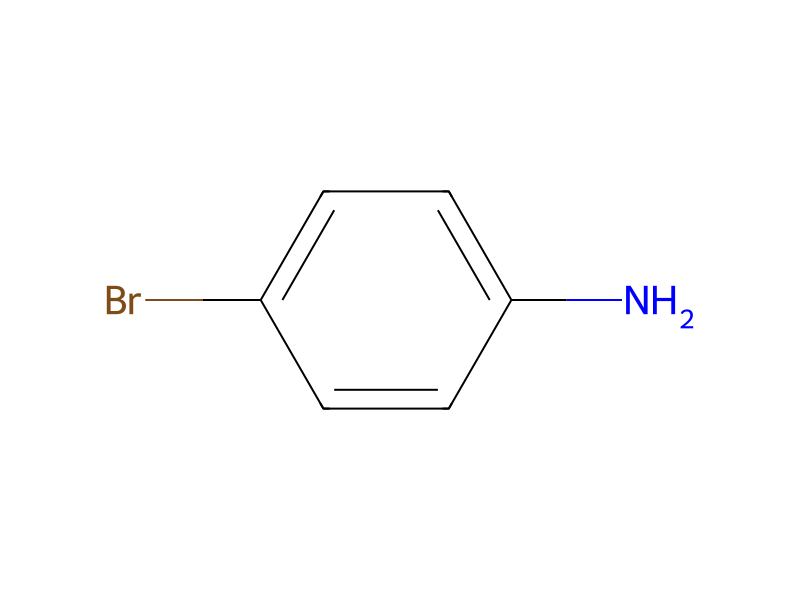
Under an argon atmosphere, 2-chloropyrimidine (2.68 g) and acetic acid (1.97 ml) were added to a solution of 4-bromoaniline (4.03 g) in dioxane (200 ml), and the resulting mixture was stirred for 3 hours while heating the mixture to reflux. Saturated aqueous sodium hydrogen carbonate solution was added in small portions to the reaction solution to neutralize it, and the resulting mixture was concentrated. Ethyl acetate (500 ml) was added to the residue and the resulting mixture was stirred at room temperature for 10 minutes, followed by removing insoluble matter by filtration. The filtrate was washed with saturated aqueous sodium hydrogen carbonate solution and with saturated brine, and dried over anhydrous sodium sulfate. After removing anhydrous sodium sulfate by filtration, the filtrate was concentrated. The residue was recrystallized from ethyl acetate to obtain N-(4-bromophenyl)pyrimidin-2-amine (3.02 g).