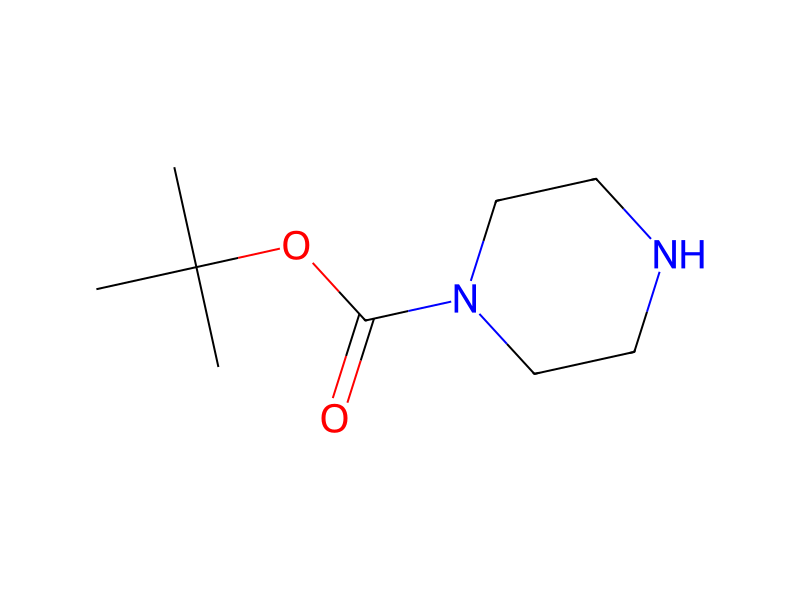
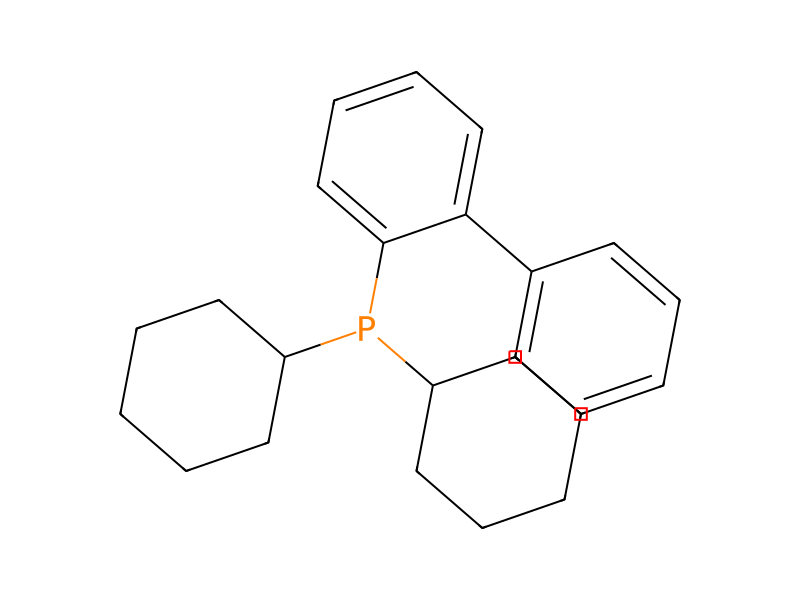
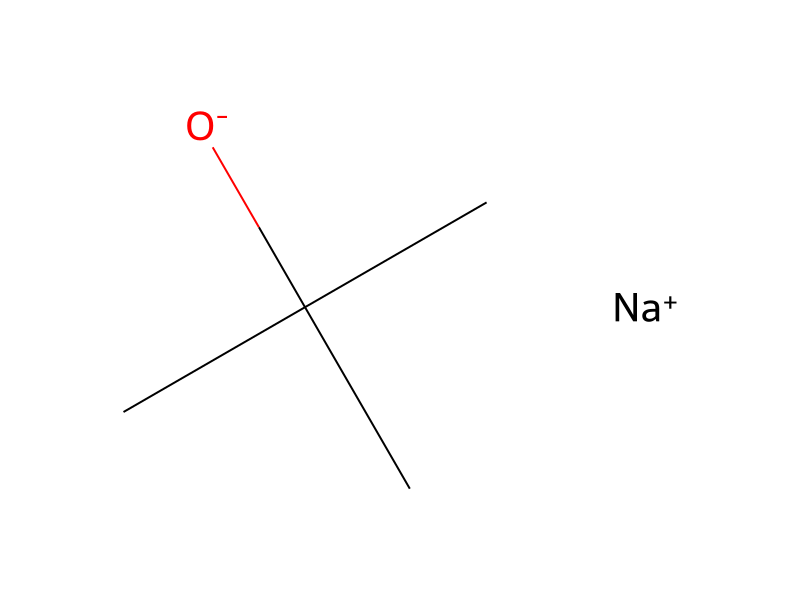
[C:1]([N:8]1[CH2:13][CH2:12][NH:11][CH2:10][CH2:9]1)([O:3][C:4]([CH3:7])([CH3:6])[CH3:5])=[O:2].CC([O-])(C)C.[Na+].C1(P(C2CCCCC2)C2C=CC=CC=2C2C=CC=CC=2)CCCCC1.Br[C:46]1[C:55]2[C:50](=[CH:51][CH:52]=[CH:53][C:54]=2[Cl:56])[CH:49]=[CH:48][CH:47]=1>CC([O-])=O.CC([O-])=O.[Pd+2].C1(C)C=CC=CC=1>[C:4]([O:3][C:1]([N:8]1[CH2:9][CH2:10][N:11]([C:46]2[C:55]3[C:50](=[CH:51][CH:52]=[CH:53][C:54]=3[Cl:56])[CH:49]=[CH:48][CH:47]=2)[CH2:12][CH2:13]1)=[O:2])([CH3:7])([CH3:6])[CH3:5]A third intermediate compound, 1-(8-Chloro-naphthalen-1-yl)-piperazine, was produced as follows: To an oven dried flask, 1-boc-piperazine (1.2 g, 6.47 mmol), NaOtBu (0.724 g, 7.54 mmol), Pd(OAc)2 (0.12 g, 0.539 mmol), 2-(di-cyclohexylphosphino)biphenyl (0.12 g, 0.539 mmol), toluene (15 mL) and 1-bromo-8-chloro-naphthalene (1.3 g, 5.39 mmol) were added. While stirring the reaction mixture at room temperature, the air in the flask was removed and refilled with N2. This process was repeated three times. The reaction mixture was stirred for 3 h at 80–90° C. Diethyl ether was added at room temperature and the mixture was filtered through a pad of silica gel. The brown oily material was purified by chromatography on silica, eluting with hexanes:chloroform (1:1) and then changing to 100% chloroform, to give 4-(8-chloro-naphthalen-1-yl)-piperazine-1-carboxylic acid tert-butyl ester as an oil (1.35 g, 72%). 1H-NMR (400 MHz, CDCl3) δ 7.73 (dd, 1H), 7.56 (dd, 1H), 7.52 (dd, 1H), 7.42 (t, 1H), 7.34 (t, 1H), 7.18 (dd, 1H), 4.16 (s, 2H), 3.38 (s, 2H), 3.22 (m, 2H), 2.76 (m, 2H), 1.45 (s, 9H).