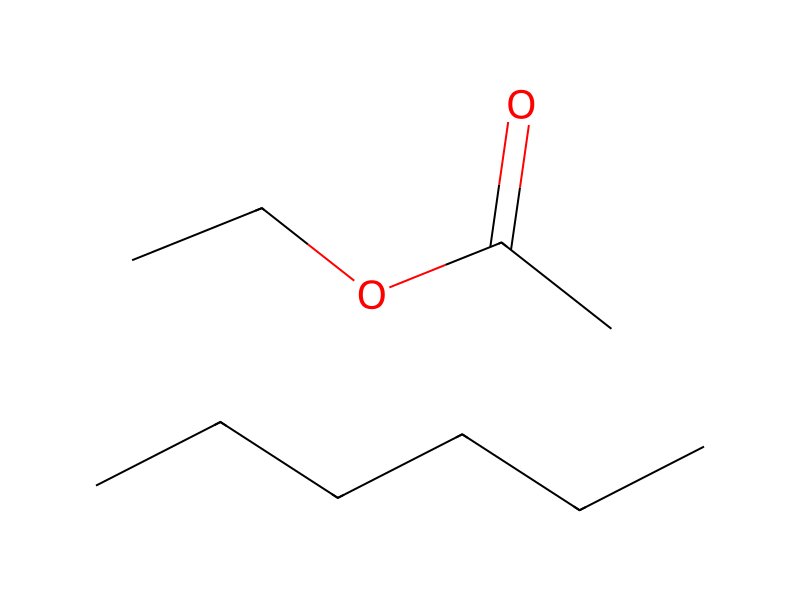
[Cl:1][C:2]1[CH:3]=[C:4]([O:8][CH:9]([CH2:13][CH3:14])[C:10](O)=O)[CH:5]=[N:6][CH:7]=1.CN(C)C=[O:18].C(Cl)(=O)C(Cl)=O.Cl.[Cl:27][C:28]#[C:29][C:30]([NH2:33])([CH3:32])[CH3:31]>ClCCl.CN(C)C1C=CN=CC=1.CCCCCC.C(OCC)(=O)C.C(N(CC)CC)C>[Cl:1][C:2]1[CH:3]=[C:4]([O:8][CH:9]([CH3:10])[CH2:13][C:14]([NH:33][C:30]([CH3:32])([CH3:31])[C:29]#[C:28][Cl:27])=[O:18])[CH:5]=[N:6][CH:7]=12-(5-Chloro-3-pyridyloxy)butyric acid (0.35 g; prepared as described in Stage 2 of Example 1) was stirred in dry dichloromethane (5 ml) containing N,N-dimethylformamide (0.1 ml) and treated dropwise with oxalyl chloride (0.145 ml) at ambient temperature. The solution was stirred for 0.5 hours and added in portions to a mixture of 1-chloro-3-amino-3-methylbut-1-yne hydrochloride (0.25 g; prepared as described below), dry triethylamine (0.68 ml) and 4-dimethylaminopyridine (0.01 g) in dry dichloromethane (5 ml) with stirring at ambient temperature. The mixture was stirred for 1 hour, stored for 18 hours, diluted with further dichloromethane, washed with aqueous sodium hydrogen carbonate, dried over magnesium sulphate and evaporated under reduced pressure to give an oil. The oil was fractionated by chromatography (silica:hexane/ethyl acetate 3:1 by volume) to give a solid that was recrystallised from hexane to give the required product as a colourless solid, 0.15 g, m.p. 78–82° C.