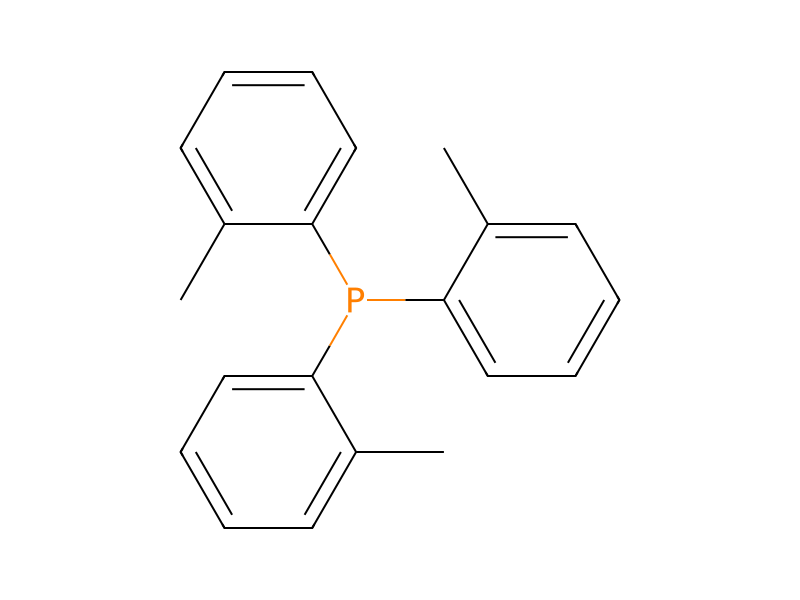
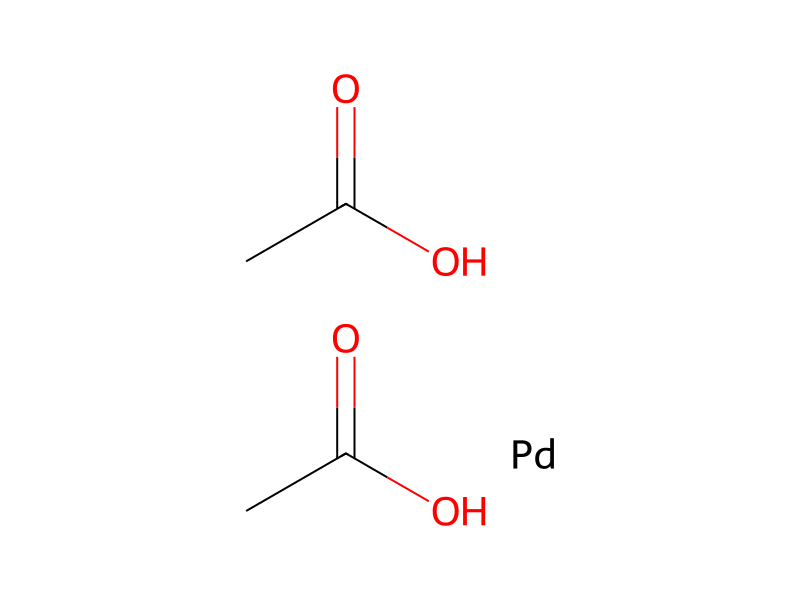
A mixture of 5.8 g (17 mmol) of 3-iodo-2-methyl-4-methylsulfonylbenzoic acid, 4.0 g (23.8 mmol) of 4-methylthiophenylboronic acid, 11.7 g (85 mmol) of potassium carbonate, 50 mL of acetonitrile, and 12 mL of water was prepared and purged with nitrogen gas with stirring. The catalyst system, 190 mg (0.85 mmol) of palladium II acetate and 775 g (2.25 mmol) of tri-o-tolylphosphine, was added and the mixture was heated to reflux with stirring for several hours. The mixture was then cooled, basified with dilute aqueous sodium hydroxide solution, extracted with ether, and then acidified with concentrated aqueous hydrochloric acid. The resulting mixture was extracted with ether and the extract was concentrated by evaporation under reduced pressure. The residue was diluted with ethyl acetate and again concentrated by evaporation under reduced pressure. The residue was chromatographed on a preparative C-18 high pressure liquid chromatography (HPLC) column eluting with a 60:40:0.05 mixture of acetonitrile, water, and acetic acid. The product fractions were combined and extracted with ether. The ethereal extracts were concentrated by evaporation under reduced pressure and the residue obtained was diluted with ethyl acetate and again concentrated by evaporation under reduced pressure. The residue obtained was mixed with hexane and the insoluble solids were recovered by filtration and dried to obtain 2.2 g (39 percent of theory) of the title compound as a tan powder melting at 178-179° C.