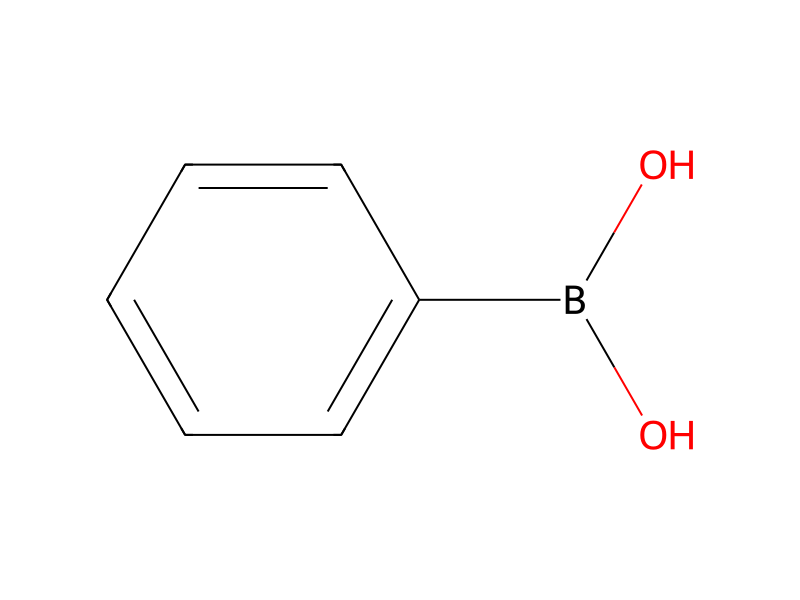
[Cl:1][C:2]1[C:3](I)=[C:4]([S:8][CH3:9])[CH:5]=[CH:6][CH:7]=1.[C:11]1(B(O)O)[CH:16]=[CH:15][CH:14]=[CH:13][CH:12]=1.C(=O)([O-])[O-].[K+].[K+].COCCOC>C1C=CC([P]([Pd]([P](C2C=CC=CC=2)(C2C=CC=CC=2)C2C=CC=CC=2)([P](C2C=CC=CC=2)(C2C=CC=CC=2)C2C=CC=CC=2)[P](C2C=CC=CC=2)(C2C=CC=CC=2)C2C=CC=CC=2)(C2C=CC=CC=2)C2C=CC=CC=2)=CC=1.CCOCC.O>[Cl:1][C:2]1[C:3]([C:11]2[CH:16]=[CH:15][CH:14]=[CH:13][CH:12]=2)=[C:4]([S:8][CH3:9])[CH:5]=[CH:6][CH:7]=1A mixture of 6.0 g (21 mmol) of 3-chloro-2-iodo(methylthio)benzene, 5.1 g (42 mmol) of phenylboronic acid, 14 g (100 mmol) of potassium carbonate, 80 mL of 1,2-dimethoxyethane, and 75 mL of water was prepared and deaerated with a stream of nitrogen. Tetrakis(triphenylphosphine)palladium(0) (730 mg, 0.63 mmol) was added and the mixture was heated at about 100° C. under nitrogen with stirring for about 20 hours. Water and ether were added and the aqueous phase was extracted with more ether. The ether phase and extract were combined, washed with saturated aqueous sodium chloride solution, dried over sodium sulfate, and concentrated by evaporation under reduced pressure and then in a Kugelrohr apparatus at 80° C. under 0.5 mm Hg (67 Pascals) pressure. The liquid residue was chromatographed on silica eluting with an 85:15 mixture of hexane and dichloromethane to obtain 4.3 g (87 percent of theory) of the title compound as a colorless liquid.